


Dead or Alive 6: Last Round is the updated version of the 2019 release remastered for current gen consoles and systems. Learn more about the game, our review, our score, and whether it's worth buying or not.
Overview
What is Dead or Alive 6: Last Round?
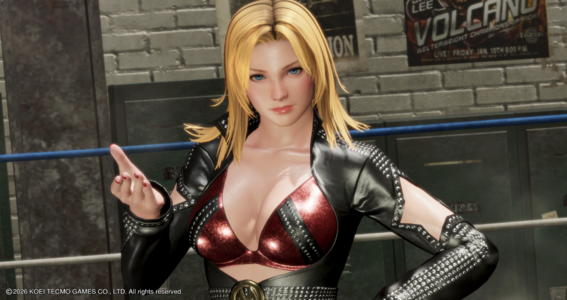
DEAD OR ALIVE 6 Last Round is a 3D fighting game developed and published by KOEI TECMO GAMES. This is also the re-release of the sixth mainline game, which was released on March 1, 2019. This new release features improved visuals and performance for current-gen hardware, as well as a new Photo Mode, new cosmetics, and the base game’s second batch of returning DLC characters as part of the package.
Dead or Alive 6: Last Round features:
⚫︎ Current Gen Port of 2019 Release
⚫︎ Performance and Graphics Update
⚫︎ Photo Mode
⚫︎ All DLC Except Guest Characters
⚫︎ 3D Fighting Game Mechanics
⚫︎ New Cosmetics For Fan Favorites (Kasumi, NiCO, Marie Rose, Honoka, and Ayame)
| Digital Storefronts | ||
|---|---|---|
 Steam Steam |
 Playstation Playstation |
 Xbox Xbox |
| $39.99 | ||
Dead or Alive 6: Last Round Review: A Lofty Promise That Needs Time
The Bell Hasn’t Rung Just Yet
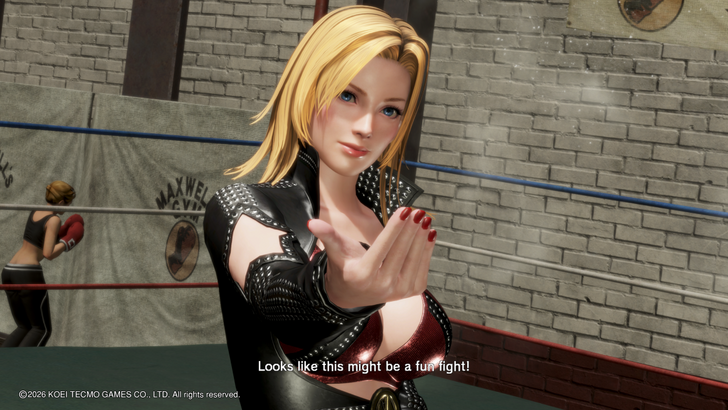
Depending on who you ask, some may say that 3D fighting games are some of the hardest games in the genre. Franchises like Tekken and Virtua Fighter have made a name for themselves for having highly competitive scenes, distinct character visuals, and continuous developer support. We can sit here and debate which of these is the best, but if we’re talking about the most controversial 3D fighting game, then that title certainly belongs to Dead or Alive.
From its inception to its current state, it remains the most controversial title among those mentioned for various reasons. Be it the lack of support after a year of its release, the lack of content compared to its direct predecessor, the questionable pricing and DLC practices, or the regression in gameplay mechanics that conflicts with the game’s core design, Dead or Alive has definitely seen better days.
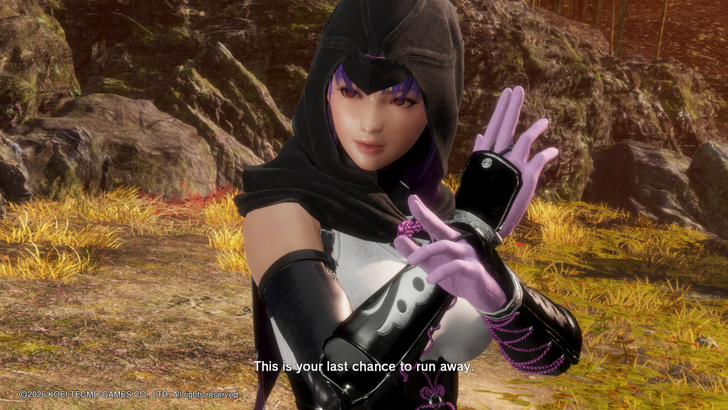
With the surprising announcement of Dead or Alive 6: Last Round and the next mainline Dead or Alive game, longtime fans were excited to see what’s next for the franchise, especially for the former, since it’s been roughly 6 years since its last update. Will it have added game modes? Will it change the meter system? Will it have more characters? Will it have rollback netcode? And more importantly, will the game finally live up to the previous games?
Unfortunately, it only says yes to a couple of these questions. Dead or Alive 6: Last Round certainly improves on its visuals and performance, but it doesn’t have the features that a modern fighting game would have, and lacks new content that fans and players have been waiting for. In a way, the game is a promissory note instead of a check that you can use now.
Better Visuals and Performance
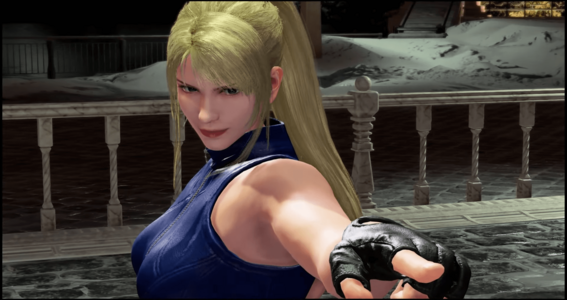
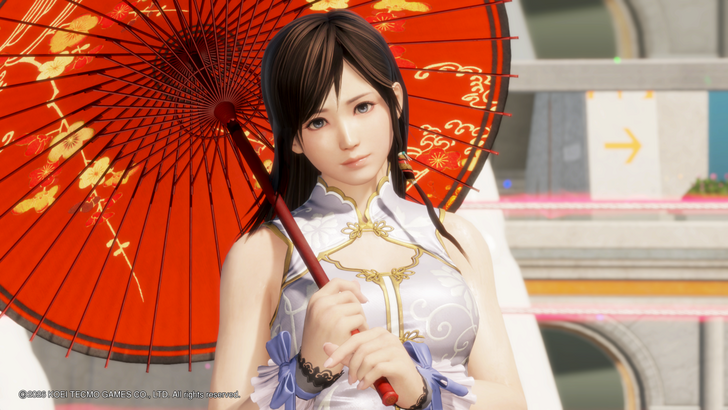
Before we get into the gameplay, let’s first focus on the visual and performance improvements that the game does have. For one, the new engine certainly does make the game look better than before. It’s unmistakable that the overall visual fidelity has improved on both available graphical modes, either Prioritize graphics or Prioritize action, on the PlayStation 5. For a more direct comparison, the game looks about as good as the relatively recent remaster of Virtua Fighter 5 R.E.V.O.
For more specifics, there’s a better focus on lighting and shading. This is most evident in the game’s "OBORO" version of the Lost Paradise stage. Regrettably, there’s only one stage that received a graphical overhaul at the moment, so if you were expecting more stages to get this treatment, you’ll have to wait for further updates and DLC (all of which were mentioned to be free).
Performance-wise, the game runs much better now than at its original 2019 release. The console versions, in particular, had shoddy performance and lackluster visuals depending on the graphical mode. Matches finally run smoothly, and the stage hazards remain as bombastic as ever without tanking the game’s framerate.
The Worst Narrative So Far
Next up, we have the game’s story. The franchise has always had a more sci-fi-esque ninja family storyline that’s quite easy to follow. Sadly, the sixth iteration is probably the weakest narrative in the whole series, mainly because it gets so disjointed and confusing. The story follows a lot of characters. And I mean a lot.
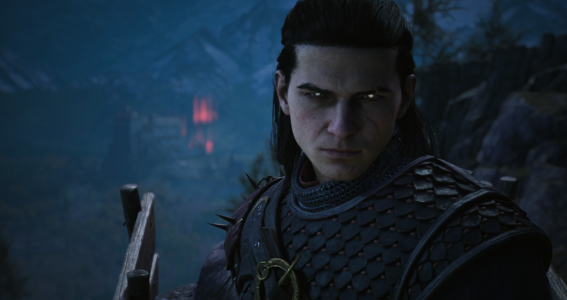
The plot carries over directly from Dead or Alive 5: Last Round, as Kasumi has left the Mugen Tenshin Ninja Clan while still keeping in contact with the rest of the ninjas, and Helena Douglas has assumed control of the DOATEC corporation. A new organization called MIST, which is run by longtime villain Victor Donovan, is after a new participant, Honoka, who showcased a mysterious power that led to her disqualification in the previous game.
In between all of that, all of the other fighters that are not directly involved with the main plot are preparing for the sixth Dead or Alive tournament. This is where the plot gets dicey because of how the game tells its story. For context, the story is told through a "timeline" similar to Dead or Alive 5’s style, which maps out the plot in chronological order. Dead or Alive 6 doubles down on this feature, with every character having a mapped-out role in the entire plot. The problem is that when you finish a chapter, it isn’t continuous.
Each chapter shows a pre-rendered cutscene, a player-controlled fight sequence, and then an ending cutscene. After which, you’re taken back to the Story menu, and you have to confirm to view the next chapter. It’s choppy, breaks the flow of the game, and is a horrible way to tell the story.

Plus, not all of the characters are directly involved in the mess with Honoka and MIST, so some of their story arcs simply act as filler when compared to the main story. The narrative does have its cool moments, like Hayate and Ryu fighting for the nth time, Diego and Jann Lee’s finals match, and even Honoka showcasing her power of mimicry against other fighters.
If the main plot had only followed the main characters (the ninjas, Honoka, Helena, Marie Rose, etc.), it would’ve ultimately been a better story simply because there would be fewer shifting perspectives and it would be much easier to understand. Maybe they could’ve made the indirect players have Arcade Mode stories instead, which also adds a reason for players to actually engage in this particular game mode.
As Deep and As Engaging as Before
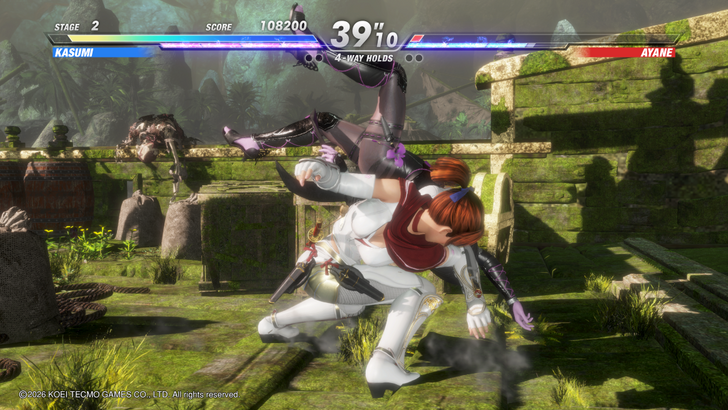
Dead or Alive’s gameplay system has always been more unique than other fighting games. The series has found much success with its patented Triangle System of Strikes, Holds, and Throws. This functions like different rock-paper-scissors scenarios during gameplay, where players must use each mechanic to their advantage to reduce their opponent’s HP to 0. While I have put in more hours in other fighting games like Tekken and Street Fighter, Dead or Alive 6’s system is fairly simple to understand and straightforward to execute.
As a longtime fighting game player who’s recently had to relearn Dead or Alive’s mechanics, I can confidently say that Dead or Alive 6’s gameplay may not be as good as the previous releases, but it flaunts its strong points significantly well to the point that learning the game is a different kind of fun than other fighting games. Especially when you start to see all of the mechanics work together starting with its Triangle System.
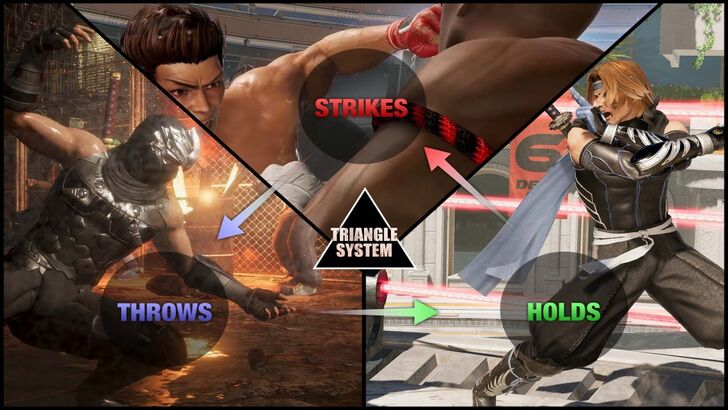
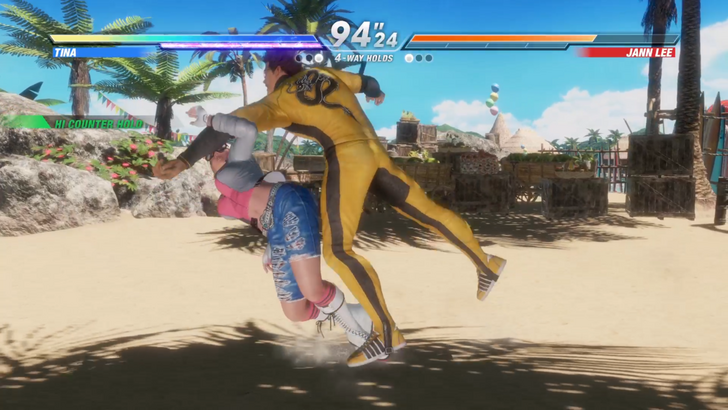
The Triangle System also carries over to the game’s combo system, which is also very different from other fighting games. For context, getting "stunned" doesn’t actually mean that you’re locked out from defending yourself. You can actually choose to either Strike the enemy back, risking a counter hit, or Hold the enemy’s Strikes to get out of the situation. During my experience of learning the mechanics, this was the concept that felt foreign to me. In other fighting games, you're mostly going to be idle the whole time you're in a combo.
But in Dead or Alive, once you start integrating Holds against Stun setups and strings, you start to see everything fall into place. You can opt to stun an opponent and do nothing to check what the opponent wants to do after they're in that situation, or you can just rip a launcher while the enemy is in a stun state to get guaranteed damage, or better yet, anticipate and punish their Hold with a Throw to inflict even more pain.
This is where the franchise built and refined its core design, where each situation is a constant mind game revolving around its Triangle System.
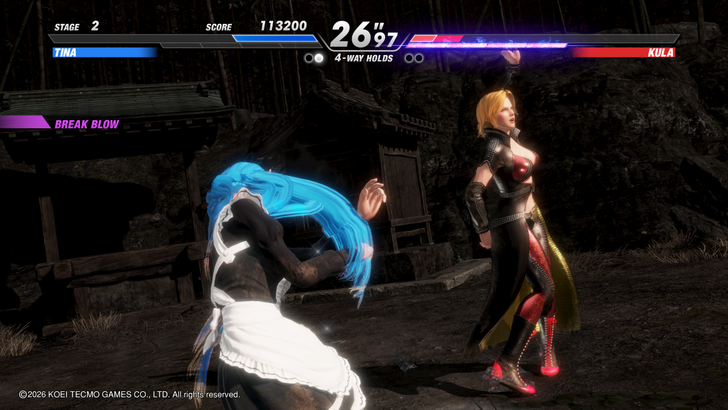
However, Dead or Alive 6 introduces a completely new mechanic or resource, called the Break Gauge, where players can utilize their meter to use new defensive and offensive attacks like Break Hold and Break Blow, respectively. Historically speaking, this is where Dead or Alive 6 fumbles its gameplay, as the existence of the Break Hold and the speed at which you gain meter added friction to the original gameplay design.
Bringing back the Triangle System, there are three types of universal Holds: the High Hold, Mid Hold, and the Low Hold. These holds counter specific attack types, meaning that high attacks will get countered by a High Hold, and low attacks will be countered by a Low Hold. The Break Hold defies this design entirely, as players can use it to nullify all attack levels at the cost of 2 bars of Break Gauge.
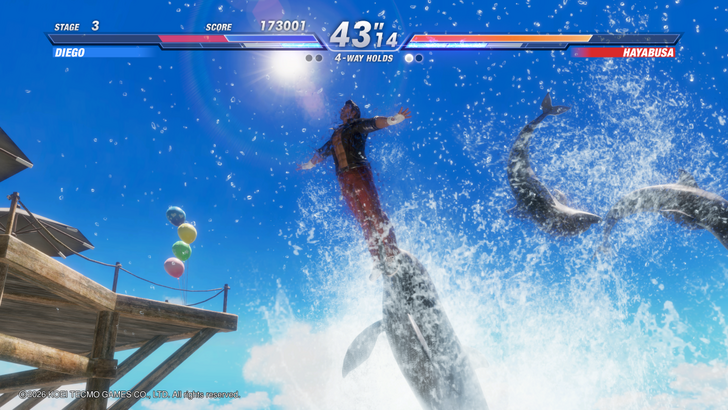
Combine this with the rate at which you gain meter from attacking and defending, and you’d see the flow of fights be constantly interrupted because of the Break Gauge attacks. As mentioned earlier, this became the controversial addition to the game, as the game gives you an easy way out, provided you have the meter to do so. It was one of the things fans and competitors alike wanted to change, which is why it’s very disappointing to see there were no gameplay changes in this release.
Lack of New Gameplay Changes
Having a re-release is nothing new for a fighting game. As mentioned above, Virtua Fighter 5 R.E.V.O. is actually the game’s fifth re-release of the same game. The main difference between those releases lies in changes to core mechanics and gameplay systems. So when Koei Tecmo announced a re-release for Dead or Alive 6, this kind of expectation isn’t very far off because fighting game players are used to this kind of marketing.
This is why, as of writing, it’s disappointing to see that there have been no changes or adjustments to the core gameplay. This isn’t to say that there won’t be any changes coming to the game, but more so that the game doesn’t have anything new gameplay-wise to justify the re-release. Like, why couldn’t the base game just be updated for free instead of a new $40 re-release?
There may be various reasons for this, and one of them may simply be the cost of effort required to port the game to new hardware to address gameplay limitations. Another reason could be the separation of DLC for Mai Shiranui and Kula Diamond, two characters who were already added as DLC in the original game. It’s rather baffling to see that all of the other DLC characters (Nyotengu, Phase 4, Momiji, Rachel, and Tamaki) are part of the Last Round package, but not the aforementioned guest characters.
Lastly, the biggest problem that the game has is the lack of online features such as rollback netcode and crossplay. In 2026, these two features can actually be considered as the two biggest things that a fighting game must have in order to remotely succeed. And without both, players will have to rely on inconsistent delay-based netcode and hope there are players in their region and on their platform to engage with the game’s online modes.
More Content to Come
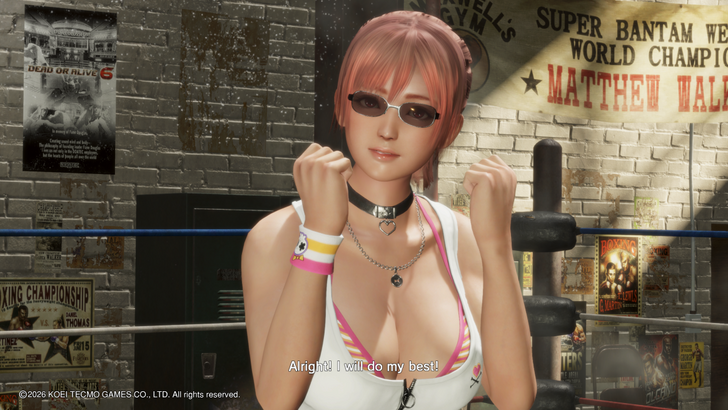
The good news is that Dead or Alive 6: Last Round has new content coming in the form of characters, stages, and, of course, cosmetics. I don’t think it would be remiss to say that everyone would wish the new content were available immediately upon Last Round’s release, but this at least promises fans and players that the game will continue to receive support in the near future.
Is Dead or Alive 6: Last Round Worth It?
Wait For More Content or Try Out the Free Version First.
Despite all of that, Dead or Alive 6: Last Round is worth trying out, but only with its free Core Fighters Edition. Interested players can opt to play the full game with limited characters (Kasumi, Marie Rose, Honoka, and NiCO) to get a taste of what the game has to offer, to see if they’re willing to buy the full game, or to wait for more updates and content.
I would recommend that fighting game players who want to try something new beyond their current game selection check it out. The system mechanics are easy to learn and grasp, yet they have an enormous amount of depth when it comes to using all of them to your advantage in a match.
Even though the visuals and performance are noticeably better, and Mai and Kula are officially part of the game (again) rather than delisted, the re-release feels more like a port than a full game. Add the fact that the game doesn’t have any upgrade packs for players who already have the base game, and it seems all the more like a bad deal, at least right now.
I’ll be the first to admit that Dead or Alive 6: Last Round certainly didn’t meet expectations. The lack of new changes and updates certainly leaves the game in a questionable position until said updates arrive. Simply put, much of what it currently offers works against the intention of building hype and attention for the series. We’ll simply need to wait and see if the series can come out alive after being dead for so long.
FAQ
Will There Be New Characters for Dead or Alive 6: Last Round?
Game8 Reviews