



| DAMON and BABY | |||
|---|---|---|---|
| Release Date | Gameplay & Story | Pre-Order & DLC | Review |
Overview
What is DAMON and BABY?
Damon and Baby is an isometric 3D action-adventure game that blends twin-stick shooter combat with in-depth exploration and platforming. It follows a demon working his way up the ladder to become a Demon King yet finds his aspirations interrupted by the death of his friend, Father Nuno. As his dying wish, he places a mysterious child in the hands of Damon, setting off a chain of events that upends the fragile balance between humanity, angels, and demons.
DAMON and BABY features:
⚫︎ Twin-stick shooter combat
⚫︎ Character designs by Guilty Gear Designer Ishiwatari Daisuke
⚫︎ Local Co-op
⚫︎ Unlockable moves for platforming and exploration
⚫︎ Linear story progression
For more gameplay details, read everything we know about DAMON and BABY’s gameplay and story.
| Digital Storefronts | ||
|---|---|---|
 Steam Steam |
 PS PS |
 Switch Switch |
| $19.99 | ||
DAMON and BABY Review: Devilishly Fun
A New Chapter
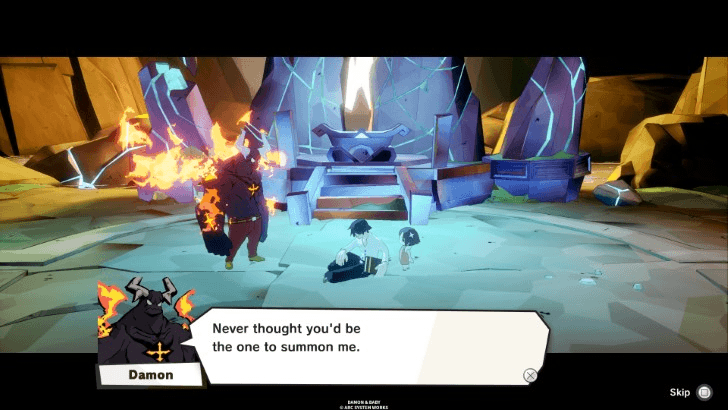
I could recall the messages in the live chat during the Arc System Works Showcase where Damon and Baby was first announced. The chatroom at the time read both a collective sigh of disappointment and a helpless chuckle of sheer incredulity. Arc System Works (also known as Arcsys) is making not one but three non-fighting games? Even I was gobsmacked, but I was part of the less vocal few who were intrigued. This new direction for the publisher meant only one thing to me: they’ve got something they truly believe in.
Arc System Works’ games first caught my eye when I was a wee ten-year-old because of their arresting character designs and stylish combat. I even participated in the annual Blazblue tournaments we had in our neighborhood and utterly decimated the six and eight-year-olds there. I then went on to watch the Blazblue and Guilty Gear franchises grow from a distance, because while I got into gaming thanks to fighting games, I ultimately gravitated towards other genres such as platforming, adventure, and even isometric action.
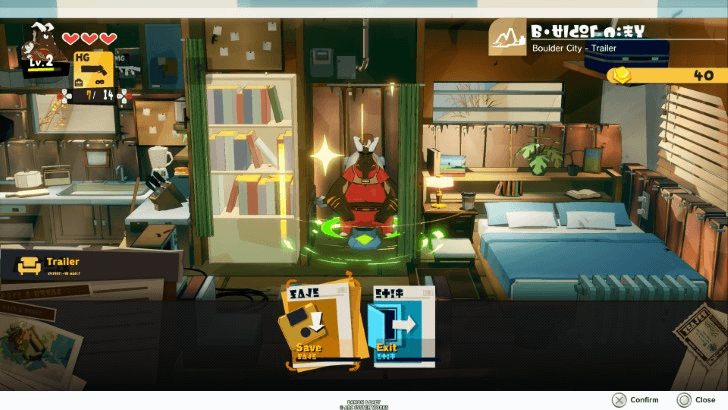
Which is why I immediately wanted to get my hands on Damon and Baby, a game that still had the DNA of ArcSys despite being a non-fighting game. I still had a few reservations before going in because there was still the possibility that it would be a thoroughly generic entry. Thankfully, it did not disappoint. Arc System Works took a chance and made a cohesive product with eye-catching visuals, a great soundtrack, highly engaging gameplay, and a touching story with high stakes.
There’s something special about playing a title that developers and publishers are willing to take a risk for. It feels even better when it’s a game that shows they didn’t make the wrong choice.
DAMON and BABY and FOUND FAMILY
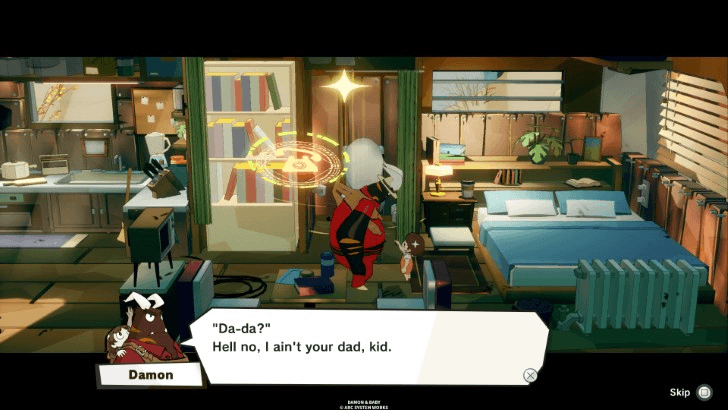
Damon and Baby stars Damon, a gun-toting demon with grand aspirations to claw his way up the ranks of Hell to become the Great Demon King. However, his priorities shift when he’s forced by a deal to take care of a child in exchange for a soul; a deal suddenly botched by Heaven snatching it before he could.
The incident results in a breach of contract that robs Damon of his powers as penalty. Now, his current form is but a fraction of his former glory. And if that wasn’t bad enough, he now can’t seem to part with the child. Literally. With no other choice but to fulfill his friend’s final wish and to restore his powers, Damon leaves his cave only to step into a brewing conflict between angels, humans, and demons. And at the center of all that conflict seems to be the toddler on Damon’s back.
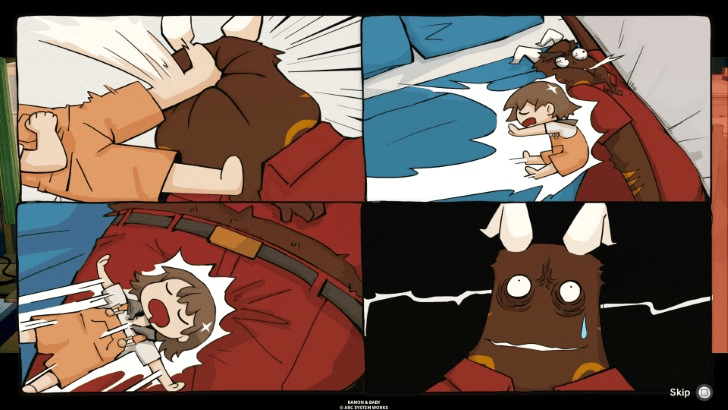
Who doesn’t love seeing a gruff and intimidating being get soft and gooey when they’re forced to care for a child? I for one am an absolute sucker for that trope when it’s applied to adventure settings because it’s a recipe for character development and relationship building. And I was not disappointed to find that the game does focus on showing us how Damon grows from being a detached and self-absorbed demon to one who would go through any inconvenience or calamity to protect the child. Watching their relationship grow made me heavily invested in progressing through the game, especially as each major development in the story raised the stakes and introduced more questions about the world and the growing conflict surrounding the child.
The development of Damon’s character and his relationships with the child and their newfound friends feels especially earned because of how well these characters play off of each other. The other companions are all equally interesting, such as Tinatana, an insurance agent from Heaven who happily goes along with everything Damon does. There’s also the Gargoyle who appears out of nowhere as a Hell Insurance operator who’s a little too invested in Damon’s business. Their colorful and sometimes over-the-top personalities and backgrounds balance out Damon’s dry and deadpan remarks. And one of the best things about this entire cast is that many of them chime in even during actual gameplay, so you never really feel alone even outside of the events of the main story.
Battles Force You to Improvise
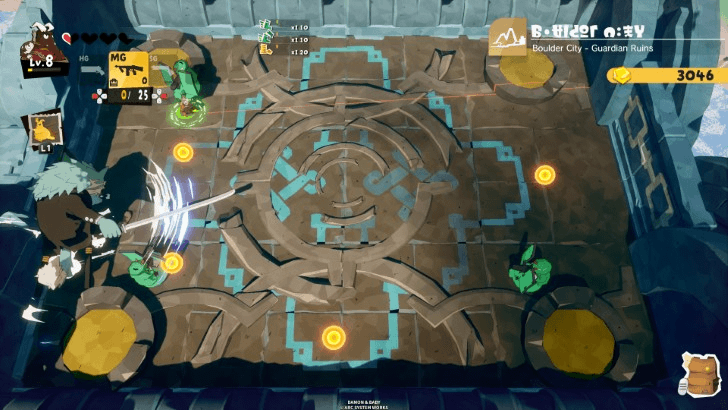
Damon and Baby is a twin-stick shooter that is also heavy on platforming and exploration. You will spend most of your time running around different locations and fulfilling quests. You’ll have to gun down hostile beings more often than not as you leap, climb, and bum-rush your way through the supernatural version of our world.
Now, there’s a bit of a learning curve with the basic controls for people who aren’t that good at handling two joysticks at the same time (that’s me!), but I was happy to find that the controls for Damon and Baby are quite smooth. At no point was it too responsive or sensitive, which made aiming with precision easy to accomplish consistently.
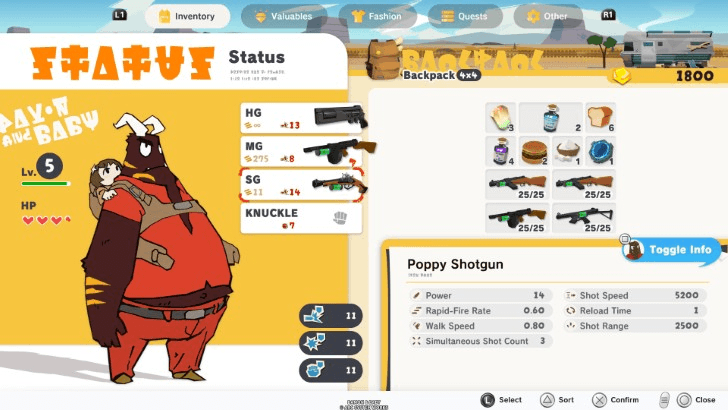
You’re also introduced to what I would say is a balanced selection of guns, and each of these can be used depending on whatever strategy you need to employ in combat. The game will of course start you off with a handgun and the power of your own meaty fists before introducing you to a machine gun and a shotgun.
Your ranged weapons will vary according to firing rate, power, range, reload time, ammo, simultaneous shot count, and even Damon’s walking speed. Their attributes can also be upgraded further by simply picking up or purchasing better guns. It’s an uncomplicated plug-and-play way of powering up that helps you keep the momentum of the gameplay loop going. As an example, certain machine gun upgrades can change the pattern of your attacks. I found one that shot bullets in a fan-like manner—perfect for groups of enemies that run around in formation. All I needed to do was switch to the gun when the situation called for it.
What helps your arsenal feel more balanced is the frankly insane variety of enemy types. Looking back at your first dungeon outside of the tutorial, I could actively recall encountering at least twelve different kinds of demons, all with extremely distinct designs and attack patterns. It’s different from a game like Hades where enemies are grouped by biome and species, thereby making many enemy behaviors and their weaknesses similar to one another and more predictable.
And to my absolute joy because I love a good challenge, I learned that not all of these enemies fall to bullets. Sometimes you’ll have to strike them with Damon’s fists, or even do a combination of striking first, then shooting. It makes nearly every single level exciting and takes the tedium out of exploration and the constant battles.
But one thing I desperately wanted to have while playing was a quick heal function, which is an odd thing for a modern action game to miss. Even early on in the game battles can get hectic. When you’re busy dodging so many attacks, it can be tiresome to have to open up your inventory to heal. It almost completely ruins your momentum and is an unnecessary inconvenience.
A Crazy Slow Start
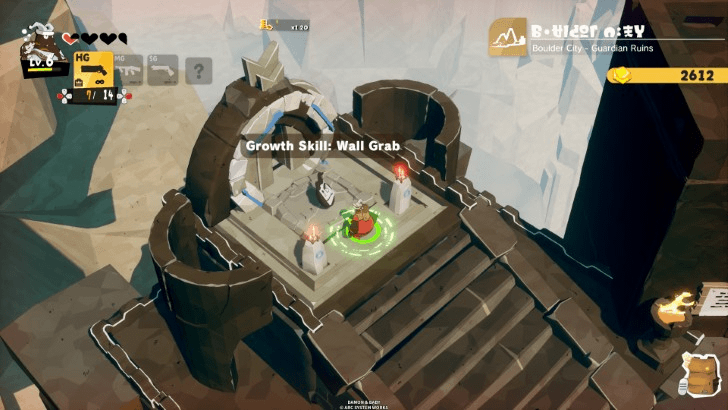
I wish I could speak about adventuring with just as much excitement, because as soon as you finish the tutorial, the pace slows to a crawl. Wooden signboards will tell you Damon would need to learn to double jump, wall climb, ram boulders, and break random cracks in the ground. But it takes quite a while to learn even one of these moves.
The moment I learned how to break massive rocks in my way and subsequently opened up a good percentage of the ruins, I was giddy with excitement. Part of that was because the game genuinely does a good job of making each area feel new, but the other part was because I spent upwards of two whole hours getting lost and backtracking.
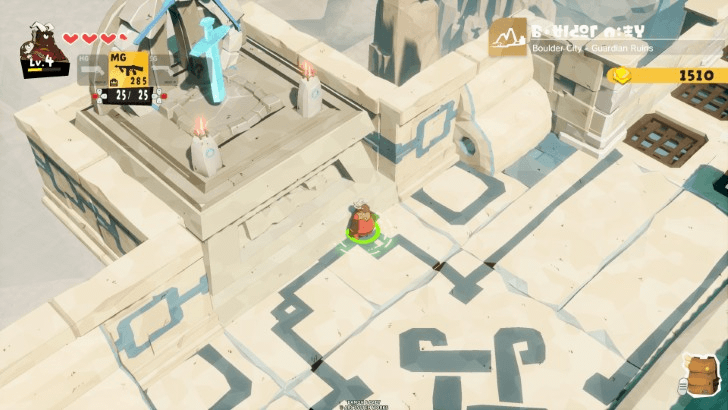
That happened for a variety of reasons, chief of which is due to the fact that the map is found pretty late into your exploration. And by the time you find it, you’d have already unlocked new abilities and explored a significant portion of the area.
And even then, it’s important to note that the maps are designed with poorly-defined terrain and very few landmarks. They’re also drawn top-down and two-dimensional, which is a decision that feels terribly inconvenient for an isometric game where you’re bound to explore rooms and caverns.
Baby Jump! Baby Jump! Baby Jump!
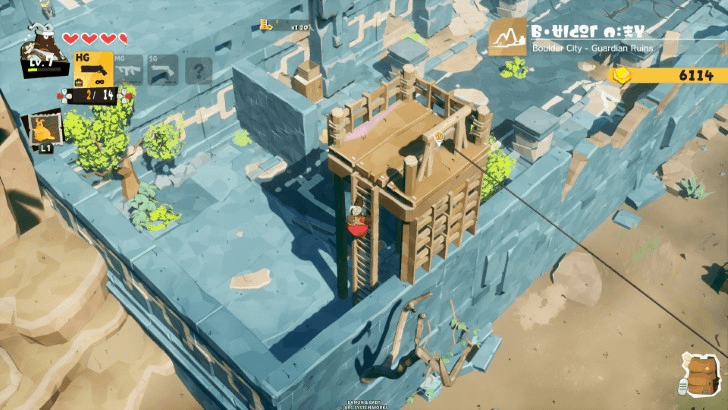
There were a few things that stood out to me about the game’s platforming and exploration features. One of them is a certain mechanic that I initially thought was a bit of a gimmick but ended up being my favorite in the game.
That mechanic is called the Baby Jump. Yes, you read that right; the mysterious child in Damon’s care is involved in this. It’s one of the first moves that are already available to you at the start of the game aside from the regular jump-slash-higher jump.
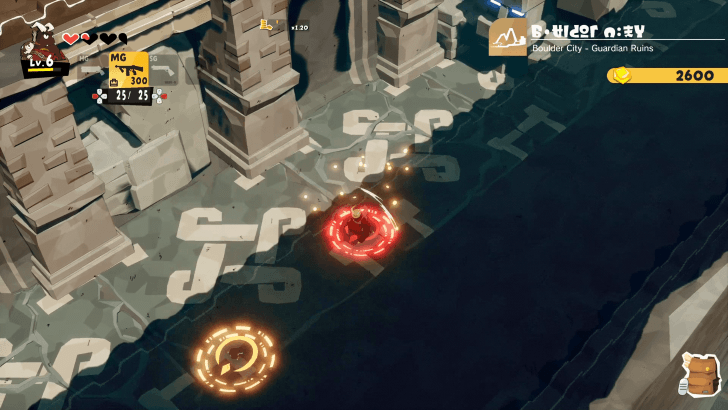
The Baby Jump lets you cross long distances in the blink of an eye and serves as your primary way of dodging in battle. Think of it as a quick teleportation mechanic. Damon makes use of the fact that he can’t physically be separated from the child by literally throwing them in front of him like he’s pitching a baseball. The bond between them will take effect, causing Damon to teleport close to the child. I’ve got a few concerns about child endangerment here, but it’s absolutely hilarious and both of them seem perfectly happy to do it.
It’s tricky to get the hang of at first, especially in battle where things can get hectic. Though it only involves holding down the joystick to select the spot you want to teleport to and a single press of a button, that precious time it takes doing so can spell your doom at the hands of brutal and fast enemies. But once you get used to it, you’ll find yourself dodging attacks and moving through dungeons expertly, until platforming feels quick and snappy and battles like a dance.
3D Anime Eye Candy
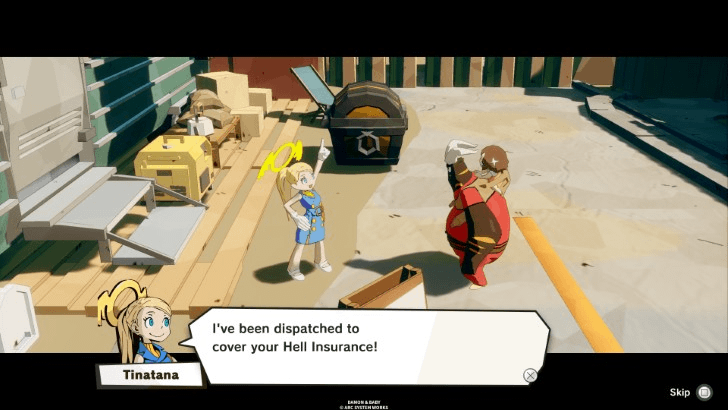
Arcsys games have a specific visual appeal to them because of the way they design their characters. It’s not just about their bright colors and clean lines—it’s about identity. Poses, expressions, hairstyles, clothing, and all those little details should ideally tell us something about a character. The same can be applied to stages, where colors can set the mood and every component—even if they can’t be interacted with—add to our immersion and appreciation of a game’s setting.
One character that illustrates this attention to detail is Tinatana, a bubbly go-getter employed at Heaven’s Ministry of Health. Apart from the halo behind her head, the color palette for her design suggests that she is affiliated with Heaven. Her hair is tidy, her clothes are undeniably trendy, and her smile is comically wide. That careful attention to identity and visual cohesiveness has also clearly touched the many locations of the game. One moment, you could be running down corridors with blue-grey stone walls only to stumble into an area with intimidating red lighting, sconces holding blazing torches, and traps that can easily flatten anyone.
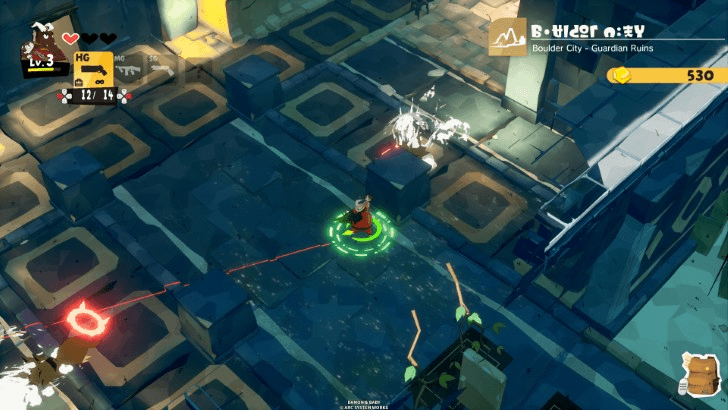
Sadly, I was expecting to see more from intricately designed stages. Shifting color palettes and introducing traps and torture implements weren’t enough to sell me on the game’s worldbuilding. I was also disappointed to find that there weren’t any collectible relics or interesting readables beyond the bases. Because of that, these places end up lacking life and history. There’s almost no incentive to explore the world around you beyond collecting weapon upgrades, consumables, and whatever currency you need to make Damon stronger. And though some of the levels contain great cover and elevation during battles, there should be more visual cues and even fluff to tell us more about the people and beings—whether celestial or infernal—that once inhabited these places.
Is DAMON and BABY Worth It?
Yes, It’s a Hell of a Good Time
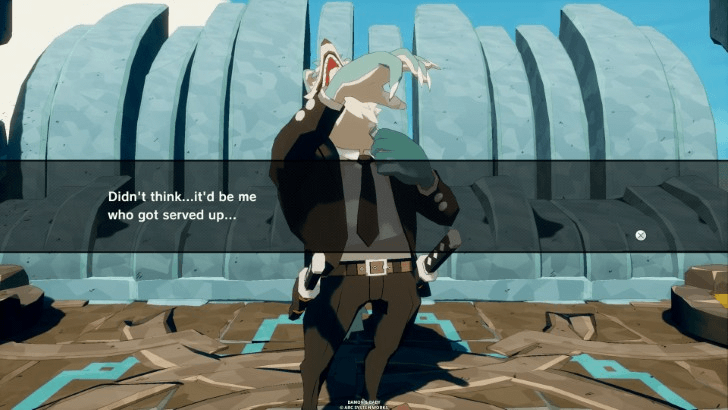
It’s been a minute since I last enjoyed playing a shooter game, and Damon and Baby was an absolute delight to experience. Aside from the actual gameplay, a large part of it was precisely because of Arc System Works’ distinctive style. And so it’s my sincere hope that the risk they took to create this game will pay off materially. It’s far from being one of the best action-adventure titles out there, but what we get—even beyond the reputation of the game’s creators—is a game that deserves its own following.
So if you’re simply curious about how they handled a game outside of their own established niche or if you want to spend a weekend playing a fun twin-stick shooter and adventure hybrid, Damon and Baby should be your next purchase.
FAQ
Does Damon and Baby Have Co-Op?
Yes, Damon and Baby has local co-op where you play as a dog.
What are the System Requirements to Play DAMON and BABY on Steam?
The System Requirements as listed on Steam are as follows:
| Specifications | Minimum | Recommended |
|---|---|---|
| OS | Windows 10 with the latest updates | |
| Processor | Intel Core i5-12400F / AMD Ryzen 5 5600X | Intel Core i7-13700K / AMD Ryzen 7 7800X3D |
| Memory | 8-16GB RAM | |
| Graphics | 2GB VRAM, Nvidia GeForce RTX 750 / AMD Radeon R7 260X | 6GB VRAM, Nvidia GeForce RTX 1060 / AMD Radeon RX 580 |
| Storage | 10GB | |
| Additional Specs | Direct X11 | |
Game8 Reviews