



| Cthulhu: The Cosmic Abyss | |||
|---|---|---|---|
| Release Date | Gameplay & Story | Pre-Order & DLC | Review |
Overview
What is Cthulhu: The Cosmic Abyss?
Cthulhu: The Cosmic Abyss is a first-person, investigation-driven mystery game with strong Lovecraftian horror elements set in an underwater facility deep beneath the Pacific Ocean. Gameplay revolves around exploring underwater environments, collecting and analyzing clues, and solving cases through deduction rather than direct guidance. Players make use of the Vault system to organize and connect evidence, essentially building their own chain of logic to reach conclusions.
Cthulhu: The Cosmic Abyss features:
⚫︎ Investigation Focused Gameplay
⚫︎ Vault System for Organizing Clues
⚫︎ Multiple Ways to Solve Mysteries
⚫︎ Underwater Setting
⚫︎ Exploration Driven Progression
For more gameplay details, read everything we know about Cthulhu: The Cosmic Abyss's gameplay and story.
| Digital Storefronts | |||||
|---|---|---|---|---|---|
 Steam Steam |
 PS PS |
 Xbox Xbox |
|||
| $49.99 | |||||
Cthulhu: The Cosmic Abyss Review: Great Ideas Rising From the Depths
Promising Lovecraftian Premise
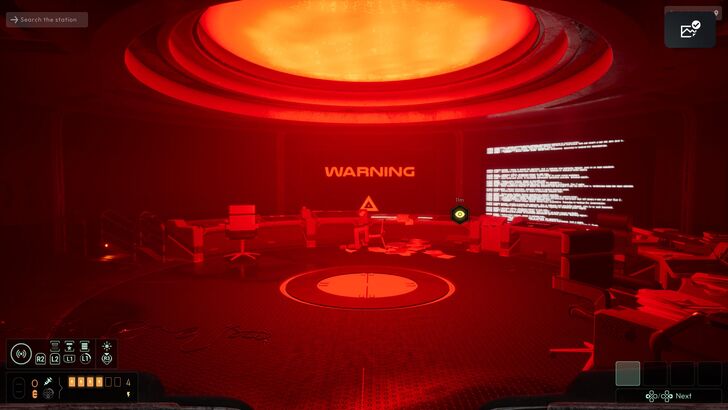
Lovecraftian horror is something that’s always fascinated me. The slow, creeping dread of the unknown, the feeling that something far bigger and far worse exists just beyond comprehension. Cthulhu: The Cosmic Abyss tries to channel that into a more modern framework, placing that cosmic fear into a setting that’s connected to a corporate and capitalistic world.
On paper, it’s a compelling setup. And honestly, there’s a lot here that works. The story has strong ideas behind it, and the mechanics supporting it are genuinely interesting. But as I spent more time with it, I couldn’t shake the feeling that the execution just doesn’t quite bring those elements together in the way it should. I was constantly seeing glimpses of something great but not quite getting the full payoff those ideas seem to promise.
The Mystery Pulls You Under the Pacific
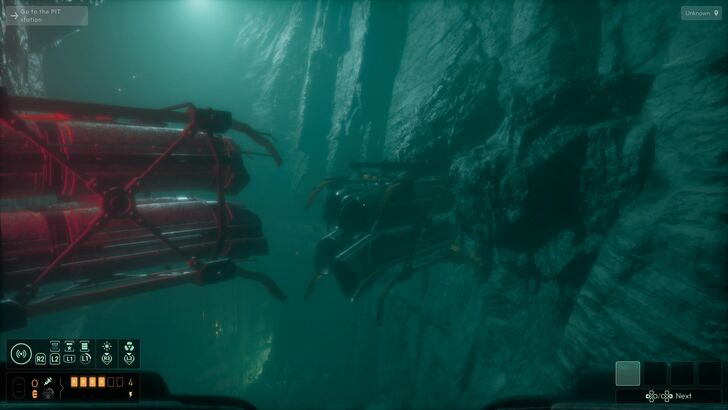
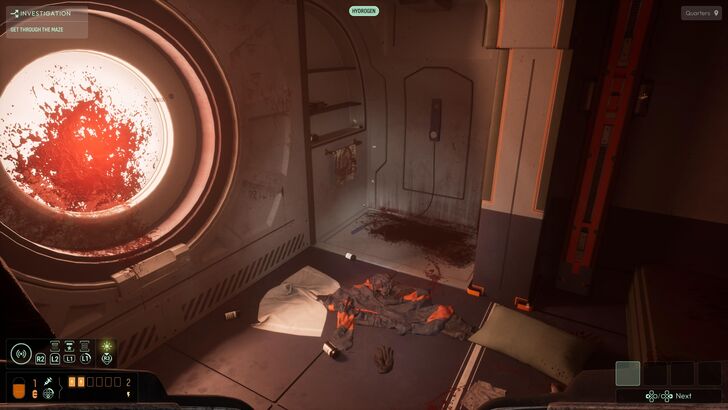
Cthulhu: The Cosmic Abyss takes place deep beneath the Pacific Ocean, where players step into the shoes of Noah, who is sent to investigate the disappearance of scientists working for Ocean I, a company that gives off the vibe that its corporate secrets are actually cultish horrors.
But Noah isn’t just some random investigator thrown into the deep end. He’s actually an agent of Ancile, an organization tasked in investigating occult cases, and a few months prior, he experienced something. An encounter that leads to a doorway to another world, and that connection is what ties him to everything happening beneath the ocean.
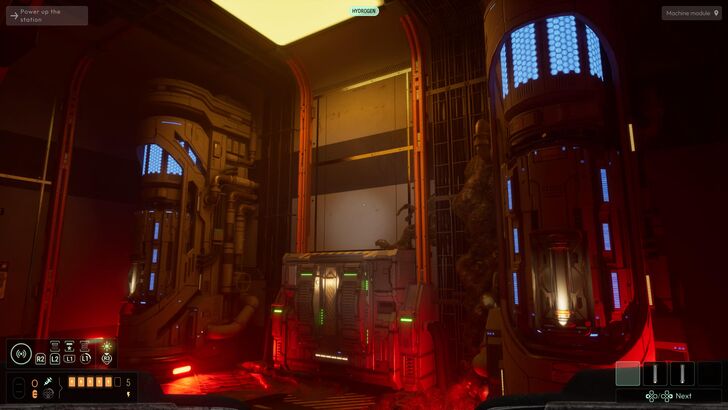
As I progress, the game slowly feeds me pieces of the puzzle. Like what Ocean I is really doing down there, and how it all links back to that moment that pulled Noah into this spiral. It sets up a strong sense of curiosity. You’re not just moving forward to complete objectives, you’re chasing answers, trying to make sense of a mystery that feels like it’s constantly just out of reach.
Documents, Deductions, and Decisions
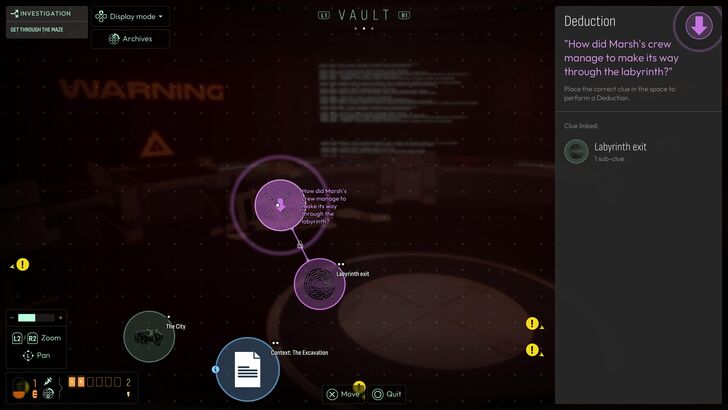
The core gameplay loop here is, quite literally, about solving puzzles… like, 99% of it. And when I say puzzle-solving, I don’t just mean moving objects around or matching symbols. Most of the time, I’m digging through clues, cross-referencing details, and reading through documents—a lot of documents—to arrive at my own conclusions.
Each scenario usually gives me two ways to interpret what’s happening, and that choice matters. Depending on how I piece things together, I can either lessen or add to my corruption level (basically the game’s version of an insanity meter, which we’ll get into later).
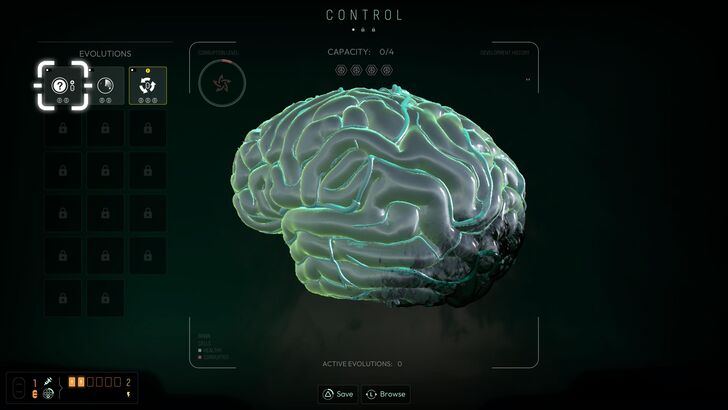
And honestly, that’s the experience in a nutshell. The remaining 1% leans into horror, but it’s more of a lingering presence than something constantly in your face. So if you’re the kind of player who enjoys methodically solving mysteries—especially in a setting as isolating as the depths of the ocean—this already plays to your strengths.
The Vault’s Web of Clues
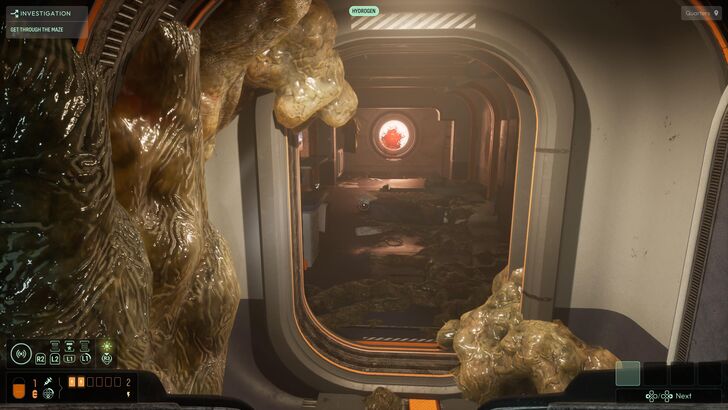
What really clicked for me with these mechanics is how involved the puzzle-solving actually feels. I’m actively reconstructing what happened inside the underwater station, almost retracing the final moments of the missing scientists. It gives every clue a sense of weight, because I’m piecing together a story that’s already ended… I just don’t know how yet.
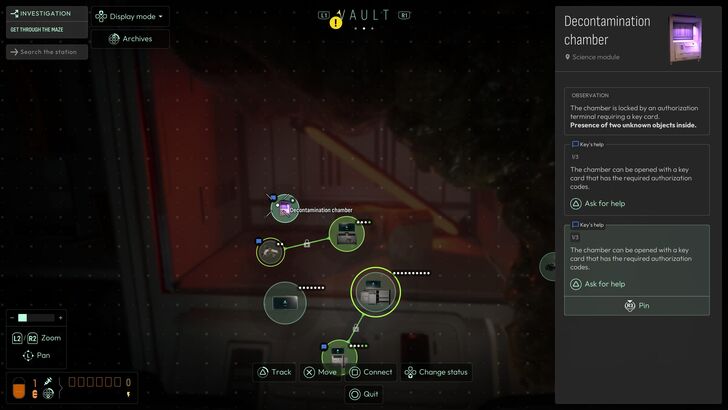
A huge part of that comes from the "Vault," which is essentially your mind laid out like a whiteboard. Every clue I find gets stored here, and I can move things around, connect ideas, and basically go full red-string conspiracy mode trying to make sense of it all. It’s not just a menu, it’s where the investigation actually happens.
If anything, the Vault also doubles as your quest log, but in a much more organic way. Instead of being told what to do next, I’m forming my own conclusions based on what I’ve connected. And once everything lines up, the game expects me to act on that conclusion, whether it’s dangerous or not.
This is great because it puts the responsibility entirely on me. The game doesn’t handhold or spell things out, it trusts me to think, to interpret, and to decide. That makes every breakthrough feel earned, because players are not just progressing through the game, but genuinely uncovering something piece by piece.
Hunting for Clues with Sonar
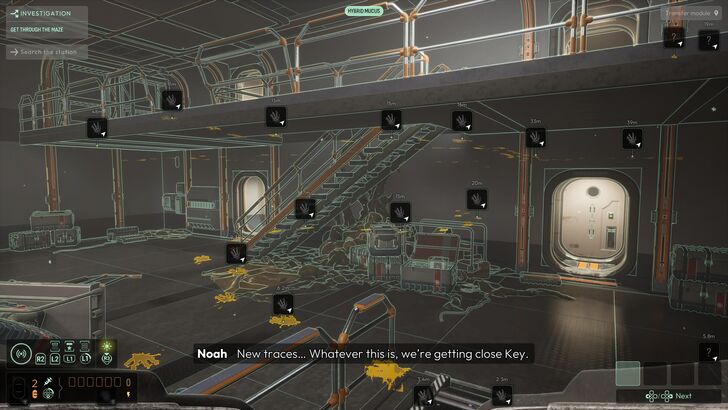
There’s also a surprising layer of challenge in how I actually gather clues. It’s not just about walking around and conveniently stumbling into important details. No, I’m actively analyzing specific components of the environment, breaking things down, and using tools like sonar to locate anything that might be useful.
But I can’t just spam analysis either. Analyzing the components of things drains energy and that resource is limited (unless you toggle unlimited use in the difficulty setting). So every analysis becomes a decision of whether this is worth using now, or should I save it in case I find something more important? That restraint adds a subtle survival element to the experience.
Optional AI Guidance (That Sometimes Feel Mandatory)
Noah also has access to an AI assistant that can nudge him in the right direction by offering additional clues. I like that this is tied to the difficulty settings as you can toggle it on if you want a bit of guidance, or keep it off for a more hands-off, self-driven experience. But in practice, I found myself in a weird spot with it. It’s a nice feature to have, sure, but there were moments where it felt like the game expects you to rely on it, especially when certain clues lean a bit too vague for their own good.
For example, I ran into a situation where I needed a specific item locked inside a containment chamber. I figured out that an ID would unlock it, and after exploring, I found two miner IDs that seemed to fit. Naturally, I tried both… and nothing happened. It was only after I checked in with the assistant that I realized there was actually a third ID and I needed to find it in their room.
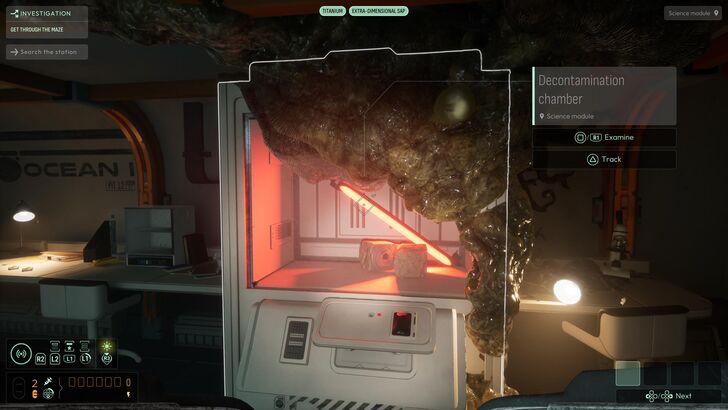
See how that creates a bit of friction? The satisfaction of solving a puzzle on your own can get undercut when progress hinges on information that isn’t clearly said unless you use the assistant. So while the additional clue is technically optional, it can sometimes feel like a safety net the game subtly pushes you toward, whether you want that help or not.
Clues Lead to Dead Ends Instead of Breakthroughs
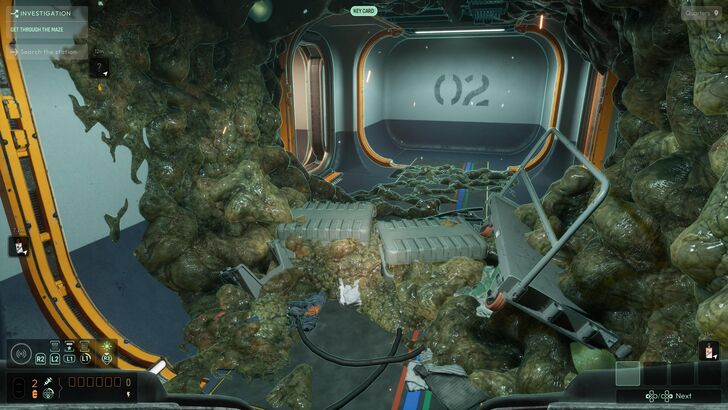
This ties into another issue I kept running into which is that some clues don’t just challenge you, they lead you straight into roadblocks. Going back to that earlier example, even after figuring out where I needed to go, I arrived only to find my path completely blocked by some bit of growth. No way forward, no workaround, just a hard stop.
At that point, I realized I probably wasn’t meant to solve that thread yet. So I’d backtrack, wander around, and start chasing other leads until something finally clicked and unlocked a bit more progress. And that’s pretty much how a large chunk of the game plays out. I’d gather multiple threads, follow one, hit a dead end, pivot to another, and repeat the process until the right sequence revealed itself. In theory, that kind of non-linear investigation sounds engaging, but in practice, it can feel like I’m spending more time circling the same spaces than actually making meaningful progress.
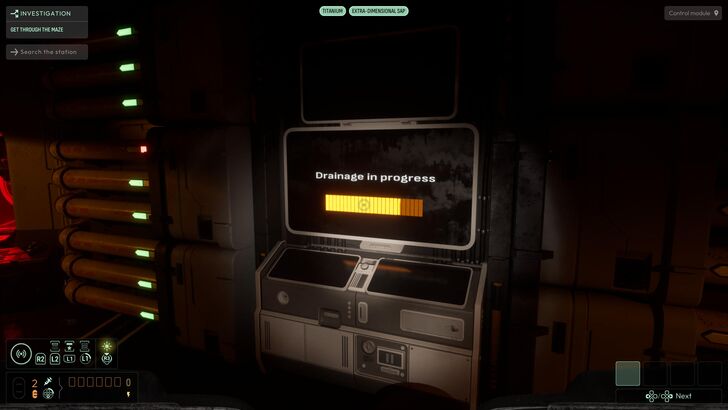
This affects pacing in a big way because instead of a steady flow of discovery, the experience can turn into trial-and-error navigation. Less about solving a mystery through deduction, and more about figuring out which path the game will allow you to complete first.
Decent Mystery Carried by Atmosphere
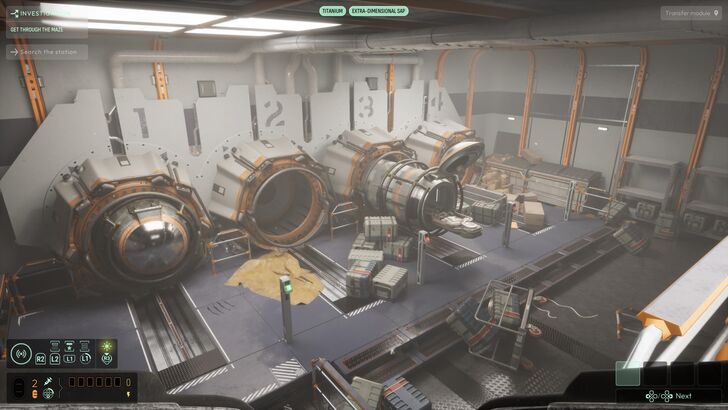
At the very least, the story itself is decent, and I did enjoy how it unfolds through the act of investigation. There’s something satisfying about piecing together what happened and realizing that the narrative isn’t just told to me but something I actively uncover through gameplay. That connection between story and mechanics is easily one of the game’s stronger points.
That said, it doesn’t always hit as hard as it could. Some parts feel a bit underdeveloped, and I think a big reason for that is because the game doesn’t fully lean into being narrative-driven. The focus is clearly on the investigation, which is fine, but it does mean that certain story beats don’t get the weight or depth they probably deserve.
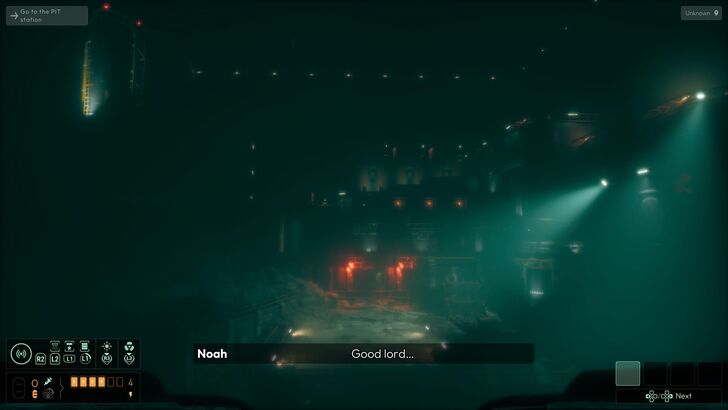
What I did consistently like, though, is how well the game sells its underwater setting. There’s a strong sense of isolation in the way everything looks and feels. Being surrounded by darkness, relying on limited tools, and never quite knowing what’s out there. It builds an atmosphere that complements the mystery really well.
Even when the story itself doesn’t fully land all the time, the experience of uncovering it still feels engaging. The atmosphere does a lot of the heavy lifting, keeping you immersed and pushing you forward, even when the narrative isn’t at its strongest.
Disorienting Swimming Controls
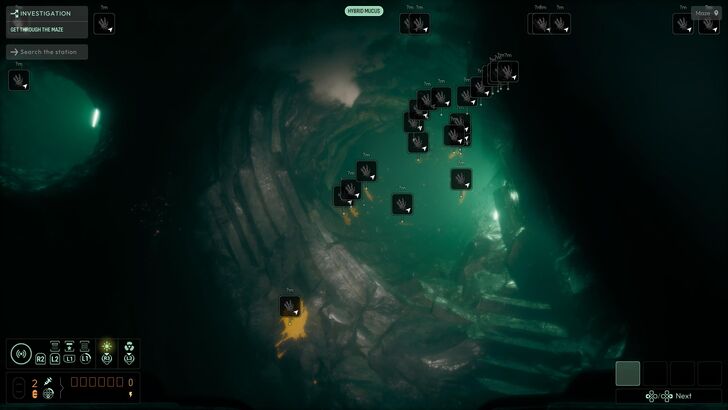
Which brings me to a less positive point: the controls. I understand what the game is going for here. Swimming underwater is supposed to feel disorienting. You’re not meant to have a perfect sense of direction, and that uncertainty fits the tone of the game. But there’s a difference between intentional disorientation and controls that are just confusing.
There were moments, especially when navigating tight underwater tunnels, where I’d suddenly find myself upside down or turned around—even though I hadn’t actually changed the direction of the joystick. It creates this disconnect where I’m no longer thinking about the environment or the puzzle, but instead fighting to reorient myself with the controls.
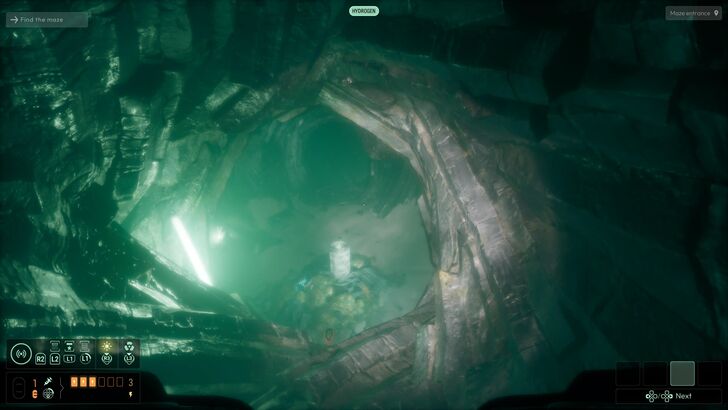
I get that this might be the game committing to the bit, trying to fully sell that underwater instability. But honestly, the setting already does a great job of making me feel disoriented on its own. Adding control inconsistency on top of that doesn’t enhance the experience, it just gets in the way.
Inconsistent Lighting Undermines Underwater Illusion
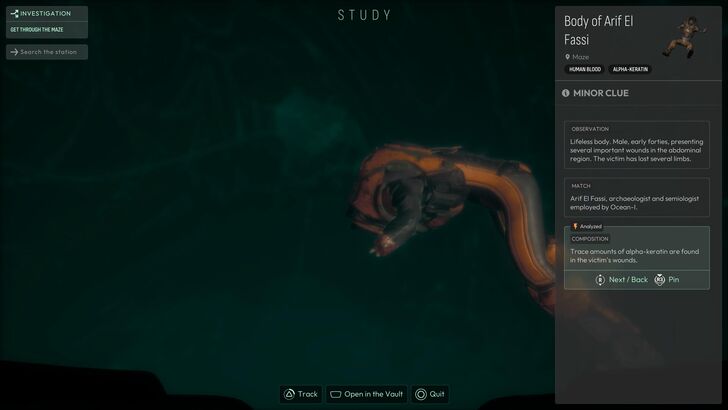
Additionally, I ran into some lighting issues that stood out more than they probably should have. I understand that when you’re deep underwater, visibility is naturally limited. A flashlight not reflecting much, or barely illuminating anything at all, makes sense in that context, and it actually helps reinforce the feeling of being in an unforgiving environment.
But the inconsistency comes in when the same kind of darkness carries over into specific indoor station areas. Inside enclosed spaces, I would expect my flashlight to behave more normally—bouncing off surfaces, revealing more detail, and at least giving me a clearer sense of my surroundings. Instead, it sometimes still feels overly muted, almost as if the lighting rules don’t change even when the environment logically should.
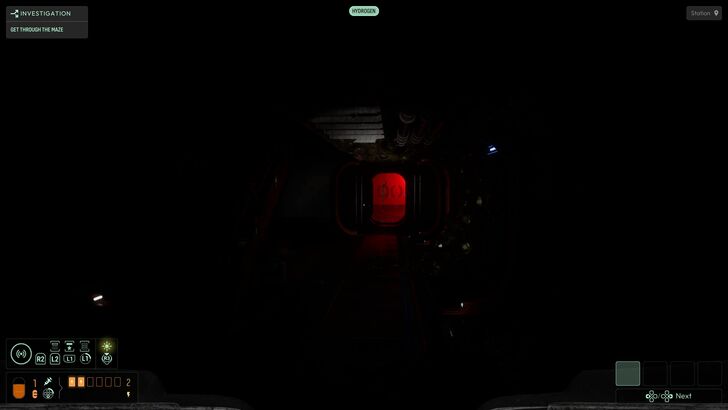
This doesn’t just affect spatial awareness, it also starts to make the design feel lazy. When lighting behaves the same way in different environments, it becomes harder to immerse yourself in the game because it’s naturally harder to see. It feels like Cthulhu isn’t adjusting its systems to match its own spaces.
Minor Input Delays
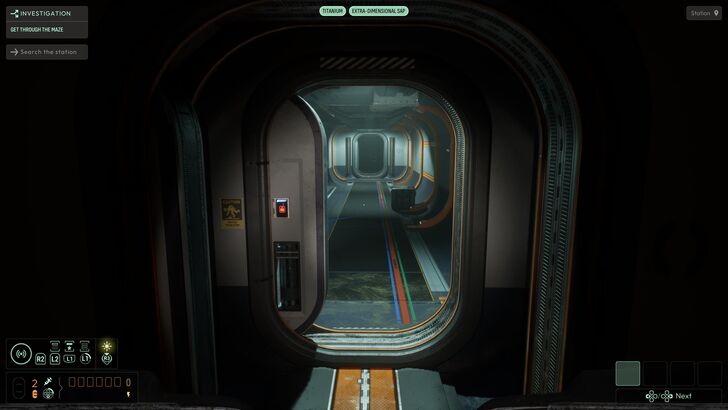
There were also a few moments where inputs didn’t feel as responsive as they should be. Sometimes pressing a button wouldn’t register immediately, and other times the input just didn’t go through at all.
That said, these weren’t constant issues or anything that ever truly broke the game for me. They felt more like occasional bugs or rough edges rather than anything fundamentally wrong with the systems.
Is Cthulhu: The Cosmic Abyss Worth It?
An Underwater Mystery Worth Figuring Out
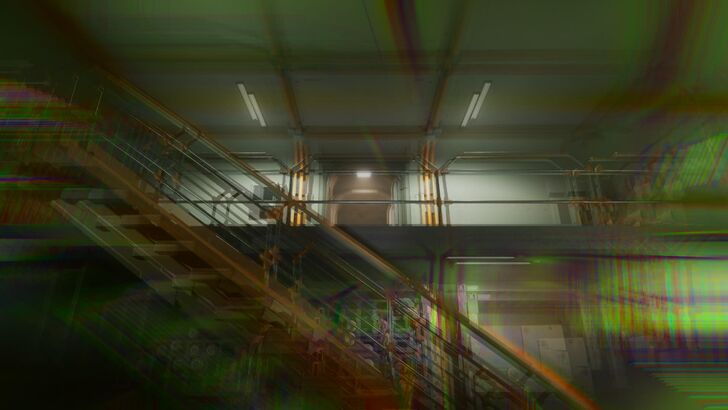
All in all, Cthulhu: The Cosmic Abyss is a game with genuinely great mechanics that occasionally ends up stumbling over its own design choices. There’s a lot here that I appreciate, especially if you enjoy deep underwater mysteries and systems that make you think critically rather than just follow markers. In those moments, the game really does deliver something engaging, especially through its layered investigation mechanics and how you actively piece everything together.
If you’re someone who enjoys slow-burn exploration, heavy clue analysis, and systems that reward patience and deduction, then you’ll definitely find something worthwhile here. There’s a satisfying core experience buried beneath all the friction, and when it clicks, it really clicks.
But if you’re expecting a smoother, more consistently guided experience (or something that balances its ambition with tighter execution) you might find yourself fighting against its design just as much as you’re solving its mysteries.
Cthulhu: The Cosmic Abyss FAQ
What Are the Difficulty Settings of Cthulhu: The Cosmic Abyss?
The difficulty options are Normal and Story mode. Normal leans more into the intended survival and investigation balance, while Story mode, on the other hand, is designed to prioritize narrative flow.
There are also manual toggles that let players fine-tune their experience. These include options like unlimited analysis and increasing the amount of guidance provided by Noah’s AI assistant.
Game8 Reviews

You may also like...
 |
Resident Evil Requiem (RE9) Review Action, Shooting, Survival, Horror |
 |
Crisol: Theater of Idols Review Action, Adventure, Shooting, Survival, Horror |
 |
BrokenLore: UNFOLLOW Review Adventure, Horror |
 |
Cronos: The New Dawn Review Action, Shooting, Survival, Horror |
 |
Cthulhu: The Cosmic Abyss News |