



Big Walk is a cooperative puzzle adventure where friends explore, communicate, and solve challenges across a sprawling island. Read our review to see what it did well, what it didn't do well, and if it's worth buying.
List of Contents
Big Walk Review Summary
| Pros | Cons | |
|---|---|---|
| Story 6/10 |
・Player-driven moments create memorable shared experiences |
・Minimal traditional narrative and worldbuilding |
| Gameplay 9/10 |
・Creative communication-driven cooperative puzzle design |
・A few puzzles are less inventive than the game’s strongest challenges |
| Visuals 9/10 |
・Excellent environmental readability and handcrafted atmosphere |
・Performance issues occasionally prevent the visuals from looking their best |
| Audio 8/10 |
・Atmospheric ambient soundscape and immersive proximity chat |
・Voice chat volume and calibration required additional adjustments |
| Value for Money 10/10 |
・Exceptional amount of replayable cooperative exploration and shared experiences |
・The experience is designed primarily around multiplayer play |
Disclaimer: This score is currently tentative. Big Walk has not yet been fully completed for review purposes, and the final score may be adjusted after the remaining content has been played through.
Big Walk Overview
When Communication Becomes the Game
Social-first cooperative games have become increasingly common in recent years, often relying on simple mechanics, a strong atmosphere, and the unpredictability of playing with friends to create memorable moments. Titles such as PEAK demonstrate how effective that formula can be, with much of the enjoyment coming from communication, improvisation, and the chaos that emerges when a group tries to solve problems together.
Big Walk clearly belongs to that same family of multiplayer experiences, but it stands out because communication is not just the source of the entertainment; it is one of the game’s core mechanics. Gestures, positioning, environmental awareness, and improvised explanations frequently become just as important as the puzzles themselves. Rather than relying on a traditional story or a constant stream of new mechanics to maintain interest, Big Walk hands players a small set of intuitive tools and trusts cooperation, experimentation, and shared discovery to carry the adventure forward.
A Cooperative Narrative Built on Shared Discovery
A Journey Without a Script
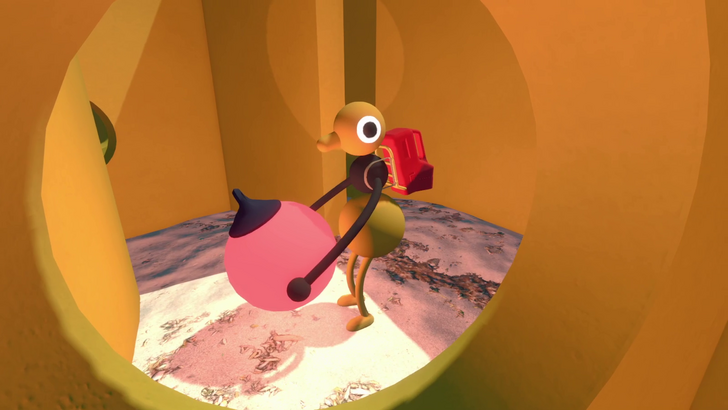
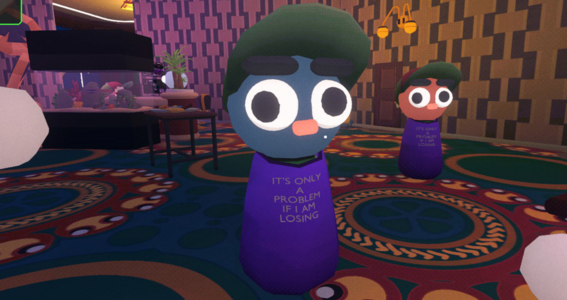
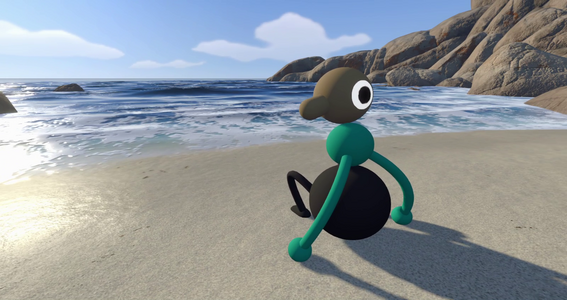
Big Walk takes place on a rugged island filled with forests, cliffs, hidden paths, and environmental puzzles designed for cooperative exploration. Players control small customizable explorers, but the game offers almost no explanation for who they are, why they’re there, or what larger purpose the island serves. There are no major NPCs, named protagonists, or cinematic story beats waiting to push the adventure forward, and that absence of traditional storytelling feels entirely intentional.
What makes the island interesting is that it occasionally looks like it’s building toward something much bigger. A massive black sphere looms in the distance behind a towering dividing wall, creating the impression that some larger mystery or revelation might be waiting beyond it. Yet when the game finally asks players to head in that direction, it functions more as a progression milestone—another set of puzzles to solve—reinforcing that Big Walk is ultimately built around shared exploration and communication rather than a traditional narrative journey.
That approach ended up working better than I expected. I never felt compelled to search for hidden lore or piece together a deeper mythology because the game never really asks players to think that way. Instead, the moments that stuck with me were the ones my group created ourselves: trying to direct a friend through a soundproof glass wall, misunderstanding instructions during a puzzle, or having a casual conversation abruptly interrupted by someone slipping off a cliff. Big Walk may not offer a traditional story to remember, but it consistently creates situations that naturally become stories worth retelling afterward.
Communication Is the Heart of the Gameplay Loop
One Giant Playground
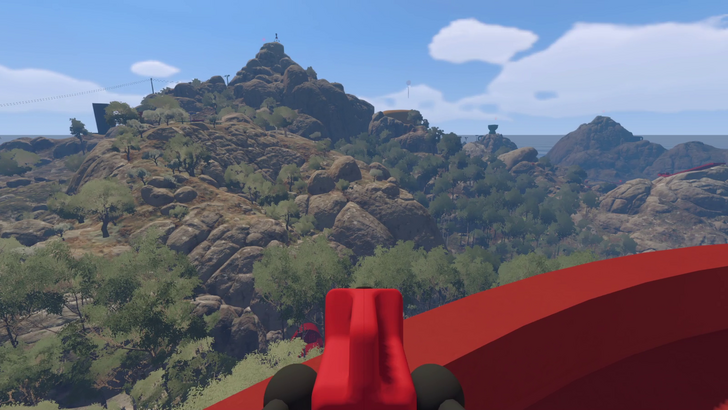
Big Walk revolves around cooperative exploration and environmental puzzle-solving. Groups travel across a large island searching for puzzle towers, hidden paths, and bean-shaped collectibles that eventually contribute toward unlocking new areas and systems. The basic rhythm is simple—explore, communicate, solve puzzles, and push deeper into the island—but the game continually finds new ways to make that loop feel fresh through cooperation and experimentation.
Exploration Through Cooperation
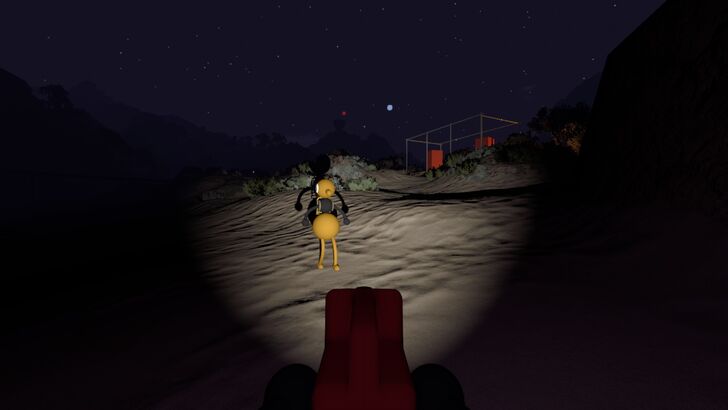
Big Walk’s greatest gameplay strength is how consistently it reuses simple ideas in surprising ways. Rather than introducing increasingly complex systems, it repeatedly places familiar interactions into new situations that force players to communicate, improvise, and rethink tools they already understand. Whether coordinating through a soundproof glass wall or trying to recreate information from a distance, the game turns cooperation itself into the heart of the puzzle-solving process.
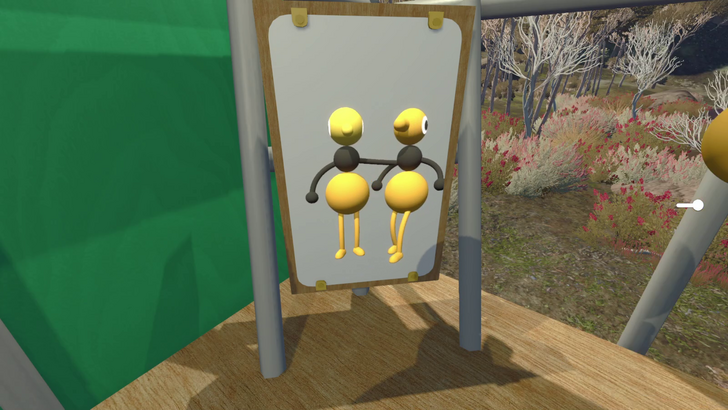
That philosophy is apparent from the moment players spawn into the world. Instead of overwhelming new players with lengthy tutorials, Big Walk introduces its core interactions through small interactive stations that encourage experimentation and discovery. The onboarding works particularly well because it establishes the game’s central design principle immediately: players are expected to learn by doing, not by following a checklist of instructions.
| MAIN LOOP | DESCRIPTION |
|---|---|
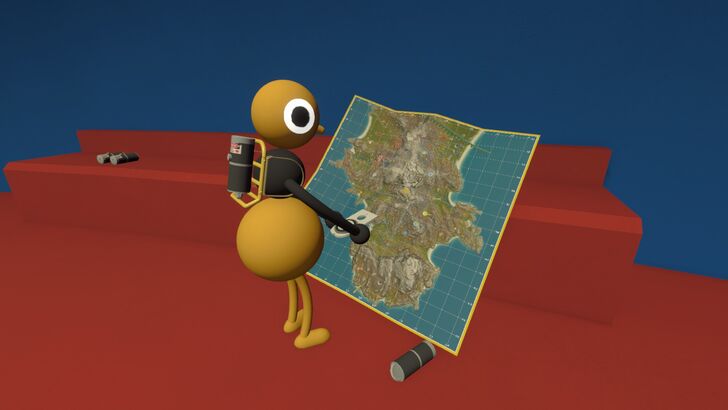 Explore the island Explore the island |
Search for challenges, hidden paths, and collectible gourds scattered across the map. |
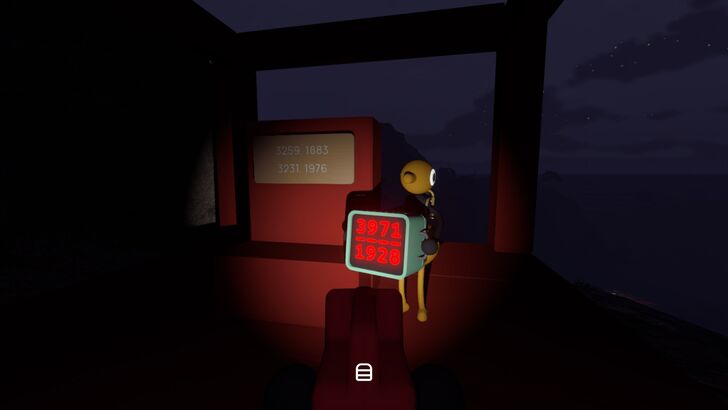 Communicate with teammates Communicate with teammates |
Share observations through voice chat, gestures, and other communication tools to coordinate solutions. |
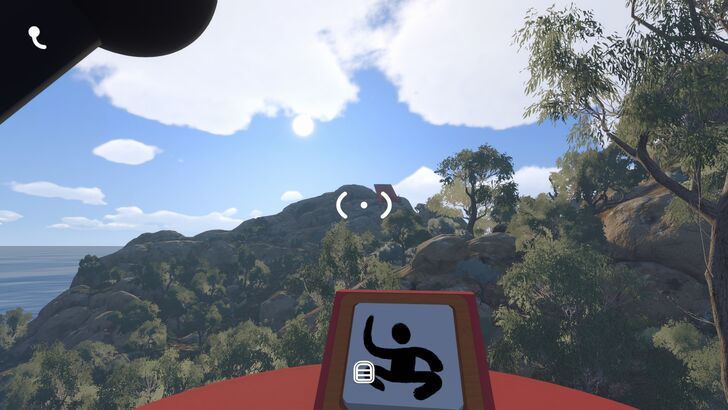 Solve environmental puzzles Solve environmental puzzles |
Combine mechanics to progress through challenges. |
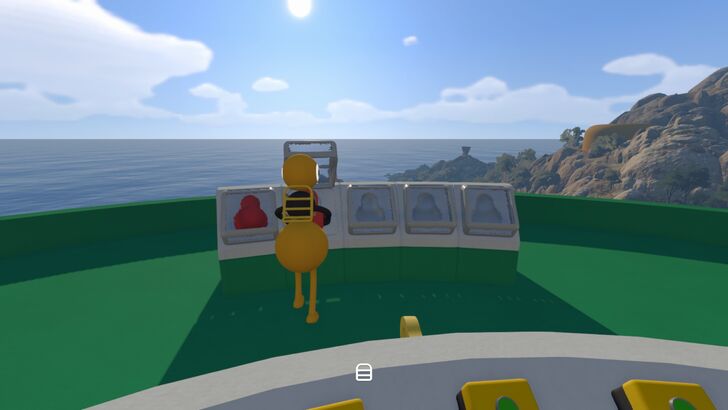 Unlock new areas Unlock new areas |
Forge keys, discover new systems, and continue pushing deeper into the island’s puzzle network. |
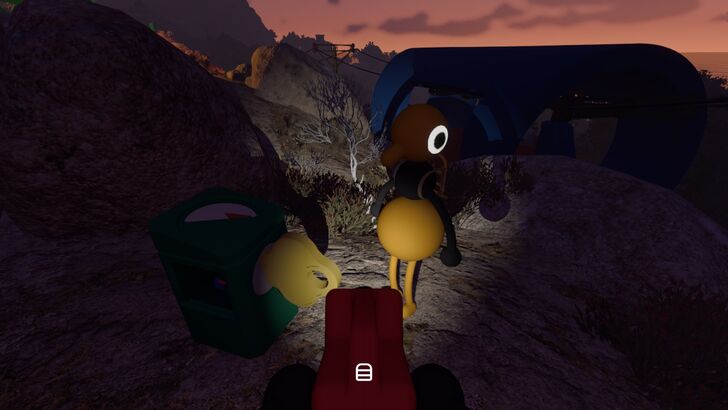
The same confidence extends to the island’s environmental design. Puzzles frequently encourage players to treat their surroundings as tools rather than simply the space between objectives, and even the day-night cycle meaningfully changes how groups approach exploration. Darkness is not merely a visual effect; it becomes a practical obstacle that forces players to coordinate around limited light sources, creating surprisingly tense and memorable moments during longer expeditions.
Straightforward Mechanics, Creative Solutions
Simple Tools With Clever Uses
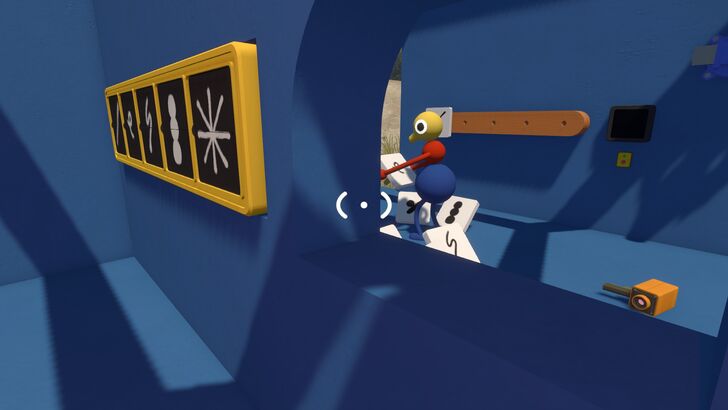
What separates Big Walk from many other cooperative puzzle games is not the complexity of its systems, but how physical and social those systems feel in practice. Communication is treated as part of the gameplay itself rather than an external convenience, and several mechanics are designed specifically to encourage players to share information in unusual ways.
That approach gives the game a surprisingly distinctive identity. Big Walk often asks players to communicate through gestures, positioning, environmental awareness, and the tools they happen to be carrying at the time, making cooperation feel much more hands-on than in most multiplayer puzzle games.
| MECHANICS | DESCRIPTION |
|---|---|
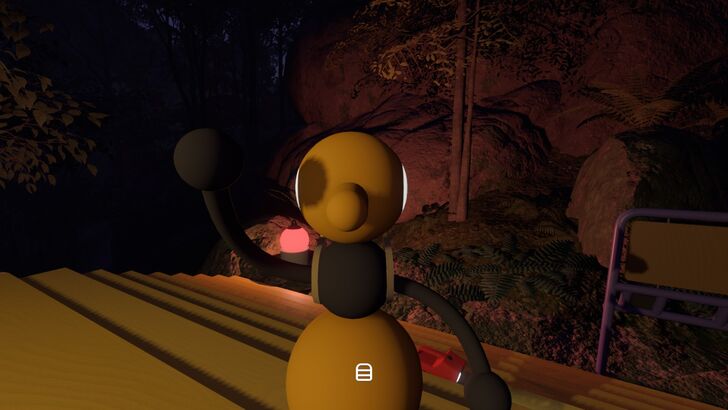 Independent Arm Control Independent Arm Control |
Allows players to point, gesture, and communicate non-verbally while solving cooperative puzzles. |
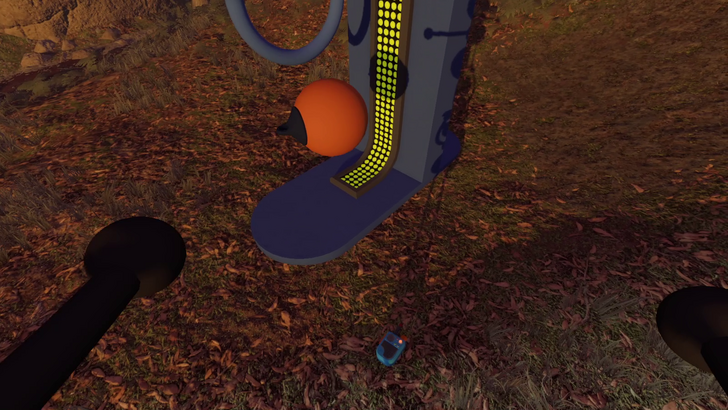 Physics-Based Interaction Physics-Based Interaction |
Encourages creative use of terrain, slopes, and throwable objects instead of relying solely on scripted puzzle solutions. |
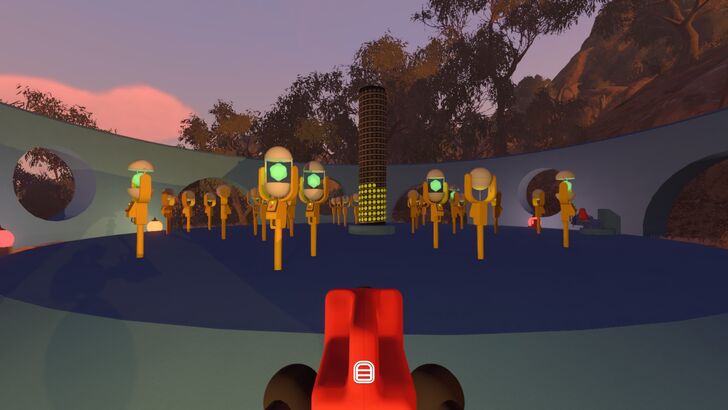 Dynamic Lighting Dynamic Lighting |
The day-night cycle changes visibility and often requires groups to manage their own light sources while exploring and solving puzzles. |
The strongest part of these mechanics is that they rarely feel isolated from one another. A gesture can become the key to understanding a puzzle, physics can turn the environment into a tool, and lighting can force players to rethink how they coordinate their actions in the dark. That constant overlap between systems keeps the cooperative problem-solving feeling fresh even when the individual mechanics themselves remain relatively simple.
Where the Experience Stumbles
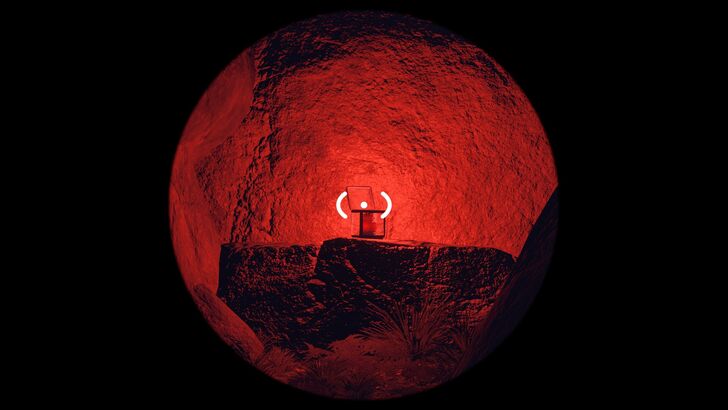
Big Walk’s strongest ideas make its weaker moments stand out more than they otherwise would. Most challenges successfully build upon familiar mechanics instead of constantly introducing new ones, rewarding players who pay attention to how earlier ideas can be applied in different contexts. A light used to reveal a distant landmark later becomes part of a puzzle that requires teammates to split up, while a simple object-throwing mechanic evolves into the solution for navigating a maze without regrouping.
| MECHANICS | DESCRIPTION |
|---|---|
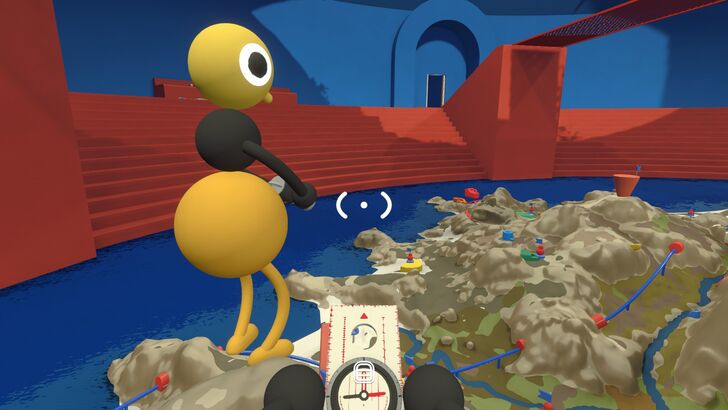 Environmental collision Environmental collision |
Small rocks and props can stop movement too abruptly instead of letting players naturally slide past them. |
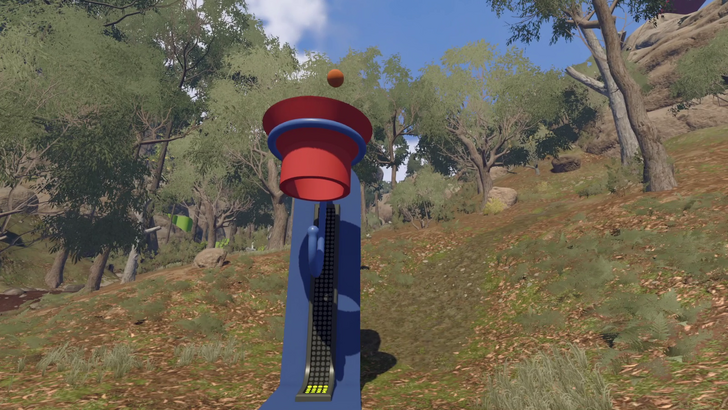 Uneven puzzle quality Uneven puzzle quality |
A few challenges feel noticeably less inventive than the game’s stronger puzzles, offering simpler solutions that don’t make the same creative use of its mechanics. |
A handful of puzzles, however, fall short of that same standard. One challenge hints at map coordinates before players have access to the information needed to interpret them, turning what should have been a satisfying deduction into unnecessary guesswork. Exploration can also feel clumsier than intended when small pieces of scenery abruptly halt movement instead of allowing players to naturally slide past them.
Why the Puzzles Keep Working
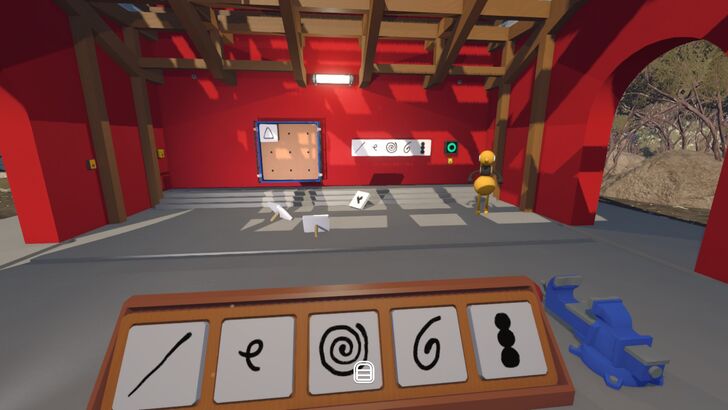
Where Big Walk truly shines is in how naturally it turns simple interactions into memorable cooperative experiences. The game rarely relies on complicated systems to create engaging moments; instead, it constantly encourages players to communicate, experiment, and bounce ideas off one another. That focus on cooperation makes even small discoveries feel rewarding because progress is almost always the result of shared problem-solving rather than a single player carrying the group.
| MECHANICS | DESCRIPTION. |
|---|---|
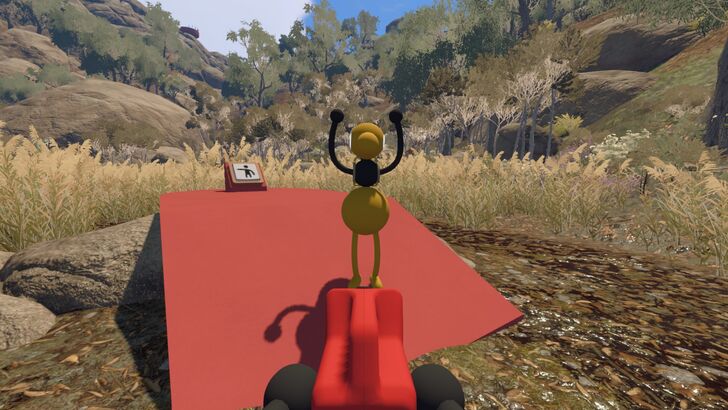 Communication-driven puzzle design Communication-driven puzzle design |
Cooperation is central to solving challenges. |
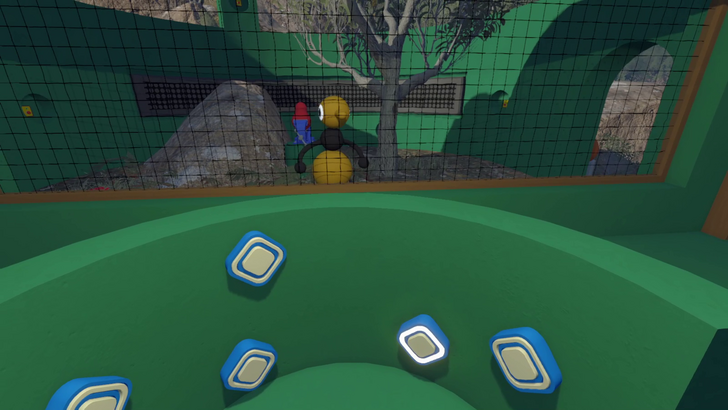 Creative reuse of mechanics Creative reuse of mechanics |
Familiar tools are repeatedly applied in surprising new situations that keep puzzles feeling fresh. |
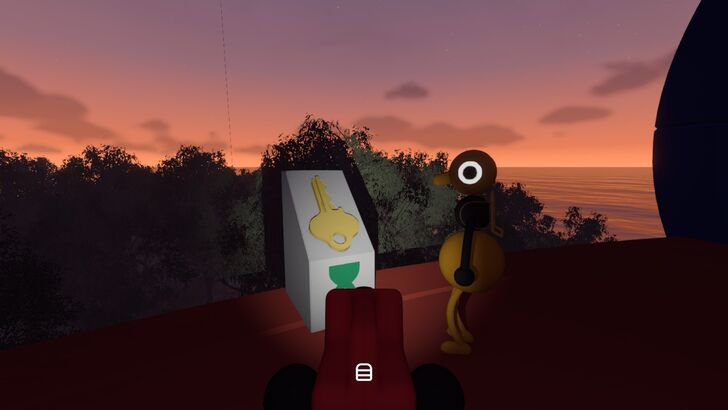 Exploration progression Exploration progression |
Keys, equipment, and discoveries steadily encourage further exploration across the island |
That same design philosophy also gives the island an impressive sense of momentum. Bean-shaped collectibles contribute toward forging new keys that unlock additional areas and systems, while useful equipment and discoveries found along the way continually expand how groups explore the world. The result is an exploration loop that consistently rewards curiosity, making it remarkably easy to keep saying, "Let’s see what’s over there," one more time.
A Smooth Adventure Interrupted by Uneven Optimization
Consistent Stability With Occasional Hiccups
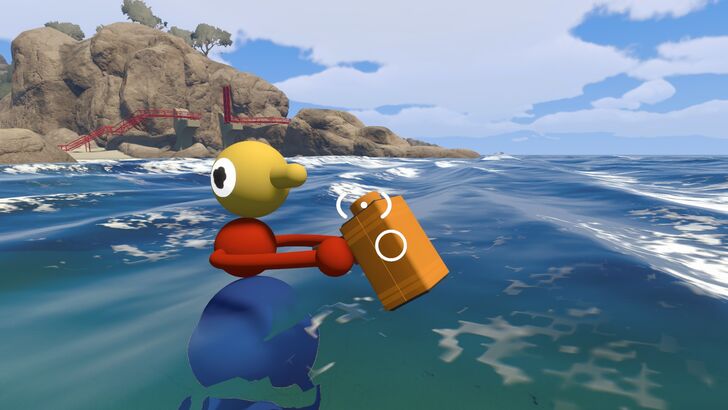
From a stability standpoint, Big Walk is in reasonably good shape. Throughout my time with the game, I didn’t encounter crashes, progress-blocking bugs, or major technical issues that prevented my group from continuing our sessions.
The main technical weakness is optimization. Even on hardware that comfortably meets the recommended specifications, I still experienced noticeable frame drops and uneven frame pacing while playing on Medium settings. The game remained fully playable throughout, but the inconsistent performance was distracting enough to occasionally pull attention away from exploration and puzzle-solving.
Sound That Serves the Adventure
Atmosphere Through Restraint
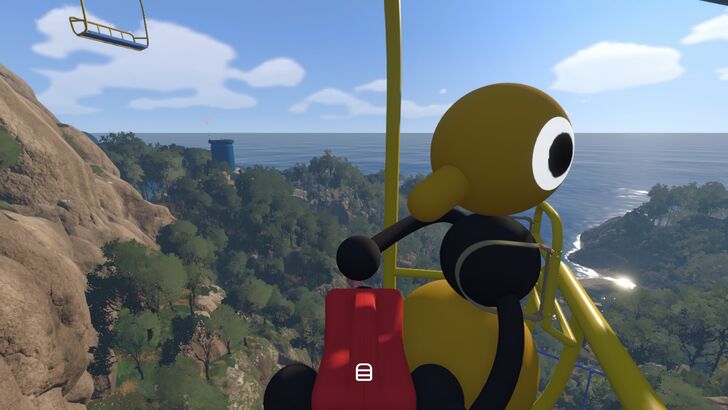
The same restraint carries over to the audio. Aside from chirping birds, crashing waves, rustling leaves, and the voices of whichever unfortunate friends joined the walk, Big Walk remains surprisingly quiet throughout much of the adventure. Those ambient sounds are crisp and grounded, giving the island a tangible sense of place without constantly competing for the player’s attention.
The standout is the game’s proximity chat. Conversations naturally fade with distance, echo through enclosed spaces, and even change when transmitted through walkie-talkies, making communication feel like a physical part of the world rather than a simple voice channel layered on top of it. That added sense of presence strengthens the cooperative experience by making distance and positioning meaningful factors during exploration and puzzle-solving.
The implementation is not perfect, however. My friend and I compared the in-game voice chat against Discord to rule out an issue with our setups, and Big Walk’s default voice volume was consistently much quieter. Because the available audio settings offered little room to compensate during our review period, communication sometimes required more adjustment than it should in a game that relies so heavily on teamwork. A post-review patch later improved the original low-volume issue by automatically boosting quieter microphones toward the intended volume, although the adjustment is handled by the game itself rather than through player-controlled volume sliders.
Is Big Walk Worth It?
Every Step Accounted For
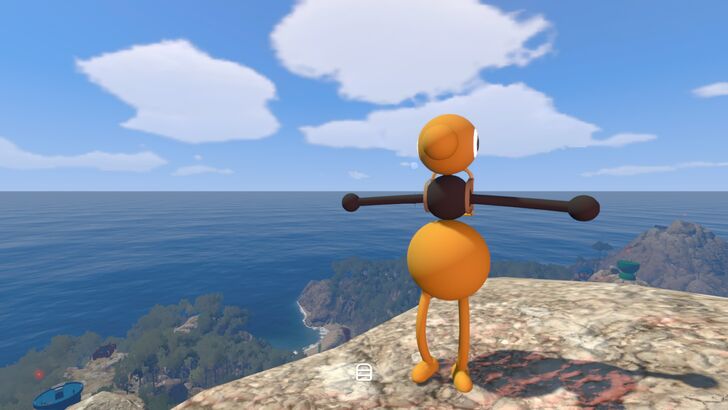
What stayed with me most after finishing Big Walk was how naturally it turned ordinary cooperation into memorable stories. The puzzles themselves are enjoyable, but the moments I kept thinking about afterward were the ones that emerged from wandering across the island with friends, misunderstanding each other’s instructions, improvising solutions on the fly, and laughing at the inevitable accidents that followed. Few multiplayer games make those unscripted interactions feel so consistently central to the experience.
Big Walk is easiest to recommend to players who enjoy exploring, experimenting, and solving problems together, but more than anything, it is a game about finding different ways to communicate. Whether through voice chat, gestures, whiteboards, or the environment itself, many of its best moments come from groups learning how to share information and coordinate under unusual circumstances. Its occasional technical issues and uneven puzzles keep it from feeling completely polished, but they do little to diminish an adventure that consistently understands how much fun cooperative communication can be when the game is built around it.
Game8 Reviews