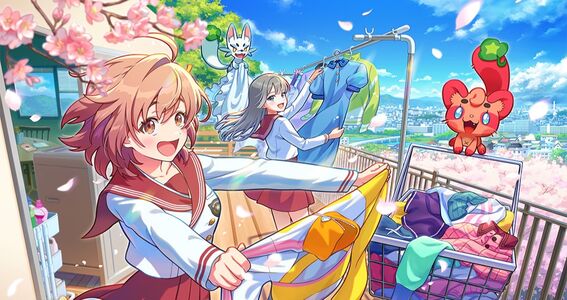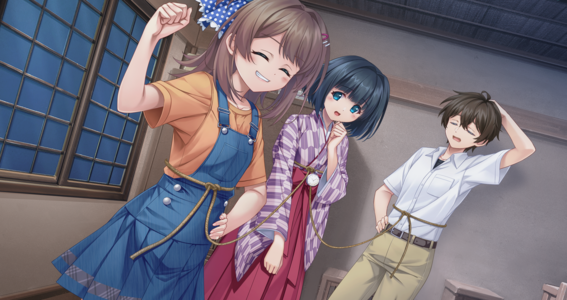




Be Missed and Remembered tells the story of a lone girl trapped as a monster, and the friends willing to sacrifice everything to free her. Read on to see what this kinetic visual novel gets right, where its ending falls flat, and our final verdict.
Overview
What is Be Missed and Remembered: The Letter from Mayoiga?
Be Missed and Remembered: The Letter from Mayoiga is a kinetic visual novel centered around a lonely girl called Susu. As the master and sacrifice to a supernatural shrine located in the middle of a frequently-flooded lake, she has spent decades in isolation due to a remnant curse that dictates that anyone who leaves her side immediately loses all memories of her. And to make matters worse, she appears to outsiders as a terrifying smoke monster.
Her eternal isolation is challenged by the appearance of Naofuyu and Risa, a sibling pair who stumble into her life and vow to free her. Using written letters to their future selves and the forceful use of rope to keep each other close, the trio fights to outsmart the curse and bring Susu back into the world.
Be Missed and Remembered: The Letter from Mayoiga features:
⚫︎ Kinetic, linear structure and story
⚫︎ Chapter-based progression
⚫︎ Full voice acting for spoken dialogues
⚫︎ Dedicated event artworks
⚫︎ Standard VN quality of life features
| Digital Storefronts | ||
|---|---|---|
 Steam Steam |
||
| 17.99 USD |
Be Missed and Remembered: The Letter from Mayoiga Review: Feels Like a Classic in More Ways Than One
A Tale of Friends and of Sacrifice
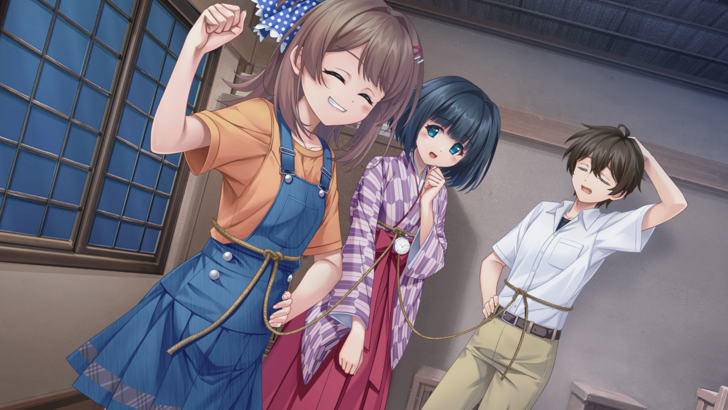
Visual novels are quite tough to get into if you’re the kind of gamer who, you know, expects actual “gameplay” in their games. After all, most visual novels involve around 90% reading and 10% thinking. There are the occasional ones offering some branching stories through dialogue options, though, such as Clannad, or some even more exceptional ones that offer entirely different gameplay loops such as Utawarerumono and its SRPG sections. But for the most part, there’s basically no “gameplay” here.
Be Missed and Remembered: The Letter from Mayoiga belongs to a subset of visual novels that is, in a sense, the most unapologetic of them all: kinetic visual novels. These are, essentially, just stories given the most basic form of interaction with its players, as well as audiovisuals to make reading less of a text-based experience. They have no branching paths, a second gameplay loop, nor a gimmick at all.
But do not let that make you dismiss it immediately. Because what Be Missed and Remembered lacks in traditional gameplay, it certainly makes up for with its story.
Warning: Massive spoilers for Be Missed and Remembered: The Letter from Mayoiga Review ahead
Be Missed and Forgotten
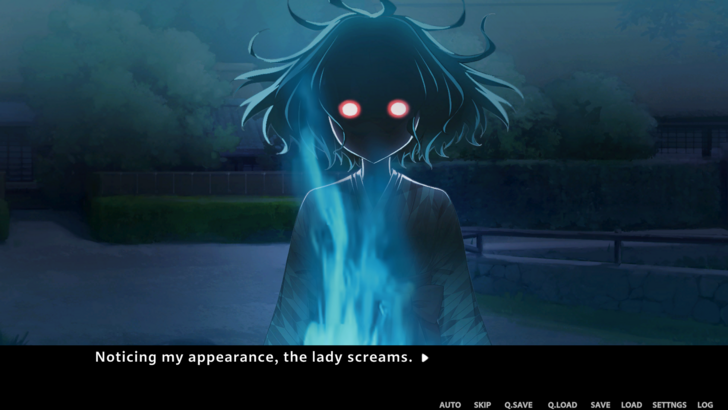
Be Missed and Remembered centers around Susu, the master and sacrifice of a Mayoiga (in this case, a supernatural shrine where people do not age or become ill) dedicated to a Water God. The shrine sits in a massive basin that stays completely flooded for all but a couple or so months every three to five years. Though she has only been isolated for twenty-odd years, the profound loneliness has completely worn Susu down. But later on, her stagnant world is turned upside down when she crosses paths with Naofuyu and Risa. Seeing her plight, the two siblings make it their mission to break the shrine’s curse and free Susu from her eternal confinement.
There’s a massive catch, though: the moment anyone steps foot outside the shrine or moves beyond two meters from its master, they immediately lose every memory of their time spent within those boundaries. On top of that, because of a particular affliction of this Mayoiga, Susu appears to human eyes as a red-eyed monster shrouded in black smoke. This illusory horror causes anyone who looks back to flee in terror, completely oblivious to whatever bond they had forged just moments prior. Naofuyu himself unknowingly fell into this exact trap once during his childhood and another during his teenage years before the main story even begins, breaking Susu’s heart twice over.
The Letter from the Past
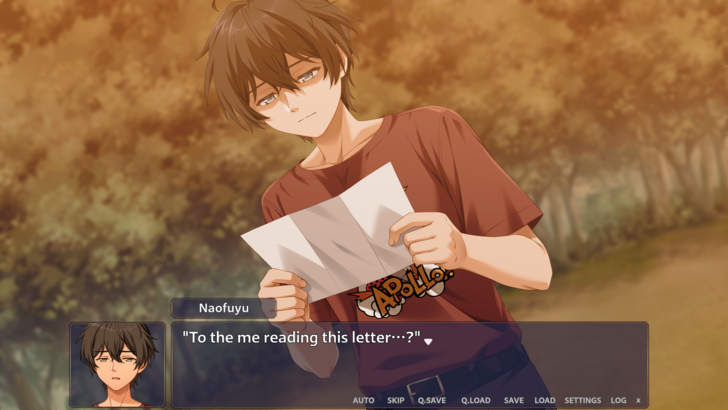
As a band aid solution to Susu’s predicament, Naofuyu devised a brilliant workaround to ensure he would return during the next dry spell: he wrote a detailed letter to his future self outlining everything he had discovered about the Mayoiga. He even went so far as to scratch the words “Susu Friend” onto his precious pocket watch, hoping the engraving would increase the chances of success.
Though it was a failure the first, and a particularly tragic second time around when both Naofuyu and Risa were scared off and traumatized by Susu’s monstrous visage, the collective weight of these lost encounters triggered a profound shift in Naofuyu’s subconscious. That is, despite not having any of the letters with him aside from a vague note on what to buy for Susu during his next visit, an unexplainable instinct pulled him back to the shrine. And strangely enough, even Risa wanted to return, though her sudden desire to return stemmed entirely from a newfound obsession with the occult born from her childhood trauma.
This is a brilliant depiction of somatic markers (emotional memory). Though Naofuyu might have forgotten the events that transpired with Susu, he remembered the emotional drive that pushed him to go back. Yes, it clashed hard with his own logic and fear, but that only made it even more human.
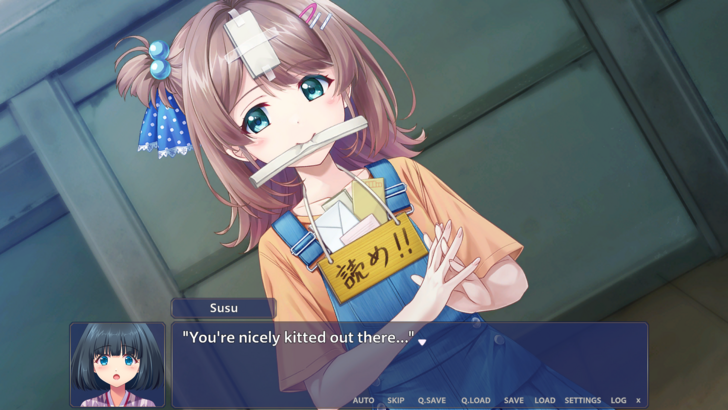
And later on, Risa, after having bonded with Susu and forming a deep, sisterly relationship, experiences this herself when she had to separate from the shrine to run an important errand for Susu. Despite her own rationality wanting to question the bizarre set of instructions she stuffed into her every single pocket (and mouth), she still follows them to the letter. She even goes out of her way to avoid every childish distraction a middle schooler would typically indulge in. Not only does this show her development as a character from the nosy, spoiled child with a massive brother complex that she had been, but also showed just how much of a reflection of her brother she was.
… She still has a massive brother complex, though.
These letters constituted the major driving force of development for Susu, Naofuyu, and Risa. Without them, the siblings would never have truly met Susu; they would never have made the sacrifice happy; and they would never have wanted to save her life. It was pulled off beautifully, and in a way that felt organic because of how much it relied on context for both the times it succeeded, and also the times it failed.
The Childishly Mature Teenagers
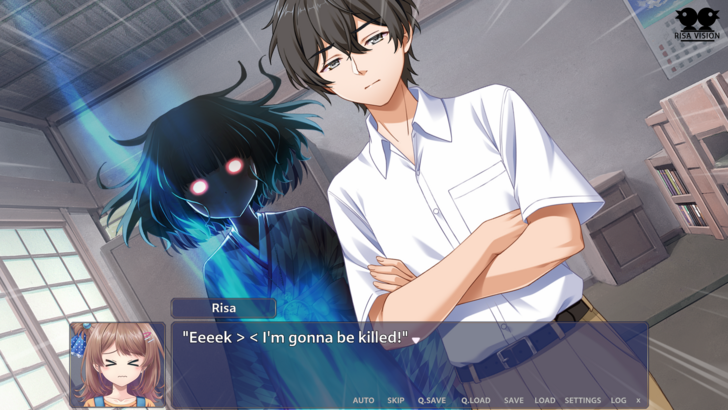
Speaking of character development, there’s a lot to appreciate in this story. Naofuyu, for example, who starts the arc as the most mature and rational character, ends it as an open-minded and deeply sympathetic character. He also had an interesting duality where he relies strictly on scientific logic in one scene, only to willingly accept mystical drivel the next. Susu as well grew from a timid girl who was far too sacrificial for her own good into someone willing to challenge fate—before giving up at the end due to the price it required from her friends.
But what really surprised me was Risa. Initially, I thought she was just a side character meant to add flavor text (like her brother complex) and much-needed innocence to every scenario. But she later on carries some of the most emotional highs in the story, such as her willingness to replace Susu as the Mayoiga’s master just so the latter can return to society. It was then that I realized that Risa wasn’t just a simple, unique character to the story.
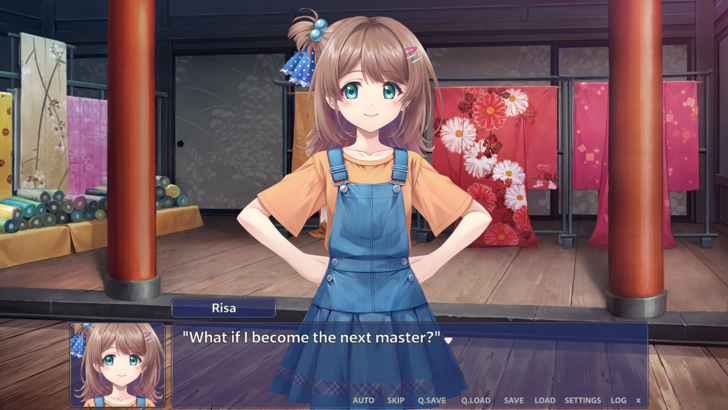
Risa was, in many ways, a reflection of her brother’s nature and Susu’s own past. Just like Naofuyu, she was willing to share the world with Susu in ways only she could. She was also willing to give up her own self as Susu’s “big sister,” just like Naofuyu did for her as her big brother. And she managed to do so while bearing many of the traits that Susu’s own little sister had; spoiled, demanding, and headstrong.
Whether the author intended it or not, Risa and Susu’s relationship becomes a healing “what if” scenario. It presents a world where Susu never suffered that tragic parting with her family—a world where she didn't break down from enduring her little sister’s fickleness before becoming the master of the Mayoiga. Instead, we get a scenario where two sisters, despite their massive differences in both nature and upbringing, can live together lovingly and rely on each other for comfort. And it was pulled off nearly flawlessly, only really suffering from some rather disproportionately cheesy lines near the end.
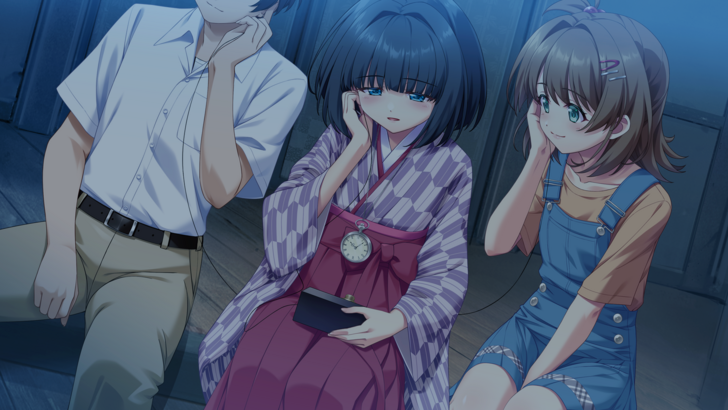
Of course, the same could be said for Naofuyu as well. However, to truly understand his development means going very deep into spoiler territory, so tread with caution.
Much like his sister, Naofuyu ultimately serves as a thematic mirror. Rather than reflecting a piece of Susu’s past, however, he reflects the tragic history of her predecessor: the previous Mayoiga master, Wakako, who she replaced so that the latter can escape. A decade before Susu took over the role, Wakako had met a man who also wanted nothing more than to make her happy and take her away from the shrine. He was even willing to isolate himself from the real world to stay by her side, exactly as Naofuyu attempts to do in the present.
But with the looming deadline of the shrine being submerged once again—and burdened by the miserable loneliness that comes with the sacrifice—Wakako made a desperate gamble. Her logic was simple: if he could somehow remember her after they were separated, there was genuine hope she could escape the Mayoiga’s curse. To test this, she took the rope that bound them within a meter of one another that not even her powers could cut, tied it directly to the torii gate, and ran. Understandably, the man's memories were immediately wiped and he went on his way. After multiple dry spells passed without a single trace of his return, Wakako realized she had lost the bet and succumbed entirely to despair.
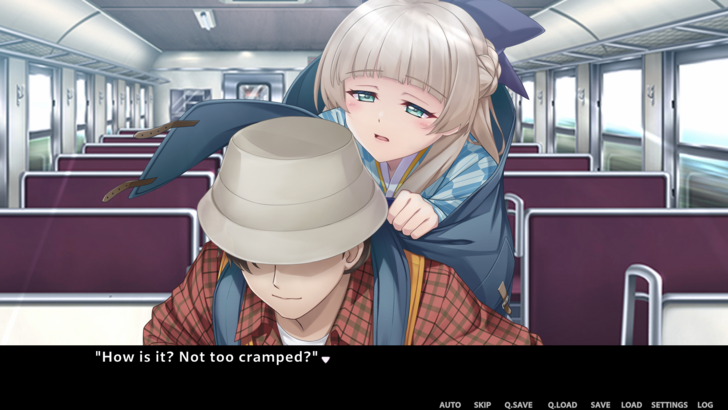
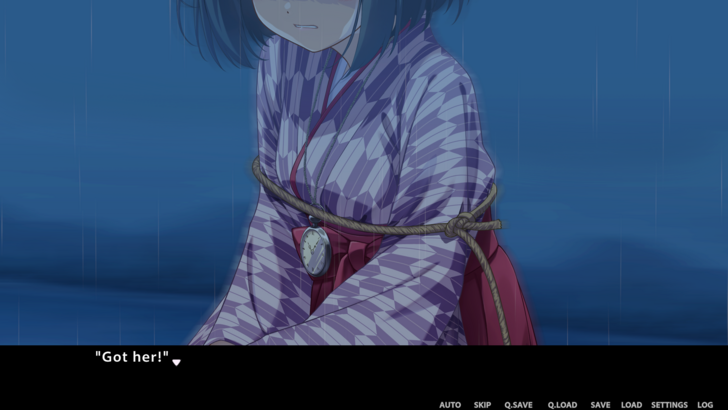
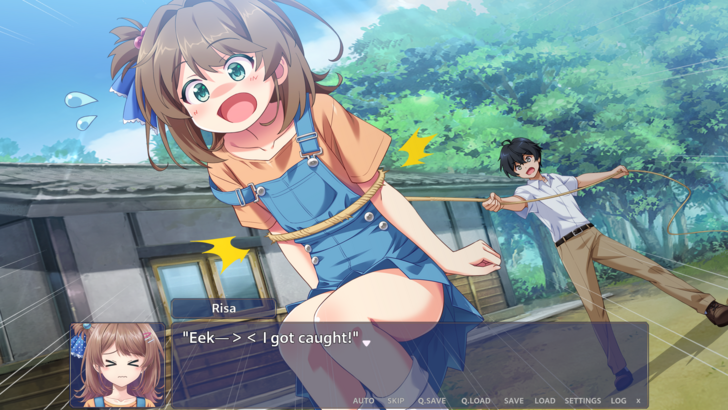
Naofuyu, meanwhile, is a representation of the same bet for Susu. But in his case, he pulled through for her—and more than once, too. She had won the same bet Wakako had made many times over, despite a couple of them ending in heartbreaks. Ultimately, Naofuyu is the one who proves to Susu that escaping the Mayoiga is actually possible. This culminates beautifully in the story’s climax: even after Susu forces him and Risa to forget about her to spare them from her despair, Naofuyu uses the exact same rope Wakako once tied to the torii gate to capture Susu and literally drag her back to them, piercing straight through his own amnesia.
It is a perfectly executed reflection. It brilliantly contrasts the tragic difference between Wakako and her lover—who had only briefly interacted out of coincidence and strained hope—and Susu and Naofuyu, who actively and relentlessly fought for each other’s happiness.
Solid Pacing, Transient Ends
That said, it’s not as if everything about Be Missed and Remembered is great, though. Yes, the character development and events are excellent as mentioned above. And yes, the pacing and opening hook is highly effective, deftly avoiding useless, multi-hour exposition to explain how everything works before starting with the actual story. But there’s a real issue as to how it executed the conclusion it has ultimately led you to.
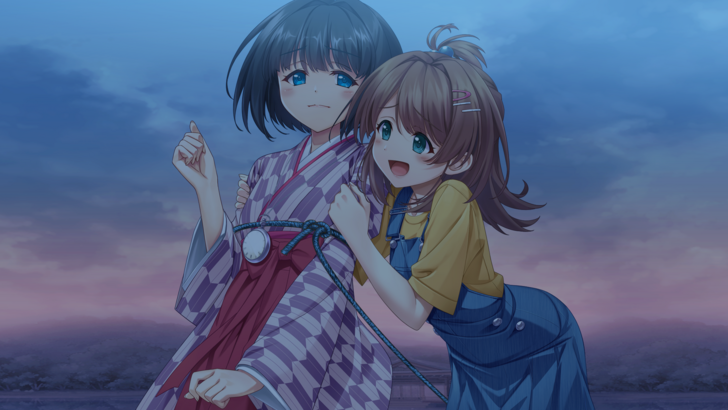
I’m talking about the ending. It’s quite forced. While Naofuyu’s emotional lassoing of Susu was spectacular and proves their unbreakable bond, it doesn't actually solve the supernatural mechanics of their predicament. The group is still left facing a massive, high-stakes dilemma to save Susu from another cycle of painful solitude: either Risa replaces her as the master, or both siblings trap themselves inside the shrine forever to keep her company.
But instead of having the characters organically fight for a third option, or the story committing to the bittersweet tragedy of making them choose, a highly convenient plot device swoops in. It completely robs the siblings of their agency, resolving the conflict for them and stripping away the emotional weight of their ultimate decision.
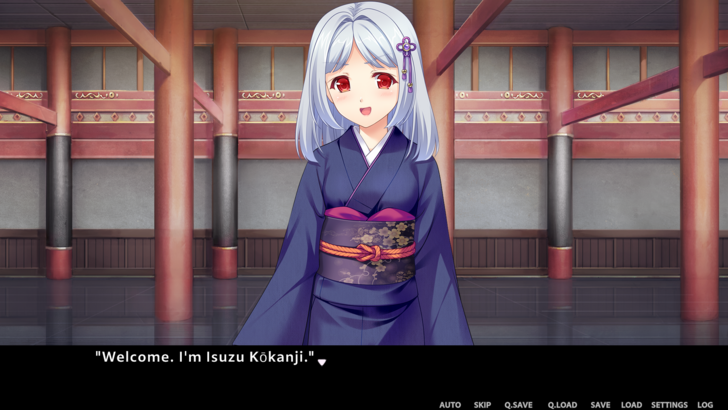
Enter Isuzu(-chan): the bubbly master of another Mayoiga who has already lived for hundreds, if not thousands of years. She is a character introduced much earlier in the story and sets herself apart from everyone else as someone who’s completely adjusted to her role as an immortal Mayoiga master. Not only that, she conveniently possesses the exact power needed to purify the tainted sacred object in Susu’s Mayoiga (fixing her monstrous appearance), and she has figured out a functional loophole to the memory restrictions so she isn't just treated as a figment of people's imaginations.
Basically a Mary Sue kinda character who acts like a Deus ex Machina to the story.
When the climax arrives, she essentially pops out of nowhere, swipes the burden of being the Mayoiga’s master from Susu, declares that Susu is now legally her daughter (handily solving the real-world ID problem), and shoos the trio away. Just like that, Susu is freed from the curse. While the lingering amnesia rule means they do forget each other shortly after leaving—a hurdle they overcome because their bond transcends mere memory, anyway—the primary conflict itself is resolved entirely by a bystander.
It is an insanely convenient development. Stripping the main trio of their agency in the final decision-making process leaves the conclusion feeling incredibly flat. This rushed wrap-up also leaves a number of baffling loose threads in its wake. Major plot points like the fate of the other families or the whereabouts of Wakako's true replacement are abandoned entirely, and even Susu’s long-awaited reunion with her biological sister feels glossed over and emotionally dissatisfying.
Like, imagine spending an entire night trying to finish a thesis with your friends, only to be asked to sit down before you start the defense because your teacher decided that you’ve done enough homework to pass anyway. It’s that kind of feeling.
The War Between “Onii-chan” and “Big Bro”
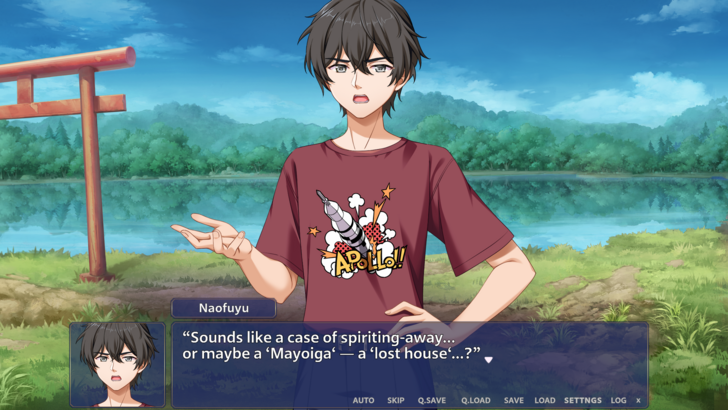
Ever read a manga where the translators swap “Onii-chan” for “Big bro,” but inexplicably leave honorifics like “-san” completely untouched? It’s a minor issue, true. I mean, I doubt casual readers would mind. But if that kind of localization inconsistency bugs you, brace yourself because there’s an even more fundamental issue with the text.
Visual novels are, in essence, entirely reliant on the details. It’s incredibly difficult to appreciate, for example, Kinoko Nasu’s writing style if the translation cuts out the mollusk references from a certain scene in his work Fate/stay night. Similarly, it’s pretty difficult to discern the timeline of specific events in Be Missed and Remembered. Like, I remember reading the early chapters where it said that Risa is eight years old and her last visit to a village was five years ago, but then claims that she was four years old during that time. Is that something similar to me, who's forever a teenager because I've never celebrated a single birthday past 19? That makes no sense.
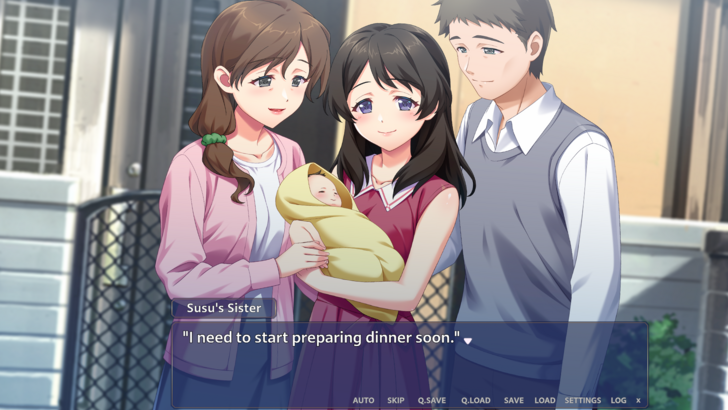
There are a number of other such discrepancies in the story, such as Naofuyu actively watching late-night broadcasts in a village that supposedly possesses no TVs, to bizarre continuity errors regarding there being two pocketwatches near the ending when there should only be one. While they’re not excessively offensive and you can pretty much automatically correct the detail through context in your head, they’re still very easy to notice and can pull you right out of the story just to make you tilt your head in confusion.
This is further exacerbated by the game’s distinctly retro, 2000s-era presentation. The Auto-scroll feature functions perfectly, sure, but the audiovisuals aren’t cinematic enough to turn the experience into an automated graphic novel like modern big hitters such as The Hungry Lamb. Instead, because the heavily static visuals force you to actively read the dialogue like a traditional book, there are no flashy aesthetic distractions to hide the textual discrepancies.
Is Be Missed and Remembered: The Letter from Mayoiga Worth It?
Oh, it’s very much worth the full price
Be Missed and Remembered: The Letter from Mayoiga is an excellent visual novel, no doubt about that. The fact that it is a purely kinetic visual novel (meaning no player choices, just straight reading) shouldn’t push anyone away from picking it up. Not only does it have a wonderful, wholesome story filled with great writing techniques, it’s also basic enough that it can serve as a great starting point for anyone interested in getting into visual novels.
The game features roughly three dozen chapters, each taking about twenty to thirty minutes to read. That easily clocks in at 12 to 18 hours of content. For a mid-length visual novel priced at $17.99 USD, that is an absolute steal, especially when titles with similar lengths and slightly higher audiovisual production values easily push past the $20 mark. While it could perhaps be priced a touch lower to achieve that true highway robbery
status, you are definitely getting your money's worth here.
Shame about the rushed conclusion, though. It could definitely be better.
FAQ
Who’s the author of Be Missed and Remembered: The Letter from Mayoiga
This visual novel was written by Tomo Kataoka, who’s widely known for his brilliant work on Narcissu
Game8 Reviews