


| Aphelion | |||
|---|---|---|---|
| Release Date | Gameplay & Story | Pre-Order & DLC | Review |
Overview
What is Aphelion?
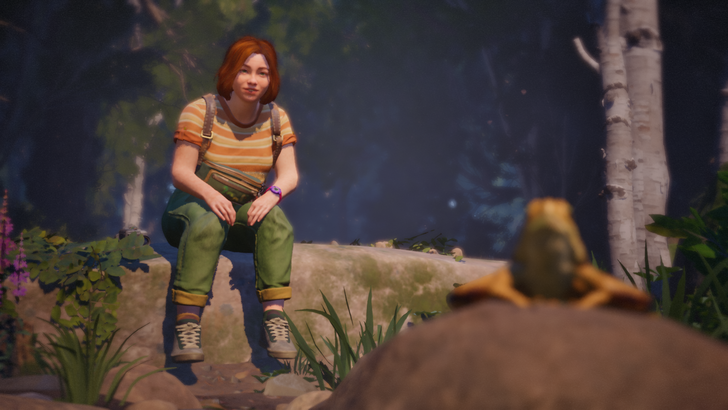
Aphelion is an action-adventure game developed and published by DON'T NOD (Life is Strange, Lost Records: Bloom and Rage). It takes place over 30 years into the future where humanity scrambles for a second chance at life beyond a decaying planet Earth. In this desperate bid for survival, a pair of astronauts are sent on a mission to survey the planet Persephone. However, an untimely crash landing leaves the pair separated, stranded, and virtually helpless.
The game was released on April 28, 2026, for PC via Steam, PlayStation 5, and Xbox Series X|S.
Aphelion features:
⚫︎ Two Protagonists: Ariane and Thomas
⚫︎ Sound-Based Stealth
⚫︎ Cinematic Narrative
⚫︎ Dynamic Traversal Mechanics
⚫︎ Tense Horror Elements
| Digital Storefronts | |||||||
|---|---|---|---|---|---|---|---|
 Steam Steam |
 PS PS |
 Xbox Xbox |
|||||
| $34.99 | |||||||
Aphelion Review: Persephone Only Looks Great From Afar
Aphelion (n.) 1. The point in an orbit farthest from the Sun.
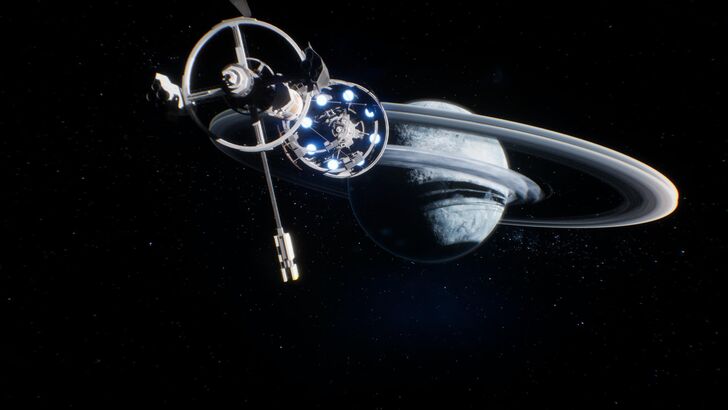
An aphelion is the moment a planet is furthest from its sun; it is the loneliest point in an orbit. This is where we find Ariane and Thomas, shivering on the surface of the planet Persephone. In Greek myth, Persephone was the goddess dragged into the cold and dark, a figure who brought winter with her and lived between two worlds.
Yet, where the myth suggests a cycle that eventually returns to the warmth of spring, Aphelion offers no such comfort; this game is trapped in its own namesake. To be at an aphelion is to be abandoned by the sun, and that is precisely how the game felt for me. Save for a few fleeting glimpses of beauty, the game is a descent into a desolate hell. Much like the planet Persephone, Aphelion is cold and, for the most part, lifeless.
It’s a Love Story Without Its Heart
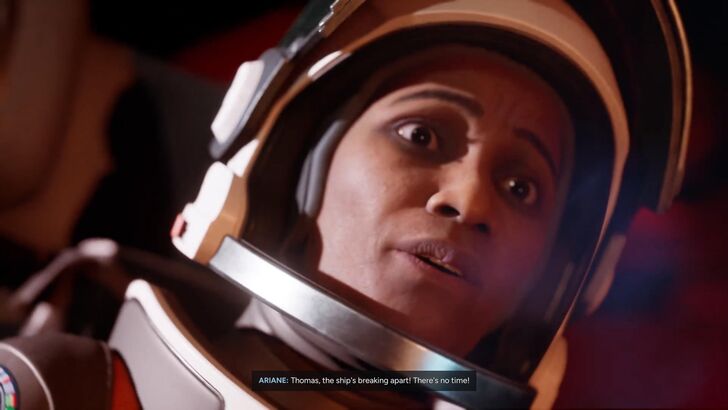
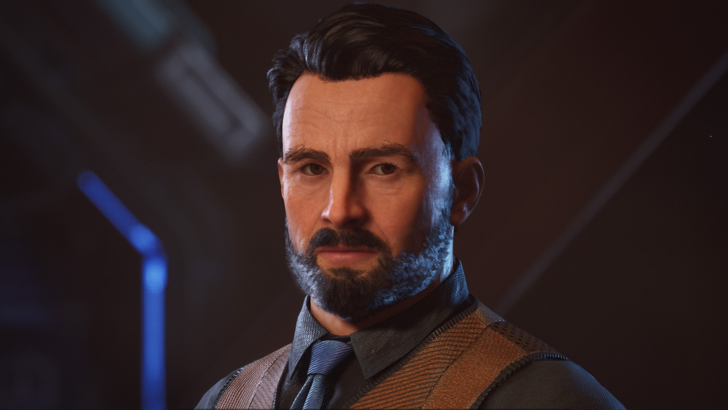
The year is 2062. Like so many stories of our future, the Earth is dying, gasping for breath thanks to climate change. Humanity’s last and desperate hope is Persephone, a frozen world that scientists believe may possess the conditions necessary to sustain human life. The European Space Agency, then, launches the Hope-01, a scientific mission to survey the planet and decide if it can truly be our new home. The mission is helmed by two astronauts: Ariane Montclair and Thomas Cross.
But space is cruel, and the mission fails before it truly begins. A crash lands them on the planet’s surface, scattering them into different regions. From there, they must survive, find each other, and finish the job. However, as they trudge through the deep snow and fight to stay alive, they learn that Perspehone is not as uninhabited as they believed, and the truth is much stranger and more dangerous.
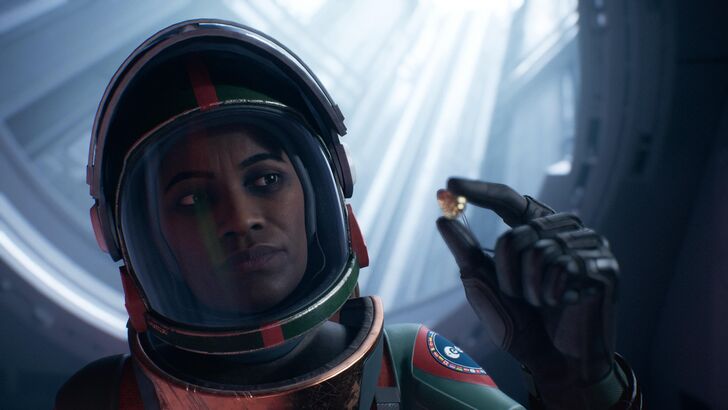
I had high hopes for Aphelion. Aside from the fact that I am a fan of most of DON’T NOD’s previous works (even the overly ambitious Vampyr), I also enjoy a good space drama that uses the cold language of science to explore the warmth of human connection.
The recently released movie adaptation of Andy Weir’s Project Hail Mary moved me deeply because it understood that space is just a vessel for the relationships we carry with us. When you are light-years away from everything you know, the person next to you becomes your entire world. I expected Aphelion to grasp this same truth. I wanted it to be a story about two people clinging to one another while the world is literally trying to pull them apart.
However, Project Hail Mary, this is not.
Even though the premise is decent enough, it fails to deliver on the promise of its own narrative. It seems to prioritize its artistic atmosphere over the human connection that should be the center of this drama. The game is beautiful to look at, sure, but it forgets that beauty alone is not enough to carry a story. It misses the mark on the very thing that usually anchors DON’T NOD’s best works: the intimacy between people.
Ariane is established as a no-nonsense, duty-bound professional. Right before they land on Persephone, she breaks up with Thomas. She views their mission as the absolute priority, and she seems to view their relationship as a distraction she can no longer afford. Thomas, in contrast, seems defined entirely by his attachment to her. He is capable on his own, sure, but he has little else going on for him.
The game wants us to believe that this dynamic is important. It wants us to care deeply about their reunion, to feel the urgency of their struggle to find one another. The problem, though, is that this relationship feels performative because it was never earned.
The game tells us they have a deep connection, but it never shows us the work they put into it. They are apart for almost the entire game. The first time we meet them, they are breaking up. That is our only baseline for who they are as a couple. Any sweet thing they might have done in the past is hidden away in one or two text logs. You cannot make a player care about a bond they have never witnessed or know so little about.
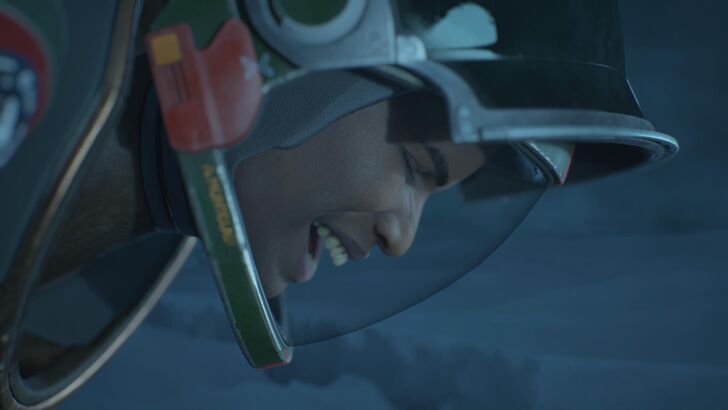
What makes it even more unfortunate is how the game tries to force these moments of depth through vague and shallow dialogue. For example, at one point, Ariane stares at her objective and say it is so close, yet so out of reach. She then follows this up by mentioning that Thomas once told her the same thing. Then, the game drops it. That is it. That is the whole line.
If you read between the lines, you can tell that Thomas was likely talking about their relationship, perhaps suggesting that since they’ve already broken up but are still living on the same ship, Thomas feels as though Ariane is close yet out of reach. Or maybe it’s about how they are close, yet separated by their priorities. It isn't really clear.
However, because the game has shown us nothing of their history, the line just hangs there in empty air. How can we feel a loss for something that bears little meaning to us? It is admirable that the two characters are fighting so hard to return to each other, but the effort feels abstract. It exists in the same limbo as the planet itself, a space defined by its own lack of life. The game wants to be a story about the endurance of love and hope, but it fails to build the foundation for that heart to stand on.
A Bit Rough Around the Edges, But The Game Looks Great
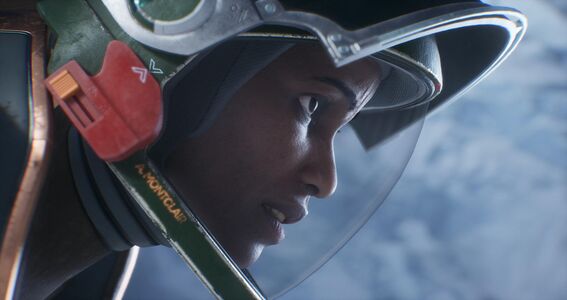
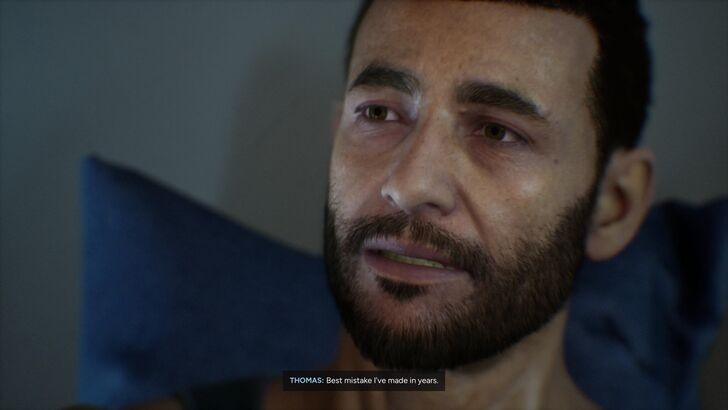
Thankfully, the game is saved in part by its two leads. Vanessa Dolmen and Eric Geynes make Ariane and Thomas feel believable. There is a single scene near the end that, for a moment, made me believe in the bond the game tried to sell me from the start. I found myself wishing we had seen more of them together before that point so that they could have given more of such stellar performances. If they had just been given more ways to show their bond, that moment would have landed with the weight it deserved.
Even so, it remains a powerful scene, sold entirely by Dolmen’s performance and the motion capture that reflects every flicker of fatigue and sadness on her face.
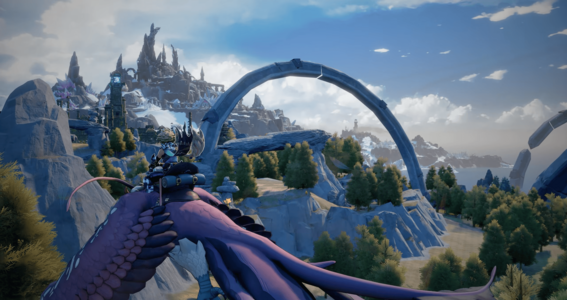
In truth, there are many times when the game is a marvel to look at. The frozen landscapes and deep caverns of Persephone are stunning. The cinematics, too, are amazing, lifted in part by the game’s immaculate soundtrack. There were moments when I simply stopped climbing just to look at the light hitting the snow. It is a lonely beauty, but a beauty nonetheless.
Beautiful vistas, though, can only do so much. It can’t hide the game’s rough edges. True to the studio’s history, the game feels unpolished. Textures take too long to load. Objects clip right through the characters. There were even times when she grunts and stumbles after "falling" two inches off a flat piece of ground. This is upsetting in any game, but it is worse for a stealth title. I expected some level of clunkiness, but these are constant and rather immersion-breaking.
The Longest Way From A to B
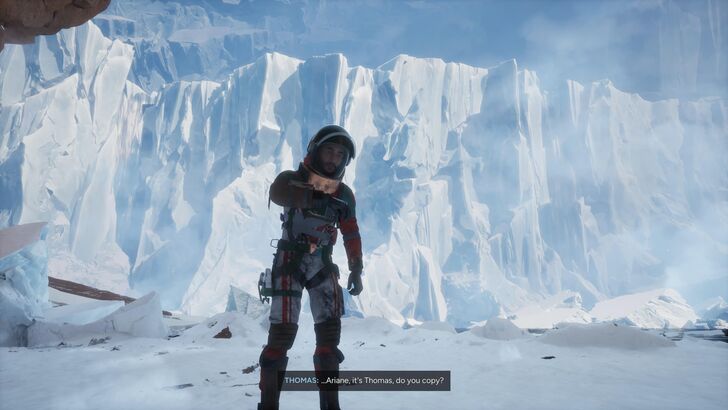
The beauty of the landscape is, unfortunately, only skin deep. Although the valleys of Persephone are a marvel to behold, the experience of moving through them is hollow. The gameplay mechanics are negligible; they serve little purpose other than to ferry you from one chapter to the next to pad out a runtime that feels much longer than it actually is. Really, in all that time walking and climbing, I was just wishing for the next cutscene to trigger.
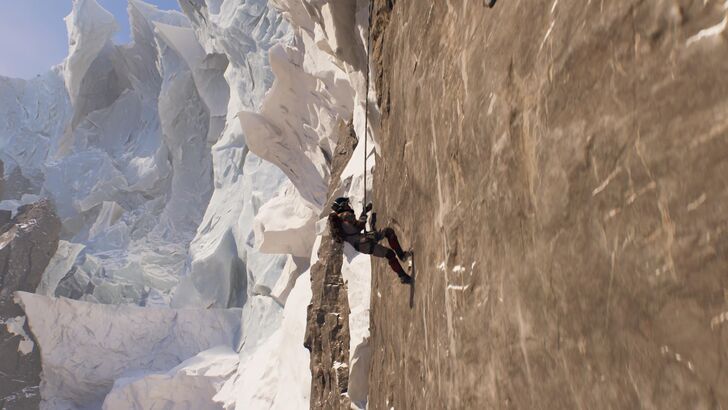
Because Ariane and Thomas are separated after the crash, the game splits their roles, and each feels like a different kind of chore. With Ariane, the game turns into a climbing simulator. You spend almost all of your time looking for handholds, scaling walls, and moving from point A to point B. It mimics the style of games like Uncharted or modern Tomb Raider games; it moves you along a linear path where the game visually dictates where you can and cannot go.
However, it lacks the spirit of those games. You spend the hours performing jumps that the game decides you can make, followed by failures at simple ledges where you somehow cannot find your footing. Unlike the fluidness of Assassin’s Creed or the mechanical challenge of Cairn, Aphelion feels slow. Challenge here comes in the form of pressing the X button if you somehow step on a ledge wrong.
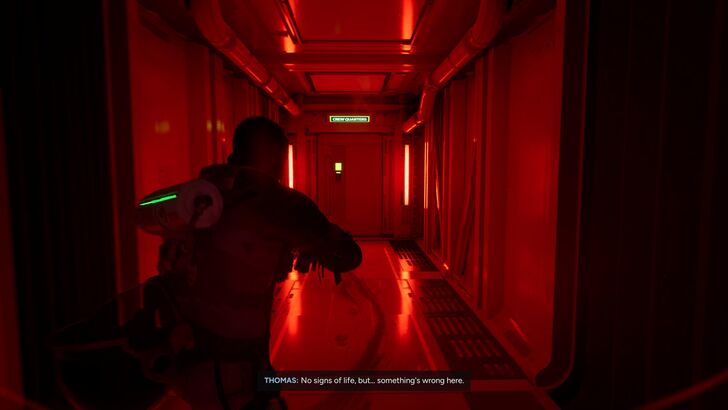
Thomas’s side of the story is the exact opposite, though it is no more engaging. His gameplay is even slower. Because he is in bad shape from the crash, the game treats his section like a walking simulator, similar to games like Life is Strange or Lost Records: Bloom & Rage.
The only real challenge is managing his oxygen levels. You have to stumble from one air tank to the next before he runs out, which isn’t really that difficult, as, for plot reasons, there is an abundance of them in Persephone. Most of his time is spent unmasking the mysteries of the story by finding secret logs, which, without spoiling much, are interesting.
If you don’t want to be bothered by the menialities of Ariane’s ledge-holding and Thomas’ oxygen levels, you can just toggle them off in the settings.
A Nemesis in Name Only
What hurts the most, however, is when the game tries to be bold and fails. It attempts to add some spice with stealth horror, using a creature called the Nemesis. This is supposed to be the moment that gets your heart racing. The Nemesis looks a bit like the Calamity Ganon from The Legend of Zelda: Breath of the Wild: a dark, jagged mess of a creature that hunts you during specific parts of the story.
Unlike Resident Evil Requiem's The Girl and Resident Evil Village’s Lady Dimitrescu, the Nemesis is not scary, it is not creative, and hiding from it certainly does not feel tense. Being hunted by something bigger than you is supposed to make you feel small and desperate. Usually, in those games at least, the stealth is a puzzle that you have to solve.
In Aphelion, though, the Nemesis is just a literal roadblock in your way. It sees through sound, so you just bob and weave until you are out of its sight. There are times when you are required to use your scanner to interact with an electromagnetic rock to draw it away or build bridges or open a path, but that’s it. You hold a button to trigger the rock, the creature moves, and you walk past. It is a minor inconvenience that keeps you from getting to the next cutscene.
Is Aphelion Worth It?
A Sale Might Warm It Slightly
I really wanted to like Aphelion. I really did. It was the one game I was truly looking forward to playing this April, even more than Pragmata. I like the concept and its premise. It reaches for a grand story, but it completely forgets the human connection that should be driving it forward, and no amount of stunning vistas will hide the fact that the gameplay is subpar at best.
$35 is relatively inexpensive compared to most triple-A games, but it’s still hard to recommend, especially since its 10-hour runtime consists of a lot of padding. If you are a loyal fan of DON’T NOD and simply must see their latest work, you will likely buy it anyway. But for everyone else, my advice is to wait. There is no rush to visit this frozen world; it will still be there, unchanged, and cold, when the price finally drops.
Aphelion FAQ
How Many Chapters are in Aphelion?
Aphelion consists of 11 chapters in total.
How Long to Beat Aphelion?
Aphelion takes about 10 to 12 hours to beat, depending on how much of the game’s linear world you explore.
Game8 Reviews