


| 007: First Light | |||
|---|---|---|---|
| Release Date | Gameplay & Story | Pre-Order & DLC | Review |
007: First Light is IOI Interactive’s latest action-adventure title, which explores the special agent’s origin as an MI6 in the 00 spy program. Learn more about the game, our score, our review, and whether the game is worth buying or not.
Overview
What is 007: First Light?
007: First Light is an action-adventure game developed by IO Interactive, released on May 27, 2026. This new, standalone origin story for the iconic British spy explores the early days of James Bond as a young, and sometimes reckless, MI6 recruit on his first mission to earn his "00" status and license to kill.
It features new iterations of classic characters like M, Q, and Miss Moneypenny, as well as an original villain in the form of a rogue agent, 009. Players will navigate a world of espionage, completing objectives in breathtaking global locations while hunting down a rogue agent.
007: First Light will be available on PlayStation 5, Xbox Series X/S, PC, and Nintendo Switch 2.
007: First Light features:
⚫︎ James Bond Origin Story
⚫︎ Third Person Shooter
⚫︎ Action Stealth Gameplay
⚫︎ Open-Ended Mission Design
⚫︎ Multiple Gadgets
⚫︎ Separate Mission Mode
For more gameplay details, read everything we know about 007: First Light’s gameplay and story.
| Digital Storefronts | |||||
|---|---|---|---|---|---|
 Steam Steam |
 Epic Epic |
||||
 PS PS |
 Xbox Xbox |
 Switch 2 Switch 2 |
|||
| $69.99 | |||||
007: First Light Review: The Greatest 007 Game of All Time
Better Than Goldeneye
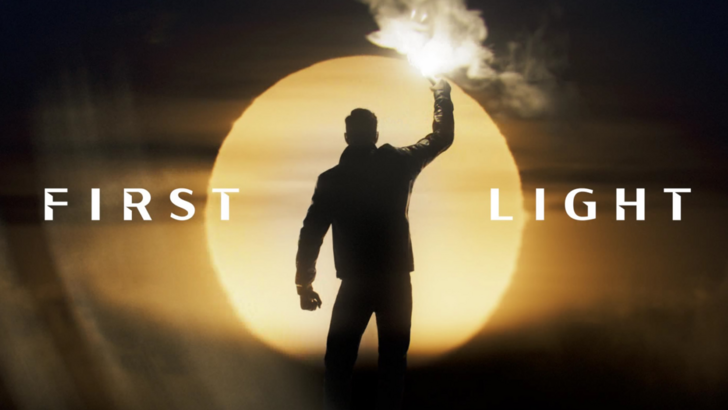
What makes the 007 franchise so captivating? Is it the high-stakes action showcased through espionage and subterfuge? The intense, yet jazzy orchestral musical score? The spectacle of luxury by featuring unnecessarily expensive real-world items and vehicles? The seamless thematic blend of science fiction that adapts over time? Or, maybe, it’s just all of that?
Regardless of what you think the answer is (it’s all of them, obviously), not a lot of franchises have been as iconic as Ian Fleming’s James Bond. After all, it’s hard to find a series that can serve as a living blueprint for a genre and continuously reinvent itself across multiple decades, with different leading actors, all while using the same thematic elements and principles.
However, it’s actually been quite a while since we’ve had a new Bond film, let alone an actual Bond video game. And those reasons alone make IO Interactive's announcement of 007: First Light all the more special. It was the perfect studio to pick up the series, and it’s honestly quite baffling that it hasn’t happened sooner.
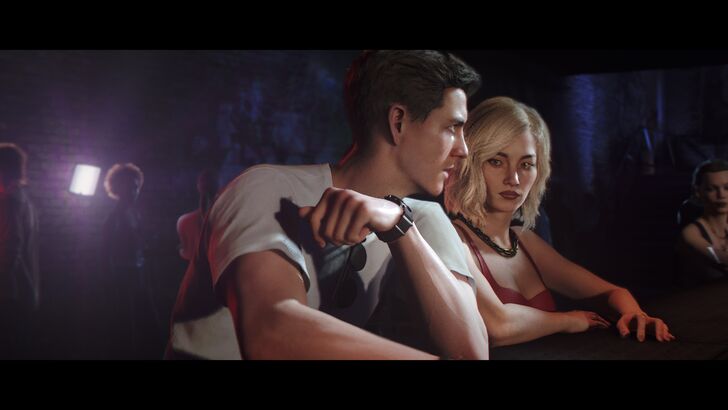
And sure enough, they delivered.
007: First Light amazingly retells the origin of Bond’s rise to earn his number, successfully integrating all the iconic references, themes, and brands, all while packaged in the perfect way possible—as an engaging third-person action adventure game with great visuals to boot. It’s everything I could’ve asked for, and it’s by far already the best James Bond game of all time.
A Bold Reimagining of the Super Spy
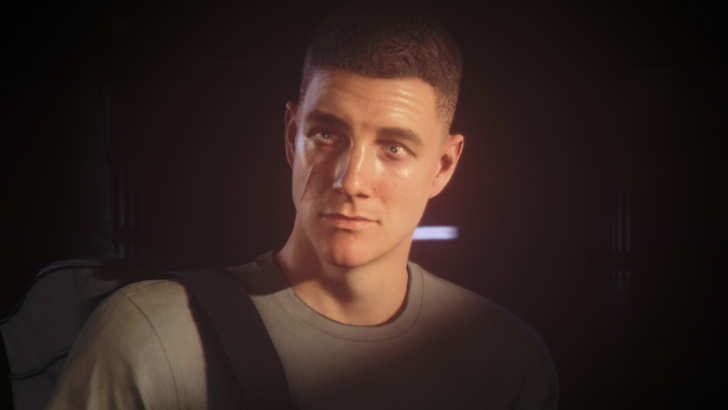
First Light’s story starts with the eponymous James Bond being dispatched to a mission in Iceland, and he is caught in the wrong place, at the wrong time. The mission goes awry, leaving him the sole survivor after being attacked by an unknown military organization. He is contacted by MI6’s Moneypenny and directed to ascertain the situation on his own, while being given a brief on why MI6 was taking over the mission in the first place.
This is where we discover that James Bond wasn’t even part of the SAS (Special Air Service), but is actually an aircrewman. This early on, IO Interactive establishes that this is a very different take on the original character, since he’s always been portrayed as a decorated military man, and that this is an origin story.
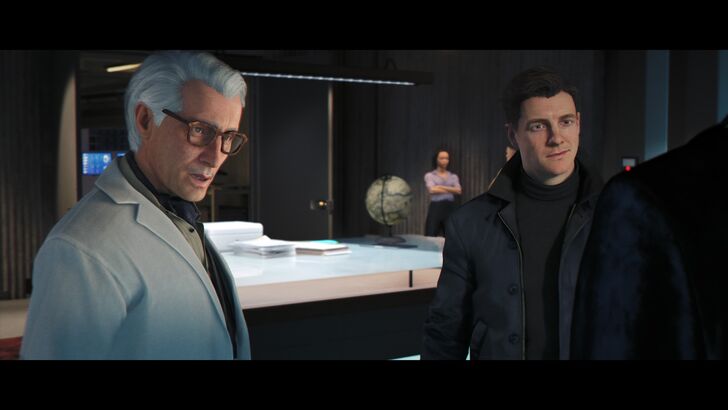
Every time a new James Bond is introduced, you should expect them to be slightly different from each other. Sean Connery’s James Bond isn’t exactly the same as Pierce Brosnan’s portrayal of the character, and that goes for Timothy Dalton and all the rest I haven’t mentioned.
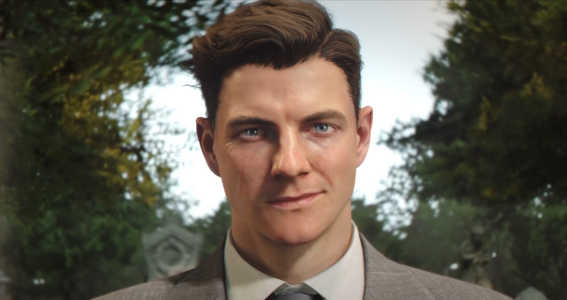
So it’s to be expected that you should think of IO Interactive’s rendition to be like this as well. But there are striking similarities that the character has that IO Interactive is able to showcase through the game’s story, visuals, and, of course, Patrick Gibson’s remarkable performance.
As the game progresses, you see flashes of the iconic Bond identity shine through the game’s dialogue and interactions—witty, charming, thrill-seeking, reckless, and, of course, issues with authority. However, the game makes it clear that he’s not the super spy we all know him to be just yet, as the first chapter showcases his training to join MI6’s 00 program.
While his charisma and suave nature are apparent anytime he’s on screen and in the dialogue, the game does a great job of showing that he’s young, acts like he has a chip on his shoulder all the time, heart on his sleeve, and ultimately naive. This made the story all the more compelling, as you see the character's clear development as the plot unfolds, with all its sudden twists and turns.
It’s in the prologue where you already get the idea of how Bond often acts on his own volition. Instead of taking the safer option of hanging back and extracting alone, he instead "defies the odds" and goes all in on saving the captured MI6 agents. He does this throughout the game and often butts heads with his superiors for it, but it makes for a great representation of how he immediately trusts his instincts, without rationalizing all the consequences.
It’s also worth discussing how the game explores his past and traumas, much like the movies do.
For instance, the deaths and disappearances of his friends and fellow agents were immediate at the end of the mission in Slovakia (All the Time in the World), and it showcases just how cruel the world of espionage really is. It isn’t until he gets back after chasing 009 in Mauritania (The Past Never Dies), where you get to see Bond grieve, even for a moment, and he sees all of the things that the agents left behind before they left for their mission.
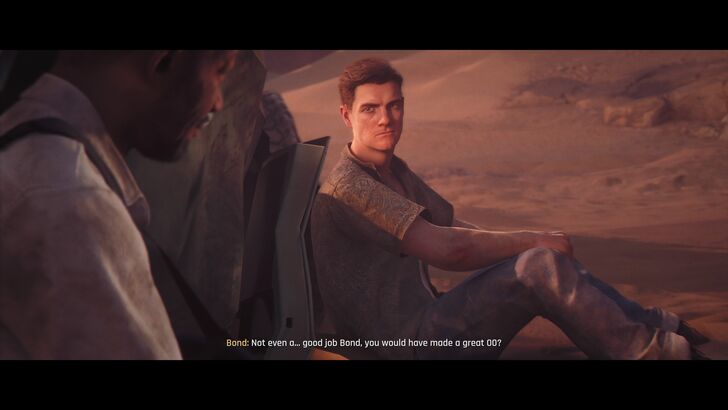
A lot of it also comes through in the dialogue he shares with Isola and Moneypenny, where he briefly talks about his parents, how they passed, and what it was like growing up in a boarding school. He immediately deflects any and all inquiries about them, answering them quickly and to the point, without expanding the discussion any further.
Similar to Daniel Craig’s take on James Bond in Casino Royale (2006) onwards, which placed greater emphasis on the spy’s psyche and traumas, First Light showcases this despite the speed of its plot and the tiny details that you can interact with. It’s not exactly subtle in the way it's shown, but I like that the plot shows he doesn’t have the time or desire to dwell on it.
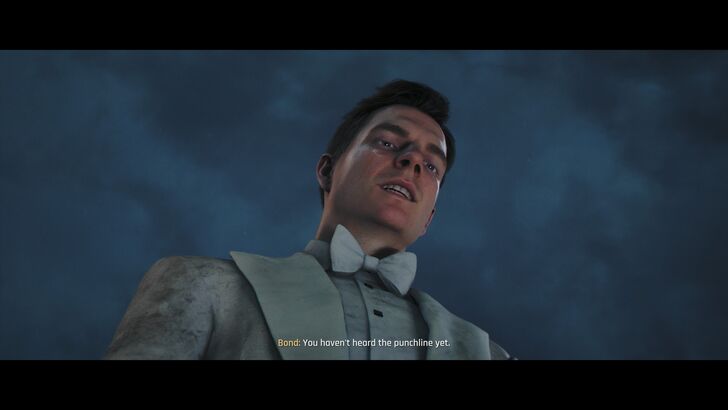
Overall, it’s a great reimagining and an amazing origin story, fit for a franchise that’s both iconic and long overdue for a reboot. First Light does a great job of showcasing James Bond’s journey of "earning his number" and, quite frankly, can be a movie on its own. Though an enjoyable and refreshing take, I do admit it could’ve done a better job with its villains.
Weak Antagonists With One Big Exception
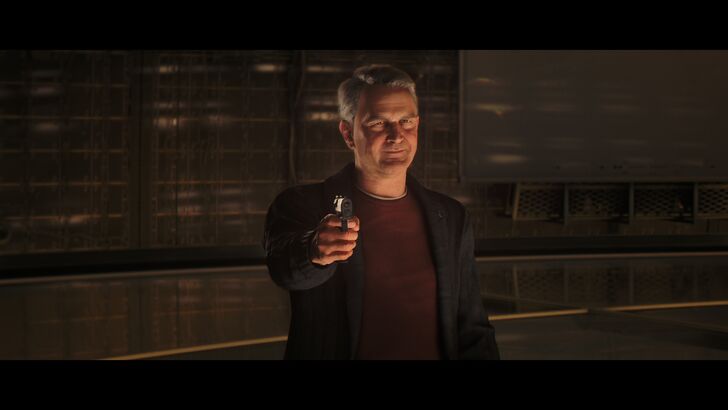
A big thing with Bond films is that the villains are equally as cunning and charismatic as the man himself, often being the stars of the show to match Bond’s antics. First Light never found its footing in creating a big villain who matches the level of iconic Bond villains like Goldfinger, Alec "Goldeneye" Trevelyan, and even Blofeld. And it isn’t even the fault of the plot itself, because the central theme of weaponizing AI is a strong foundation.
For instance, the trailers give the impression that the game would be like a classic Bond film, with James up against a rogue MI6 agent. Then you discover that he was never the villain the entire time, and it introduces more and more characters into the thick of things, with the billionaire father-son duo, Nicholas and Damian Webb, ultimately becoming the core antagonists.
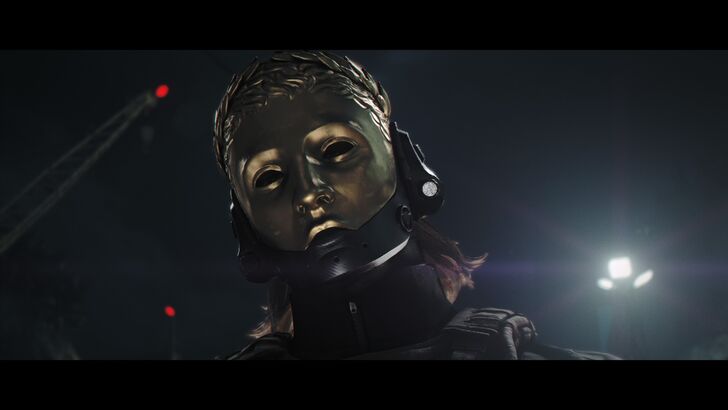
Personally, I found them rather bland. While I was impressed with the plot itself, I don’t think they were utilized enough to be memorable. This is especially true for the psychotic son, who was introduced a little too late and was supposed to be the foil to Bond’s entire character.
With the plot being as strong as it is, it might’ve been better to make him into an actual MI6 agent and recruit. He could’ve been a character who was too by-the-books and too caught up with the AI’s predictions to directly parallel Bond’s tendency to go rogue. It would’ve been a bigger plot twist if he were working in the shadows and introduced later as Sir Nicholas’ son and the rogue agent this entire time.
But instead, we get a villain who doesn’t make much of an impact, other than being a gun used to point and shoot at those who go against their narrative.
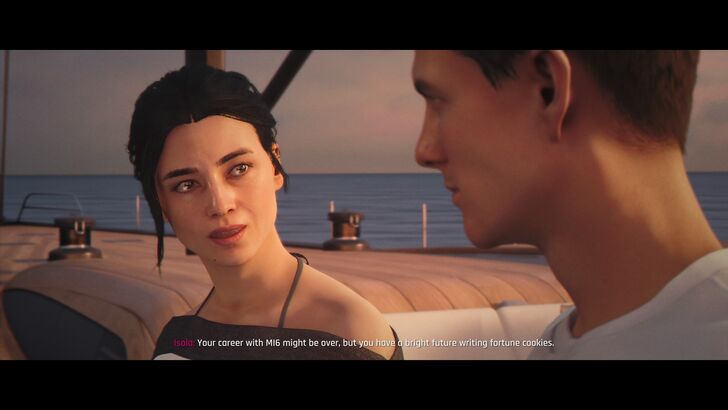
In contrast to them, however, the character that could be considered as the "Bond girl," Isola Vale, makes for an amazing deuteragonist. She’s set up as a femme fatale who’s a bit better than Bond in achieving her missions—colder, more calculating, and more efficient than he is. The air of mystery around her never disappears, even up to the very end, and I’m excited to see that she’s not done quite yet.
Truth be told, I’m glad that she doesn’t end up being dead, as most Bond girls do, as I feel like her character was the strongest point to pivot off of to build a sequel. Who was she working for? Why does she go so far and beyond for Bond? These are just a few of the obvious questions that I think the sequel would hinge on, and I’m already looking forward to it.
Presentation That Suits Its Strengths
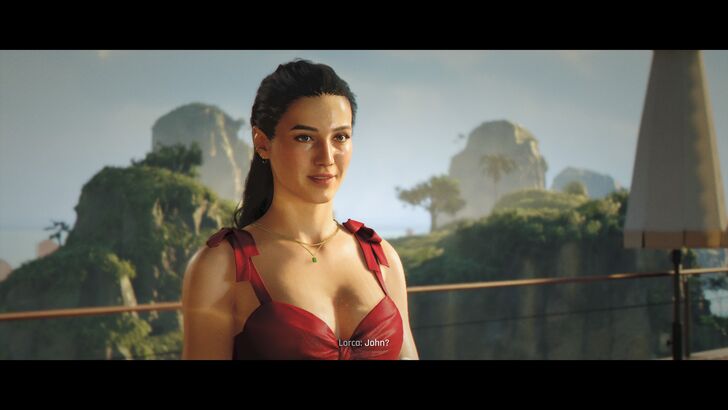
In terms of First Light’s visuals, the game does look really good, and it’s not at all surprising to say that this is IO Interactive’s best-presented game to date. There’s a clear focus on lighting, which highlights the contrast between night and day missions. This is especially apparent in the Vietnam mission (Time to Die), where it initially plays out during the daytime and later transitions to nighttime.
It’s one of the missions that really showcases the game’s vibrant colors, set in a luxurious resort in a tropical country. However, it’s also here and in the following mission set in Antarctica (Wave to the Future), where you kind of see that they do kind of play it safe when it comes to its visuals.
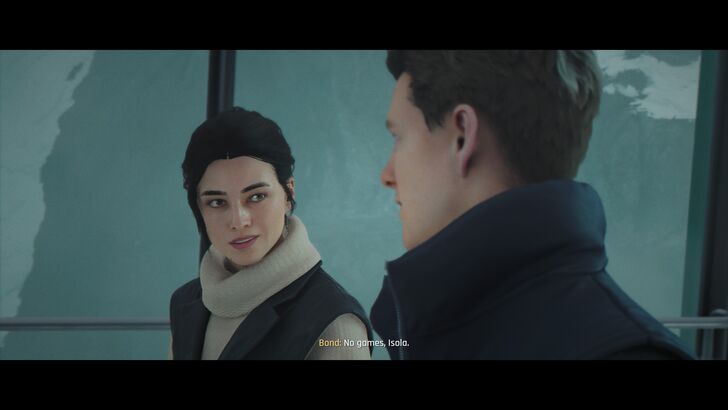
The game doesn’t explore many open areas and instead sticks to its strengths in showcasing different kinds of urban environments. From the abandoned and decrepit ships in Mauritania, the nighttime gala in London, the Webb Industries building, and the aforementioned resort and secret base in Vietnam and Antarctica, respectively. I think this was a very smart decision to not go too crazy with the level designs, as the first few reveals of the game had frame rate issues that were ironed out in the final release.
Music and voice acting are also big highlights that make the game so entertaining. One memorable moment in particular was the escape from the ambush in the London mission (Uninvited), the moment when the horns blared the iconic theme while driving a gigantic garbage truck is just perfection. This, on top of the brilliant voice acting performances from Patrick Gibson (James Bond), Kiera Lester (Moneypenny), and Bart Edwards (Damian) made for a cinematic experience that really pushed the presentation to great heights.
Gameplay is Deeper Than It Seems
Imagine a blend of 50-50 blend of Hitman and Uncharted, and you’ll get the overall gameplay loop of 007: First Light. Though saying that actually seems unfair, with how the little details shape it to be the best James Bond game we’ve had so far.
Before I start talking about the nitty-gritty of gameplay, I have to talk about the game’s tutorial, which is easily one of the best I’ve ever experienced in any third-person action game. It’s structured seamlessly as a cinematic training montage that works in both narrative and gameplay contexts.
Like Bond, you see yourself doing better at these drills and exercises, all culminating in a final showcase where you use everything you’ve learned thus far. While it doesn’t seem all that special when described, it’s in the way it’s presented and how quickly it transitions from one tutorial to the next that makes it an experience that stands out from the rest of the games in the same genre.
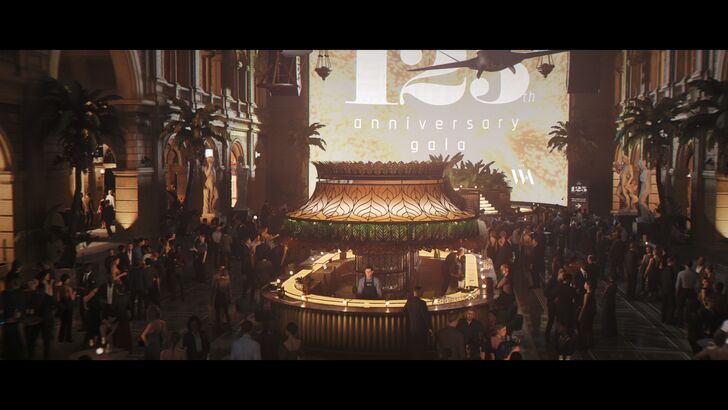
Let’s move on to the game’s mission design. They are designed and structured in such a way that it’s like a typical Bond film. You start with slower moments of dialogue and exploration, featuring mechanics that let you achieve objectives in a variety of different ways. An example of this is in the mission, where you suddenly have to amass a $100,000 fortune to gain access to an exclusive auction.
This gives the player freedom to explore the area and find different ways to get to that target amount, and it actually has more than enough ways for you to earn as much as $170,000 if you choose to explore options that give the most money. In my case, I competed in an underground fight club, won in a firearms shooting contest, and hustled a hustler for a valuable diamond.
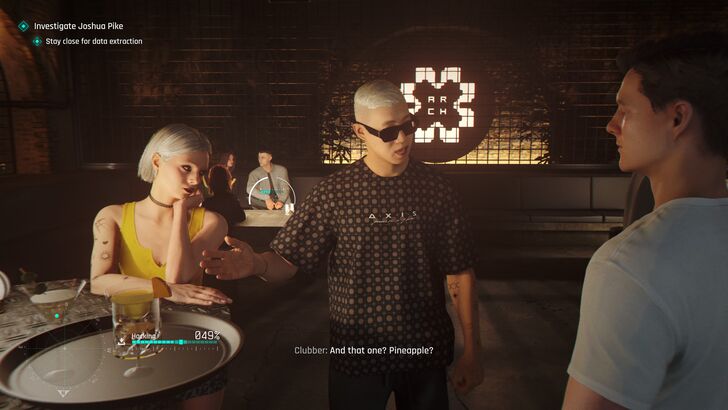
In a way, it uses how Hitman typically allows you to go for different ways to achieve objectives, and it’s an effective way to both add to the game’s replayability and its engagement. Not to mention that there are a lot of missions for you to play outside of the game’s main campaign.
Even the mission prep is already an avenue to create a completely different playthrough, since certain gadgets can unlock unique shortcuts for you. You can go in guns blazing, pursue every dialogue-related objective to get key items and access, or utilize stealth takedowns to quickly dispatch foes without detection.
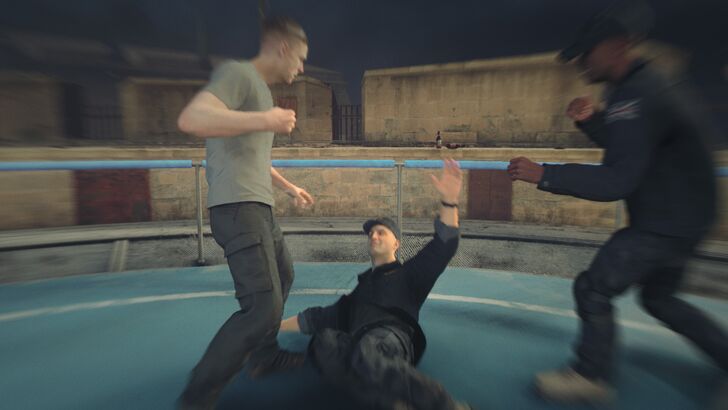
Combat, on the other hand, is much more similar to a game like Uncharted. Hand-to-hand combat is very straightforward; dodge red attacks, parry yellow attacks, use grabs for blocking enemies, and punch them when you can. Likewise, gunplay is as simple as pointing your crosshair at an enemy and shooting them.
Yet, the devil is in the details, and it’s in those that make the combat so much deeper than it seemingly is. It’s in the way the game combines gunfights and fistfights that makes it much more frenetic and requires you to quickly make decisions since the AI constantly hunts for you and will flush you out of cover when they get the chance.
One moment I’m behind cover, the next I’m using a Vault Attack to disarm an enemy, take his weapon, and eliminate him. Then, I Charge Tackle into the next guy to move towards cover without a moment to lose.
After I take him down, I hop behind cover again, use my Laser Strap gadget to blind an enemy that’s quite far from where I am, then shoot the limbs of the enemy close to me for a Takedown to conserve ammunition. And when I finally ran out of ammo for the gun I had, I immediately threw it at the first enemy I saw and took him down as well.
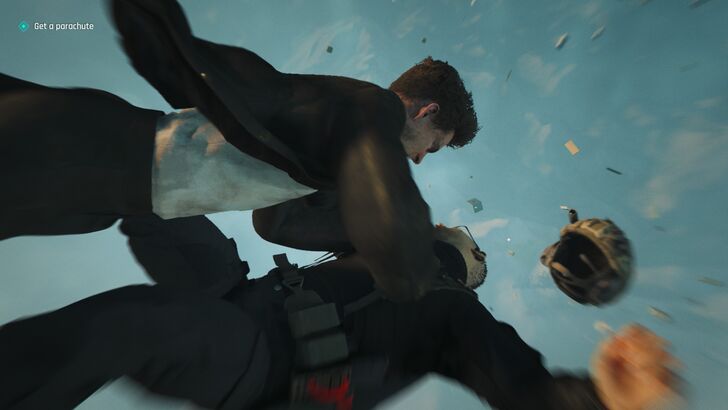
The moment-to-moment combat is probably the most engaging and satisfying combat loop I’ve played in recent memory, one that I can admit having enjoyed more than the games I’m comparing it to. It’s quite a well-crafted combat system, one that showcases just how much creativity you can employ. This also comes through in how the game structures its encounters and stage layouts, which encourage you to explore different routes to beat them.
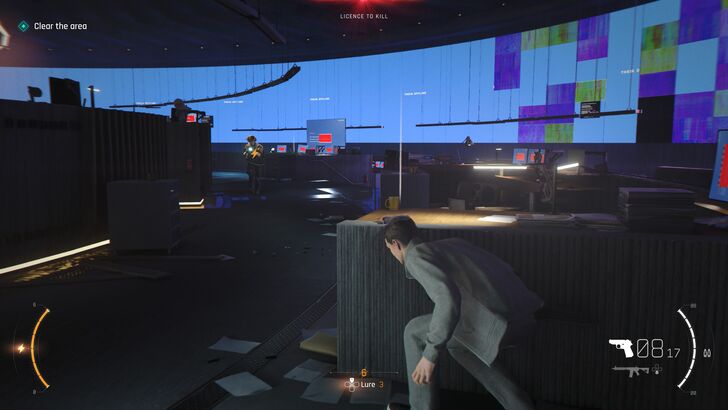
Of course, it isn’t without its flaws, as the stealth could feel much better than how it is now. There’s no option to move or carry bodies, resources feel like there’s either too much or too little to take advantage of, and, honestly, it just feels dated. Admittedly, I wanted to try doing as many stealth challenges and achievements as I could, but it wasn’t nearly as engaging or as deep as the actual fights.
Sometimes it even felt like the game didn’t want you to go with the stealth approach, with how aggressive the AI is in rotating and covering each other when they’re alerted by your presence. It was serviceable, but it could’ve elevated the experience so much more if it had more mechanics to play with, or maybe even taken from the Hitman games.
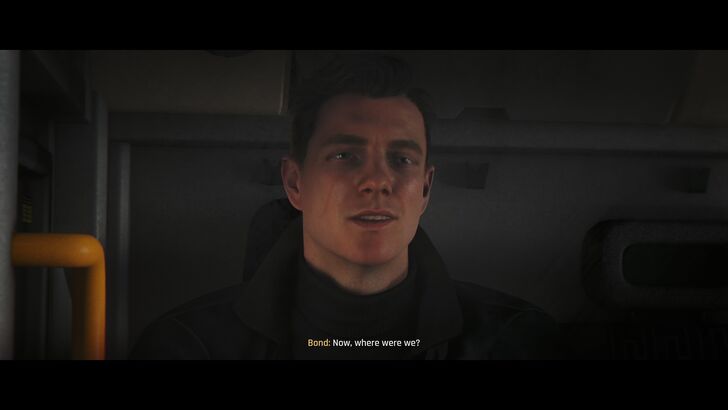
All in all, First Light’s gameplay is the closest and most definite result if one were to ask what a James Bond simulator would look like. The open-ended missions give you tons of different options for approaching missions, while the deep combat mechanics easily inspire creativity in each encounter. Is the gameplay perfect? No, since the stealth could be so much better. But does it have enough to rival the best games in its weight class, like, say, Uncharted and Tomb Raider? It definitely does.
007: First Light doesn’t reinvent the wheel on what makes a great third-person action game, because it doesn’t have to. IO Interactive builds on established gameplay mechanics from popular titles in the genre and its own IPs, using them to create the best possible experience that showcases the British super spy in his element.
Is 007: First Light Worth It?
Definitely, It’s Time You Earn The Number As Well
007: First Light is, quite frankly, the ultimate James Bond video game experience, and pays homage to the source in the best way possible. It’s absolutely worth the AAA price for a multitude of reasons. Not only does it have amazing replayability through its side content and optional challenges, but it also has a lengthy main campaign, great voice acting, and an engaging moment-to-moment gameplay loop that will leave you wanting more.
Even with noticeable flaws in stealth gameplay and visuals that tend to play it safe, it’s an easy recommendation for anyone, not just fans of the films, but also just anyone who plays video games in particular. I would go so far as to say it is already one of the best games this year, and one that might be in the running for Game of the Year across multiple categories until proven otherwise.
FAQ
Who Voices Theresa Lorca in 007: First Light?
Theresa Lorca is voiced by Raquel Cipriano.
Who Are the Celebrities That Made Cameos in 007: First Light?
The confirmed celebrities that make a brief appearance in the game are the following:
⚫︎ Seán William "Jacksepticeye" McLoughlin
⚫︎ Khaby Lame
⚫︎ Michael "Shroud" Grzesiek
⚫︎ Dimitri Vegas
⚫︎ Chase & Status
Game8 Reviews