



| Windrose | |||
|---|---|---|---|
| Release Date | Gameplay & Story | Pre-Order & DLC | Early Access Review |
Windrose is the newest survival pirate simulation, where you venture out in an Alternate Age of Piracy. Learn more about the game’s plot, gameplay, release date, our review of the demo, and more.
Everything We Know About Windrose
Windrose Plot
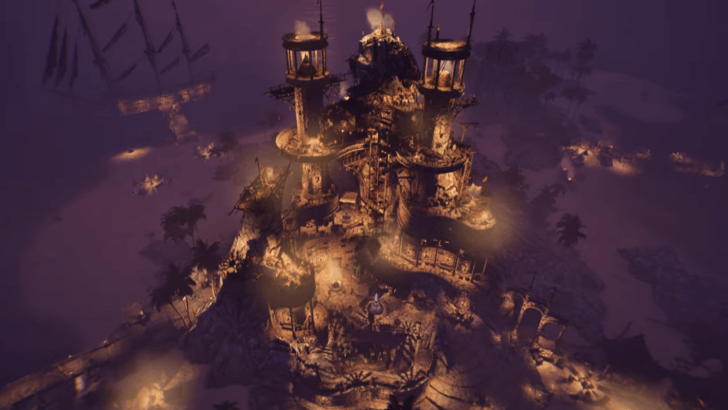
Windrose is set in an alternate Age of Piracy, where players take on the role of a captain who begins their journey on a voyage. What starts as a personal mission tied to challenging the infamous Blackbeard slowly grows into a larger conflict including pirate factions, empires, and mysterious forces shaping the seas. As players strengthen themselves to reach different regions, they’ll uncover more about Windrose’s world and the threats that lie within it.
Windrose Gameplay
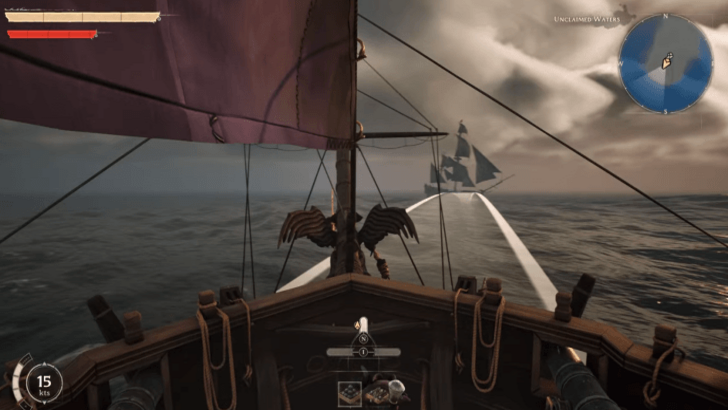
Windrose is an open-world adventure that mixes exploration, crafting, and combat on both land and sea. Players can gather resources, build bases, and upgrade equipment while sailing through different islands filled with enemies, dungeons, and possible treasures. The game can be played solo or in co-op, allowing players to form a crew and take on challenges together.
As players progress, they can customize their ship, upgrade their gear, and take on stronger enemies and bosses. Combat also features both melee weapons and firearms, along with naval battles where players control ships and engage in cannon fights or boarding encounters.
Windrose Release Date
Releasing on April 14, 2026 for Early Access
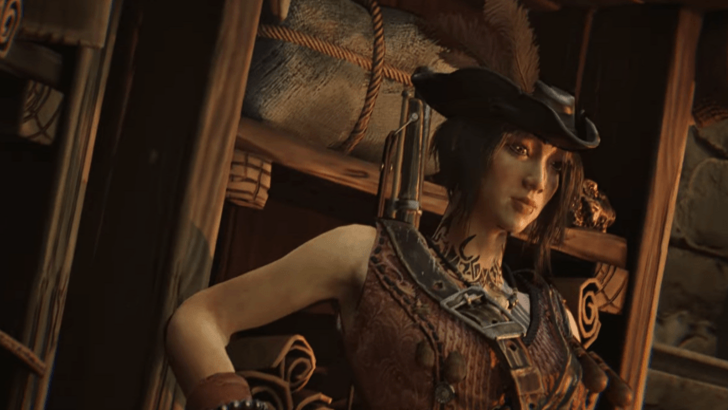
Windrose is releasing on April 14, 2026 for Steam and Epic Games Store, with the price confirmed to be $29.99 by the developers on forums. The game is currently only available for Early Access on PC, but we’ll update this page when more platforms are announced!
| Digital Storefronts | |||||
|---|---|---|---|---|---|
 Steam Steam |
 Epic Games Epic Games |
||||
| $29.99 | |||||
Windrose Review (Early Access)
Piracy Sure Does Take Its Sweet Time
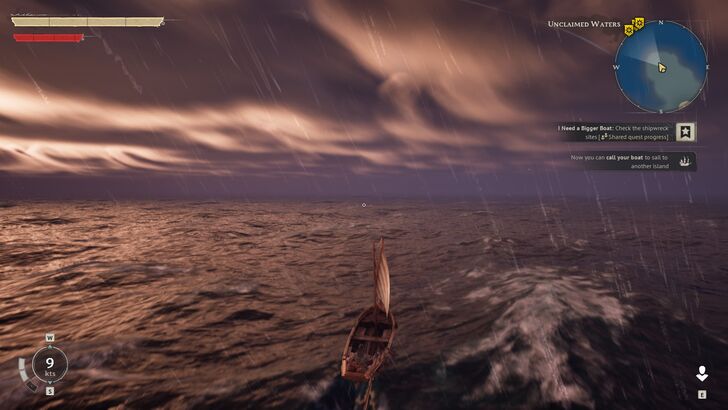
While there have been a lot of pirate-themed games, let’s face it, there really are only a handful that stand out. Assassin’s Creed 4: Black Flag, Sea of Thieves, and Sid Meier’s Pirates!, these are the few games that instantly come to mind. But that’s a problem in itself. Outside of these titles, there just aren’t enough of these games that really capture the fictional freedom of sailing the open seas, engaging in traditional naval combat, and looting hidden treasure while singing some sea shanties along the way. Obviously, we can’t say it’s a lack of trying, but I digress.
Enter Windrose, a pirate survival simulation game that seemingly came out of nowhere and captured the attention and hearts of many with over a million wishlists when its demo came out a few months ago. Not only did it have the alluring theme of piracy, but it also featured base building, online multiplayer, RPG-like progression, and even Souls-inspired combat.
As an avid fan of relatively cheap multiplayer games that my friends and I can just hop on, this was the perfect fit. After being able to play a pretty good chunk of the game, I can definitely say that I’m pretty impressed with the whole thing. But it sure does love taking its time with almost every aspect of the game.
A Narrative That Sails Headwind
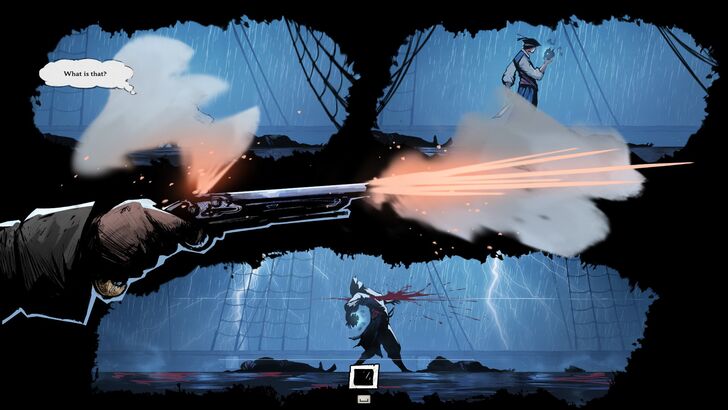
Let’s first start with the narrative, or at least the parts that I was able to play. While the introduction certainly doesn’t waste any time getting into the game, the whole thing slows to a crawl once you start playing through it. Let me explain.
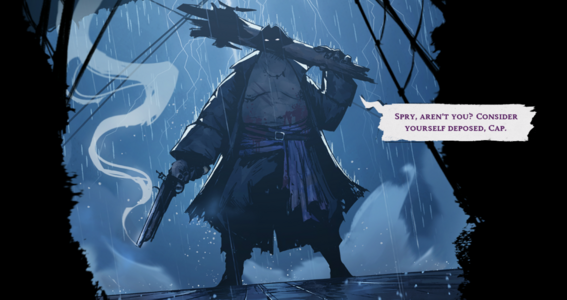
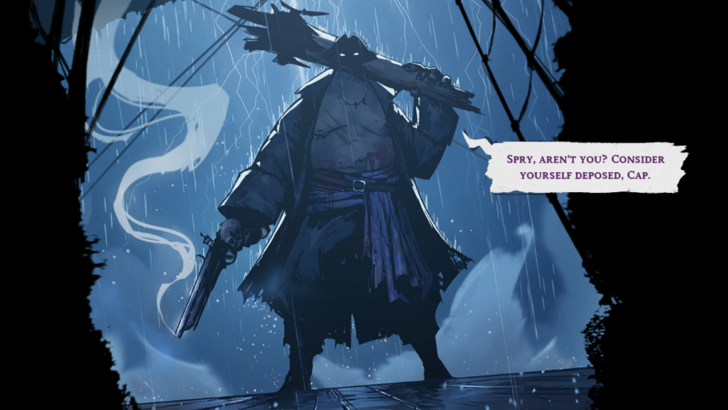
The game starts off with you and your crew getting ambushed by the Blackbeard Pirates. Unfortunately, Blackbeard comes out victorious, and he takes the artifact under your protection for himself. However, the artifact seemingly merges with your lifeless body, and after Blackbeard throws your body overboard, you wash up on a deserted island with nary a wound in sight. Now, you have to find out why you have this second chance, and why you’re still living even if it feels like you’re already a dead man walking.
And, scene.
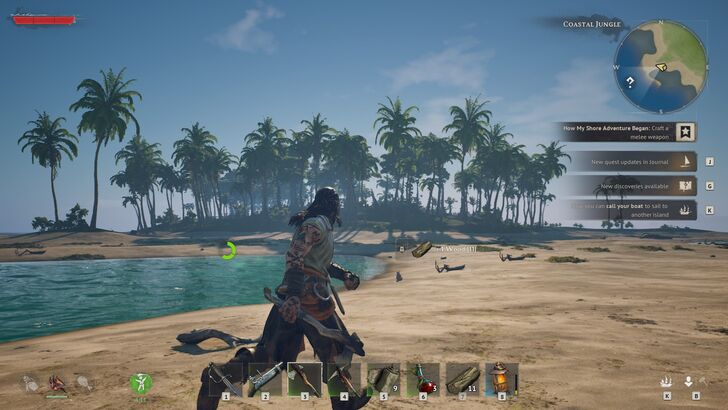
You now have full control of your character and take on the tutorial to learn the basics and a little bit about the lore behind you, your crew, Blackbeard, and, of course, the artifact itself. Sadly, this is where it stalls out for hours. While you get some answers after meeting with another one of your crewmates who survived the attack, it doesn’t really provide much context for the world of Windrose.
It also doesn’t help that the game's overall pace is as slow as a boat without proper sails. Not only is the general movement slow, but even the objectives are spaced so far apart that it honestly felt like a chore to complete. This isn’t even accounting for the materials that you have to farm, other points of interest to get more loot, and more, which really feels like you’re sailing against the current most of the time.
And after you get through these first few steps, you don’t really see much progress other than getting the location of one of the pirates who was involved in the attack. In my case, this happens about four hours into the game. After dealing with him and gaining access to the next biome, the story remains quite vague, and it’s clear that the pacing isn’t really made to have a continuous narrative for one to enjoy.
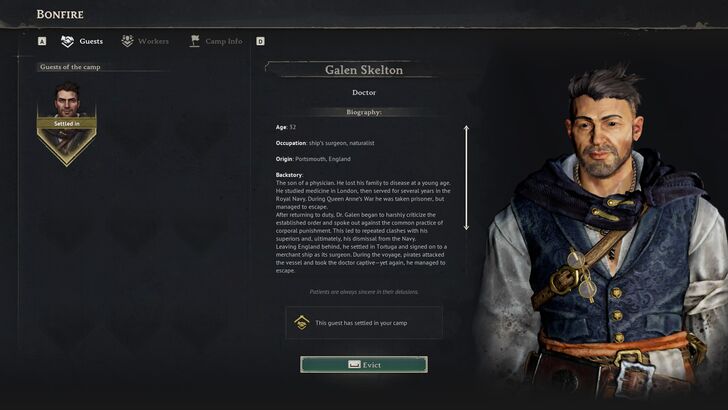
It’s more of a tool to slowly integrate players into the game’s massive scope of gameplay. Admittedly, I haven’t been able to delve far enough into the game to really say that the story ends up taking priority over the gameplay loop of the game. However, I can attest that after defeating the first story boss of the game, the recommended level for entering the next biome is two whole levels above mine.
Suffice to say, the story ends up taking a backseat for almost the entirety of the game. This isn’t necessarily a bad thing. After all, it is a multiplayer survival game where players can build their own fantasy bases and live out their pirate adventures to the fullest. But it probably would’ve been better if the main narrative were a bigger part of the game instead of something that’s constantly pushed to the side.
Simple Yet Engaging Survival Crafting Gameplay
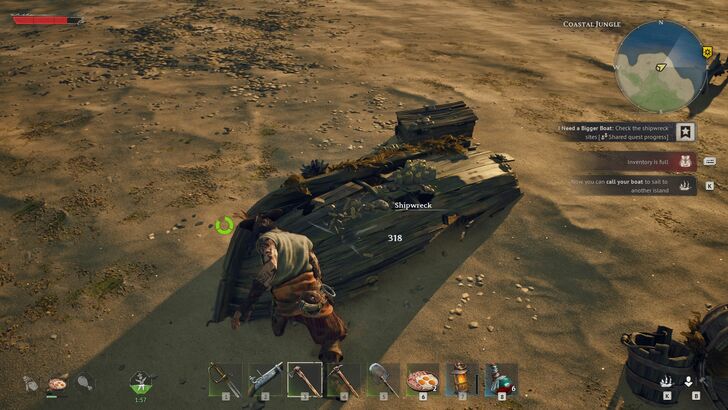
While the game’s pace is certainly a bit slower than expected, the gameplay loop is surprisingly easy and complete as far as what you’d expect from a survival game.
One thing I appreciate about Windrose’s design is that it’s not overly realistic. In fact, it’s actually one of the simpler survival games out there. Sleep and Hunger are part of the game, but it’s not to the point where your character dies if you neglect them for too long.
The same goes for its other survival aspects. Crafting is a matter of whether you have the materials and the recipe or knowledge to create that specific thing. Building, on the other hand, lets you choose to build premade shelters or structures if you’re not feeling creative enough to build your own home.
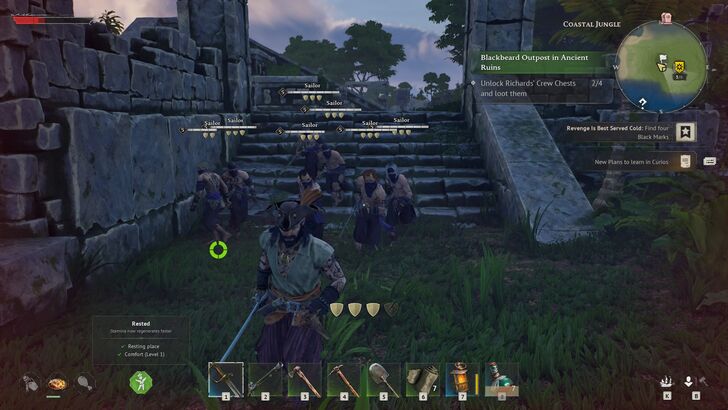
And it’s this simplicity that makes the game shine. As someone who doesn’t like building houses or shelters in a survival game, the choice of having premade structures enabled me to engage more with the game’s other mechanics instead.
I had more time to gather more materials, explore ruins, fight random enemies, and more. The seemingly mundane act of gathering materials for upgrades and other tools became the primary way to enjoy the game, and I was definitely surprised by its easygoing nature.
But, as mentioned earlier, everything still moves relatively slowly. And for me, it took some getting used to. The stamina system, paired with the spaced-out points of interest, definitely padded a lot of the time in between everything. It’s not going to be a game that gives you quick instances of dopamine, as the game feels like it emphasizes the mundane more than its supposed highlights.
Classic Souls-Inspired Combat
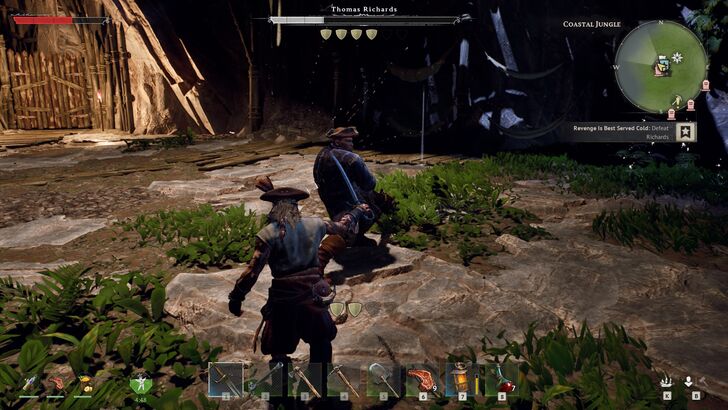
One of the main things that actually intrigued me was that the game had “soulslite” combat, and it certainly doesn’t disappoint. The combat loop genuinely feels like the first iteration of Dark Souls, with a lite version of Sekiro’s perfect blocking and stance system. It’s not a perfect replica, but it looks, feels, and plays well enough that you’d instantly see the similarities.
Things like stamina management, staggering, and pattern recognition are its core combat elements. Weapon choices also matter, since different weapon types have different attack animations and swing speeds. Hell, even the perfect blocking was a satisfying mechanic to pull off, as it would deal considerable damage to their “posture.”
As a Souls fan myself, I felt right at home with the system, and I thoroughly enjoyed it for the most part. But that’s also where the cracks lie.
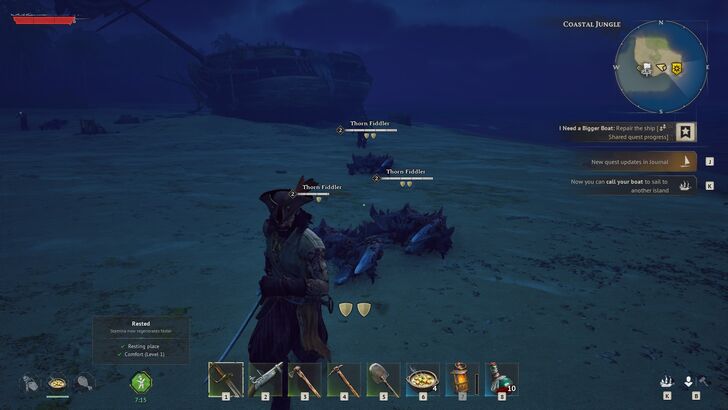
It’s no surprise that you end up being outnumbered in almost every encounter, as with most games in the genre. However, the problem is that enemies tend to be considerably tanky while being able to kill you within 2-3 hits. Naturally, it would devolve into a hit-and-run situation, where I would only throw a few hits in and dodge out of the way immediately.
Animations can also feel pretty stiff. In my particular case, the Saber’s Heavy Attack felt too slow and too weak to utilize even against a group of enemies. This limited my options to just sticking with light attacks since they staggered enemies much more consistently and were just plain faster at the cost of lower damage.
This made fights a lot longer than they should be, as you’d play a lot more risk-averse early on before you start getting weapon upgrades. It’s most apparent in boss fights, especially since you don’t really have many damage options other than a full attack rotation that completely obliterates your stamina bar.
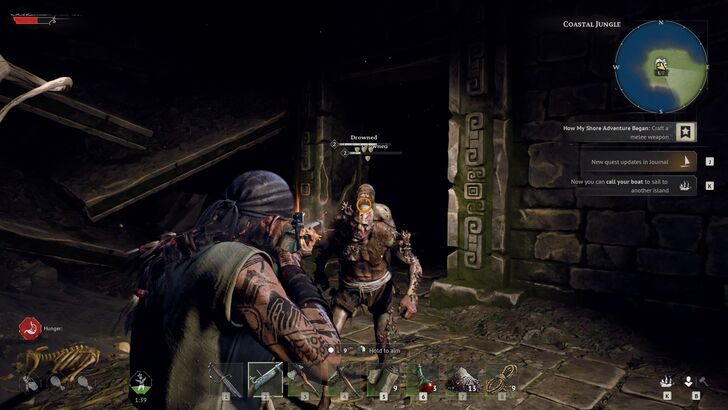
Thankfully, dying in the game isn’t as punishing as a Souls game. Instead of losing souls or currency, you drop your upgrade materials and other items on the ground. However, they don’t disappear on death, meaning you can always come back for your items later on, even if you die on the runback.
Regardless, combat still remained a relatively enjoyable part of the game. One that reminded me to simplify the approach and kite a bit more, rather than going all in all the time.
Slow, But Rewarding Progression
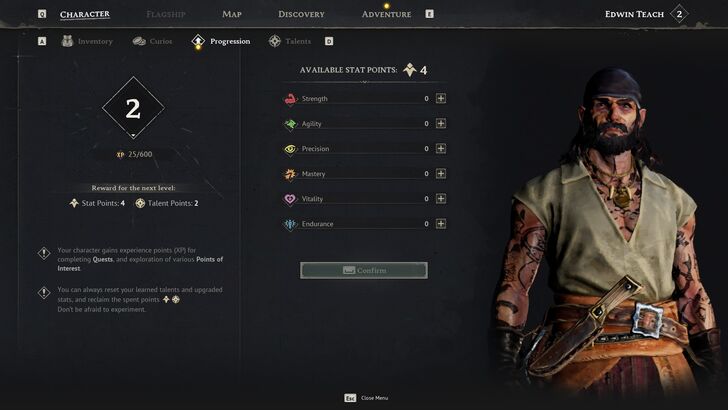
On top of that, progression is also pretty slow. Instead of a Souls-like way of leveling up, the game uses a traditional leveling system with experience points. The catch is that you’re only awarded experience points upon completing a quest or fully exploring a point of interest. While this may seem normal, you have to consider that it’s a survival crafting game.
This means that a significant amount of time will be spent on gathering resources. Which then results in you not getting experience points since you’re trying to pool your materials and upgrade your equipment before you start on anything else. It pads a lot of time in between quests, since certain materials aren’t necessarily easy to come by.
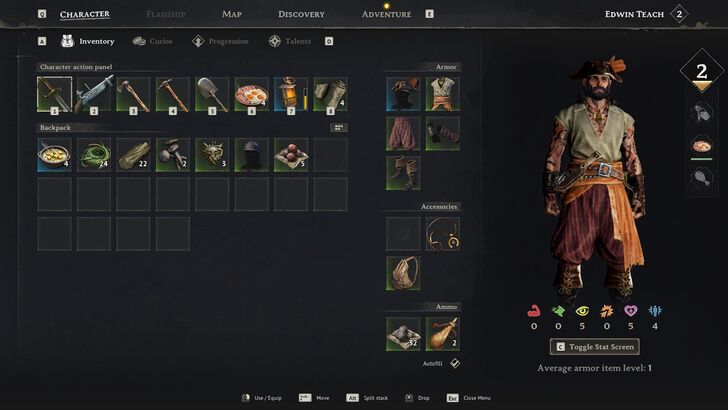
For instance, one particular material that’s needed for many of the game’s core items and upgrades early on is Copper. You can only find this material in caves, which can be located far away from your camp or your nearest checkpoint. Not to mention that smelting the ore to an ingot also takes considerable time. This became an issue during my playthrough because it stalled my story progress for a while, up until I finally found another cave with copper nodes.
Leveling itself is also pretty barebones; you just allocate attribute points and talent points to stats and skill trees, respectively. While you do feel a bit of an impact if you’re increasing stats for damage, the gains feel marginal early on unless you pump everything into a singular stat. ut like its combat, it’s very straightforward and easy to understand; you just need to give it more time (and points) to reap the benefits of exploring and doing all of the available points of interest and quests.
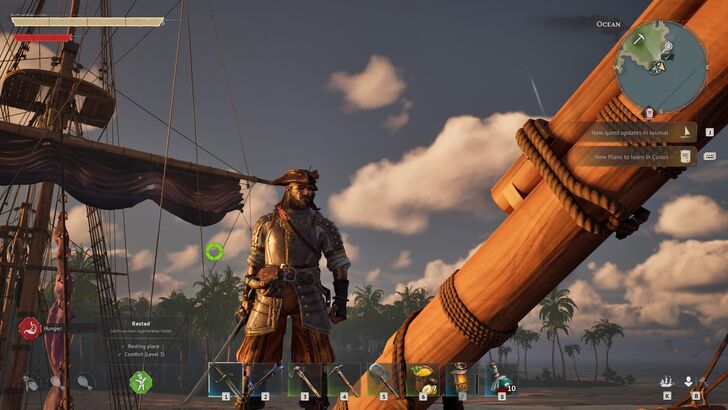
In contrast to all of this talk about the game’s pace, however, I can’t stress how good the exploration truly is. Windrose truly gets the “wonder of discovery” aspect of survival games, and it’s evident when you start sailing from island to island. It can just be a simple act of looking for a specific material around the Archipelago, but it never becomes boring because there’s always something to do.
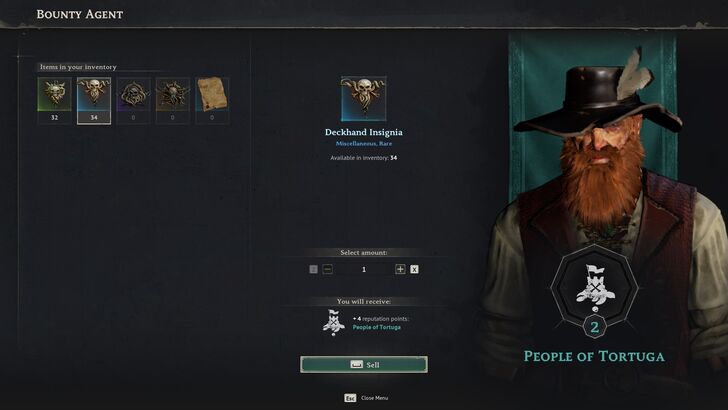
Each island typically has a few points of interest that not only give you lore descriptions but may also reward you with more crafting recipes to be able to create more gear and weapons. Furthermore, later on in the game, you’ll encounter different pirate factions and groups that you’ll definitely want to prioritize since they give you access to even more quests, crafting recipes, and even usable items.
Typically, you’ll want to raise the level of these factions by giving them tokens to allow you to buy even more items from them. Additionally, you can sell treasure that you find in the various caves, ruins, and temples that you explore for more currency to exchange for exclusive items and crafting recipes for stronger gear, ship equipment, and even housing decor.
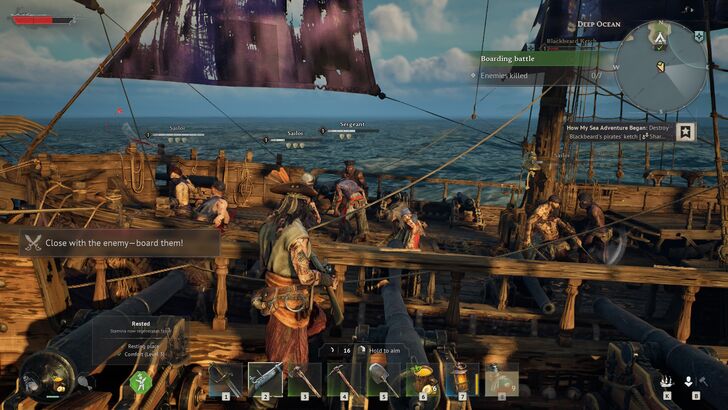
Speaking of naval exploration, the sea shanties also contributed to the overall enjoyment in the game. It got to the point where the songs are stuck in my head after the playthrough, and I’ve begun humming them to myself.
Last but not least, naval warfare is also a major reason why island hopping is enjoyable. It’s a pretty simple scheme of a pseudo third-person shooter where you control a ship instead, and you just blast the enemy’s ship to smithereens. Or, if you’re feeling frisky, you can choose to board their ships instead, like a true pirate.
Co-op is a Game Changer
While I played solo for the most part, playing co-op is a real game-changer. Sure, you face even more enemies and are generally stronger, but the rewards can potentially quadruple depending on the number of players in a server. This is because loot is instanced per player, and you can trade loot. So everyone wins, at least technically.
Additionally, certain quests also have shared progress, so you and your crew can work on quests together or even work on separate shared quests on your own so that you can get more work done in a single session. You can also expedite responsibilities with material gathering, building, crafting, and such, so that you can operate as a well-oiled machine.
Finally, and most importantly, each player can commandeer their own ship, which not only looks cool when you’re all in formation but also makes naval battles even more chaotic than they already are.
A Slow-Burn Voyage Still Worth Paying For
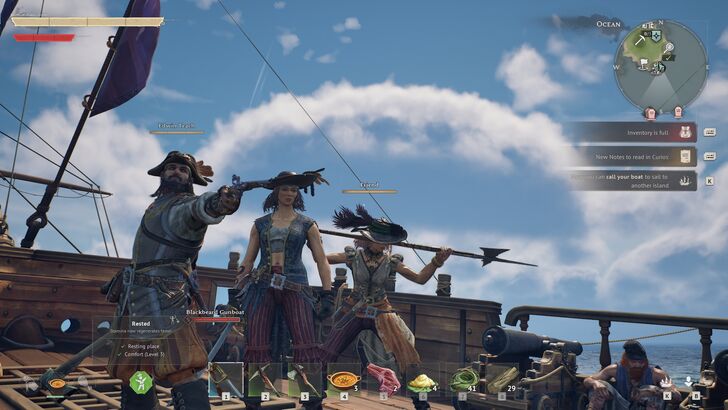
For $29.99, Windrose is still a game worth paying for. While not everyone would appreciate the game’s slower pace, the thematic pirate exploration, methodical duels, and simple survival mechanics combine to keep you hooked for hours. It manages to make its boring aspects shine, and that’s very impressive for a game with a massive scope.
It’s absolutely best played with a group of friends, especially since all of you can band together and coordinate on collecting materials and questing to speed things up. However, even with all of the criticisms I’ve listed, playing solo can also be just as satisfying. Sure, it can take a while to get going, but the overall experience is just too good to pass up.
Game8 Reviews

You may also like...


Windrose Product Information
 |
|
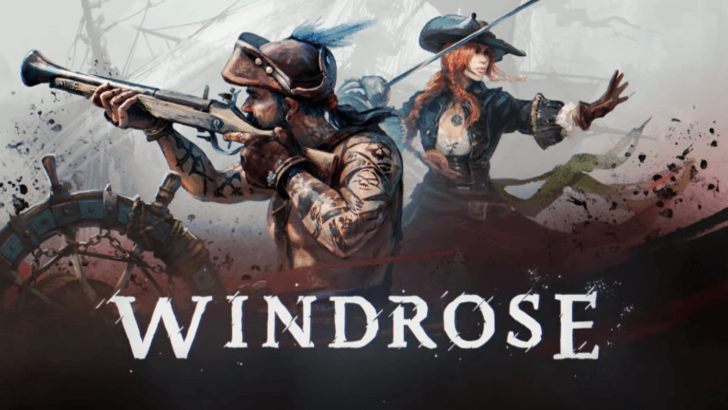
| Title | WINDROSE |
|---|---|
| Release Date | April 14, 2026 (Early Access) |
| Developer | Kraken Express |
| Publisher | Kraken Express, Pocketpair Publishing (Japan) |
| Supported Platforms | PC (Steam, Epic Games) |
| Genre | Action, Adventure, RPG |
| Number of Players | 1-4 (Online Lobby) |
| Age Rating | IARC 16+ |
| Official Website | Windrose Official Website |