



Overview
What is Warhammer 40k: Mechanicus 2?
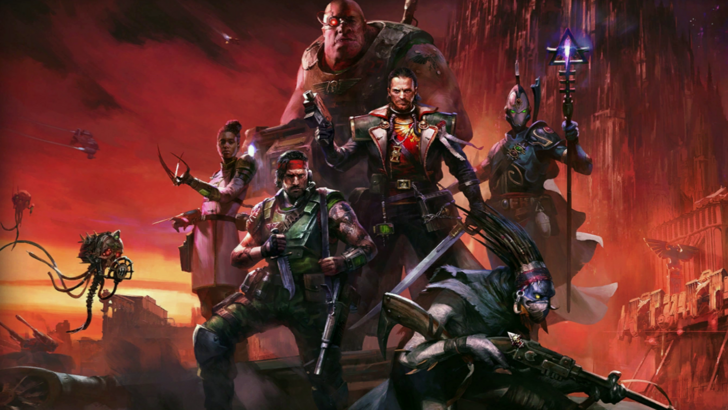
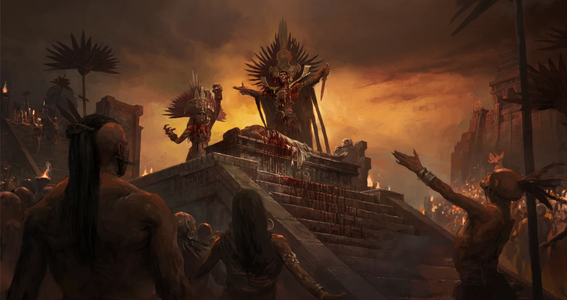
Warhammer 40k: Mechanicus 2 is a single-player, turn-based, tactical strategy game set in the grimdark universe of Games Workshop’s Warhammer 40,000 setting. Framed as an ongoing conflict between the magi of the Adeptus Mechanicus and the Necrons, Mechanicus 2 takes players on a dual-perspective experience through the various skirmishes, conquests, and mobilizations taking place on the surface of Hekateus IV.
Warhammer 40k: Mechanicus 2 features:
⚫︎ Dual-sided campaign for the game’s two factions: Adeptus Mechanicus and Necrons
⚫︎ 20+ unique units for each faction
⚫︎ 5 unique Leaders per faction
⚫︎ Full voice acting with hand-drawn backgrounds and 3D assets
| Digital Storefronts | |||||
|---|---|---|---|---|---|
 PS PS |
 Xbox Xbox |
||||
 Steam Steam |
 Epic Games Epic Games |
||||
| $39.99 | |||||
Warhammer 40k: Mechanicus 2 Review: Strategic Glory Eternal
Adeptus Mechanicus vs. Necrons
Warhammer 40k is one of those settings that doesn’t really need an introduction. By its mere mention, images of blue-clad supersoldiers the size of pickup trucks and cyber-enhanced humans attached to tens of mechanized tubes flash across the mind, and the unmistakable ka-chunk ka-chunk ka-chunk of bolterfire backs the thought like a dreadful dirge.
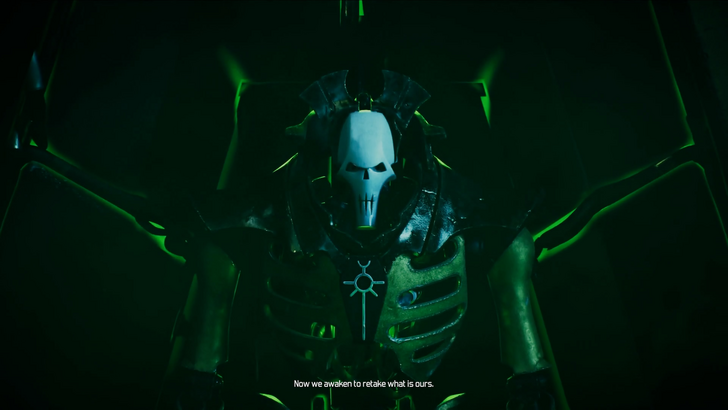
Vivid as that is, you’re not going to see much of that in Warhammer 40k: Mechanicus 2 because this game’s all about the toaster-loving magi of Mars, the Adeptus Mechanicus, and the spookiest xenos from the early days of the galaxy, the Necrons.
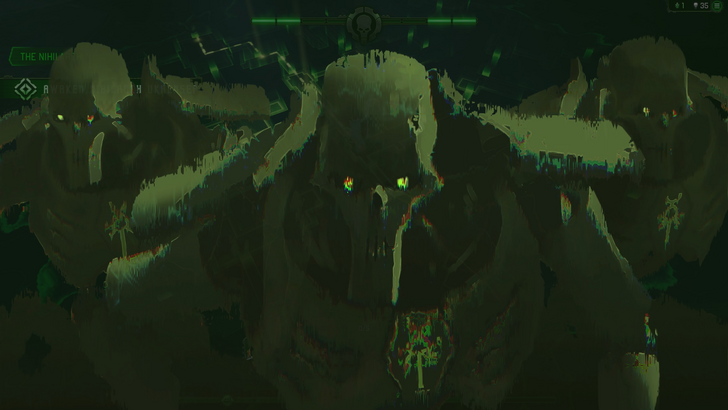
It’s all Gauss lasers, Tesla arcs, and radium blasts for this one, so one can expect the same gravitas that all Warhammer 40k games have from Mechanicus 2. What I didn’t expect, however, was a work of art worthy of the Omnissiah’s praise on top of that.
Personally, I’m more of a Blood Angels and T’au aficionado, but this game’s got me considering giving more stories involving these bloodless weirdos a try. That’s just one of the good things this game has done with them, though, so let’s go through them part by part.
The Magi of Mars Take on the Sankhotep Dynasty
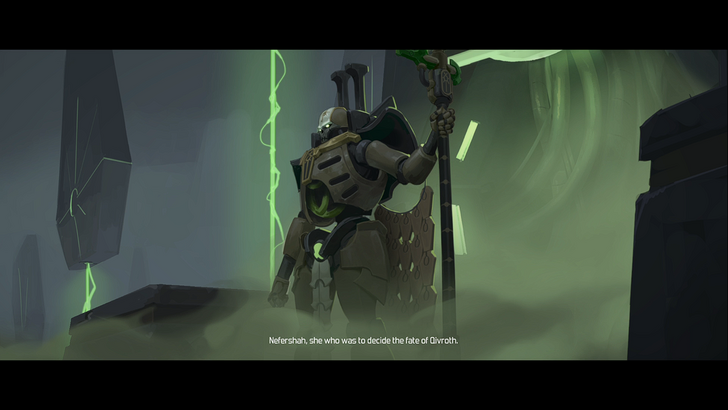
We begin with the game’s story, though I’ve pretty much summed it up already. In Mechanicus 2, as is befitting yet another 40k tale, major factions are fighting over resources, and are willing to do some of the most over-the-top tactics and employ the most uncanny creatures to win. In this case, it’s a planet called Hekateus IV, at least to the Mechanicus, which has just been converted into a Forge World ripe for construction and development.
Unfortunately, they weren’t the first to find this planet, as it turned out to be a Necron Tomb World claimed long before the Mechanicus ever found it. Forced to root out the Necron "menace" from their new asset, the Mechanicus musters its forces to fight against its endless legions until there are none left.
The Necrons, ever pompous and believing this planet to be infested by these human vermin, are just as ready and willing to eradicate the occupiers. And so, the stage is set, with two equally fanatical factions throwing their legions and elites at each other until one is left standing.
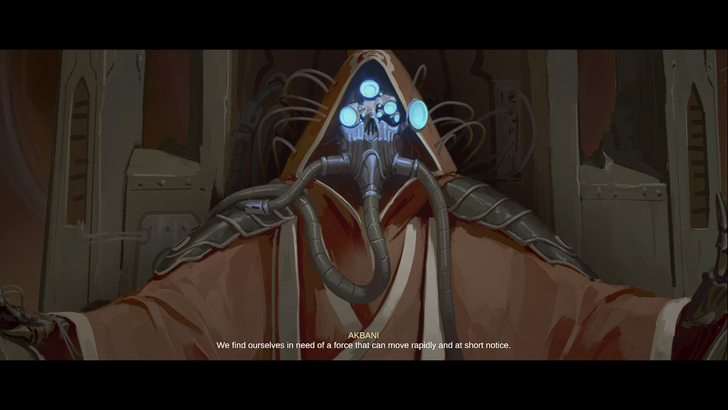
Now that’s where the player comes in, and you can actually choose a side here. Granted, it’s one side per campaign, following their respective perspectives, so no switching sides on the same save. You won’t see me complaining, though. This narrative, though not the first to utilize dual perspectives of the same major historical event, did so to great effect so far, granting context at the best times and cutting each perspective expertly to preserve tension.
A 40k game is only ever as good as its story, or at least its setting and the implications therein, and I can say that this game knocks it out of the Imperium. If I must pick a favorite, the Necrons sing sweeter melodies to my storyteller’s psyche. Whereas the Adeptus Mechanicus are all pretty much just avid lovers of lost technology through and through, the Necrons, ironically, had more overall personality for me to latch on to.
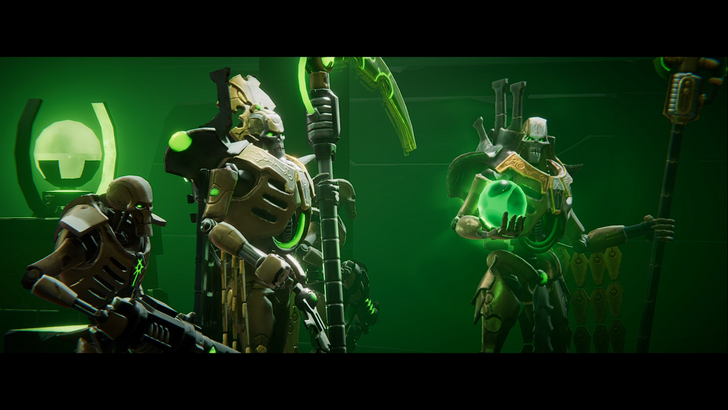
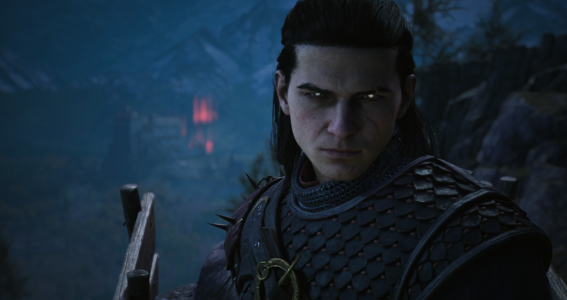
Nefershah, the Vargar of the Phaeron Sankhotep, serves as the main character of the Necron campaign, which itself is rife with betrayals and political plotting in stark contrast to the Mechanicus’ uniform march forward with the development of Hekateus IV. At times, I found myself fully engrossed in the events unfolding, even if the Necrons have all the emotional capacity of a dishwasher. If that’s not good dialogue and character work, then I don’t know what is.
That said, this game is a lot, no matter which campaign you pick. Mechanicus or Necron, the campaign chronicles a massive, planetary conflict spanning continents and multiple simultaneous skirmishes. You’re unlikely to make heads or tails of it if you aren’t already versed in Warhammer 40k’s usual scale. A minor accessibility issue at most, of course. The game’s story still hits harder than it has any right to, so quality isn’t an issue if you find a way to experience it fully.
Taking the Uncertainty Out of XCOM’s Mechanics
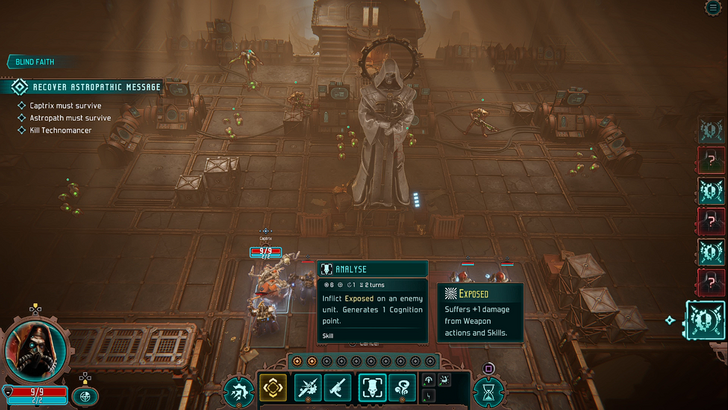
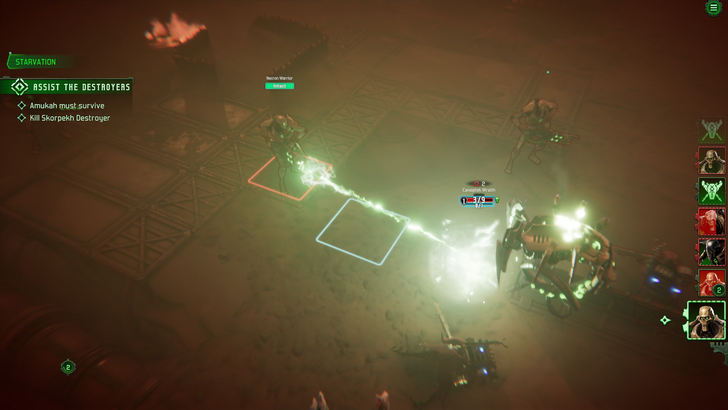
Moving on to gameplay now, Mechanicus 2 operates on a turn-based strategy format played out over a tactical grid, XCOM-style. Unlike XCOM, though, there aren’t any percentage-based chances to hit here, because all you need to worry about is cover, range, and cooldowns.
Units can move, shoot, and do all manner of things their unique abilities allow through a rather generous action economy, featuring cooldowns for powerful abilities, commander-specific activated skills for themselves and their units, and many, MANY attacks.
If someone’s in range, the attack or effect hits; it’s that simple, though the rest of the system is anything but. Each scenario or "Mission" is broken up into a linear path of dialogue encounters, branching choices, and battles called Skirmishes, which is where units actually get to start killing each other.
Wounds don’t heal between skirmishes, and units can just straight up die before you reach the end of the mission, which usually has one last fight for you.
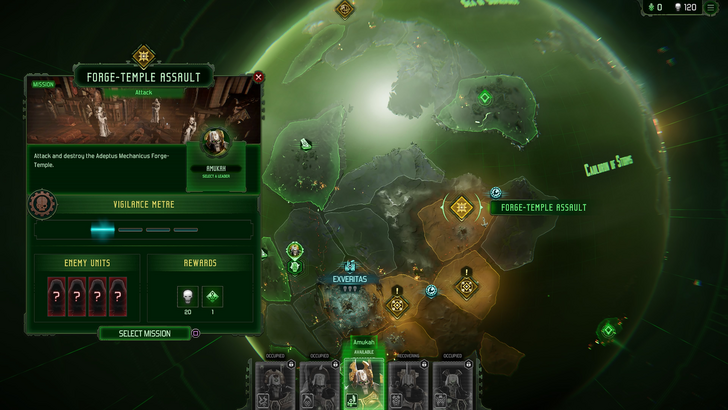
This is a unique setup for sure. Instead of having one big mission from start to end, you’ve got a few small battles that build up the consequences of continued conflict, with a big encounter at the end to cap it off. It keeps things fresh, in my opinion, as even XCOM’s missions could last upwards of an hour in some cases. Here, though? 15-20 minutes at worst, though you do have a few of them per mission.
I also appreciate that this game plays like the tabletop experience, too, focusing more on attrition and scale over arbitrary percentages, just like the rest of the Warhammer universe. This offers a far more satisfying type of strategy that makes every move count for you and your enemy, removing randomness as a factor altogether. That much is a double-edged sword, because no bad luck means no good luck either, so newbies can’t get lucky or rely on percentage-based mechanics like critical hits and random effects to potentially get ahead.
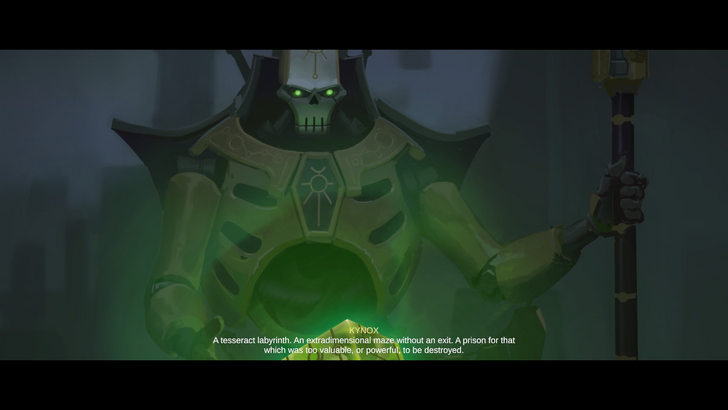
It’s a game that eats novices alive, though not right away. The spike in difficulty comes in the mid-game, after the first major events of each faction’s story. All of a sudden, you’re being swarmed, and the world opens its operations to you as the training canticles come off.
In addition to basic combat missions, you can suddenly assign your unused Leaders to do automatic missions for a certain amount of time, locking them out of your use until then. Then, you can use strategic mission choices to lock off enemy areas and destroy them once and for all.
It’s a lot, to say the least, but the tutorial does take its time, as does the game progression, so even the greenest neophytes can still have a good time if they keep at it.
Digging Deep with Progression
Moving on to the goings on between missions, Mechanicus 2’s progression system is as deep as its tactical combat layer, giving you tens, if not hundreds, of unlocks to experience as you chug through the game’s healthy selection of missions.
Successful missions give currency that you can use to upgrade certain things, like how your squads work, their loadouts, ranks, deployment size—and that’s if they don’t outright just unlock new units to field. Other upgrades are for your commander, for your choices on the branching paths in missions, and even how missions ramp in difficulty.
It’s a veritable trove of unlockables that you can access through tactical gameplay, and I’m here for it. My favorite thing to note about all this is how deliberate and slow it is without getting grindy. Each mission usually only rewards enough for one or two upgrades at a time, so every mission is a couple of steps closer to the most broken builds every time. It’ll take time to get there, but you’ll get there.
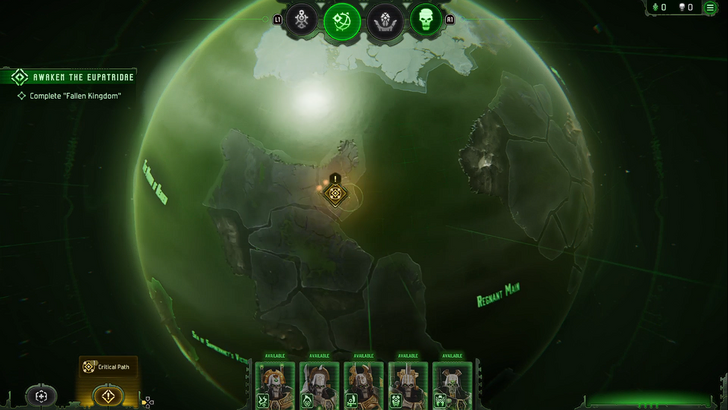
It’s consistent, and the unlocked are balanced well enough that even just one or two feels sufficient. This mirrors how Warhammer 40k has historically approached progression for its tactical strategy titles. Eshcewing basic stat boosts and milestone-based progression, this game challenges you to finish what you started without fail, or try again if you do. It’s like a roguelite in that way, though not in any other, so I won’t consider that a proper definition for this game.
Overall, the game has great depth in the two main pillars of its core gameplay, but even then, that’s not the best thing about Mechanicus 2 that I’m ecstatic to talk about.
Basically Two Games in One
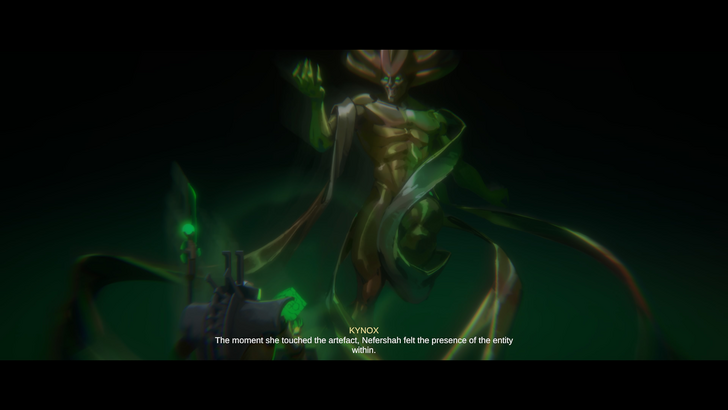
Mechanicus 2 is basically two games in one. What do I mean by that? Well, see, it comes with two campaigns, though many games have done that without earning the distinction. No, this is two games in one because the Mechanicus and Necrons have completely different ways to play, down to the principles of their in-lore tactics, so you experience the same depth in gameplay and progression across multiple campaigns, and from different vantages within the story.
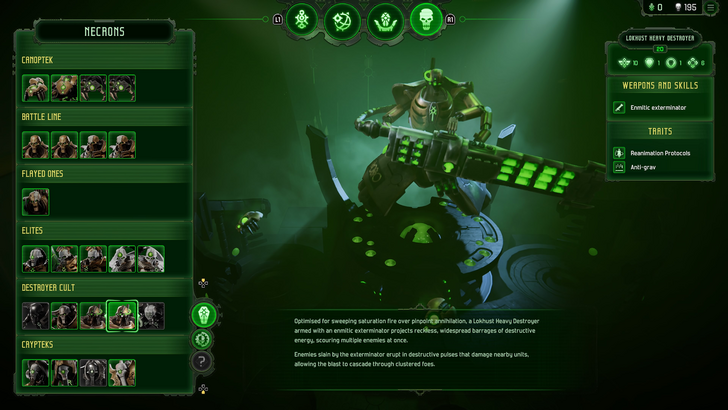
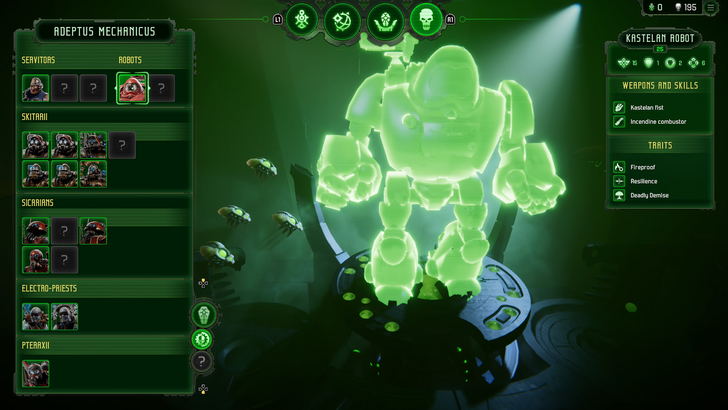
Take the Necrons, for example; their style uses their units as fodder until the elite Necrons can finish their business. Meanwhile, the Skitarii Rangers of the Mechanicus are all designed to take potshots from afar and not move for that perfect shot, all while buffing themselves to godhood. They also specialize in hitting hard and fast using their rust units, and if all else fails, they throw in a Castellan to wreck things up.
Even the progression system for each is completely different, with the Necron Campaign utilizing runes, relics, and symbols to grant powerful abilities if the correct combination of symbols is mixed for each commander, while the Mechanicus works on a per-ability upgrade model, as one would expect for lovers of modular technology.
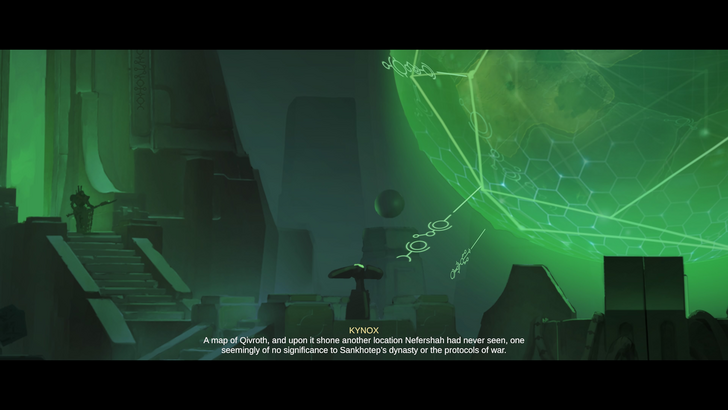
It’s quite the value prospect because playing one campaign is a separate, distinct experience that has the depth of a whole game. It’s called Mechanicus 2, but there’s a whole Necron game in here as well, with its own twisted story of political machinations to go with the Mechanicus’ perpetual zealotry for toasters.
I remember when I got very far into the Necron campaign, thinking that, surely, the Mechanicus campaign might be tiny by comparison because there’s no way they just put two game-sized campaigns into one game. Lo, and behold, when I booted a fresh save for the Mechanicus runthrough, it’s just as, if not more, deep than the Necron one.
It’s hard to find a game that genuinely just has two halves that can stand as their own games in a vacuum; rarer still to find one that can synchronize both into an outstanding strategic experience where neither overshadows the other.
Keeping the Warhammer 40k World Visually and Aurally Striking
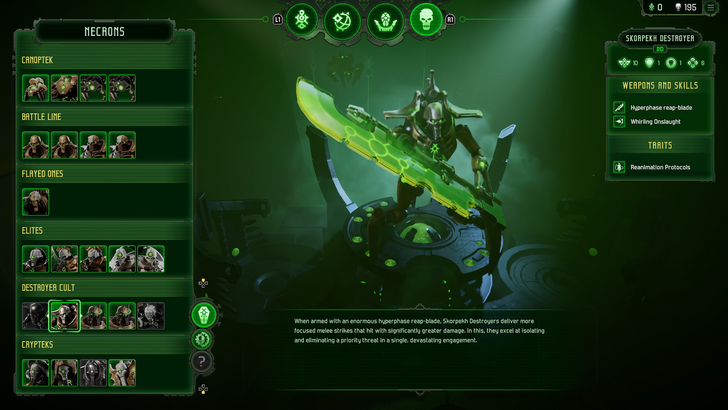
On a more visual note, Mechanicus 2 carries with it the same visual weight as all Warhammer 40k games, barring the truly grot-ridden ones. Appropriately so, I would say, as James Workshop certainly has the budget to go blow-for-blow with Nintendo when it comes to maintaining a consistent brand identity, and Mechanicus 2 is their latest showstopper.
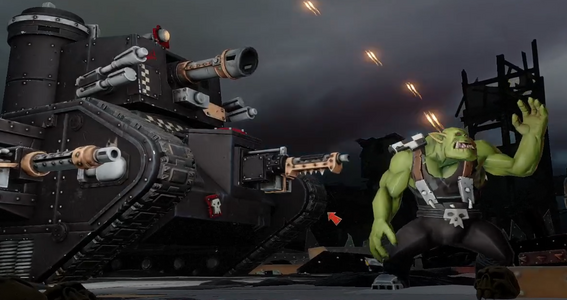
This game’s visuals are distinctly impressive, even if it’s not the biggest entry to the IP like Space Marine 2. Though not as mechanically huge and dynamic, that’s more a restriction of the genre and the resulting POV than it is the game’s visual capabilities, because it does manage to capture the grand scale and detailed dark sci-fi stylings of Warhammer 40k through its art direction and variety of media.
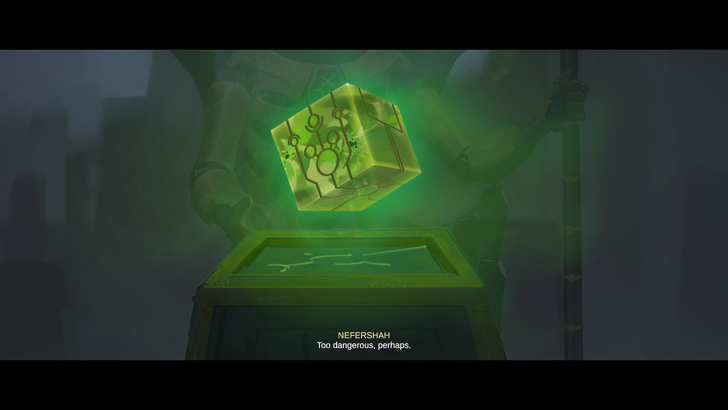
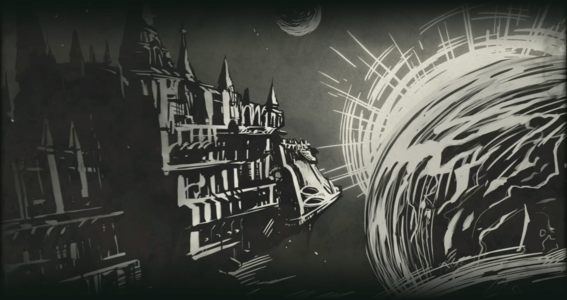
Combining 3D models with painted portraits and striking level design, Mechanicus 2 has multiple avenues to impress and managed to do so with each one. Audio is another medium the game has mastered, with the incessant bit-fragging of the Mechanicus and the ancient rasp of the Necrons coming in sharp and clear through its exquisite voice acting.
Warhammer 40k is a setting of extremes, for sure, but even that didn’t prepare me for such amazing performances across the board for its presentation.
Hard to Get Into if You Aren’t Into It Already
If there’s one thing I can even consider a hiccup to an otherwise amazing game, it’d be accessibility, though it’s hard to blame Mechanicus 2 for an IP-wide issue. 40k isn’t a children’s game by any means, and is as much a narrative experience as it is a philosophical one.
There are a lot of things at play for both sides of this planetary war, which in itself is but a grain of sand in one hourglass among the billions in 40k’s grand calculus, so diving into this as a newbie can become an overwhelming experience. This goes for every 40k game, particularly ones that have lore baked into their gameplay, which is basically all of them.
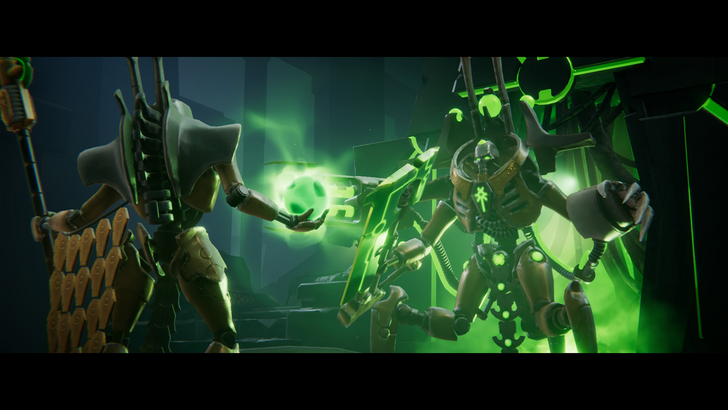
It’s not a bad thing, per se, that the greenhorn 40k fans could get lost in the proverbial sauce because it’s all just the lore. You could know nothing and still enjoy the game’s deep strategy, then come out no more knowledgeable of the Omnissiah or the Necron Dynasties than when you started.
I just won’t recommend this as a gateway to the IP, as it relies on much of the established lore to keep its story going. Remember that, and you won’t need the Emperor’s light to figure out what’s happening here.
By the Omnissiah—It’s Glorious!
So, that’s all the canticles hold for Warhammer 40,000: Mechanicus 2. It’s a great game that I’d be happy to offer up to the great god of machines myself for its interlocking parts and absolute heft. It doesn’t come in at a AAA price, but has more meat on it than some AAA titles that currently exist—and for a game that’s 50% bones, no less!
The game has the depth, vision, variety, direction, and identity to stand out, so why shouldn’t a fan of 40k, strategies, both, or neither try it? Wherever you come from within this grimdark universe’s fold, we can all agree on one thing once we get a taste of Mechanicus 2; that this isn’t just another strategy game, it’s strategic glory eternal.
Is Warhammer 40k: Mechanicus 2 Worth It?
Worth Multiple Worlds—Not That You’d Need to Pay That Much
Warhammer 40k: Mechanicus 2 is a AAA game if we’re measuring vision, execution, depth, variety, and general quality, but it’s a AA game if we’re just looking at price. Coming in at a surprising $39.99, this game is an absolute steal for anyone looking for their turn-based strategy fix.
It’s got two entire campaigns, each feeling like its own game, multiple Leaders per faction, tens of unit types available to each commander, multiple missions launched concurrently across a grand planetary war theatre, and full voice acting to go with its detailed 3D models. This game has everything–multiple planets’ worth, I dare say—but you’d never think it judging from the price alone.
FAQ
How Do You Unlock New Leaders in Warhammer 40k: Mechanicus 2?
Warhammer 40k: Mechanicus 2 grants players 5 unique Leaders with distinct play styles for each faction. To unlock all of them, players must play through each faction’s introductory missions, which lets them test drive each of the Leaders in their own curated missions, before letting the player choose any of them for any missions that come after.
How Do I Unlock New Units in Warhammer 40k: Mechanicus 2?
Unlocking new units in Warhammer 40,000: Mechanicus 2 depends on which faction campaigns players selected.
For the Adeptus Mechanicus, units are unlocked as mission rewards and can be bought using their faction’s unique progression currency, which will then be available to all Leaders once unlocked.
For the Necrons, units are tied to the upgrade trees of specific Lord leaders in their personal Courts, with each Lord having a select Court of unlocked units to select from when chosen for a mission.
Game8 Reviews