



| Umamusume: Pretty Derby | |||
|---|---|---|---|
| Gameplay & Story | Release Date | Pre-Register & Pre-Order | Review |
Umamusume: Pretty Derby is a sports simulation gacha game where players train horse girls inspired by real racehorses through racing careers, heartfelt stories, and idol concert performances. Read our review to see if it's still worth playing in 2026.
This updated review revisits the game one year after the launch of its Global server. Check out our Umamusume: Pretty Derby review during its launch to see how much has changed since then.

Umamusume: Pretty Derby Review History
| Review | Date | Score |
|---|---|---|
| 1st Anniversary | June 2026 | 
|
| 1.0 Release | June 2025 |  |
Overview
What is Umamusume: Pretty Derby?
Umamusume: Pretty Derby is a sports simulation and management gacha game where players train aspiring horse girls based on real-life racehorses through their racing careers. By managing training, races, skills, and support cards across multiple career scenarios, players raise stronger trainees while experiencing character-driven stories inspired by real racing history. Alongside its racing gameplay, Umamusume also features fully animated idol concerts, event stories, PvP modes like Champion’s Meeting, and a steadily expanding lineup of characters and scenarios.
Umamusume: Pretty Derby features:
⚫︎ In-depth Training and Career Management
⚫︎ Character Stories Inspired by Real Racehorses
⚫︎ Winning Live Concert Performances
⚫︎ Over 70 Collectible Trainees and Counting
⚫︎ Robust Inheritance Systems
⚫︎ High-Quality Visuals and Soundtrack
For more gameplay details, read everything we know about Umamusume: Pretty Derby’s gameplay and story.
| Digital Storefronts | ||
|---|---|---|
 Steam Steam |
 Google Play Google Play |
 App Store App Store |
| Free-to-Play | ||
Umamusume: Pretty Derby Review: The Race That Keeps Going
Picking Up the Pace
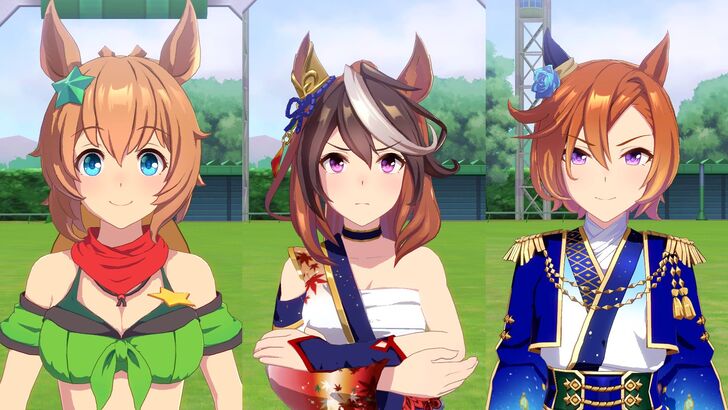
Umamusume: Pretty Derby launched globally last year and quickly became one of gaming’s biggest surprise hits, even going on to win Mobile Game of the Year at The Game Awards 2025. It was a strange, earnest kind of success story that few saw coming. Who expected a game about training horse girls to chase their dreams on the racetrack—only to then watch them perform idol concerts afterward—to become such a phenomenon? Even fewer expected it to spark genuine interest in the real racehorses these characters were based on. It’s a rabbit hole, but one many players happily descended into.
Over the past year, Umamusume has steadily improved alongside its accelerated update schedule. New features, expanded stories, and long-requested quality-of-life additions have helped the Global version evolve quickly, though not without inheriting many of the same growing pains longtime Japanese players already experienced during this era of the game.
The excitement surrounding Umamusume’s future is easy to understand, especially knowing what still lies ahead for Global players. But after a full year of accelerated updates, new scenarios, and enough training runs to mentally scar anyone farming legacies, the bigger surprise is that Umamusume still holds up remarkably well even beyond the novelty that first made it explode in popularity.
The View From The Lead is Ours

Since launch, Umamusume’s Main Story has expanded significantly, adding four new chapters alongside several event stories. While event stories mostly focus on lighter, character-driven interactions between the trainees, the Main Story takes a more dramatic approach, with each chapter acting as a largely self-contained arc centered around a specific trainee, her struggles, rivalries, and racing career. These stories continue to be one of Umamusume’s biggest surprises thanks to their strong pacing, incredible soundtrack, and voice acting that consistently sells even their heaviest emotional moments.
What makes these stories particularly interesting is how heavily they pull from real horse racing history. Umamusume rarely hides the inspirations behind its characters, often adapting famous victories, rivalries, and tragedies directly into its world of idol horse girls. Some details are obviously softened or reworked entirely, especially when dealing with injuries or deaths, but the emotional core behind these stories still remains intact.
Silence Suzuka’s chapter is probably the best example of this. There will be spoilers for Chapter 5 coming up, so if you’d rather experience the story yourself first, feel free to skip ahead to the final image of this segment.
Rather than opening on some triumphant race, the chapter immediately frames itself around the Autumn Tenno Sho — the same race where the real Silence Suzuka suffered the career-ending injury. It opens with Suzuka approaching the zelkova tree near the racetrack before abruptly rewinding several months into the past, and if you already know what happened in real life, that single scene is enough to put a pit in your stomach immediately.
What follows initially feels closer to a more traditional sports drama. Suzuka finds her running style, bonds with the cast, earns victories, and shares plenty of lighter and occasionally comedic moments with Team Sirius along the way. But because the chapter already showed its hand from the beginning, that lingering sense of dread never fully disappears.

Once Agnes Tachyon starts questioning whether Suzuka’s front-running style is physically sustainable, everything suddenly feels wrong in the best possible way. Suzuka’s muscles tightening during training, the Trainer staying up late researching racing accidents, the constant fear that her body simply might not be able to handle the speed she’s chasing — the story quietly transforms from a sports drama into something far more anxious.
What makes it work so well is that the chapter fully understands the player already knows the tragedy. The fear doesn’t come from wondering what might happen, but from desperately hoping the story somehow changes anyway. And honestly, for a moment, I genuinely thought it wouldn’t.
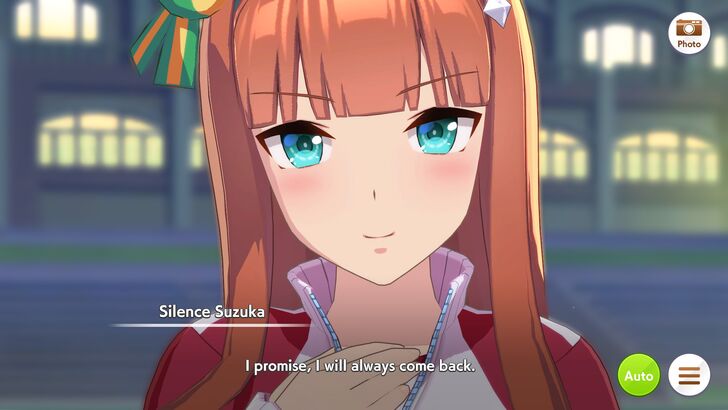
By the time the Autumn Tenno Sho finally arrives, the entire atmosphere becomes weirdly somber. The race feels less like a finale and more like the story bracing itself for impact. Even knowing Umamusume’s generally hopeful tone, the buildup becomes so effective that I genuinely started thinking the game might directly adapt the tragedy after all.
Then Suzuka starts running.
As she pushes forward, the race suddenly shifts into this almost surreal sequence where she’s trapped in darkness, unable to move forward, while the voices of Team Sirius, her friends, and the Trainer call out to her. And when Suzuka finally breaks through that darkness, passes the zelkova tree, and outruns the tragedy hanging over her story entirely... yeah, I cried. The music swells, everyone starts shouting encouragement at once, and the chapter throws every emotional lever it possibly can at the player. And it completely earns it.
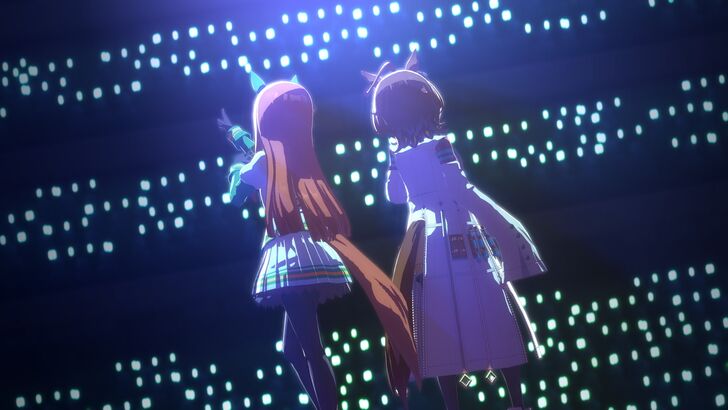
More than anything else, Suzuka’s chapter perfectly captures why Umamusume’s storytelling resonates so strongly despite its bizarre premise. The game isn’t simply retelling horse racing history beat-for-beat. Instead, it reimagines these stories through a far more hopeful lens, transforming stories once associated with heartbreak into emotional victories these characters are finally allowed to overcome. And honestly, I don’t think that’s a bad thing at all.
Part of what makes Umamusume work emotionally is that the game fully understands the history behind these horses while still allowing its characters to move beyond it. Rice Shower’s story, for example, avoids the real-life tragedy surrounding her death entirely and instead focuses on her perseverance, culminating in her long-awaited victory against Mejiro McQueen. Silence Suzuka’s chapter follows that same philosophy. The story never ignores the pain attached to the real horse’s legacy, but instead turns the Autumn Tenno Sho into a moment of catharsis where Suzuka is finally allowed to outrun the tragedy hanging over her career.
In a world like Umamusume’s, where these girls are given the chance to keep running forward, it’s hard not to become emotionally invested in seeing them reach the finish line safely this time.
The Weight Beyond the URA Finale
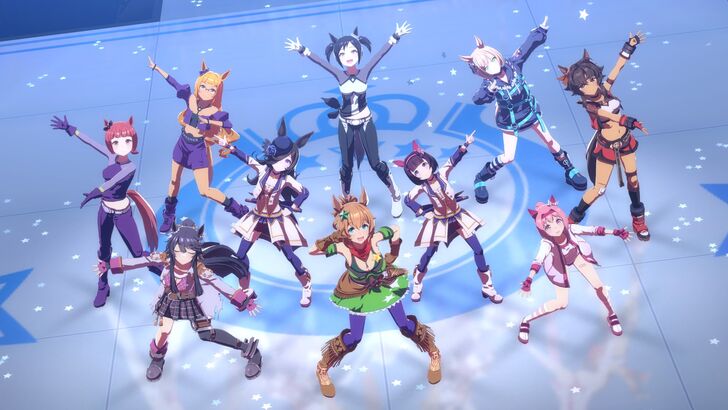
Unity Cup was the first major sign that Global’s accelerated schedule was going to dramatically change how Umamusume would be experienced outside Japan. While Japanese players had roughly six months with URA Finale before the next scenario arrived, Global players only had around four months before Unity Cup released alongside the game’s half-anniversary celebration. It quickly became clear that Global wasn’t slowing down anytime soon.
Mechanically, Unity Cup revolves around Spirit Bursts and managing an entire team of supporting trainees during large-scale team races held throughout a career run. Building up burst meters and timing powerful training sessions becomes the core loop, rewarding players who can carefully balance energy management, stat gains, and team-wide performance all at once. And honestly? It can be exhausting.
Compared to URA Finale, Unity Cup feels significantly more restrictive despite producing much stronger trainees. Runs take longer, energy management becomes far more punishing, and even a single mood drop or poorly timed energy loss can derail an otherwise promising attempt. Much of the scenario’s strength also hinges on RNG. NPC trainees lack consistent specialty priorities, meaning players are often forced to hope multiple teammates align on the same training session for massive stat gains while simultaneously praying they still have enough energy left to capitalize on it.
The scenario constantly feels like a balancing act between greed and survival. Do you push for one massive Spirit Burst turn and risk draining your energy completely, or play things safely and potentially fall behind? Even team composition can become awkward depending on which support cards are brought into a run, especially since NPC trainees inherit skills from their support versions. Haru Urara, for example, remains a strong support card option for the scenario despite contributing no inheritable skills at all.
What makes Unity Cup interesting, however, is how it marked the point where Umamusume’s training systems began shifting away from the relatively straightforward structure of URA Finale and toward something far more optimization-heavy. The scenario asks players to micromanage nearly every part of a run, and while that depth can be rewarding, it also makes bad luck feel significantly harsher.
Then came Trackblazer, the scenario many players once hyped up as the mode that would separate casual players from the tryhards. Ironically, that never really became the issue. Trackblazer is not especially punishing because it is difficult. Instead, it is punishing because of how much time it demands from the player.
Unlike URA Finale and Unity Cup, Trackblazer completely removes traditional trainee goals and instead focuses entirely on accumulating Result Points through repeated races before eventually challenging the Twinkle Star Championship. In practice, this gives players far more freedom than previous scenarios ever allowed. There are no rigid race schedules to follow, no mandatory placements needed to continue a career, and far more room to aggressively pursue fan counts, event points, or legacy farming strategies. But that freedom comes at a cost.
A single Trackblazer run can easily stretch to nearly 40 minutes, even when played efficiently, turning what once were relatively relaxed training sessions into lengthy commitments. The scenario’s heavy reliance on randomized shop items further amplifies the frustration. Entire runs can live or die based on which items appear, how early they appear, and whether players can afford to fit proper training sessions between the constant string of races needed to maintain momentum.

More than anything else, Trackblazer changes the emotional rhythm of Umamusume itself. URA Finale and even Unity Cup still feel like raising a trainee through the highs and lows of her racing career. Trackblazer, by comparison, often feels more like optimizing a build path. The freedom is welcome, and the rewards are undeniably strong, but the sheer length of the mode can make repeated runs feel mentally draining in a way previous scenarios rarely did.
And after spending nearly forty minutes pushing through a run, there are few things more deflating than seeing a disappointing 1-star spark waiting at the results screen.
Keeping The Pretty in Pretty Derby
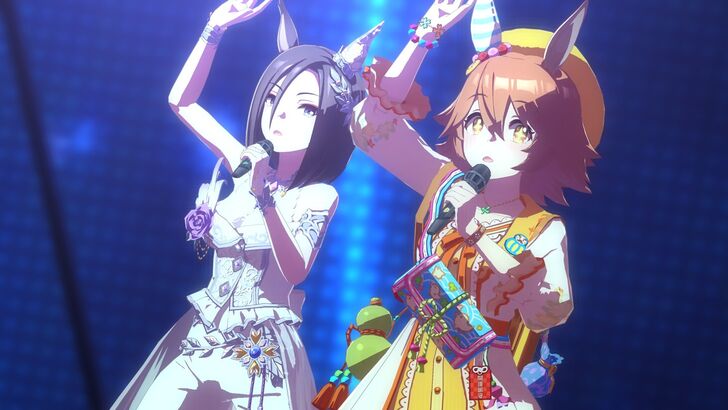
Even a year later, Umamusume still doesn’t disappoint visually. While the races themselves haven’t changed much mechanically, Cygames has done an impressive job maintaining the game’s visual clarity and overall presentation. Character models remain sharp and expressive, and despite races often throwing eighteen contestants onto the track at once, each trainee still feels visually distinct even when alternate outfits enter the mix.
A lot of that comes down to how thoughtfully designed the characters are. Outfits don’t just exist to look flashy; many subtly reflect a trainee’s personality, racing style, or even the accomplishments of the real horse that inspired them. But as strong as the races look, the game’s true visual centerpiece remains my favorite part of Umamusume altogether: the concerts.
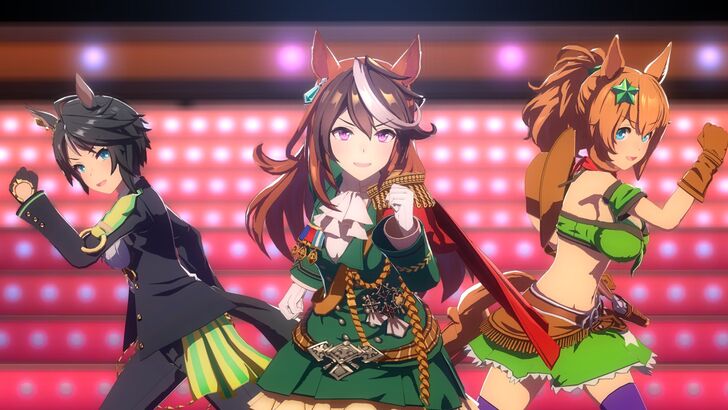
For those somehow needing a refresher after a year, Winning Lives are performance sequences held after races, with the winning trainee taking center stage. What could have easily been treated as a throwaway gimmick instead became one of the game’s most consistently impressive features. And over the past year, the production value behind these concerts has only gotten stronger.
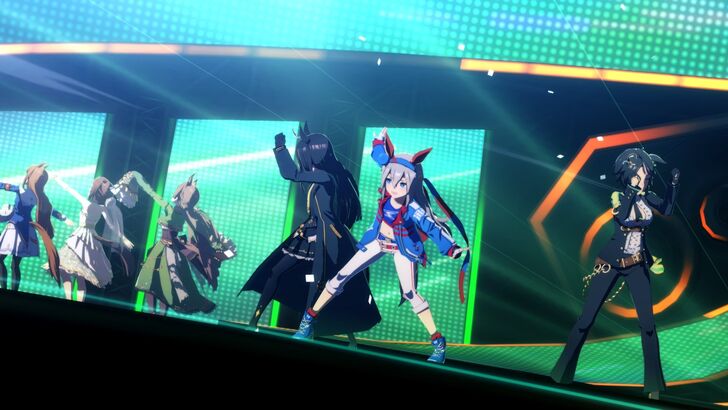
Narita Brian’s “Blaze,” unlocked through her Main Story chapter, immediately stands out thanks to its heavier atmosphere and dramatic use of shadows, giving the performance a far more intimate and emotional tone compared to the game’s usual upbeat energy. On the complete opposite end of the spectrum is “BLOW MY GALE,” a concert bursting with movement, sweeping spotlights, and vibrant green lighting that fully commits to the song’s wind-themed presentation. The staging constantly redirects the viewer’s attention without ever becoming visually messy, creating performances that feel surprisingly theatrical for what began as a horse racing gacha game.
That same attention to detail carries across nearly every new concert added since launch. The lighting, choreography, crowd penlights, camera work, and trainee-specific outfits all come together to create performances that still feel rewarding to watch even after hundreds of races. More than anything else, the concerts embody what makes Umamusume’s presentation so memorable: Cygames treats every part of the game with complete sincerity, no matter how absurd the premise might initially sound.
Quick But Out of Breath

By now, it’s impossible to ignore just how fast Global Umamusume is moving. In addition to major scenarios arriving earlier than they originally did in Japan, Global players also received a steady stream of quality-of-life updates, side features, and system adjustments at a pace far quicker than the original release ever did. As a result, Global Umamusume reached a far more refined state much earlier into its lifespan.
Features like Trainer Cards and the Photo Studio gave players more ways to personalize their accounts beyond simply showing off strong trainees. The ability to archive home screen conversations was also a surprisingly nice addition, especially for a game where attachment to the cast is such a huge part of the experience. On the gameplay side, event rewards and daily missions were adjusted to better fit the accelerated pace, making Carat income feel far less restrictive than many players initially feared.
Even smaller quality-of-life additions helped smooth over some of the game’s rougher edges. Support event choices now preview their outcomes ahead of time, including stat gains and skill hints, making training far less dependent on blindly memorizing event options or keeping third-party guides permanently open on another monitor. Event point bonuses were also reworked to be significantly less restrictive, no longer forcing players to run very specific support cards or trainees just to farm efficiently. However, the accelerated schedule also changed how players approached Umamusume entirely.
Because Global exists nearly four years behind Japan, much of the game already feels “solved” long before content even arrives. Players already know which support cards remain futureproof, which trainees dominate certain Champion’s Meetings, and which banners are worth saving for months in advance. In some ways, this benefits free-to-play players since resources can be planned around with near-perfect foresight. At the same time, however, it also creates an environment where experimentation feels increasingly rare.
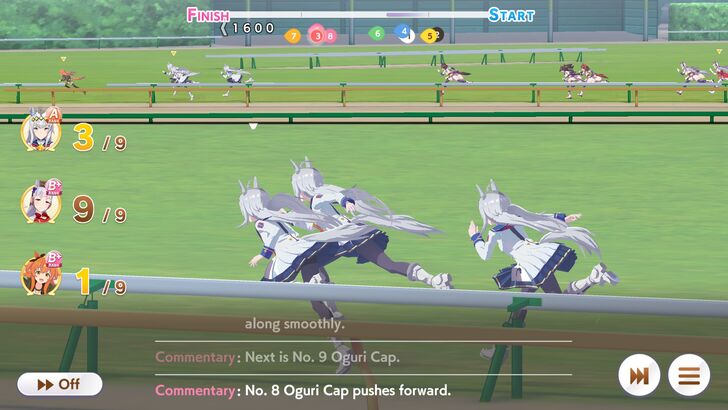
For players especially interested in Champion’s Meeting, Umamusume can start to feel less like raising your favorite trainee and more like following an optimization roadmap built years in advance. Skill descriptions themselves still remain frustratingly vague despite the game’s increasingly competitive environment, often forcing players to rely on community spreadsheets and third-party websites just to understand exact activation conditions or stat values. Once players begin engaging with higher-level PvP, the gap between casual understanding and optimized play becomes immediately noticeable.
Ironically, this is also where Umamusume’s free-to-play friendliness becomes a little more complicated.
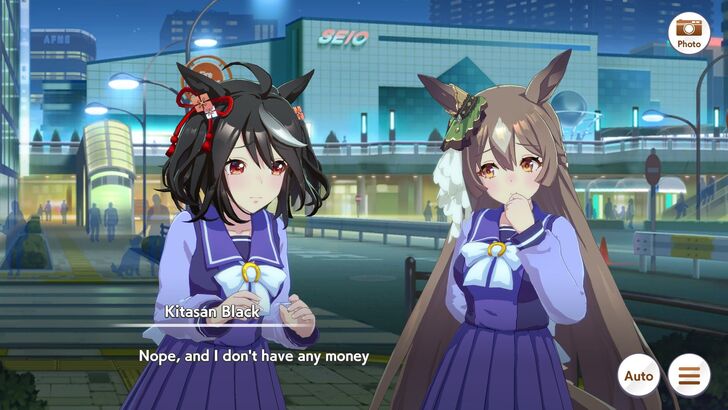
The game is still remarkably generous compared to many gacha titles. Strong SR cards remain genuinely viable at high uncaps, event cards regularly fill useful niches, and older staples like Kitasan Black, Super Creek, and Fine Motion continue to hold value even a year later. But because Global players already know what the “correct” pulls are months or even years ahead of time, pulling simply for affection can sometimes feel quietly punishing for players trying to remain competitive.
And honestly, that might be the strangest part of Global Umamusume’s first year overall. Thanks to years of hindsight from Japan, Global players experienced the game’s evolution at an incredibly accelerated pace. The result is a version of Umamusume that became more convenient, more refined, and more approachable much faster than its original release ever was — but also one that became exhausting far sooner as well.
Is Umamusume: Pretty Derby Worth It?
Still Running Forward
A year later, I still think Umamusume: Pretty Derby is something genuinely special. Beneath the absurd premise of anime horse girls racing each other and performing idol concerts lies an incredibly sincere game carried by strong storytelling, fantastic presentation, and a surprising amount of heart. The races still feel thrilling when the final stretch gets tight, the concerts somehow continue getting more visually impressive with every update, and the cast itself remains easy to grow attached to thanks to how consistently the game treats its characters with care.
That does not mean the experience is flawless. The accelerated schedule has made Global Umamusume both more convenient and more exhausting at the same time, especially for players interested in optimization or Champion’s Meeting. Trackblazer runs can feel draining, PvP often feels overly solved due to years of foresight from Japan, and some of the game’s systems still rely far too heavily on third-party resources to fully understand. But even with all of that, the game still functions remarkably well as a casual experience. Raising your favorite trainee, watching their stories unfold, and seeing them cross the finish line never really loses its charm.
More than anything else, Umamusume succeeds because of how sincere it is. The game fully commits to its bizarre premise without irony, and that sincerity carries nearly every part of the experience, from its emotional story chapters to its over-the-top concerts and heartfelt character writing. One year later, it’s easy to see why so many players stayed long after the novelty wore off. And honestly? Yes, I still absolutely recommend it.
How to Catch Up as a New Player

Starting Umamusume a year after launch can look a little intimidating from the outside. Between the growing trainee roster, support cards, inheritance mechanics, and enough community spreadsheets to make your head spin, it's easy to assume you've already missed the boat. Fortunately, catching up is far less painful than it first appears.
The biggest thing new players should understand is that support cards matter far more than trainees early on. Rerolling for powerful support cards such as SSR Super Creek or SSR Fine Motion can give an account a strong foundation, as both remain useful well beyond the early game and make for reliable long-term investments. New players also receive a free 3-star trainee to help get started, with Oguri Cap remaining a popular recommendation thanks to her versatility, though picking a favorite character is honestly a perfectly valid option as well. Between the free trainee selection and strong friend supports, there's also no need to spend hours chasing a perfect start before you can begin enjoying the game.
Here's a general rundown of how to get started:
| New Player Catch-Up Guide |
|---|
| 1. Consider Rerolling for Strong Support Cards |
| 2. Claim Your Free 3-Star Trainee |
| 3. Add Friends for Support Cards and Legacy Trainees |
| 4. Read Stories for Additional Carats |
| 5. Complete Daily Missions and Limited-Time Events for Rewards |
| 6. Complete Career Runs and Build Your Roster |
| 7. Upgrade Support Cards and Trainee Potentials |
| 8. Participate in Team Trials, Events, and Clubs |
From there, most progression simply comes from raising trainees and steadily improving your account over time. Friend supports and legacy trainees help bridge much of the gap between new and veteran players, while stories, events, and career runs provide a steady flow of resources. Reaching the level of long-time Champion's Meeting competitors will naturally take patience, but getting to the point where you can comfortably participate in events, build teams, and enjoy everything Umamusume has to offer is far less daunting than it initially seems.
If you’re interested in catching up with the game’s contents, you can check out our guide using the button below:
Umamusume: Pretty Derby Related Guides
Umamusume: Pretty Derby Wiki Front
Guides by Category
| Umamusume: Pretty Derby Categories | |
|---|---|
 Story Story |
 Career Mode Career Mode |
 Races Races |
 Banners Banners |
 Characters Characters |
 Tips and Tricks Tips and Tricks |
 News News |
 Support Cards Support Cards |
 Skills Skills |
 Game Modes Game Modes |
 Events and Choices Events and Choices |
 Champions Meeting Champions Meeting |
 Items Items |
- |
Premium Guides

Sign up for a free membership or Log in to read these premium articles! |
Game8 Reviews