


| MOTORSLICE | |||
|---|---|---|---|
| Release Date | Gameplay & Story | Pre-Order & DLC | Review |
Overview
What is MOTORSLICE?
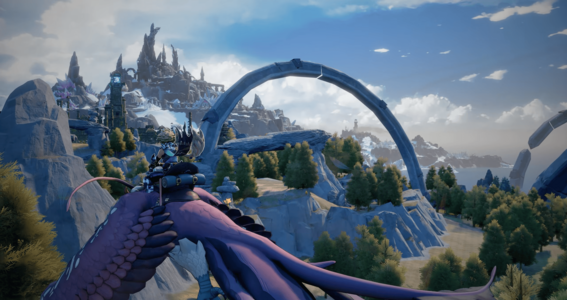
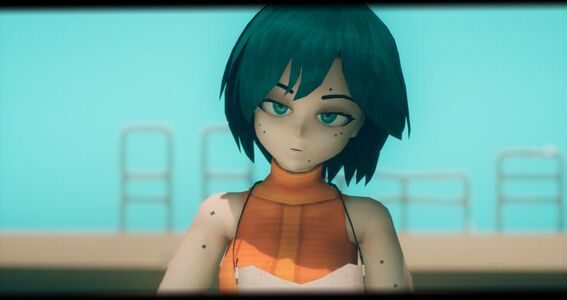
MOTORSLICE is an anime-style action-adventure parkour game by indie developer Regular Studio. Using the concepts of megalophobia, liminal spaces, and brutalism combined with breakcore music, MOTORSLICE is meant to be a modern and stylish take on platformers. Players will have to run, vault, and slice their way through a deserted megastructure housing deadly traps and machines over a hundred times the size of the protagonist, a girl named P—and the levitating Orb Drone that serves as her companion.
MOTORSLICE features:
⚫︎ Female Protagonist
⚫︎ PS2-Era Graphics
⚫︎ Dialogue Choices
⚫︎ 3D Action Platforming
⚫︎ Parkour Mechanics
⚫︎ Gigantic Boss Battles
For more gameplay details, read everything we know about MOTORSLICE’s gameplay and story.
| Digital Storefronts | |||||
|---|---|---|---|---|---|
 Steam Steam |
 PS PS |
 Xbox Xbox |
|||
| $19.99 | |||||
MOTORSLICE Review: A Great Slice of P
A Juxtaposition That Cuts Just Right
Can you imagine getting baited immediately twice over within the first hour of a game? Just imagine an upcoming game that piques your interest; the character designs are cool, the theme and tone are right up your alley, which are just enough to lead you getting the game. Then, you get to playing it, where you find that most of the cutscenes you’ve seen so far are just the main character slacking off and goofing around, only to then find it endearing because they’re that likable.
That’s exactly what happened to me with MOTORSLICE.
I didn’t expect much from it, really. But it surprised me just how much I enjoyed the many platforming segments and its varieties, as well as the nostalgic presentation that give it a unique character and atmosphere. But most of all, I was surprised how much I enjoyed learning its world through the eyes of a green haired tomboy with a chainsaw who absolutely cannot afford to fail.
The Machinations of P’s Mind Are an Enigma
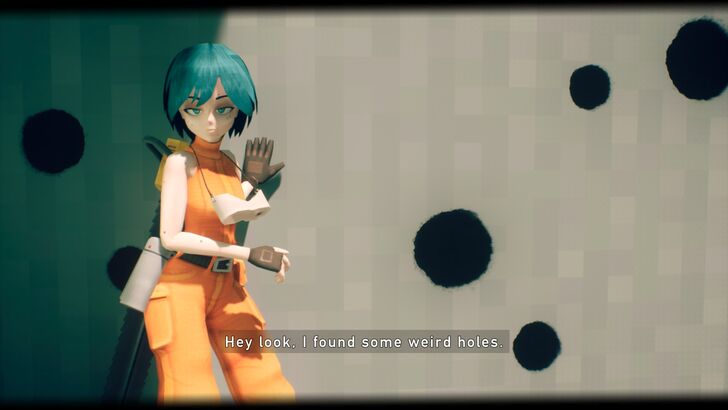
The narrative of MOTORSLICE follows P, a slicer who’s arrived at a massive collection of buildings called an array megastructure and is tasked with destroying every machine in what her operator, G, calls a godforsaken place. It doesn’t waste any time in setting up the stakes, the danger, and the objective that P has to achieve by saying that "failure is forbidden."
Unfortunately, the Orb drone her operator is using malfunctions due to signal loss, leaving P alone without backup or any recon support. As a result, P has to fix it herself and, interestingly, notes that this has happened before. After doing so, she christens it with the name “Orbie” and becomes the game’s camera, as well as who you are in the overall story. I have to note how interesting the setup is, because the game quite literally takes a character in its story and turns them into a lens through which the player sees P’s journey.
But that’s not quite what makes the narrative interesting.
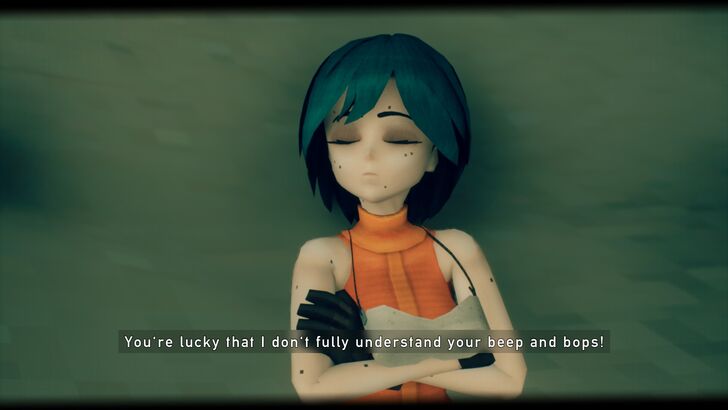
As you progress through the story, it becomes quite clear that P uses Orbie as a way to vent and let off some steam, and it wouldn’t be inaccurate to even describe her situation as similar to that of Tom Hanks in the 2001 movie, Cast Away. In a way, the narrative and worldbuilding are told through the stories and experiences that P shares as she slacks off from time to time.
It’s in her breaks where she starts to divulge more about the world and even her feelings about her current situation. This is where P showcases her personality; She’s someone who’s quite aloof, funny, realistic, and slightly delusional at the same time. She brings up her issues with team missions with fellow slicers, how her name is actually a rank depending on job performance, how she chose her weapon, and even just appreciating a hot cup of coffee from time to time. But there are times when her conversations with Orbie start to become inappropriate.
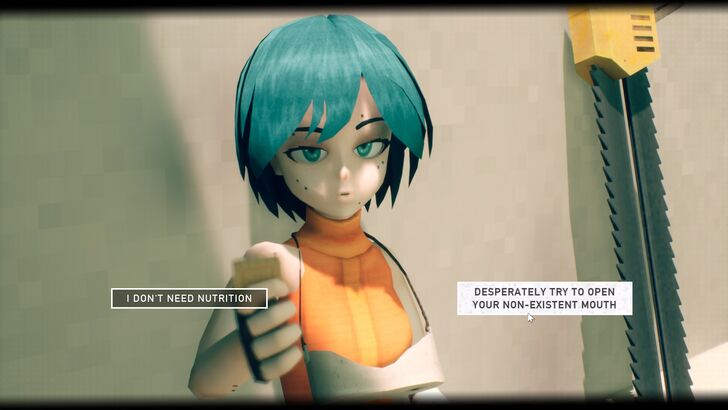
This is where its storytelling takes a hit, because the dialogue she has with Orbie becomes jarring, given how it handles your choices. For instance, you only get two dialogue options, and the tone of each is either too serious or too perverted. I wasn’t a big fan of how it was handled, especially since it sort of feels like you’re either a buzzkill or a degenerate. There was no middle ground.
But then I realized that this is what would essentially happen to anyone who’s on a suicide mission with no one else to talk to. You see P go through intense situations, fighting machines of all sizes, escaping from death traps, and even climbing and navigating her way out of buildings and towers with nothing but her parkour skills and her chainsaw. No support, no rules, and having no other choice but to go through with it.
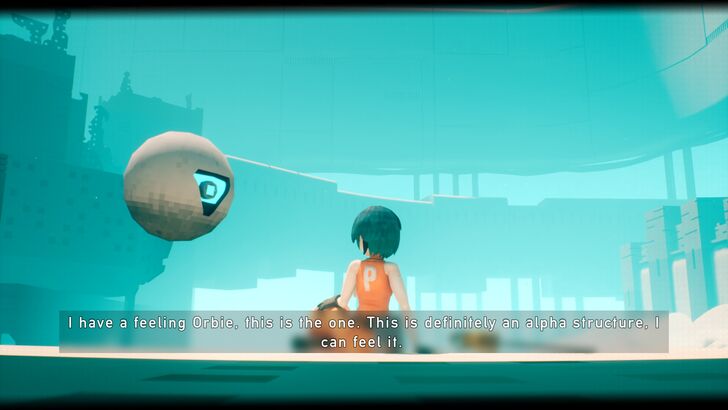
Not exactly saying that I enjoyed all of the shoehorned dialogue, but judging from where P was coming from, I get it. I can’t imagine myself going through that kind of situation without going insane, and like the aforementioned Cast Away, P might have just needed her Mr. Wilson to get through the mission.
This was where I thoroughly enjoyed how the story unfolds: despite the inappropriate dialogue, the one-sided worldbuilding is wonderfully told, and it makes you cheer for a green-haired tomboy who’s just trying to do her job and appreciating the little things in her life.
Brutalist Aesthetic That’s Both Functional and Nostalgic
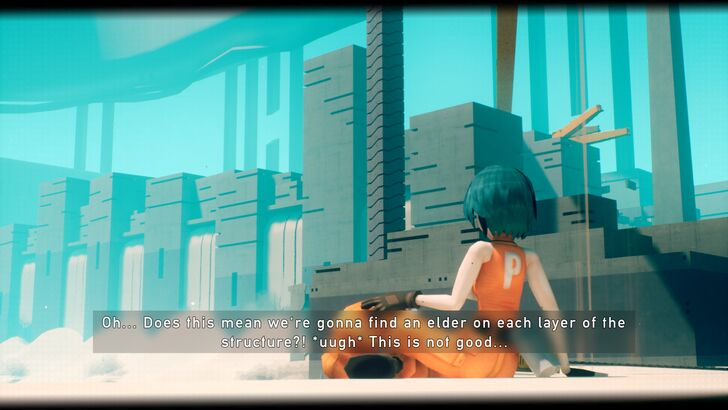
Let’s move on to the visuals, which is what I think is the best part of the game. The use of PS1- or PS2-era textures is nothing new, but it’s in the color grading and environmental details where MOTORSLICE shines the most.
The brutalist theme of its artistic direction makes it look heavy on the surface, mirroring just how bleak the situation is. But the clever use of color contrasts to highlight enemies, show you where to go, and even emphasize P's position in wide shots makes the game a visual marvel.
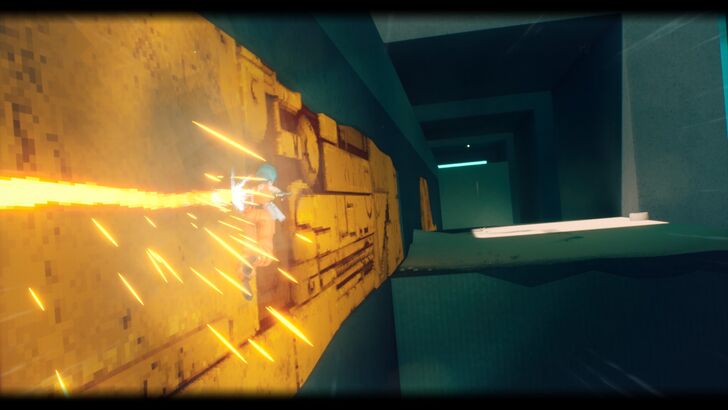
It’s easy to just add "yellow paint" to show players where to go and break the overall immersion, but it’s another to use it to your advantage and add color to a drab background. This is also evident in its environmental details: while each area has roughly the same colors, they use subtle hints to make navigation easier without outright showing them to you.
You’d see an orange-colored railing and pipes to swing from, oddly shaped cracks on the walls, and even marks on the walls where you can clamber and wall-run onto, and you’d get an impression of where to go from there. And while this does give the impression that the game’s stage design is linear, there’s actually more than one way to progress through areas, encouraging exploration.
Is it the most visually appealing game? No, especially for those who don’t appreciate what games looked like back then. But MOTORSLICE’s visual execution definitely makes a case for being among the best, using its aesthetic and simple contrasts to its advantage. It’s nothing short of a masterpiece in how a game manages to not only look right, but also feel right through its gameplay.
Platforming is the Name of the Game
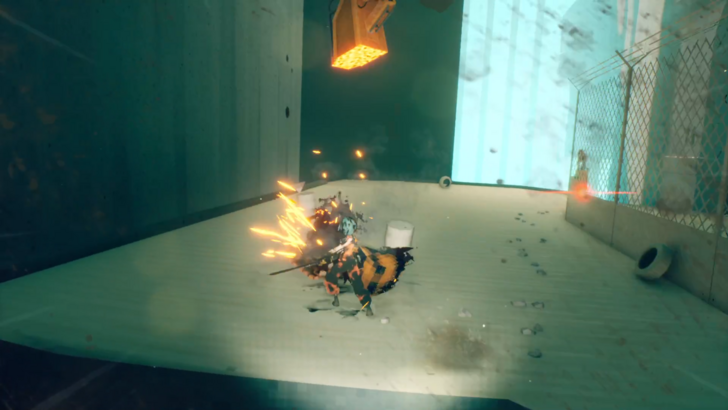
Gameplay-wise, MOTORSLICE is a mixed bag. In a summary, it has great puzzle-platforming segments, but pretty lackluster combat that doesn’t hold much weight to it. Think, Prince of Persia: Sands of Time, as it shares similarities in many gameplay beats.
Combat is very simple: P swings her chainsaw with a push of a button, and you parry enemies using a timed attack matching visual cues. There’s also a roll button, but I didn’t use it much beyond an actual last resort. There is some enemy variety, but since combat is a one-hit situation for you and most of the enemies, there’s not much strategy in the grand scheme of things.
Most of the time, combat is merely a way to break the monotony of its gameplay. I won’t discount that it effectively succeeds in doing so, but it’s also clear that it really could have been better if it had more going for it. For one, encounters don’t last long enough, even when you’re already past the midway point of the game. If it had just a bit more complexity, like having more mechanics involved when dealing with other enemy varieties, then it definitely could’ve been better than how it is right now.
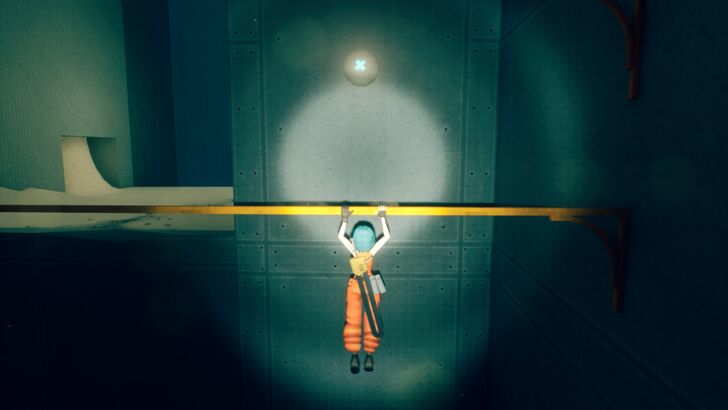
In contrast, platforming is where the gameplay shines. While most of its mechanics don’t reinvent the wheel by using momentum, wall jumping, wall-running, and even the clambering from swing to swing, it manages to be both engaging and satisfying as you progress through increasingly difficult platforming challenges.
Initially, you’re mostly just doing simple gap jumps from point A to point B, then it gradually mixes in wall runs, swings, and even its exclusive platforming gimmick, where P uses her chainsaw as a traversal tool on distinct colored platforms (we’ll call this motorslicing for convenience). It slowly integrates its platforming into intricate puzzles that are ultimately satisfying to both solve and complete.
Additionally, the stage design for all 9 chapters is well-paced; it varies the difficulty and the number of these platforming sections sporadically without making it feel overwhelming. This is also evident in its chapter bosses, where they’re made to be Shadow of the Colossus-esque. They’re not all great hits, as some of them can be a little more annoying to deal with than others, but more than half of them were definitely fun tests in being able to test your execution.
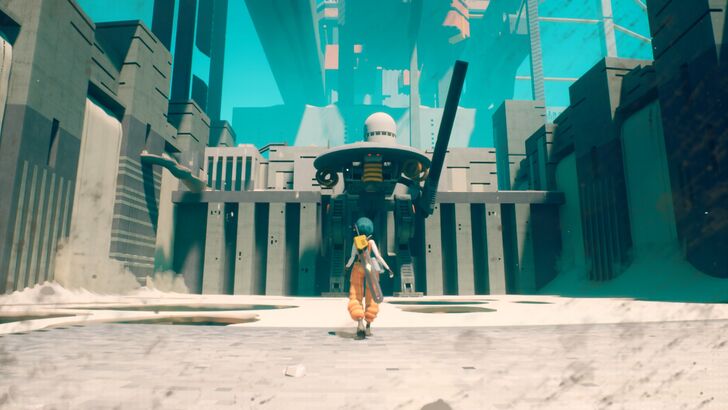
One enjoyable boss fight is in Chapter 3, where you climb and motorslice around a gigantic bipedal walker. While I won’t say it was the best boss in the game, it was one of the early bosses that successfully showcases how grand it feels to fight these colossal things and how it also reinforces platforming as the star of the show.
Unfortunately, its demand for precise platforming is also where it suffers and where the frustrations start to show. The controls aren’t the greatest, more specifically the way that techniques are tied to her orientation makes it inconsistent to deal with all throughout the game. In my case, these were commonly found in chaining wall runs as well as changing directions when motorslicing. These two movement skills became aggravating to both learn and execute, as these were usually paired together in the game’s many platforming segments and even boss fights, leading to many gruesome deaths.
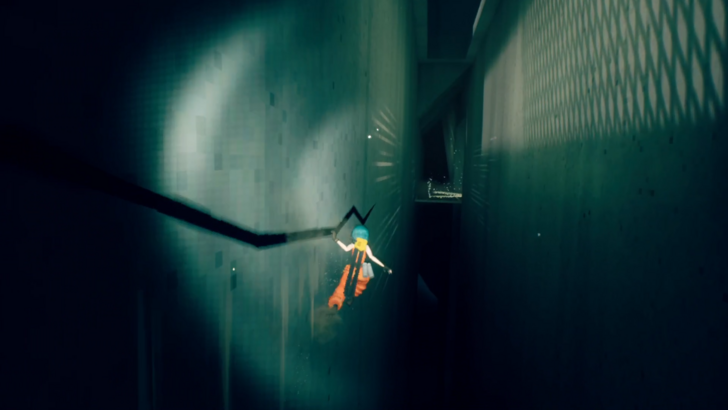
It’s not as if they’re impossible to do, but it does become frustrating when you have to restart a whole platforming segment because of how awkward it is to pull off until you get the hang of it.
Yet, even with all of that said, the platforming remains immensely satisfying, to the point where the satisfaction clearly outweighs the frustrations that come with it. And it’s definitely on brand with how P roughly deals with situations on her own terms. Sure, it could’ve been better with a little bit more action, but the way it lets you be free in exploring options and solving these challenges is a breath of fresh air that is certainly worth the effort.
Immersion is the Heart of It All
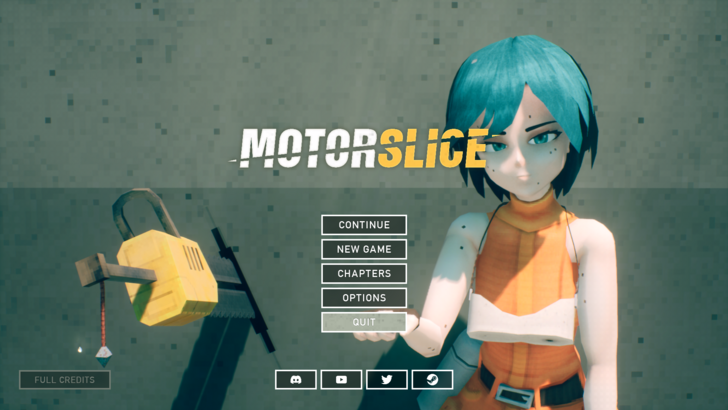
Lastly, I simply can’t end the review without talking about its immersion, or rather, the amount of immersive mechanics there are in the game. Earlier, I mentioned that the player plays as Orbie the Orb Drone following P, which doubles as both the game’s camera and a narrative device. However, there are also quite a few things that it can do that are quite useless in the grand scheme of things, but elevates the immersion of the game.
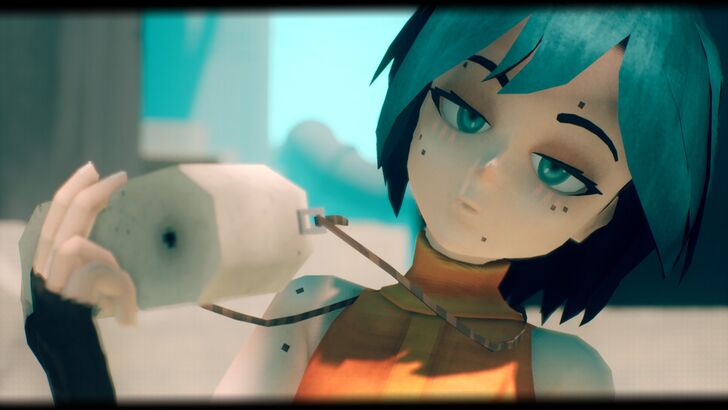
For instance, you can take selfies in the game. Of course, it’s not particularly useful, but it’s cool to see P interact with Orbie as a character and not just skip straight through to Photo Mode. Another example is being able to interact with P in various ways during cutscenes and in selfies, by poking her character model. While it does feel like you’re just eliciting an inappropriate response from time when doing so, it adds to the immersive experience nonetheless.
Like who wouldn’t be interested in seeing a character model force quit your game because she got irritated by all the poking you did to her in the title screen?
Is MOTORSLICE Worth It?
Definitely a Slice Worth Its Cost
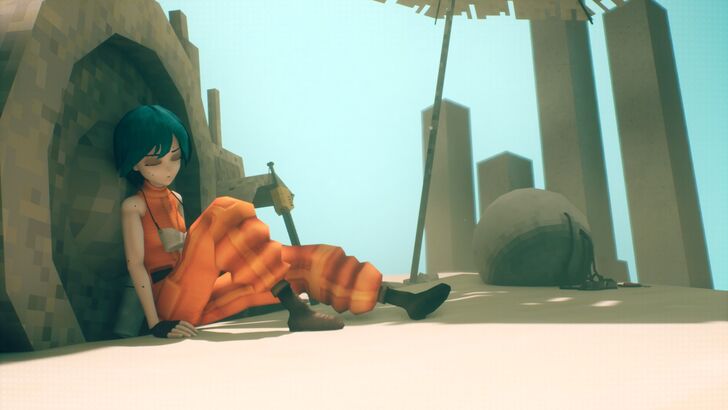
MOTORSLICE is definitely a game that surpassed my expectations. I didn’t expect much out of the game, honestly, but I was able to appreciate what Regular Studios was going for with how surprisingly cohesive its elements are. And, yes, P is also just that endearing. I can’t help but watch her rave and rant about the most mundane things, even if the choices don’t necessarily reflect that.
Priced at $19.99, it offers about 9-10 hours of gameplay, which is already a bargain when it comes to games in the same genre and price range. It takes advantage of its "dated" visuals by both reinforcing its aesthetic and theme, while smartly using color contrasts and various environmental details for both form and function.
Additionally, its stage design and platforming mechanics are satisfying to pull off, despite having annoying controls to deal with, making a majority of its gameplay enjoyable in many opportune moments. The replayability isn’t quite amazing, as there aren’t any post-game additions when finishing the game, but the developer has stated that there may be future plans to add more to it, so that’s also worth considering.
FAQ
What are the System Requirements to Play MOTORSLICE on Steam?
The System Requirements as listed on Steam are as follows:
| Specifications | Minimum | Recommended |
|---|---|---|
| OS | Windows 10/11 with the latest updates | |
| Processor | intel core i5 8th gen | intel core i5 10th gen |
| Memory | 8GB RAM | |
| Graphics | GTX 1050 | GTX 1070 or more |
| Storage | 3GB | |
| Additional Specs | Direct X12 | |
Game8 Reviews