



| Mongil: Star Dive | |||
|---|---|---|---|
| Release Date | Gameplay & Story | Pre-Order & DLC | Closed Beta Test Review |
| Review | |||
Overview
What is Mongil: Star Dive?
Mongil: Star Dive is the latest monster taming action-adventure RPG by South Korean developer and publisher Netmarble Corp. It is the sequel to Netmarble’s Monster Taming
(localized in North America as Creature Academy), a popular creature collector mobile game that was originally released in 2013 and reached its end of service in 2023.
Mongil: Star Dive features a mix of monster taming and traditional action RPG combat similar to well-established games such as Genshin Impact, Zenless Zone Zero, and Wuthering Waves. Players swap between any of the three deployed characters of their choosing to launch chain attacks. Elemental damage plays a role in the combat as well; players can select specific characters to deploy depending on the enemies’ weaknesses.
Mongil: Star Dive features:
⚫︎ Swap-based action combat
⚫︎ Event character guaranteed on gacha
⚫︎ Monster collection gameplay
⚫︎ Gear crafting system
⚫︎ Boss raids
⚫︎ Minigames and bounty systems
For more gameplay details, read everything we know about Mongil: Star Dive’s gameplay and story.
| Digital Storefronts | |||||
|---|---|---|---|---|---|
 Epic Epic |
 Android Android |
 iOS iOS |
|||
| Free-to-Play | |||||
 PS PS |
 Xbox Xbox |
||||
| Coming Soon | |||||
Mongil: Star Dive Review: Only Lands Among the Stars
Perhaps Just Another Mobile Action RPG
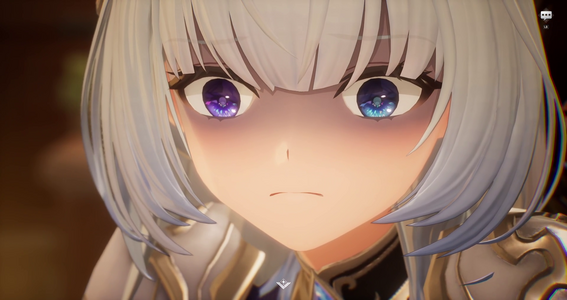
There’s no doubt that the mobile action RPG market is oversaturated. Considering that the vast majority of them are live service, having to choose between the likes of Zenless Zone Zero, Wuthering Waves, Endfield (though this is arguably more like Factorio than anything), and even the oldies that are still very much relevant like Punishing Gray Raven and Honkai Impact 3rd feels like an exercise in over-analysis instead of just a purely subjective choice. After all, every single one of them has something unique and compelling to offer—and they’re very good at those things, too.
The same can’t really be said about Mongil: Star Dive. In terms of gameplay, it just feels like a mix of different mechanics already present in its peers implemented with varying degrees of success—or failure. Unfortunately, this means that it occupies a precarious position in the market where there’s always something better if you’re looking for a specific feature or mechanic. For example, collecting monsters as equipment is done by Wuthering Waves much better. Movement is much tighter in Zenless Zone Zero, too, and both games beat it in terms of optimizing swap-based combat.
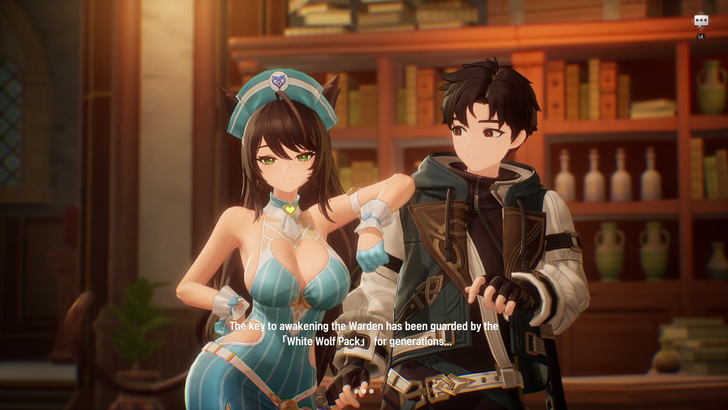
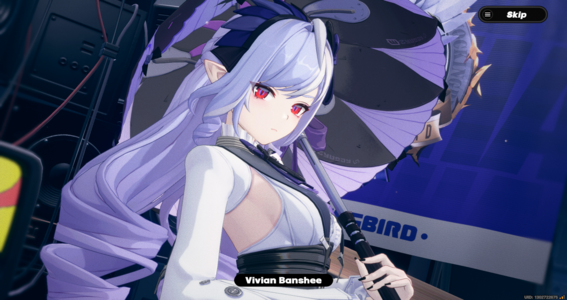
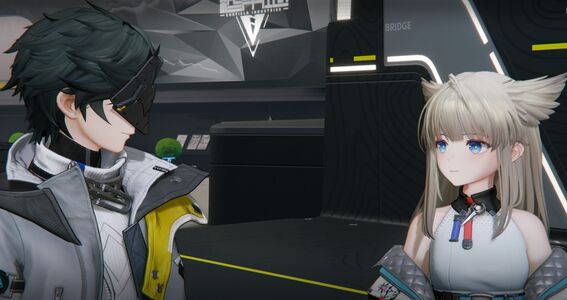
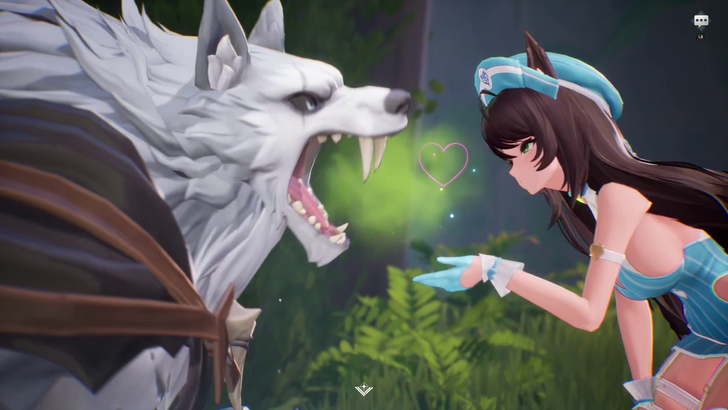
At the very least, anyone can genuinely praise Mongil: Star Dive for its personality. After all, it’s incredibly rare to find mobile games that really don’t take themselves too seriously unless you come upon the very unlikely corners of games like Trickcal. Using a combination of cringe and trope-heavy writing alongside an animation style that’s exploding in expressiveness, it manages to blow past the point where you can only look at it with pity and disgust and into “it’s so embarrassing that it’s funny”.
But even then, that just simply means that its entertainment value is very surface level. I mean, even if you like the story, if you can’t actually get into the game, then why bother? Just watch a comedy anime instead.
Purple Mist is Evil in Any World
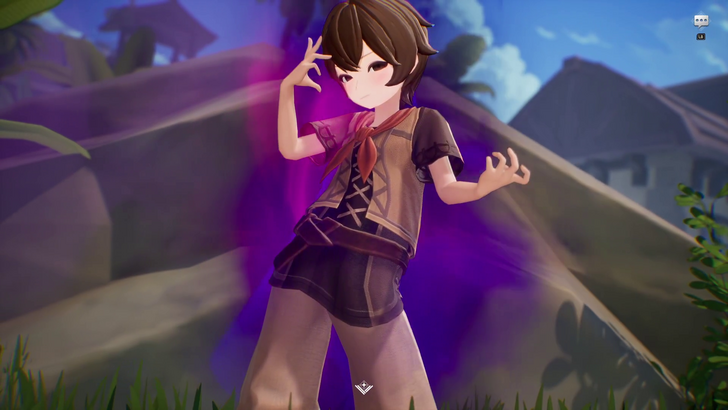
Mongil: Star Dive has a very straightforward story driven by some of the most intuitive designs you can make. Long story short, it has one of those common “save the world” stories, complete with a mascot and everything. The plot device for the world’s destruction is even depicted as some of the most obviously evil objects you can think of for a fantasy world; huge, purple seeds emitting an ominous mist that have been scattered across every region.
Despite that, I would say it does more good for the game than anything else. Not all stories need to be deep or complex to be considered excellent, after all. Sometimes, these just serve as burdens and end up creating too much friction between you and the rest of the experience.
It isn’t like Mongil: Star Dive’s story has no substance, either. But it’s simply not given much importance compared to the raw feel of the game. The writers clearly designed this experience purely for entertainment, giving it a rare, but not entirely unique, lighthearted charm that prioritizes engagement over bothersome lore.
Cringe on Purpose

Mongil: Star Dive’s animation style is sort of similar to Zenless Zone Zero in the way they exaggerate movements and expressions, but without the latter’s extremely rubbery, almost boneless quality. This isn't necessarily a con for either game and, instead, allows the former to carve out its own visual identity. That is, while ZZZ uses that fluidity to establish a distinct, hyper-stylized personality, Mongil: Star Dive makes up for their less cartoonish visuals through their writing.
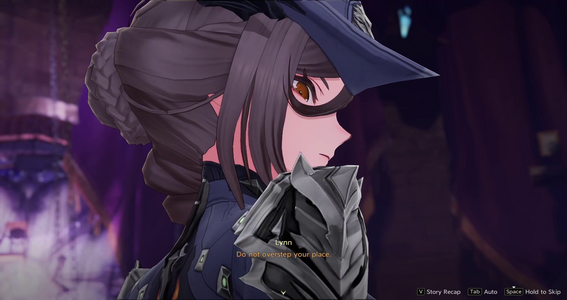
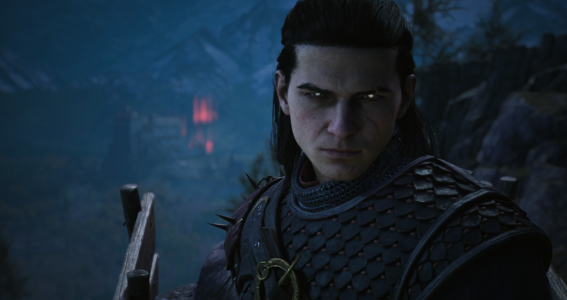
These two aspects are directly complementary. The game doesn’t want you to take it seriously, regardless of whatever is shown on the screen or on the dialogue boxes. And really, how could you when their villains range from an obviously shady dude wearing a hooded cloak sneaking around a forest, a demon that looks like it was pulled directly off the drawings of an adolescent who thinks magic is real, or a couple of mecha girls that sharply contrast literally anything and everyone around them? And it certainly doesn’t help that their dialogue consists of the most cliché villainous tropes.
Yes, it’s often cringe. But it’s also impossible to not admire their commitment. You end up wanting more because it’s consistent, predictable, and in some ways, even nostalgic of the times when not everything tries to draw you in with large worlds, complex stories, and deep characters. It’s not entirely unique, of course; games like Trickcal exist, after all. But it’s rare, and rare is a commodity.
Visuals and Audio Quality are Worlds Apart

While Mongil: Star Dive’s visuals certainly deserve a lot of praise, the same unfortunately can’t be said for its audio.
The only thing I could think of that's actually good about it is the voice acting. These talents are able to sufficiently imbue life into their characters, making them something more than just a 3D model on your monitor. Naturally, that does wonders to the immersion, especially when you consider that more than half of this game's appeal comes from it's extremely animated and unserious writing.
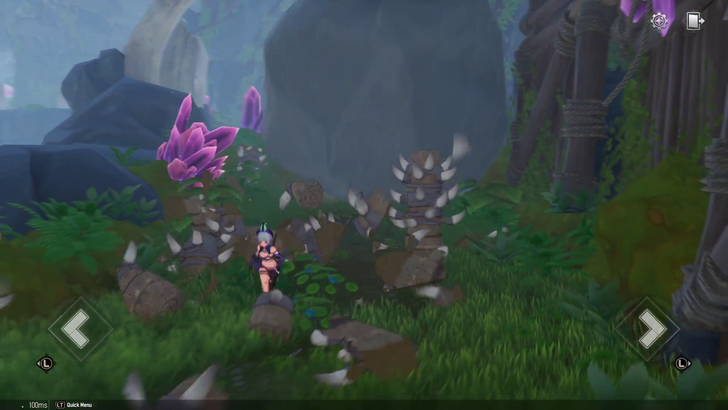
On the other hand, the same praise can't be said for everything else. The sound effects, for example? They're flat and boring. The background music? Forgettable.
In a bubble, this can still be considered barely acceptable.
However, if you juxtapose it with its high quality visuals, the differences make for a shocking contrast. Like, how could a game that looks this good sound so... meh? It almost feels like they're from completely different games. And that, unfortunately, just hurts any kind of immersion you may get, especially when you're not actively listening to anyone talk.
Combat Deja Vu
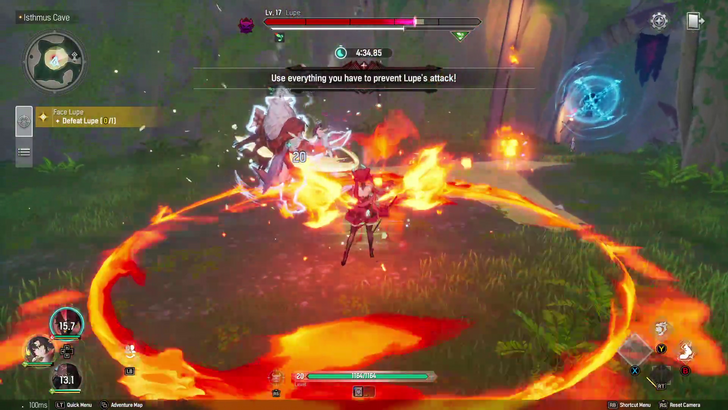
Unfortunately, the endearing writing and visuals are pretty much the limit of what works for the game. Everything else fluctuates between above average
at best and a strict downgrade
of existing systems at worst.
Take the combat mechanics, for example. Its system feels very similar to many of its action RPG peers, most notably Zenless Zone Zero and Wuthering Waves. That is, it puts a lot of emphasis on movement and swapping for both attacking and defending. And that’s not bad in a vacuum; there’s a reason why it’s such a common mechanic among mobile action games.
I mean, besides forcing you to roll the gacha.
The problems readily become apparent when you start looking more closely, though. Take its version of swap-based combat, for example. Just like Zenless Zone Zero, it can be a defensive tool; like Wuthering Waves, it can also be used to prevent your DPS from dropping.
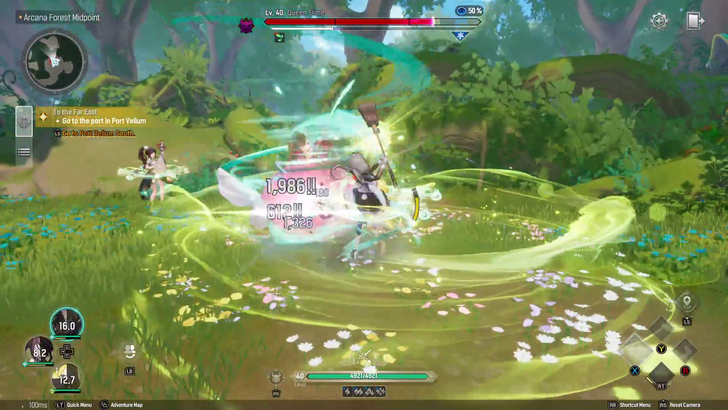
One issue, however, stems from how you can't actually strategize around these swaps due to surprisingly substantial cooldowns. In ZZZ, you can swap to a support to parry, use a skill, and immediately swap back to your carry for a second parry to maintain offensive pressure. That’s impossible in Mongil: Star Dive due to the surprisingly fat cooldown enforced on each character upon getting swapped out.
Furthermore, while Wuthering Waves makes swapping, quick-swapping, and Intro/Outro skills feel like an expressive (and often optional) choice for optimization, Mongil: Star Dive makes it mandatory. Else, your damage curves take such a precipitous, heh, noseDIVE (sorry) whenever they’ve passed the peak of their rotations that you’re forced to tag out to avoid flatlining your damage.
Overall, Mongil: Star Dive just feels like a Temu version of other more popular and well-executed peers. While on the bright side, it does make it familiar to anyone with experience playing mobile action games, but if you’re looking to play for a specific mechanic, you’re better off spending time with the games where those are the core gimmicks.
The Equipments are Cool but Tedious
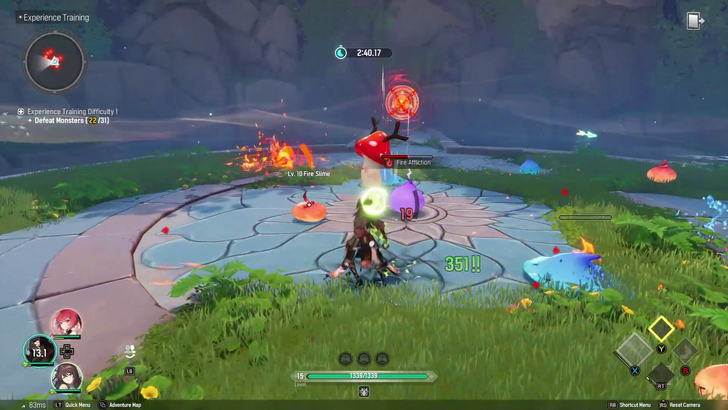
Unlike the very derivative combat system, Mongil: Star Dive does offer something rather unique when it comes to your teambuilding options. The game allows you to equip pets
that provide more than just stat bonuses; they actually join you in attacking when certain conditions are met.
This is somewhat similar to Wuthering Waves’ Echo system, but taken to another level. That is, it allows you to conditionally summon multiple monsters to attack. Do note that this doesn’t replace the three-member party system, though. Since you can equip a handful of monsters for each human character, you can technically pack nearly a dozen entities into every lineup. That’s a hilariously large number of characters you can have active in a mobile game.
What’s more, though this is mainly a teambuilding meta-progression element, it directly bleeds into the combat experience. Due to the sheer amount of entities it adds to the field, it can turn what would have otherwise been a standard combat system into a messy spectacle. Unfortunately, it does very little to make actually playing feel any better, as the results are more visual and numerical than anything else.
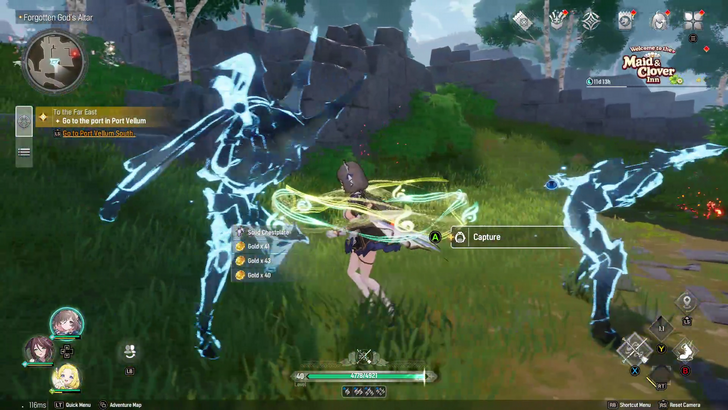
Unlike Wuthering Waves’ version of it, however, actually collecting them is such a pain that you’re more likely to just settle for whatever you can get your hands on, especially early on. See, the primary way to capture monsters is wandering the open world and wantonly poaching the local wildlife while praying for a drop. Strangely enough, too, for a "Monster Taming" game, there's not much taming to be done here besides beating them into submission.
Anyway, while this isn’t much different from the former, at least it offers dungeons where you can spend stamina to get them en masse. The same can’t be said for Mongil: Star Dive, however. And while you could argue that the lack of set bonuses
makes these drops more flexible, that freedom is an illusion that shatters the moment you start min-maxing. And for anyone looking to make full use of the monsters’ respawn cycles, it turns any normal login for dailies into a chore that quickly gets old. It certainly doesn't help that you need to collect dozens of them to make a dent in your levels, either.
Similarly, crafting is also a horror of an experience mostly due to the same reasons. The materials needed to craft the gear you'll need will come from enemies or the map, see. And each one can only be fought or gathered from a limited number of times a day, so you can't exactly make enough of them to grind for the right stats. And the worst among them is having to craft for boots because their main stats are class-specific. So, if you want to expend your daily shopping list even more, you should definitely focus on these, too.
Decent Economy, But Still Hungry for Your Money
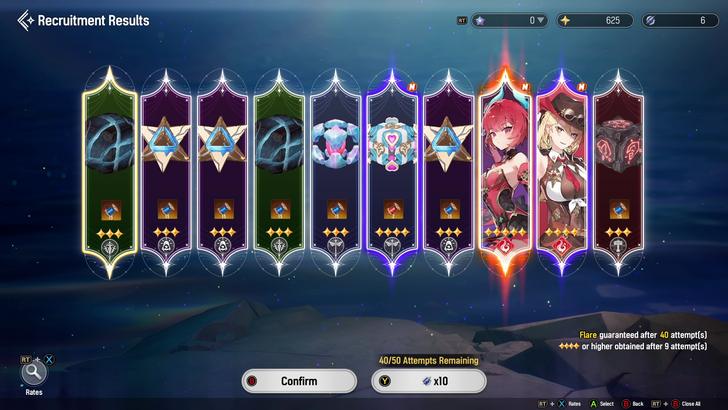
Now, I know what my fellow gacha connoisseurs might be thinking—”What about the monetization?” This is an even bigger topic if you’re familiar with Netmarble, because their reputation for it isn’t exactly pristine—quite the opposite, really.
This is readily apparent in how there are three tiers to Mongil: Star Dive’s Battle Pass; a free one that barely gives you anything actually worth being happy for, a second one with decent prizes at an industry-standard price range, and the most expensive one that costs double the previous tier while also offering a much better lineup.
… Why not just offer everything in one tier? How much is it to generate in-game resources, anyway? Not to mention there’s like two subscription packages. Two! That’s one more than most games try to force down your throat! Do they actually affect your gameplay, though? Not really. While it just makes grinding a bit less tedious, they’re just quantitative quality of life improvements at the end of the day. But knowing that they’re there does things to people. Specifically, pressure. The mere thought that, “Man, this could be much easier if I just spend more” will stick. And in a way, that’s worse than offering packages in your face because it lingers.
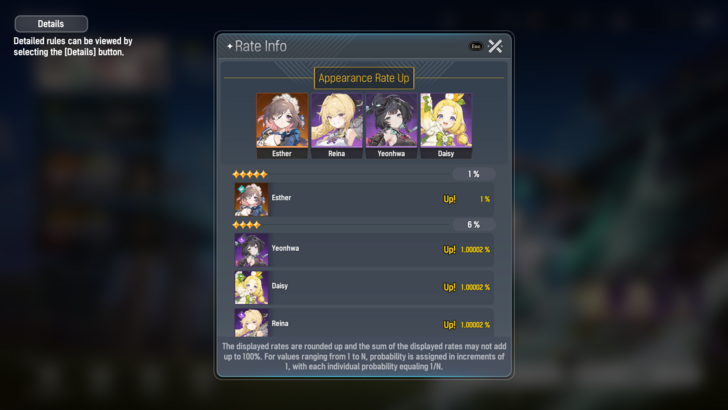
Fortunately, the gacha system and its economy are rather decent. The SSR rate is set at 1%, which ain’t that bad at all (yes, we’re at the point where 1% “ain’t that bad” these days). Plus, despite the hard pity being set at a relatively astonishing 90 pulls, the event characters don’t drop from a 50-50 or even a 70-30 system. Instead, they’re always guaranteed to you when you get any SSR from their banner.
Combined with the relatively decent economy from its consistent daily currency, Mongil: Star Dive ends up as a pretty forgiving game for F2P and dolphin players. Though side quests giving standard pulls instead of gacha currency is something I definitely have mixed feelings on, it’s definitely still a good enough alternative to just nerfing your income outright.
Yes, it might sound contradictory that a game that pressures you into spending is still friendly to F2P and dolphins, but the two aren’t mutually exclusive. It’s heavily dependent on player agency at the end of the day, and Mongil: Star Dive does certainly give enough support for non- or small-time spenders to make themselves comfortable to a degree.
Is Mongil: Star Dive Worth It?
Good for a Try, But Not for a While
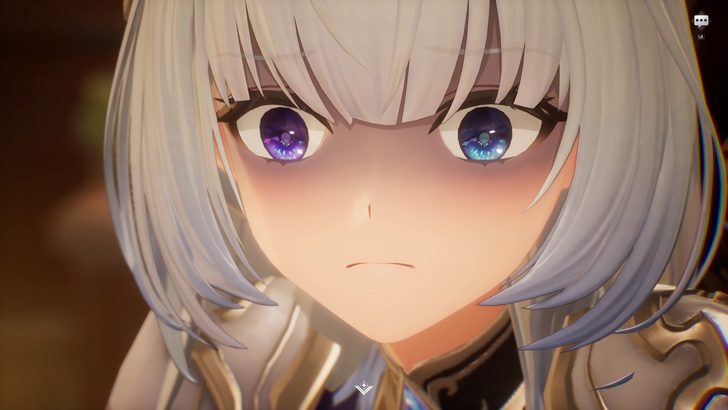
Mongil: Star Dive might sound like a decent enough gacha game at first glance. After all, the animations are great and the writing is hilarious. Unfortunately, those qualities are only surface level at best. But on the other hand, everything else that would actually dictate how you would engage in it as a live service gacha game is just above average at best.
You can definitely give it a spin, though. It’s not as if the game is bad. It’s just that you could be playing better ones with your time.
Game8 Reviews