


"So, you know, it kind of reminds me of the old internet debate of like ninja versus knight versus samurai versus pirate. Who would win? It's like, why not put everything in one game? If it works, it works. And it's actually kind of fun."
Vaewolf is an upcoming hack-and-slash "power fantasy" announced in Gamescom 2026. We sat down with developers Milky Tea at their pre-reveal press briefing and delved deeper into its world, the gameplay, and its vampire-werewolf concept.
Vaewolf On Vampire-Werewolves, Their Unique Style, And The Game’s Narrative
An Unusual Meeting Of Two Longtime Rivals
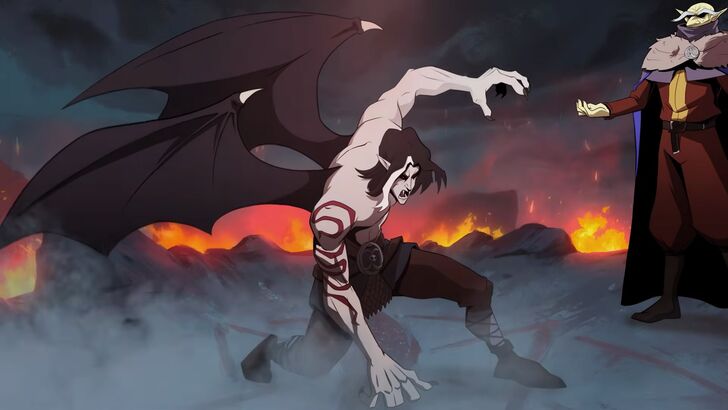
One of the things that people would most likely notice about Vaewolf is the odd blend of two factions that have, more or less, been seen on opposite ends of the spectrum. Vampires vs. werewolves is a common trope in media, from films to series to video games. Vaewolf takes that concept and puts a unique spin on it, combining the two rival factions together in one player character.
"There's been so much media where, you know, obviously the lycans and the vampires are always fighting against each other. And we thought, wouldn't it be cool if we combined them and just give players, you know, something that they can change these forms on the fly as they're going off to sort of get revenge?" said Milky Tea managing director Chris Wood.
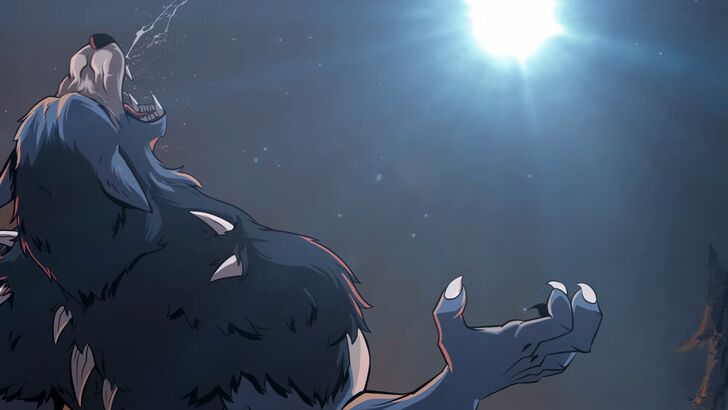
The core motivation centered around vampires and werewolves being just "cool&;quot; in general, which then grew into the Vaewolf idea they have today, mixed with things that the team was just excited to add to their own game. Senior Producer Adam Walenkiewicz also chimed in that it was initially a "little bit bonkers" kind of concept when he was introduced to the team, but he eventually warmed up to it.
"It kind of reminds me of the old internet debate of like ninja versus knight versus samurai versus pirate. Who would win? It's like, why not put everything in one game? If it works, it works. And it's actually kind of fun."
Although, if there had to be a particular piece of media that they were directly inspired by, Wood said that it has its roots in the old Gothic action horror film Underworld that starred Kate Beckinsale.
A Last Survivor’s Revenge
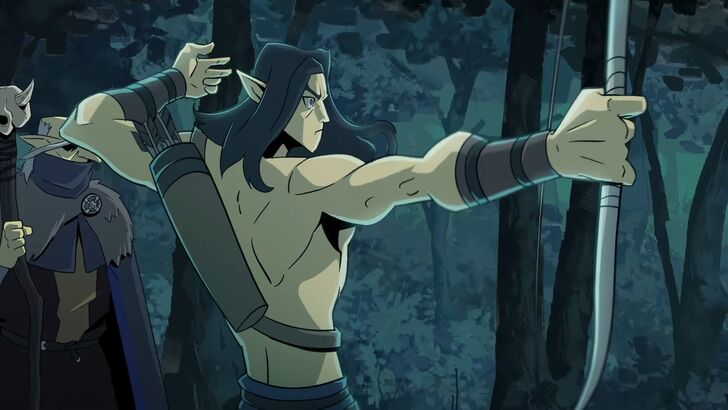
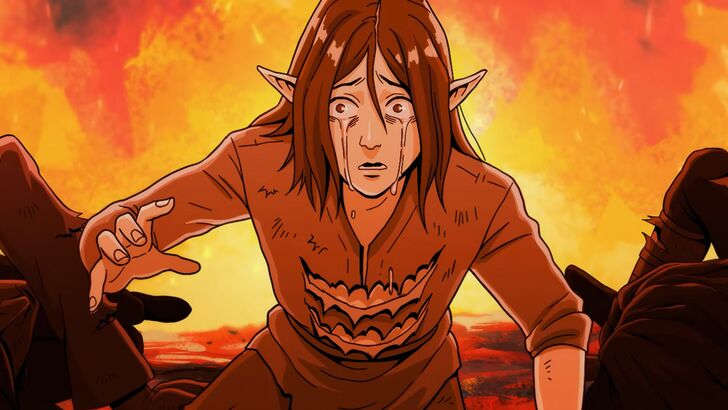
Vaewolf is an action-packed hack-and-slash adventure title where players, quite literally, "paint the town red with the blood" of the enemies. It follows the story of the protagonist, the titular Vaewolf, an elf-vampire-werewolf hybrid whose sole mission is to hunt the Viking leader, Bloodaxe, and take him down for revenge.
Long ago, he was the last surviving child of an Icelandic Wood Elf family. With his kin slaughtered by the Vikings, he retreated to the frozen wilderness and grew feral from the cursed blood of the werewolf that had infected him from the Viking attack. One day, he is taken in by a reclusive vampire elder who sheltered and posed as a guiding figure. Under his guidance, the child learned to hunt with a bow and how to master his newfound powers. The elder also offered something more, something blasphemous, even: the gift of the vampire.
And thus, the Vaewolf was born. Part-vampire, part-werewolf, with the origins of an elf creating a unique day-walker—an amalgamation of species that should never mix to the point that the afterlife itself refused to accept him, thus keeping him in a state of immortality. Years later, the Vaewolf child grew older and caught wind of the Fells of Cumbria, where his family’s murderer thrived and got off scot-free. The flames of revenge are stoked, and the Vaewolf, now stronger and wiser than ever, now found his life’s purpose: to kill the monster that took everything away from him.
Hyperaggressive but Clinical Combat
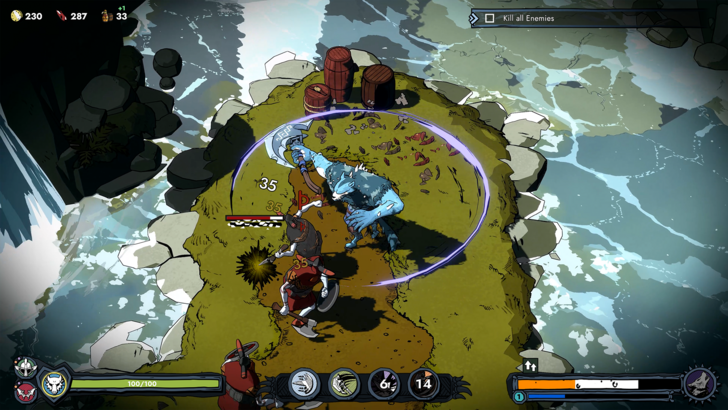
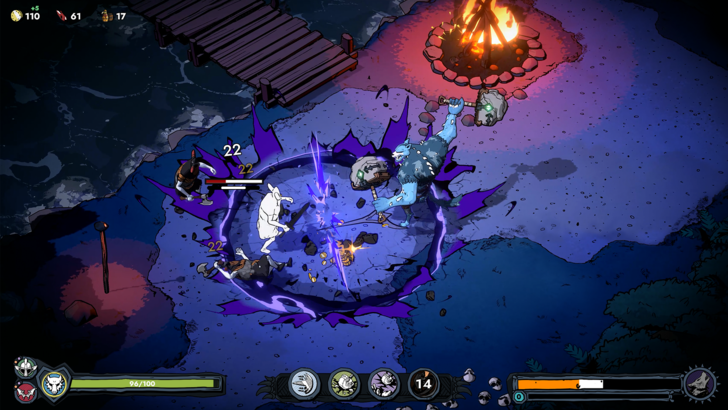
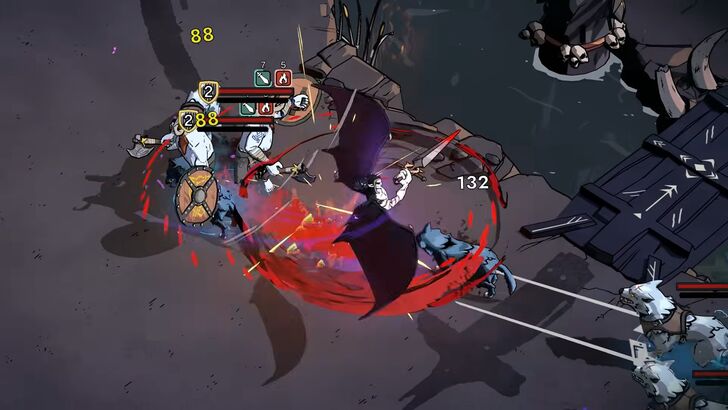
Milky Tea then took the protagonist’s ability to shift forms and turn it into its core mechanic. Players aren’t locked to one singular form during a run—they are able to seamlessly switch between forms at any given time. Mastering the three forms and chaining their powers together is key to Vaewolf’s gameplay. The Elf specializes in ranged attacks with his bow and throwing daggers; the Vampire commands the battlefield with area of effect (AoE) attacks, status effects, and his whip; and finally, the Werewolf is proficient with close-up melee, taking down enemies with his large claws.
Each attack without getting hit will build the Wrath Meter. The more it fills up, the faster the Vaewolf attacks. This mechanic works well for both veterans and casuals—accumulated Wrath can turn into a Rebound, which is sort of like a shield that helps less experienced players get back up on their feet, and then more skilled players can max out the meter and clear enemies more efficiently.
"So the result of all this is a high-stakes combat loop that rewards mastery with speed, spectacle, and explosive payoffs while giving more casual players enough protection to stay in the fight," shared Wood.
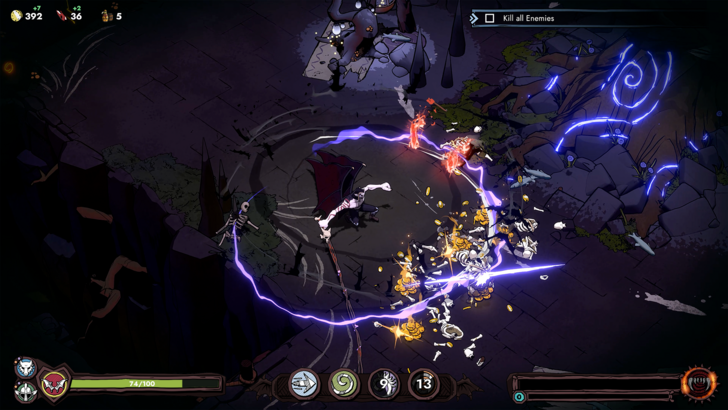
Milky Tea’s Senior Producer, Adam Walenkiewicz, also highlighted that switching between the three is the best way to play the game, but the team understands that some people may like a certain form more than others—and that’s perfectly okay.
"We think the game is at its best, and it's the most fun when you actually switch quite often. But we're trying to, as a design principle, we're trying to avoid building in those hard niches where certain enemies can only be killed as the werewolf. So those things are kind of spread around. That being said, we do want all of them to have a very distinct identity." As mentioned before, each of the Vaewolf’s forms have a unique style. The Werewolf for strong and hardy close combat., the Elf for ranged sniping, and the Vampire placed in the middle with AoE abilities, healing, and incredible mobility. "Kind of like the master of shenanigans," Walenkiewicz chimed in.
Procedurally Generated Maps With Various Enemies
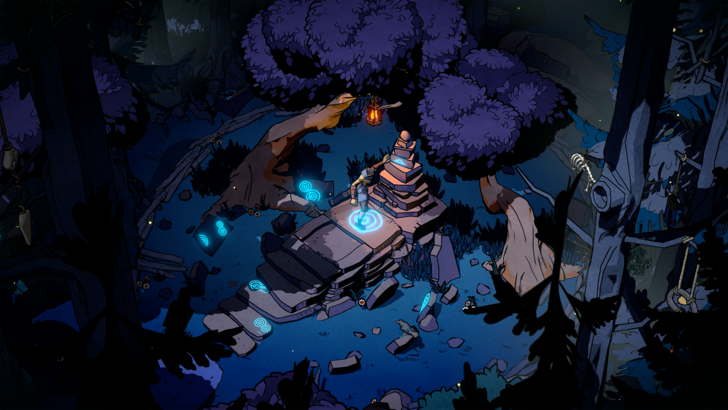
At the press briefing, we were also given a chance to see a sneak peek of the gameplay from Walenkiewicz. We were introduced to the lush forests of Eskdale, the first region of three that the Vaewolf must clear to reach Bloodaxe at the peak.
Similar to games like Hades, Cult of the Lamb, and other roguelikes, progression through the area is done by clearing rooms one by one. Enemies are mostly comprised of Vikings in various types, such as Armored Vikings or Viking Mages, Archers, and more, with a mix of other fantastical creatures like other Werewolves. Players can choose which rooms to move toward, usually bearing different rewards such as Runes (attack modifer upgrades) or Trinkets (ability boosters) or special rooms like Hero’s Trials, which are more challenging rooms but with better rewards, and the Trader’s Camp to purchase Runes, Trinkets, or healing items.
With a solid gameplay loop already in stone, replayability is also addressed:. "It's also worth mentioning that all of the levels are procedurally generated, so there [are] an insane amount of combinations when it comes to how your environment looks like on each run," said Walenkiewicz. Additionally, the further the player goes, the more the number of rooms to clear.
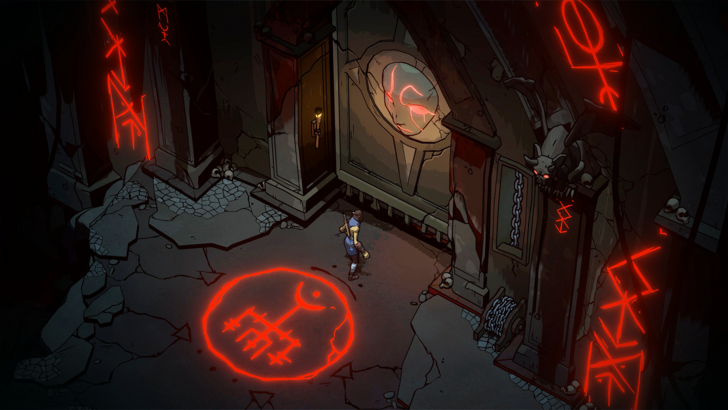
Even if there’s only three confirmed locations to accomplish to get to Bloodaxe, Vaewolf is not a walk in the park to clear. Death is inevitable in a quest like this, but the Vaewolf’s immortality is a blessing in disguise—he’ll just have to try and try again.
"Death isn't failure," commented Wood. "You return to Ravenglass with resources that unlock permanent upgrades, new abilities, and more build options. Then you head out again, stronger and better prepared than before. So the loop is simple, really. Kill, die, get stronger, repeat."
An Illustrative, Hand-Drawn Style
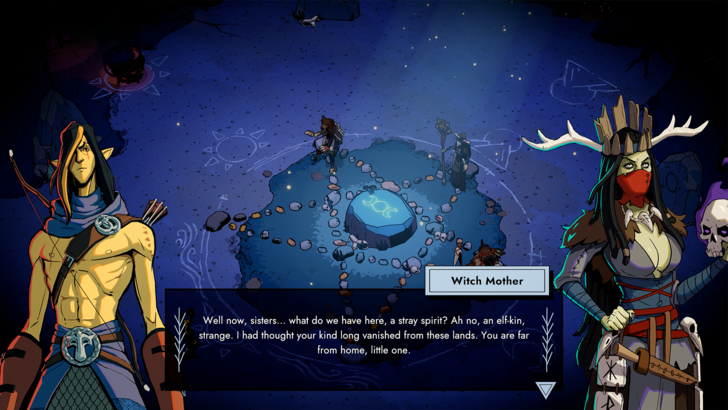
Despite possessing such a dark story of revenge, the visuals are actually quite vibrant—it’s a deliberate choice by the developers and is one of the game’s unique assets. When asked what were the main inspirations for the game’s unique visual style, Wood shared that while in the beginning stages of conceptualizing the game, they thought about how the Mike Mignola (Hellboy) and Herge style (The Adventures of Tintin) would look in Lake District, the main setting of Vaewolf.
"Well, so basically, back in the day when we were first concepting things, we were kind of thinking, what would Mignola style look like in the Lake District? And with a bit sort of Herge from Tintin as well for a bit more vibrant colors going with that darkness of the Hellboy comics and whatnot. So we thought that was a really unique and cool style when we started concepting out and we got a lot of excitement in the team about that visual style as well."
This also raises the question of the setting. With a Viking clan as the main antagonist, most people would correlate them to the high norths of the Nordic regions. However, Vaewolf is set in Lake District, a mountainous region set in Northwest England. Wood assured that it still all fits thematically—Lake District was, indeed, a Viking outpost back in AD 800s.
Still, the main reason is less historical and more of a passionate decision. Lake District is an important place to many members of the team and is simply a "very beautiful place" that "looks great [and] really helps with our art style," Wood added.
"A lot of the core members of the team are based in and around Liverpool and often go up to the Lake District. This is just an area that we love and feel has been very underserved in the games industry at the moment. And there's some really cool sort of mythology and folklore around there as well that we've tapped into a bit and some good history there. So we just wanted to give it some love really."
Vaewolf is set to release in 2027 for PC, PlayStation 5, Xbox Series X|S, and the Nintendo Switch 2. It is now available for wishlisting on its official Steam storefront.
Full Interview With Milky Tea
Chris Wood (Milky Tea Managing Director):
Vaewolf is a story of revenge. It’s a blood-pumping, action-packed adventure where you paint the town red with the blood of your enemies. It’s relentless, high-tempo, and powerful.
So you are the Vaewolf. And you have one mission: to hunt the Viking leader, Bloodaxe, from the Fells of Cumbria.
You are the last surviving child of an Icelandic Wood Elf family slaughtered by a Viking clan cursed with the blood of the wolf. They leave you among the dead, but you don’t die. Alone in the frozen wilds, you grow feral, shaped by hunger, instinct, and rage. And somewhere in those brutal years, something very deep inside you begins to awaken—the same curse carried by the monsters who murdered your family, the blood of the werewolf.
Your life changes when you’re found by a reclusive vampire elder who takes you in, shelters you, and teaches you to master the beast rather than be consumed by it. Under his guidance, you become a deadly bowman, a hunter who can strike from the shadows. But the elder offers you something more—he grants you the ancient gift of the vampire, transforming you into something neither bloodline should have allowed: the Vaewolf.
Part-vampire, part-werewolf, the only day-walker of his kind, cursed and doomed to be cast out from the afterlife. Years later, your hunt leads you to the bleak and haunted Fells of Cumbria, where Bloodaxe and his clan have taken root. Every run begins with the same purpose: track the clan, grow stronger, and kill [the] Bloodaxe, the monster who took everything from you.
So there are three key unique features that make Vaewolf distinct from other games in the genre. The first is our hyperaggressive combat with three forms that the players can switch between on the fly. The second is our Wrath Meter, a revving up system that rewards you for aggressive but clinical play. And finally, it’s our stunning setting. We built an illustrative, hand-drawn style that blends Herge from (The Adventures of) Tintin and Mike Mignola from Hellboy, and all of this taking place in the real-world location of Lake District (a mountainous region of Northwest England).
So players have access to three powerful forms from the start and can switch between them seamlessly. You don’t choose a class in Vaewolf—you combine all three into a build that suits your playstyle. The Elf specializes in ranged attacks and kiting, the Vampire in area of effect magic and status effects, and the Werewolf in relentless melee aggression. For each form, players choose one basic, one charged, and one tactical attack from three distinct options, creating huge freedom to shape their loadout. Every ability can also be upgraded with what we call Runes to change its behavior and grow stronger during a run.
So mastery comes from rotating between forms, chaining these abilities, and tearing your way across the battlefield. And all of this to the beat of a banging Viking techno soundtrack. But if that blood-pumping techno beat isn't enough, let's look at the Wrath system. Everything in Beowulf is built to heighten aggression, momentum, and revenge. So Wrath builds as you deal damage without being hit. The higher it climbs, the faster you attack, rewarding players who stay aggressive and nimble. When you are hit, the wrath is then converted into what we call rebound, giving you temporary protection and helping the less experienced players recover if a fight starts to get on top of them a bit. Players who combine aggression with precision can max out the meter, then spend that wrath on a devastating area of effect. The last that we call rage. So the result of all this is a high-stakes combat loop that rewards mastery with speed, spectacle, and explosive payoffs while giving more casual players enough protection to stay in the fight.
Bloodaxe slaughtered your family and destroyed your clan. Now you're hunting him across the Cumbrian Fells driven by revenge. The journey takes you through three distinct regions. You start through the lush Eskdale forest, which then grows darker and more spooky as you push deeper. Then you descend into the Underworld, a network of ancient tunnels where the creatures of the night have made their home. And finally, you climb through the dramatic mountain trails of Scafell, at the summit of which Bloodaxe awaits. And with him, the final reckoning.
But the afterlife has no place for a cursed creature like you. Each time you die, the gods spit you back into the catacombs beneath the town of Ravenglass. Ravenglass is the home base that players return to between runs, the place where you prepare for the next hunt. Avery the vampire exchanges Bloodstones for new abilities across all these three forms. And through her, players shape their build, experiment with different configurations, and prepare for the next run. You can also practice your setup on Dead Meat, a rather unfortunate Viking prisoner. At the Pickled Pagan, a sharp-tongued barkeeper serves concoctions that grant permanent effects, giving every failed run lasting value.
So you begin in Ravenglass, where you unlock abilities, select your loadout, and prepare for the next hunt. From there you venture out and fight, gather runes and trinkets that make you stronger during that run, and eventually you'll probably die, but death isn't failure. You return to Ravenglass with resources that unlock permanent upgrades, new abilities, and more build options. Then you head out again, stronger and better prepared than before. So the loop is simple, really. Kill, die, get stronger, repeat.
Gameplay Overview Portion:
Adam Walenkiewicz (Milky Tea Senior Producer):
Welcome to this gameplay overview. As Chris has mentioned, I'm Adam. I'm the producer of the project. So what we're going to be looking at is a gameplay overview in the first region, Eskdale. This is a couple of runs in. We have a few extra abilities purchased, just so you see a bit of variety. And keep in mind that this is not the latest build. Of course, this is still a work in progress in terms of content, as well as balancing and bug fixing, so there will be changes in the final product.
Here we're just trying out a few attacks before we start. There is multiple weapons and attacks for each form, and we're seeing the bow and throwing daggers attacks for the Elf, Werewolf with his claws and Vampire with his whip. So in between rooms you can choose where to go next. Here we have a choice between 2 combat encounters rewarding us either a rune or a trinket and we'll get into details of what they do shortly. Each combat encounter is an ambush with enemies spawning semi-randomly.
(The) main enemies you're going to face are the Vikings, sometimes joined by a selection of various fantastical creatures. And enemies with green auras under their feet can inflict status effects on you, so positioning is really important. It's best to take extra care to avoid them.
So now it's time to choose our reward. Runes, as Chris mentioned, modify the behavior of your attacks, and they are usually quite a powerful upgrade. On this occasion, we choose to upgrade the leap for our werewolf, which will now inflict frost damage and freeze enemies it hits. Now we'll choose to go for a trinket, and trinkets are global power-ups active across all forms, but first we have to win the combat encounter. So the wolves, in addition to jumping in and out to harass you, can also buff nearby allies with extra damage.
So now let's talk about trinkets in a bit more detail. Each one has a specific theme, can be picked up up to five times, upgrading its effect every time. This time we're going to go with Shapeshifter, which means we get a damage buff for five seconds after each form change. So here we're going to see two different types of room to choose from. We're going to go with the hunting grounds, where if our reflexes are quick enough, we can hunt down some animals for extra health, but there is also always a guaranteed chest with more health. On this occasion we don't really need any healing, so we're just going to get some extra gold from the barrels and move on.
One of the room types you can encounter is a Hero's Trial. These are more difficult combat encounters, but they also provide rewards which are sometimes much more powerful. We're going to take the one on the left, which will give us a chance for a Wrath room if we're victorious. At this point, it's also worth mentioning that all of the levels are procedurally generated, so there [are] an insane amount of combinations when it comes to how your environment looks like on each run. And special rooms like the Hero's Trials have environment art inspired by real-world locations from the Lake District, and in this case it's the Earthen Cross.
So having defeated all our enemies, we've got ourselves the Wrath rune. So Wrath runes allow you to modify what the Wrath mechanic does. So every time you charge up your bar through damaging and killing enemies, you'll get powerful benefits for the duration. Rebound, on the other hand, is a buff you get for a few seconds after getting hit to help you get back into the fight. And this time we chose Rampant Onslaught, which increases our damage in the Elf form while Wrath is active.
So this Viking with the horned helmet is an armored enemy. That's a system that means that only some attacks can break through it, and it's really hard to kill them without removing armour first. But luckily we've got some special attacks, and the Werewolf's Grand Slam is also great at dealing with armour. You saw a jump there, the newly upgraded frozen one. One of the great things about it is that it allows you to jump over enemy attacks, and as you can see, upgraded, it's pretty devastating. We're also making good use of switching forms depending on the situation. Quick hard melee attacks when enemies close in and save for ranged combat once we regain some breathing room. So, another trinket chest—we're going to upgrade our Shapeshifter trinket to give us some more damage resistance after transforming.
So, moving on, let's visit the Trader's Camp this time to see if we can buy something for the gold we found. You'll notice that as time passes and Vaewolf leaves Eskir Woods for the depths of the Copland Forest, the time of day is changing and the environment art is also changing subtly to a slightly different theme. This time we can only afford some food, but you'll notice that if we had more gold, we could also buy random trinkets or even unlock slots so more trinkets can be equipped at the same time.
And that's it for today's preview. Thank you very much for watching. It's a shame you can't join us at Gamescom to play the game in person, but we do hope you're intrigued by what you saw today. As mentioned at the beginning, the game is still in alpha, so we've got many improvements coming, and we hope that you'll have a chance to give the game a go as we head towards release. And now I believe we've got some time to answer any questions. Thank you very much.
What are some of your inspirations for the visual style of the game?
Chris Wood: Well, so basically, back in the day when we were first concepting things, we were kind of thinking, what would Mignola style look like in the Lake District? and with a bit sort of Herge from Tintin as well for a bit more vibrant colors going with that darkness of the Hellboy comics and whatnot. So we thought that was a really unique and cool style when we started concepting out and we got a lot of excitement in the team about that visual style as well. So to answer your questions succinctly, Herge and Mike Mignola, I'd say.
Will each of the three areas have the same number of rooms to clear before the boss or can we expect them to go longer the further we get into the game?
Adam Walenkiewicz: So I can take that one. So we are still deep in balancing. The exact number of rooms is something that changes quite frequently. But it's possible that some of the later ones will be a bit longer. Yes. Also, keep in mind that obviously the presentation you saw today was heavily skewed towards showing you a lot of variety, so it's not necessarily representative of how long it's going to take to play through that specific region. The person recording the video also has 300 hours of play time in this game. So, you know, hopefully as a new player, it will take you a bit longer. But again, today was a bespoke build for this presentation.
What were the main inspirations for Vaewolf and what led to having a Vaewolf as a main character? While not entirely new, it's quite a unique theme, I believe, since it's usually vampire versus werewolf.
Chris Wood: Yes, absolutely. Yes, you're absolutely right. There's been so much media where, you know, obviously the lycans and the vampires are always fighting against each other. And we thought, wouldn't it be cool if we combined them and just give players, you know, something that they can change these forms on the fly as they're going off to sort of get revenge? It came obviously from a very, very early sort of prototype of the game, just trying different sort of forms and things in general. But then we narrowed it down to just how cool vampires and werewolves are in general and just sort of some things that we were excited as a team to play. Also, to be honest, one of the inspirations for that, I'd say, is actually Underworld, the old movie with Kate Beckinsale, which we really enjoyed as well.
Adam Walenkiewicz: I may add to that, when I joined the project, when I first heard about the theme, it seemed a little bit bonkers to me. I was like, this is crazy. There's so much going on, but I kind of love it. So, you know, it kind of reminds me of the old internet debate of like ninja versus knight versus samurai versus pirate. Who would win? It's like, why not put everything in one game? If it works, it works. And it's actually kind of fun.
So we saw the werewolf excelled at breaking armor, but can you tell us what enemies or challenges the elf and vampire forms excel at countering?
Adam Walenkiewicz: It's an interesting one because we're trying to steer away from forcing you to play a certain form at a certain time. If you really like the werewolf, if you really like the vampire or the elf, you're perfectly okay to play that form more than the others. We think the game is at its best, and it's the most fun when you actually switch quite often. But we're trying to, as a design principle, we're trying to avoid building in those hard niches where certain enemies can only be killed as the werewolf. So those things are kind of spread around. That being said, we do want all of them to have a very distinct identity.
So Werewolf to start with, that one is very much the close combat brawler, the armor breaker, the one that's a bit more resistant to damage, can jump around and sort of bully enemies around a little bit.
Elf is definitely the one that obviously stays ranged, is a little bit softer when he gets hit, you're going to feel that. But if you like, harassing enemies from range and trying to run away a little bit, maybe snipe enemies from range so you'll see less AOE abilities and more sort of hard hitting charged ones on the Elf. That's what he enables you to do.
And Vampire, we see kind of like the master of shenanigans, as I like to call him. So status effects, AOE setting things up, maybe a little bit of healing, and lots of mobility actually. So it all comes from us sitting down and thinking, What is the core fantasy that people would expect when they see I can play as a vampire, right?
And we really tried going for that hard and we've got some exciting changes around that happening as we speak as well. So we're pushing it as hard as we can.
Why did you guys choose the Lake District as a location? It's not the most common spot for Vikings. New York, the East Coast, obviously Scandinavia are far more commonly used.
Chris Wood: Yeah, indeed. So the Lake District was a Viking outpost a long time ago, I think in the 800s AD or something like that—Ravenglass was an old Viking…had been taken over by Vikings, shall we say. But to be honest, it's just that the team are very passionate about the Lake District. A lot of the core members of the team are based in and around Liverpool and often go up to the Lake District. This is just an area that we love and feel has been very underserved in the games industry at the moment. So it's a very beautiful place, looks great, really helps with our art style. And there's some really cool sort of mythology and folklore around there as well that we've tapped into a bit and some good history there. So we just wanted to give it some love really.
In terms of permanent upgrades, are they form-specific, or will they be more general that cover all three?
Adam Walenkiewicz: So in a way we've got both. We've not seen Ravenglass in the presentation today, and that's where you buy all of your permanent upgrades. So, Mead is the currency you'll bring back to our lovely barkeeper, who will sell you powerful potions, and that is across all forms. It's global stuff that will work no matter what form you decide to play in. But also you could consider a permanent upgrade, the fact that you can unlock new abilities at Avery that Chris has mentioned in his presentation. So obviously you only saw some of them in the toolkit in the video, but there was more to be unlocked, and obviously that forms a permanent upgrade for the forms you choose to sort of expand your repertoire in. So if you really like the vampire, you can buy more abilities for him and that sort of stuff. So we've got both.