


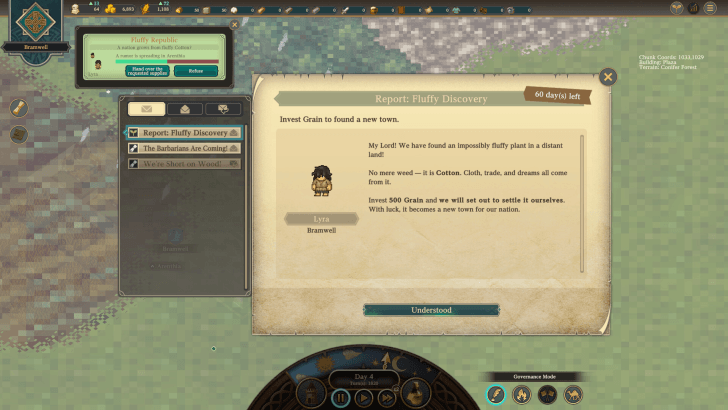
"That's the kind of system it is: as the player runs the town, individual citizens who become dissatisfied, or who develop a desire to do something, will appear. Depending on how you respond, something significant can happen: a nation becoming independent, or a new discovery being made."
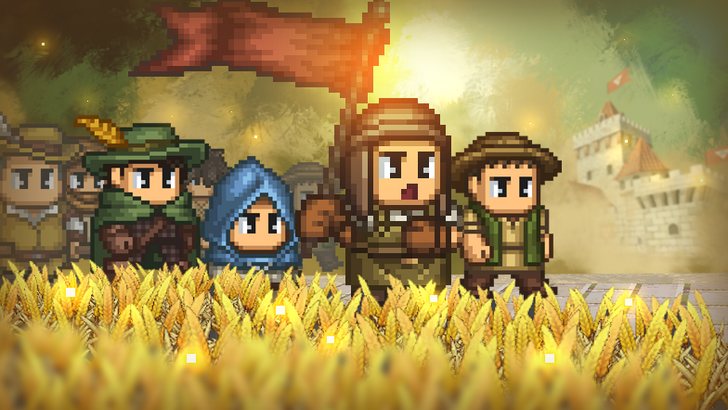
We sat down with Micro Simulation Inc.'s Nagahiro Enatsu and Shueisha Games' Soya Nakano to talk about Conquista: Tides of Wills, a 4X strategy game where every citizen has a mind of their own.
Conquista: Tides of Wills On Citizen AI, Its HD-2D Art Style, and Gamescom's First Hands-On Reactions
From a Solo Project to a Full Team
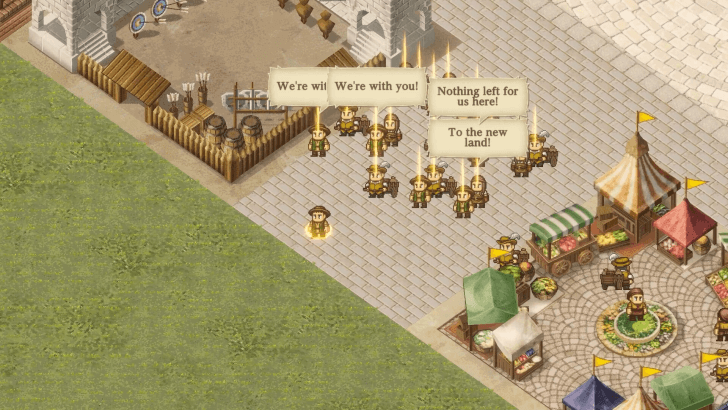
Conquista: Tides of Wills started as a solo passion project from Micro Simulation Inc. CTO Nagahiro Enatsu before Shueisha Games came on board to help turn it into a full production. According to Enatsu, that shift has opened up parts of development that used to be completely out of reach, letting the team actually test graphical ideas in real time rather than working around what one person could realistically build alone.
"With a bigger team, we're able to work on different parts of the game at the same time, and when we want to try something out, we can already put the graphics in and test it," Enatsu explained, crediting the added manpower with making development noticeably smoother.
For Shueisha Games, the decision to support Enatsu's project wasn't about steering it in a new direction but filling in the gaps the solo project couldn't cover on its own. Nakano said the team recognized Enatsu's vision as genuinely ambitious but saw that the engineering side and the ability to build out graphics and the game's broader "book," or lore and content, needed outside support to fully come together.
"We thought that if we supported them there, this person could probably create something amazing," Nakano said of the decision, framing Shueisha's role specifically around engineering and content support rather than creative control.
Citizens With a Will of Their Own
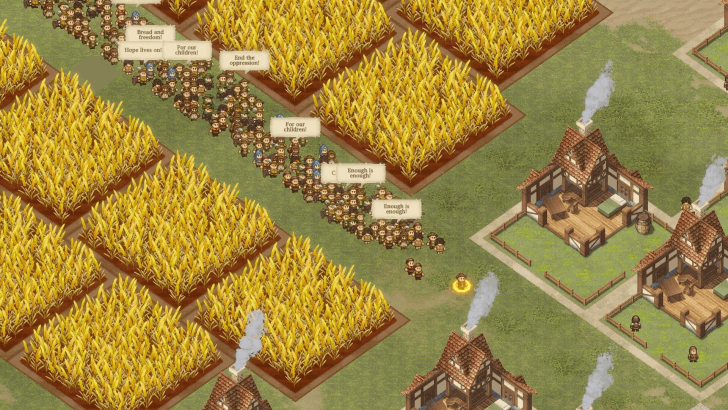
The core hook of Conquista: Tides of Wills is that a nation is only as strong as the people living in it, and those people don't simply follow orders. As players build up their town, individual citizens can develop their own ambitions or grow dissatisfied, and it's up to the player to decide how to respond by supporting them or driving them out.
"Depending on that, if you support them, good things may happen to the town as a result, but if you drive them out instead, it might give rise to a nation that harbors a grudge," Enatsu explained, describing outcomes that can range from a new discovery being made to an entirely new nation splitting off in response.
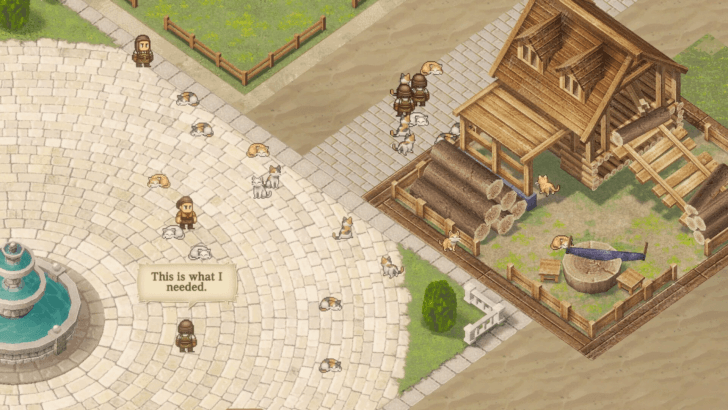
That system can escalate further than players might expect. Enatsu confirmed that a citizen pushed too far can, in rare cases, declare independence and start an outright war against the player's own nation. It's not a common occurrence, but it's built into the system as a real possibility rather than a scripted one-off event, underlining that the game isn't simply tracking a hidden "satisfaction" meter behind the scenes but simulating genuinely complex, reactive behavior tied to each citizen's individual ambitions.
Where Micro Meets Macro
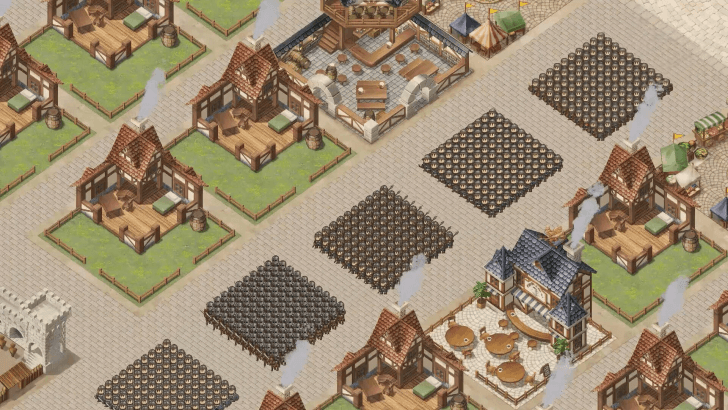
Balancing that citizen-level simulation against full 4X-scale nation-building was, unsurprisingly, one of the harder problems the team had to solve. Conquista blends colony sim and 4X strategy, two genres that each come with their own deep, detailed systems, and Enatsu said trying to fit every element of both into one game simply wasn't realistic.
"Since this is a combination of two genres, colony simulation and 4X strategy elements, it's difficult to include every single element typically found in each genre, so we had to cut some systems out," Enatsu said, pointing to detailed individual tracking from colony sims and overly complex diplomacy systems from strategy games as two areas the team scaled back specifically to keep the focus on how the micro and macro layers interact.
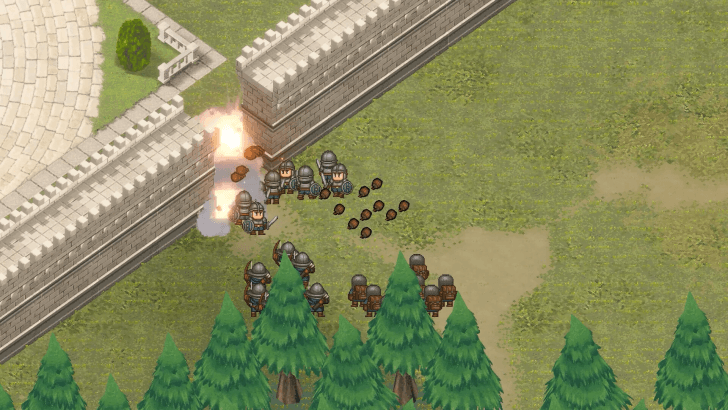
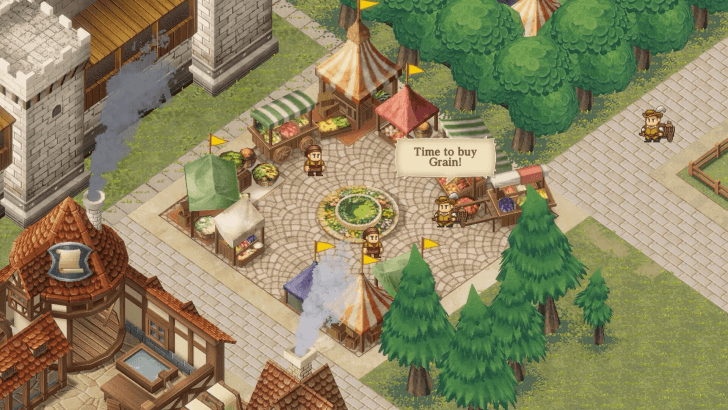
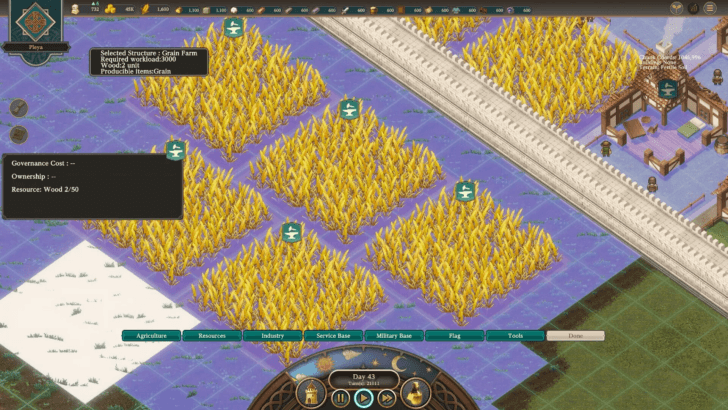
That interaction is also what Enatsu considers the game's most distinct feature. Conquista includes a system called Passion, which governs how individual citizens can act out on their own ambitions in ways that ripple up to affect the wider nation, something Enatsu said isn't really present in other games in the genre. The game's presentation reflects that same design idea directly: players can zoom out from a single town's colony-sim view all the way to a full world map, watching the same seamless transition from individual to nation in the camera itself.
An HD-2D Look Built for Contrast, Not Just Nostalgia
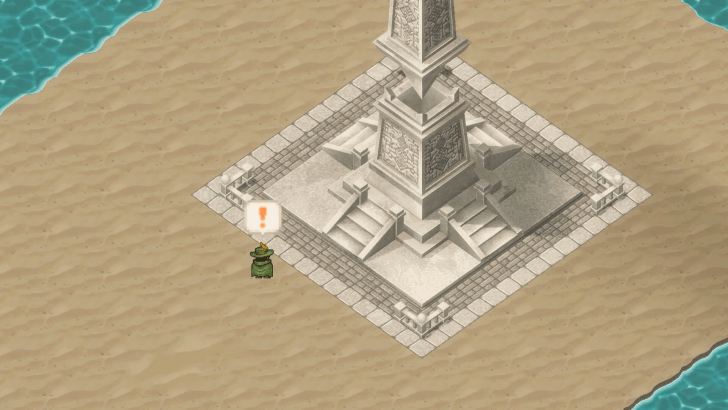
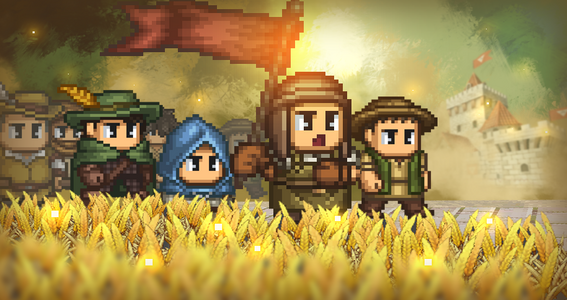
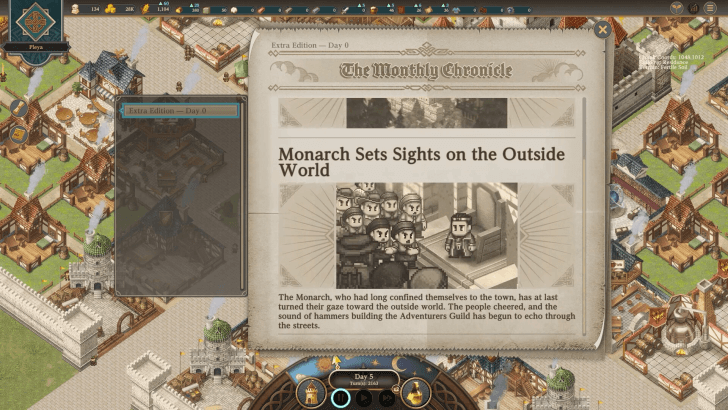
Conquista's pixel-art, HD-2D-adjacent visuals stand out against the more realistic or abstract map-based look of classic 4X games like Civilization, and Enatsu said that choice came down to two separate reasons. The first was tonal: since the game's story touches on war and other genuinely grim events, the team wanted the visuals to soften that a bit and create a deliberate contrast between the tone of the world and how it looks.
The second reason was about the audience. Nakano explained that most players drawn to strategy games tend to skew older, and the team wanted to lean into that by using pixel art that would feel nostalgic to that crowd rather than chasing a more modern, hyperrealistic look.
"I think the people who'll actually be playing this game are mostly in their 30s and up, people who like strategy games," Nakano said. "So the second idea was: let's try challenging ourselves with pixel art, something that would resonate with that age group and evoke a bit of nostalgia."
Rimworld and EU4 as Guiding Lights
When asked what inspired Conquista's specific blend of individual-level storytelling and nation-scale strategy, Enatsu pointed to two games directly: RimWorld, for how it generates seemingly endless, organic stories purely through interactions between individual colonists, and Europa Universalis IV, for the way a single idea or event, like the Renaissance, can gradually spread and reshape an entire map over time.
Enatsu noted Conquista's own systems go further than either game individually, but both were formative influences on the way the team thinks about small, individual actions cascading into much larger consequences.
"I was inspired by the idea that even a simulation could generate stories that way," Enatsu said of RimWorld's influence, before turning to EU4. "If an idea like the Renaissance arises in a particular place, it gradually spreads across Europe. That kind of system, simply implemented, isn't nearly as complex as what's in this game, but it's another title that influenced us."
First Hands-On Impressions at Gamescom
Gamescom marked the first time players could go hands-on with Conquista: Tides of Wills, and the results caught the team a little off guard. Enatsu said the game's soft, gentle art style ended up pulling in far more casual players than the team had anticipated, even though the systems underneath remain a genuinely complex 4X strategy game.
That gap between how approachable the game looks and how deep its systems actually are is something Nakano says the team is still actively working through. Rather than simplifying the systems themselves, the current plan is to better communicate the game's accessibility to newer players, while continuing to prioritize the hardcore strategy fans the team is primarily designing the game for, gradually smoothing out points of confusion as more community feedback comes in.
"We had somewhat anticipated that it would appeal to casual users, but honestly, more people than we expected are actually trying it out right now," Enatsu said. "That's something we're grateful for, but even though the content itself was made fairly simple, it's still a reasonably complex 4X strategy game underneath, so we need to work harder to communicate the appeal of the game's accessibility even more clearly."
Landing on Steam, With Early Access Still Undecided
As for when and where players will actually get to play, Nakano confirmed Conquista: Tides of Wills is currently planned for Steam, with no other platforms under consideration at this time. The team is still deciding whether it will launch as a full 1.0 release or through Early Access, though Nakano said that decision, along with more concrete details, will be shared with the community closer to launch.
"Either way, our approach will be to keep updating the game while making sure users and the developer can stay in communication, both before launch and after launch," Nakano said. For a game that began as one person's solo project and grew into something players are already forming opinions on at gamescom, that ongoing back-and-forth with the community looks set to shape Conquista: Tides of Wills well past its eventual release.
Full Interview with the Team
Conquista began as a solo project before growing into a larger production with Shueisha Games. What did the game look like in those early stages, and how has it evolved since then?
Nagahiro Enatsu: We've become able to add all kinds of elements to places that used to be out of reach, and, um, things like wanting the graphics to look a certain way — being able to actually test with that put in has meant development has been able to move, um, really smoothly, I think. So comparing to just working with a single person, when you have bigger team, you will be able to program the places where they couldn't do before and they will be able to work up in different parts of the game at the same time. And then also when they want to try out the game, they can already put in the graphic in it and then test it out. So it was a big change as well. So everything that kind of got smoother was done with the team.
Game8: I see. So you've got a-- I can tell you have a big vision for the game. So having the support from Shueisha has helped with being able to realize that vision.
[JP:] So the picture is: that vision is now becoming realizable — is that the right understanding?
Soya Nakano: Right. And he (Enatsu) really started an incredibly ambitious project, and honestly, in order to reach that goal, well — first there was a sense that the engineering side was a little lacking, and also, simply put, the team didn't have the ability to produce graphics and so on. They didn't have the ability to fully build out the book
[content/lore] side, so we thought that if we supported them there, this person could probably create something amazing — that's what we were thinking at the time, and that's mainly what we've been supporting.
Nao (interpreter): So, at Shueisha Games, they realized that they have, that Mr. Enatsu has a huge vision. It's a very ambitious one. So they wanted to make him achieve for that. But they realized that the engineering part and the programming part was a little bit lacking and, you know, manpower and everything. So they wanted to support that part. And then also, as a team, they didn't have a team of graphics that people can do. So Shueisha Games thought, okay, this part we can help out and make that ambitious vision come true. So that's, that's why they are willing to help them.
I think it's a really interesting element that each individual character can influence how the nation develops — how it grows and progresses. So I'd like to know a bit more specifically what that looks like — some examples, and what kind of system it is.
Nagahiro Enatsu: Yes. So, as the player runs the town, individual citizens who become dissatisfied — or individuals who develop a desire to do a certain thing — will appear. In response, the player makes decisions such as supporting them or having them driven out. Depending on that: if you support them, good things may happen to the town as a result; but if you drive them out instead, it might give rise to a nation that harbors a grudge, for example. So you decide how to engage with them, and as a result something significant can happen — a nation becoming independent, or a new discovery being made, that kind of thing. That's the kind of system it is.
Game8: Oh, that's amazing. So there are cases where, like, a citizen who's had enough of living in this nation says they'll declare independence, and then something like starting a war against you can happen, right?
Nagahiro Enatsu: That kind of thing too — well, in terms of probability it's not extremely high, but of course it can happen.
Game8: So it's not simply, um — not just numbers, like just controlling a dissatisfaction
or satisfaction
figure — but really complex actions actually occur, right.
Nagahiro Enatsu: Ah, that's right. Various things — for example, gaining a justification for war against another nation, or in terms of diplomacy — conversely, the town's research might progress instead. It's a system where many different elements have an influence.
In the process of building out that complex system, were there any particular challenges? Were there any difficult hurdles?
Nagahiro Enatsu: Right. Since this is a combination of two genres — colony simulation and 4X strategy elements — it's difficult to include every single element typically found in each genre, so we had to cut some systems out. For instance, colony-sim games often have detailed information tracked for each individual, but we cut back on that to some extent, removing some of that inter-individual information. And on the strategy side, we cut back on overly complex diplomacy systems to some degree. Building the foundational system so that we could focus on the micro–macro interaction was the most challenging part.
There are definitely games where the micro side is really finely detailed, but I don't think there are that many games with this kind of macro–micro combination. Were there other games, or other things, that influenced that thinking?
Nagahiro Enatsu: If I had to name specific titles: one is a game called Rimworld — a colony sim where new stories are generated endlessly, without limit, through interactions between individuals. I was inspired by the idea that even a simulation could generate stories that way. The other one is EU4 — Europa Universalis, by Paradox Interactive. In that game, for example, if an idea like the Renaissance arises in a particular place, it gradually spreads across Europe — that kind of system, simply implemented, isn't nearly as complex as what's in this game, but it's another title that influenced us.
Nao (interpreter): So there are two titles. One is the Rimworld. That one is more about the units communicating with each other to expand the story. So he was inspired by that. And then also the other one was EU4.
Nagahiro Enatsu: EU4. Ah, no wait.
Nao (interpreter): The other game is called EU4. That one is more a simplified strategy game, but it's not like as complicated as the first one. But he was very inspired by this game.
Conquista has a unique art style which stands in contrast to classic 4X titles like Civilization with semi-realistic visuals. What led to the decision to use an HD-2D art style for the game?
Nagahiro Enatsu: Right. It's not quite as effects-heavy as HD-2D tends to be, so to speak, but as for why the graphics ended up leaning a bit cute the way they currently are — one reason is that things like war and quite a lot of pretty grim events happen in the game, so we wanted to soften that somewhat and create a bit of a contrast/gap.
Soya Nakano: And the second reason is — I think the people who'll actually be playing this game are mostly in their 30s and up, people who like strategy games. So the second idea was: let's try challenging ourselves with pixel art, something that would resonate with that age group and evoke a bit of nostalgia.
This is the first time players have gotten hands-on with the game here at gamescom. Have you seen any feedback from that? Is there anything specific you're looking for?
Nagahiro Enatsu: The biggest surprise was that, since the graphics have that gentle, soft look to them, casual gamers seemed to really be drawn in by that look — it appealed to casual players specifically — and realizing that was the biggest surprise, according to Kanda-san. Right, we had somewhat anticipated that it would appeal to casual users, but honestly, more people than we expected are actually trying it out right now. That's something we're grateful for, but even though the content itself was made fairly simple, it's still a reasonably complex 4X game / strategy game underneath. So going forward, toward the casual players who are likely to keep playing from here, we need to work harder to communicate the appeal of the game's accessibility even more clearly — that was a simple but important point. Yes, that's roughly it.
Game8: Thank you. Right, um — for players who tried it casually like that, there's the approach of making the system easier to understand, or alternatively using graphics and marketing to also pull in hardcore 4X players — there are various strategies you could take, and I still wonder which direction is closer to the right one.
Soya Nakano: It's something I'm still wrestling with. This is probably an area I've spent the most time on personally, but basically — for example, for people who have completely mastered the extremely complex systems of full-blown 4X games, there are probably parts that feel like something's missing. Conversely, for people who are really into colony sims, there are things where they'd think "I wish there were a bit more of this." So while what we most want to appeal to is heavy/core gamers, we want to strike a good balance there. And casual gamers inevitably end up coming in from this angle as well, so for them — well, first and foremost, we're not going to change the game system itself. We won't change the system, but I think what matters most is that, above all, we gradually update things so that they can enjoy the game. And after this we're going to be running community initiatives, so we want to hear users' opinions there, and knock out the confusing parts one by one.
I asked a bit about the micro side there, but as for the macro, the 4X-style system — compared to other games, could you tell me a bit about what's unique about this game?
Nagahiro Enatsu: Compared to other games, we have a system called "Passion," so, well — things like a nation suddenly turning against you, or breaking apart, happen relatively easily; that's one point. And the fact that something starting from a single individual can ultimately expand all the way up to the macro scale is probably something other games don't have. Also, I think the other point is that by scrolling out from the colony-sim screen, the view seamlessly switches all the way out to the world map. Those are the two key points, I think.
What kinds of actions can you actually take toward individual people, really one by one? Not toward a group, but doing something to this one specific person. Is there anything where that has a big impact?
Nagahiro Enatsu: There aren't really actions you can take toward individuals in general — the player's role is fundamentally to build up the town's infrastructure. But specifically for characters who have Passion,
you become able to take actions like supporting that person, or conversely, driving them out of the town.
Soya Nakano: Earlier, Enatsu-san mentioned that you can't really take much action on units, but that's actually intentional — as far as the player is concerned, the units are genuinely meant to feel alive on their own. They act on their own accord, and what the player can do is things like manage the town's environment, or the broader world situation — forming alliances with other nations, going to war, that kind of macro-level stuff. Then, in response to those changes in circumstances, the town's residents react and take action of their own accord. So it's relatively more of an observational thing, in a way, perhaps.
It's slated for 2027. Could you tell us which platform it'll release on, and whether it'll be an Early Access release or go straight to a 1.0?
Soya Nakano: We'll be launching on Steam, but as for other platforms, we're not particularly considering any right now. As for whether it'll be early access or a full release, that's still under consideration, but either way, I think our approach will be to keep updating the game while making sure users and the developer, ENAT, can stay in communication — both before launch and after launch.