


"I wanted to do a PvE because I felt it had a better chance at finding an audience."
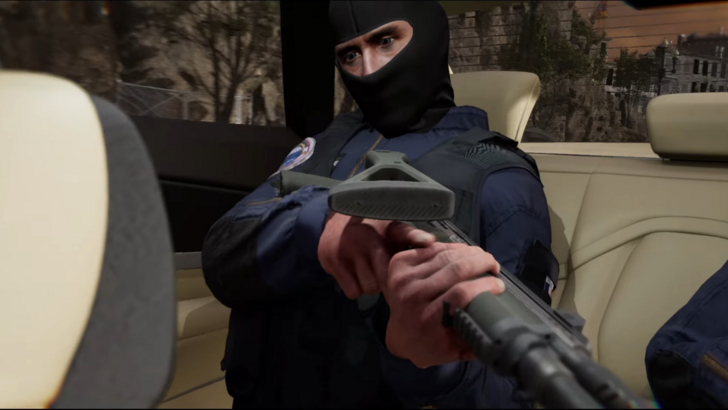
We interviewed Minh "Gooseman" Le, creator of Counter-Strike, to talk about his newest first-person co-op PvE shooter, Alpha Response. Le discusses why he made the jump to PvE rather than PvP, the challenges of creating a PvE experience, influences that shaped its mechanics/systems, and what the future holds as the game approaches its 1.0 release.
Alpha Response Creator Discusses Shift From PvE to PvP
Adapting to a New Market
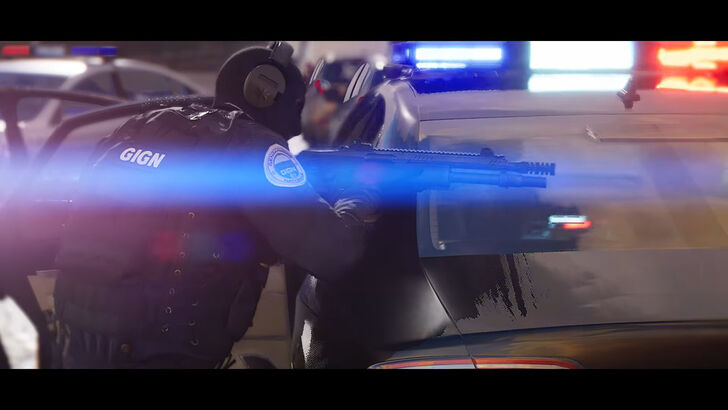
Since entering Early Access in 2024, Alpha Response has grown into a co-op shooter built around the unpredictability of its PvE combat. Developed by Ultimo Ratio Games and led by Minh "Gooseman" Le, the co-creator of Counter-Strike, the project goes in a different direction from the competitive multiplayer shooters that defined much of Le’s career.
Like Counter-Strike, players earn cash from successful operations to buy better weapons and armor. However, instead of pitting players against one another, Alpha Response drops four-player squads into open city areas to respond to hostage rescues and other high-risk objectives. These cooperative missions are also designed to be more unpredictable, thanks to adaptive AI that adjusts enemy behavior based on players’ performance in-game.
We sat down with Minh Le to discuss the thinking behind that design philosophy, from his decision to leave competitive PvP behind in favor of cooperative PvE to the challenge of building dynamic AI. We also talked about the lessons he has carried through decades of designing shooters, the game's evolution throughout Early Access, and its goal of keeping players on their toes every time they step into the field.
Alpha Response Creator Shares Why He Went For PvE Instead of PvP
A New Lease on Games
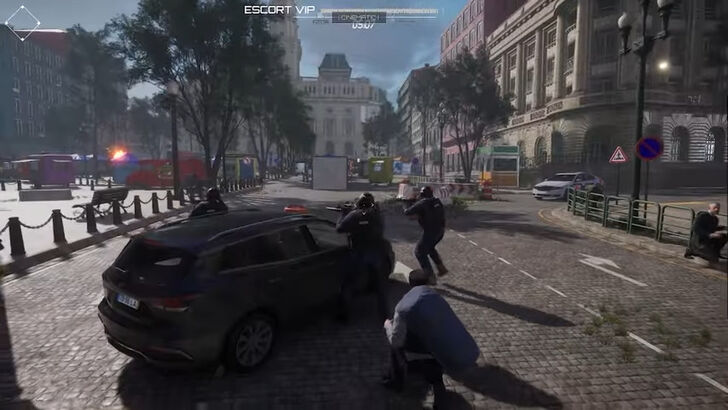
Le’s reason for making Alpha Response is simple: He wanted to build a different kind of shooter. After spending much of his career feeding the endless appetite for players trading gunfire, he saw cooperative PvE not only as a new creative direction but also as a more practical one in today’s market.
"I wanted to do a PvE because I felt it had a better chance at finding an audience," Le explained. Retaining players in the PvP market is notoriously difficult, he noted, as he would be "competing with some huge, well-established games that offer a much more polished experience."
It is a rather pragmatic assessment from a developer whose work helped shape one of the most influential competitive shooters ever made. Alpha Response chooses to bypass the turf of entrenched live-service titles entirely, focusing instead on its strengths in co-op and replayable missions.
PvE is a Different Kind of Challenge
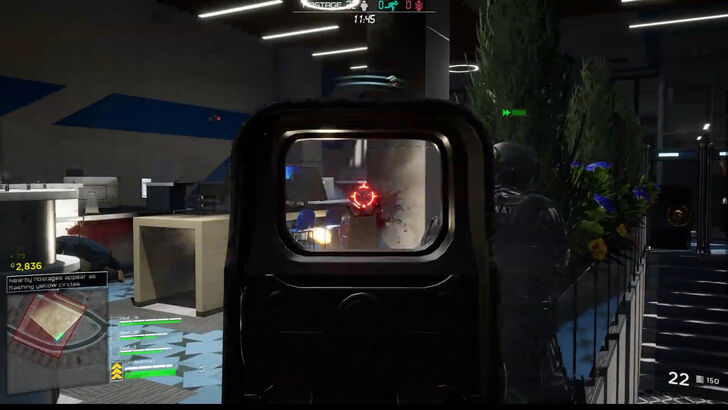
This, however, meant moving away from how Le usually made games, as creating a PvE game presents a different set of challenges. According to him, "designing PvE games is very different [from] PvP because you have to design AI, and the level design also has completely different layouts [since] PvP levels tend to be symmetrical."
Competitive maps are often balanced so that neither side gains an inherent advantage, but Alpha Response embraces uneven spaces built around objectives, even at the expense of absolute fairness between opposing teams. Players may be escorting a VIP through exposed streets or clearing buildings where enemy reinforcements can arrive from multiple angles.
The challenge, then, becomes outsmarting enemy AI that is simultaneously trying to outsmart the players.
Alpha Response Adjusts To Its Players Through Dynamic AI
More Than Just Pathfinding
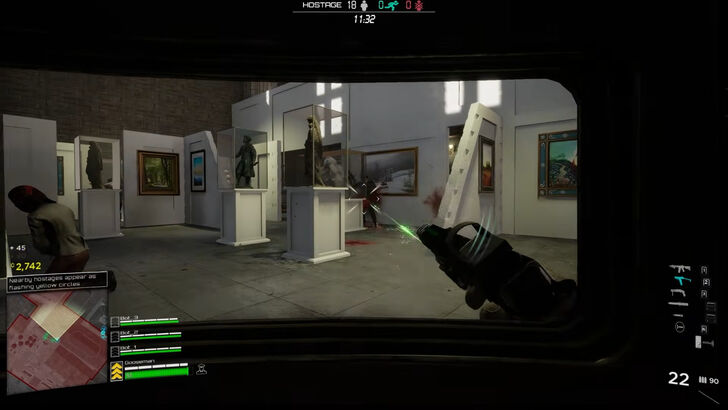
A never-ending challenge in PvE games is finding the right balance between difficulty and fun. This varies from player to player, but it's still something developers have to consider, especially when players are only playing against the game itself rather than against fellow players, as in competitive shooters.
Like other multiplayer shooters before it, Alpha Response addresses this problem by continually tweaking its AI to strike the right balance between challenge and fun without causing excessive frustration. It draws inspiration from the AI Director popularized by Valve’s co-op classic, Left 4 Dead (L4D). Le explicitly noted that the system "recognizes when the players are having a hard time and will scale down the difficulty accordingly."
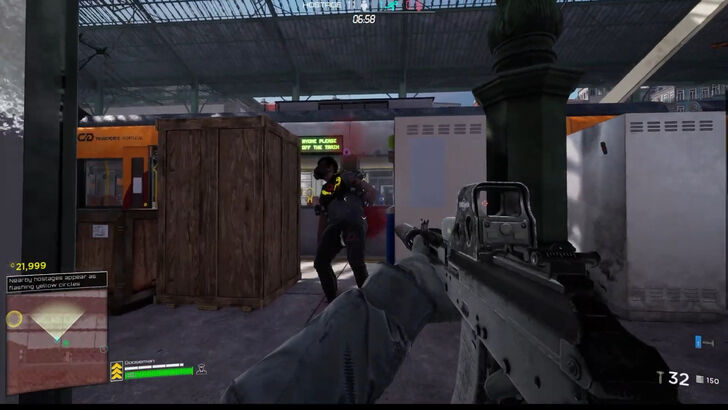
For instance, if a squad operates efficiently, the AI will respond aggressively by proactively holding angles and flanking through broken windows or escalating panic by deploying suicide bombers or attack dogs to disrupt formation. Conversely, when things go south, the system lengthens the interval between enemy wave spawns, lowers the number of enemy spawns, and lowers their accuracy.
"We spent a lot of time fine-tuning the enemy AI to feel challenging while not frustrating new players," Le said. "Some of the missions can be quite hard even for experienced FPS players like myself, but if you move cautiously and use surrounding cover effectively, you can complete the missions successfully."
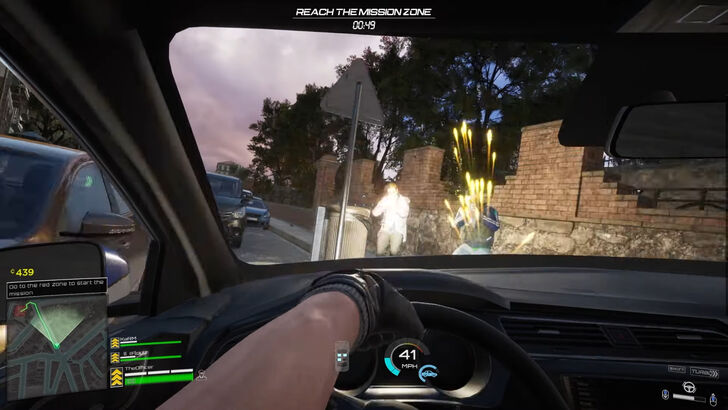
Yet, there’s a key difference between the two games: Alpha Response’s map design is more of an open world, whereas Left4Dead’s is much more linear. This created a unique problem for the former, as the AI had to adjust to the positions of all 4 players and consider their parameters as well. "The whole thing was difficult. Just balancing it." Le remarked when asked about the most difficult aspect of designing its dynamic AI.
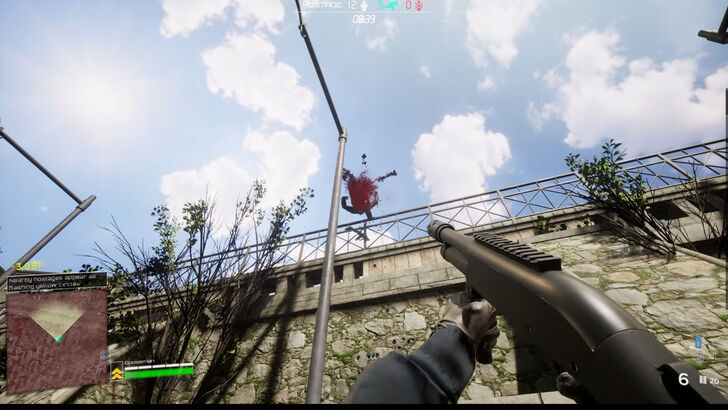
It is, however, only one piece of the equation. Le explained that much of the team’s Early Access effort was spent refining how enemies behave once they enter the battlefield. "We’re at a stage where the AI offers a really challenging and exciting experience to the player."
For Le, if the AI still surprises its creator after hundreds of hours, it is doing its job. "I’ve played the game hundreds of hours, and I’m still challenged each time I play the game because of the dynamic way in which the AI enters the mission and how they maneuver and engage the player." Le likened the experience to open-ended tactical shooters such as Ghost Recon and Far Cry, where players are expected to constantly reassess their surroundings because "the enemy will enter the mission zone from different angles."
Directing the Flow of Every Mission
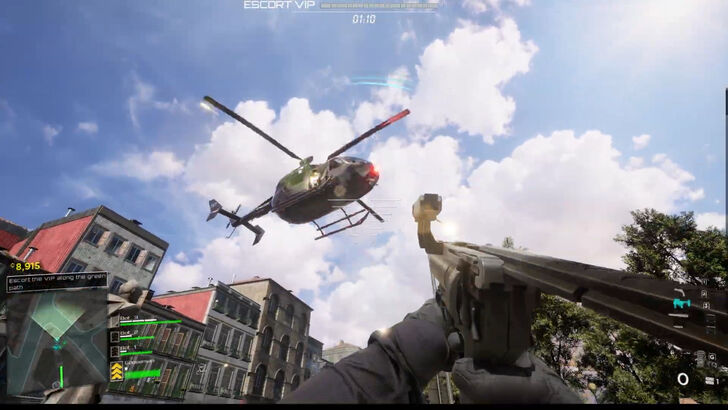
That design extends even to the missions themselves. Nearly 40 scenarios are made around differing objectives, with enemy behavior adapting to the context of each operation.
There are no spawn zones or scripted points to look out for. Enemy vehicles can enter the combat zone at any moment to unload additional hostiles at different locations and force squads to adjust their positioning. On some occasions, "enemies will drive into the mission area and disembark at various locations," Le explained. Even after securing one sector, players cannot assume it will remain safe for long, as new threats can arrive from another direction with little warning.
Those reinforcements are rarely uniform, either. Aside from the standard riflemen, Alpha Response incorporates enemy types that demand different priorities on the battlefield. "We also have [...] suicide bombers, grenadiers, dogs, drones, helicopters, and more," Le said, and each introduces its own problem to solve.
Not Just Against You
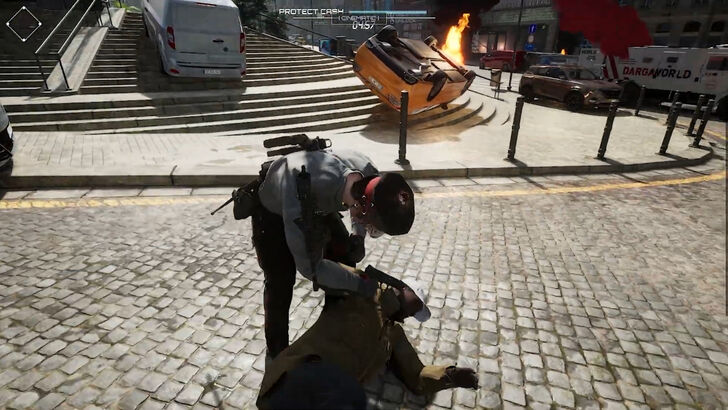
The adaptive AI is not limited to the enemies players face, though. As Alpha Response approaches Version 1.0, Le considers the addition of "BOT teammates" to be one of the game’s biggest milestones, as it allows players who prefer to go it alone to experience missions as they were intended.
Like their human counterparts, the bots are smart enough to adapt to the situation at hand. If players want things done a specific way, though, they can issue commands to have teammates hold an area, regroup, or move into position. This, then, gives solo players access to many of the same strategic considerations as a human squad.
Alpha Response Takes Inspiration Not Just From Modern Shooters
Paying Homage to the Arcades
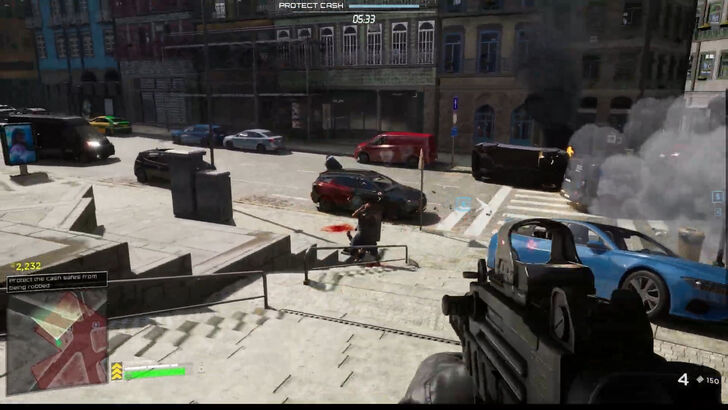
The dynamic AI is only one part of what keeps missions from becoming predictable. Equally important are the elements surrounding the firefight itself. Factors like civilians, vehicles, and specialized enemy units force players to reassess the entire map, not just the nearest target.
What’s surprising, however, is that the influences behind that philosophy come not from modern tactical shooters, but from arcade light-gun games. "We added the civilians because they add a sense of unpredictability and dynamism to the firefights that I don’t experience in other games," Le noted. "We were inspired by classic arcade shooters like Virtua Cop and Time Crisis that had chaotic firefights with civilians running around."
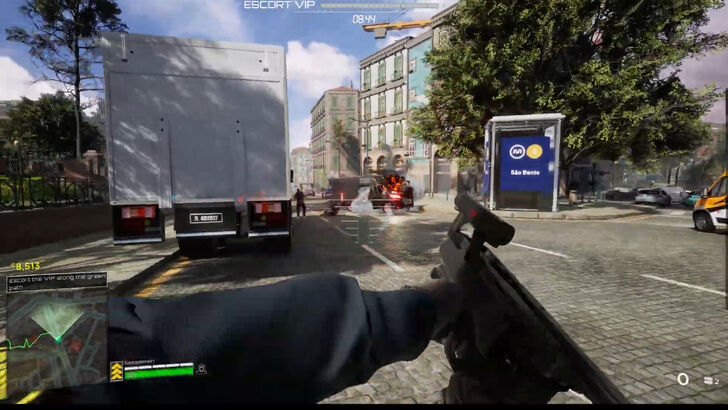
Both arcade games were built around more than simply shooting every hostile that appeared on screen. Civilians regularly crossed the player’s line of fire, which then forced players to quickly identify their targets under pressure while enemies emerged from windows, rooftops, vehicles, and blind spots.
Similarly to those arcade games, missions in Alpha Response are fairly short, with some taking roughly ten minutes to finish. Regardless, Le believes that their "open world setting offers a lot of replayability because the AI will move and react differently each time you play."
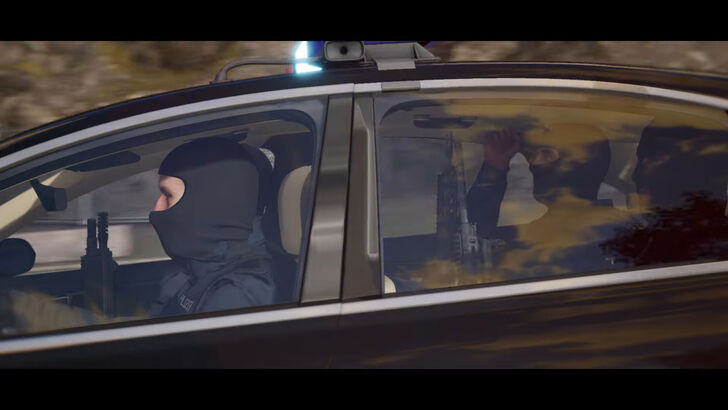
The resemblance, however, ends with that influence, as Le combines those ideas with mechanics drawn from modern military shooters.
"I continue to evolve my design principles based on playing other games such as Battlefield and Call of Duty," he said. "when I first made Counter-Strike, I wasn’t a fan of aiming down the sights and leaning, but now I’ve incorporated those elements into my latest games."
He even went so far as to say "I think Alpha Response will offer players an experience similar to Left 4 Dead / Payday / Virtua Cop."
Alpha Response Creator Hints More Missions After 1.0 Launch
Going Global
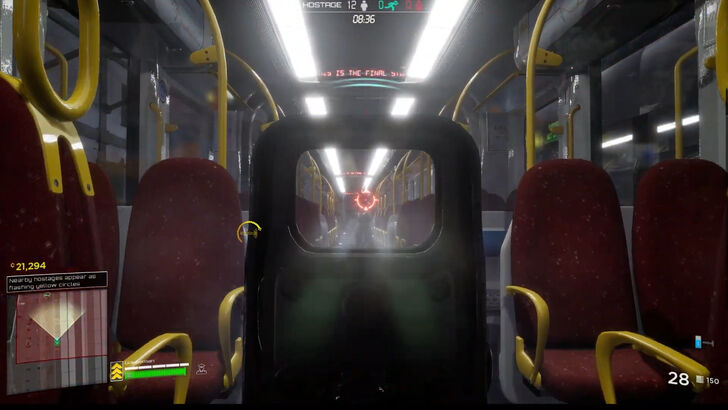
Alpha Response entered Steam Early Access in October 2024. In the almost two years since, it appears that they’ve been iterating on its systems through player feedback, with Ultimo Ratio Games targeting a full release in the third quarter of 2026. Throughout that period, they’ve expanded the game with new missions, enemy types, and a whole slew of optimizations.
For Le, however, the full release is not the point where development ends. "We would love to continue the project after 1.0 by adding more missions that take place in different parts of the world," he said. The game’s structure naturally lends itself to more maps and challenges that continue to build on the AI systems that already underpin each mission.
At the same time, though, Le acknowledged that those ambitions are tied to the realities of independent development. "There’s a lot of potential to add more, but it really depends on how the game sells." Perhaps fittingly, what comes next for Alpha Response is just as unpredictable as the experience Le set out to create.
Full Interview
You've spent much of your career working on multiplayer shooters, from Counter-Strike to Tactical Intervention and Rust. What drew you toward building a cooperative PvE experience with Alpha Response, and did that shift open up any gameplay ideas that simply wouldn't have worked in a competitive PvP setting? Do you ever feel the pull to bring competitive or PvPvE elements back in, or was leaving that behind part of the point?
I wanted to do a PvE because I felt it had a better chance at finding an audience because PvP games are hard to keep an audience [for], as I would be competing with some huge, well-established games that offer a much more polished experience. Designing PvE games is very different than PvP because you have to design AI and the level design also has completely different layouts (PvP levels tend to be [symmetrical]).
Alpha Response has been evolving throughout Early Access, with updates touching everything from mission design to optimization. As the game approaches Version 1.0, what do you think is the biggest addition or improvement players should be excited about? How do you decide which areas to prioritize when balancing technical polish with adding new content? And was there anything that surprised you about how players approached the game or the kinds of feedback they consistently gave during the Early Access period?
I think the biggest addition is adding BOT Teammates [so] that players who prefer to play single player can enjoy a squad-based experience. We also improved enemy AI over the course of the Early Access. We're at a stage where the AI offers a really challenging and exciting experience to the player. I've played the game [for] hundreds of hours and [I] still feel challenged each time I play the game because of the dynamic way in which the AI enters the mission and how they maneouvre and engage the player.
I think it feels a lot like the Ghost Recon / Farcry games where the enemy will enter the mission zone from different angles and the player needs to always be aware of his surroundings. Alpha Response has a variety of unique missions (almost 40 missions in total) and each of them offers different playstyles. For example, in some missions you're escorting a VIP and you need to pay attention to enemies that will spawn in front of you as you're escorting your VIP. In other missions, you're defending an open area, and the enemies will come at you from all angles.
Counter-Strike is built around tight, focused engagements, while Alpha Response features large maps, AI enemies, vehicles, and civilians that can all influence a mission. What were the biggest challenges in making those larger, more dynamic encounters stay engaging while giving players meaningful tactical decisions?
Many players share stories about missions that spiral out of control in unexpected ways, whether because of civilians, vehicles, or enemy behavior. When designing Alpha Response, were you aiming to create those kinds of unscripted moments, or did they emerge naturally during development?
We had to continually tweak the AI and modify the mission layouts to provide a challenging and fun experience without frustrating the player too much. Some of the missions can be quite hard even for [experienced] FPS players like myself, but if you move cautiously and use surrounding cover effectively, you can complete the missions [successfully] without feeling frustrated. We added the civilians because they add a sense of unpredictably and dynamism to the firefights that I don't experience in other games. We were inspired by arcade shooters like Virtua Cop and Time Crisis that had chaotic firefights with civilians running around.
In PvP, your opponent was always another human. In Alpha Response the AI has to provide that tension instead. How do you make enemies feel smart and unpredictable without feeling unfair?
We spent a lot of time fine-tuning the enemy AI to feel challenging while not frustrating new players. The player is able to fine-tune the enemy AI difficulty at the start of a match, but we also do dynamic AI scaling, which will affect how the enemy behaves during a match based on how well the player is doing. This is similar to Left4Dead's AI director, which recognizes when the players are having a hard time and will scale down the difficulty accordingly.
How does the AI director handle difficulty adjustment dynamically? For example, does it focus on creating more 'chill moments' between enemy waves, or does it reduce the AI intelligence, preventing it from taking some of the more difficult actions like preparing an ambush?
It scales the amount of enemies and their accuracy. It also scales the time between spawning a new wave of enemies.
Is it dynamic in the way that the difficulty would also scale upwards if the players are doing well?
Yea, it does.
What are the variables that affect this dynamic AI? Does it monitor player health, ammo, completion speed, etc.?
I don't want to get into the specifics of it. There are dozens of variables.
What’s the most difficult aspect of designing the game’s dynamic AI?
The whole thing was difficult. Just balancing it.
You mentioned Left4Dead's AI director as an influence. In what ways is the AI director system in Alpha Response similar to L4D, and in what aspects does it differ?
Alpha Response takes place in an open world,
where Left 4 Dead missions are much more linear. The AI in Alpha Response needs to accomodate for the player being anywhere in the open world, so it's much more difficult to determine where to spawn the enemies because the 4 players can be in [different] parts of the map.
You've been designing shooters since the late 1990s, when multiplayer FPS games looked very different from today. Are there any design principles you've held onto throughout your career, or has your philosophy evolved significantly over time? What do you think Alpha Response offers shooter fans in 2026 that they won't find elsewhere?
I continue to evolve my design principles based on playing other games such as Battlefield and Call of Duty. When I first made Counter-Strike I wasn't a fan of aiming down the sights and leaning, but now I've incorporated those elements into my latest games because of my experiences playing CoD and BF games.
I think Alpha Response will offer players an experience similar to Left4Dead / Payday / Virtua Cop. I think our unique open-world setting offers a lot of replayability because the AI will move and react differently each time you play. We also have vehicles that add a lot of dynamism to the gameplay, for example. [In] some missions, enemies will drive into the mission area and disembark at various locations. We also have a wide range of enemy types, suicide bombers, grenadiers, dogs, drones, helicopters, and more.
With Alpha Response approaching Version 1.0, how does the team view this milestone? Is it the finish line for the project, or the beginning of a longer roadmap for future updates and content?
We would love to continue the project after 1.0 by adding more missions that take place in [different] parts of the world. There's a lot of potential to add more, but it really depends on how the game sells.