
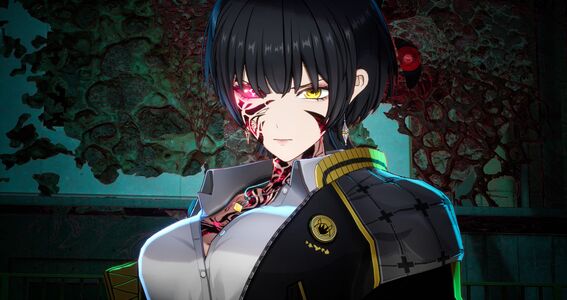




Qliphah in Providence’s Shadow is a tactical RPG developed by UnitePlus and published by Arc System Works. Learn more about the game’s plot, gameplay, release date, our review of the game, and more.
Overview
What is Qliphah in Providence's Shadow?
Qliphah in Providence’s Shadow is a tactical RPG developed and published by Arc System Works. A "tactical timeline" RPG and visual novel hybrid, the game sees players navigating Tokyo and investigating anomalies around the city which give more information about the world, grant player upgrades, and progress the story. The story follows Soma Hoshigami, a courier turned half-human, half-abberation, and Rena Hizuki, an investigator with the Tokyo Metropolitan Police Department’s Public Safety Department, are tasked with investigating the cause behind the Collapse and the mysterious "Tiny True" narcotic
Qliphah in Providence's Shadow features:
⚫︎ Unique, Timeline Based Combat
⚫︎ Kinetic Visual Novel Style Presentation
⚫︎ Cyberpunk, occult noir setting
⚫︎ Cel-shaded art style and presentation
| Digital Storefronts | ||
|---|---|---|
 Steam Steam |
 Playstation Playstation |
 Switch Switch |
| $24.99 | ||
Qliphah in Providence's Shadow Review | Two Halves That Never Make a Cohesive Whole
A Strange, Undercooked Acquired Taste
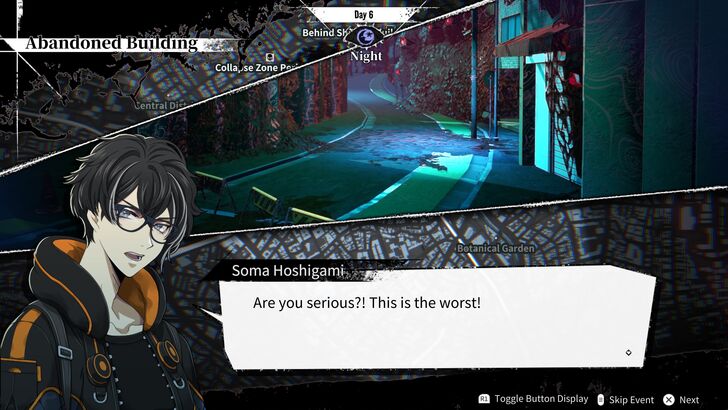
When I first saw Qliphah in Providence’s Shadow’s initial gameplay trailers, I didn’t quite know what to make of it. It had the occult, post-apocalyptic settings and aesthetics I associated most with Shin Megami Tensei, and what looked like a strange fusion of the combat in Devil May Cry and the Final Fantasy VII Remake series. I was all in, though; a game this weird was bound to at least be interesting.
Having played Qliphah in Providence’s Shadow… it certainly was interesting! The novelty of this visual-novel-meets-action-RPG was undoubtedly strong at first, especially with the gothic cyberpunk setting and truly strange combat system. The uniqueness was stretched quite thin across the experience, though. Qliphah in Providence’s Shadow is one of the strangest games of the year, and while I found a lot to like at its core the experience also makes some baffling missteps.
Qliphah, ultimately, reminds me most of Hawaiian style pizza (walk with me here, please). It’s a fusion of two things that don’t normally go together, and while it has its audience it's a polarizing idea that's hard to get right and is inherently divisive. I feel the same way about Qliphah as I do Hawaiian pizza: It’s cool, I like it sometimes, but it’ll never be my first choice and I’d get sick of it if that's all I ate. The game being undercooked only makes it worse, failing to bring those ingredients together into a satisfying pie.
I wanted to like this game way more than I did, y’all. Qliphah’s slow-paced, methodical combat is great in flashes, but it takes a while to get used to and only really opens up after enough experience. Its story’s reliance on text and dialogue provide dense, compelling worldbuilding and a fun central relationship, but a generic and forgettable narrative with a truly baffling genre mismatch. It’s two halves that never quite mesh into a cohesive whole, and at best it’s a decent foundation that very easily gets in its own way.
A Combat System Which Defies Categories
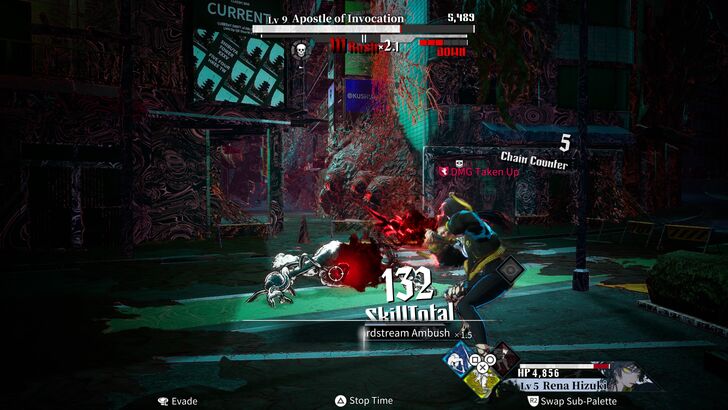
Qliphah’s combat is simply nothing like I’ve ever played before. The game asks that players approach much slower than they might be used to in "similar games" like FF7 Remake, with an option to even freeze time to queue up moves and assess likely enemy options. Its a mix of Scarlet Nexus and The World Ends With You that, in theory, seems well thought out. Everything you can do during combat, from moving to attacking, is queued up in a central "timeline." While moving through combat arenas in an almost grid-based, directional manner works quite well, it’s the attacking that takes a lot of getting used to.
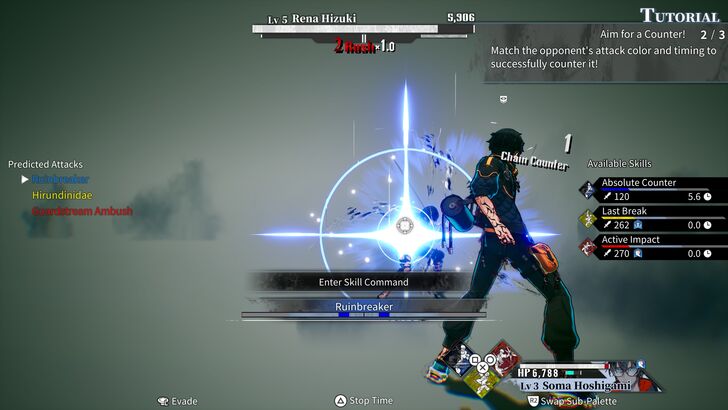
Soma and Rena’s face-button attacks are color-coded since they’re meant to counter similarly colored enemy attacks. Your red attacks in the Circle Button or Left D-Pad Button counter the enemy’s red attacks, same goes for blue, and so on. It requires players to either properly react to the colors in the timeline or queue them up in advance, and the reward is getting to break the enemy’s guard and finally pull off special moves, combos, and other flashy attacks.
This slower, more deliberate approach to combat feels like a turn-based game metamorphosing into an action RPG and being abruptly interrupted halfway through. I initially approached the game like Devil May Cry, weaving and dodging through enemy attacks while trying to string together stylish combos, and I got my ass beat by a level 5 sludge aberration. Even when I was starting to grasp the fundamentals, Qliphah’s combat still remained unintuitive thanks to its reliance on heavyhanded, dense tutorial blurbs that show up even as you figure them out yourself.
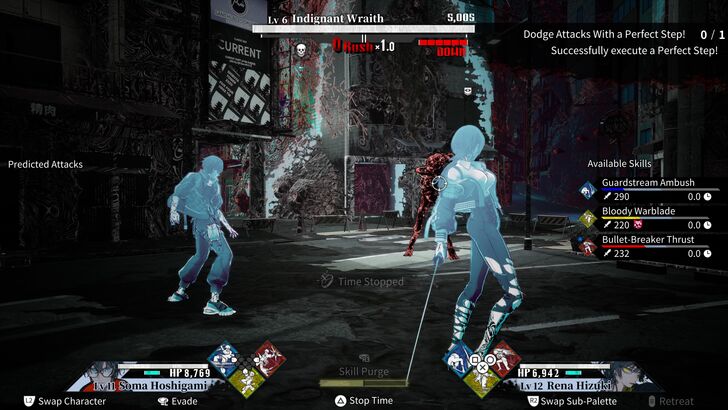
Qliphah’s combat is a freak of nature that starts off alluringly weird, requires a bit of work to get into, but it does get quite fun once you get a feel for it. The learning curve is a bit steep, but when it finally clicks it truly feels like nothing out there. Perfectly queuing up moves and timing them to counter enemy attacks can be quite exhilarating, especially as the game lets you use certain super moves that deal a ton of damage.
That said… it clicks, and then that’s it. There isn’t nearly enough meat on this combat system to sustain a 10-15 hour campaign, and when it’s used as much as it is, it gets stale quickly. Qliphah’s combat system is fun and dynamic after a lot of tutorials and fidgeting, and it just stays there, never quite growing or evolving. Once you get a hold of dodging, queueing up moves, and countering other moves, there isn’t much else left to learn as the game doesn’t introduce any new mechanics after the fact.
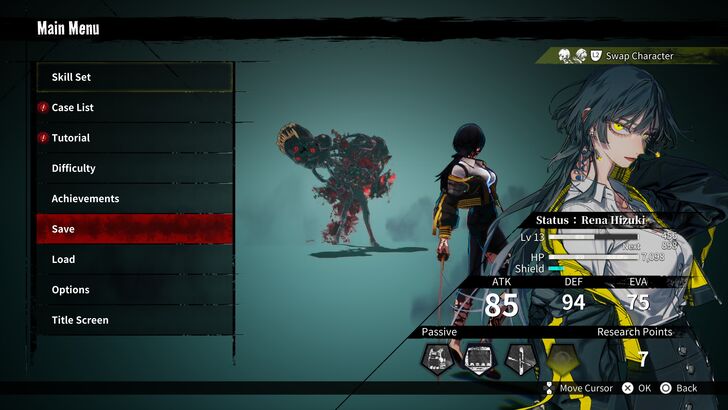
There are upgrades and skill points to earn as you progress through Qliphah’s campaign, but they often amount to just tweaking your damage output or your HP bar. While unlockable moves and abilities do exist, the game’s emphasis on synchronized timing for the counters makes sticking with the initial toolkit an easy path of least resistance. I mean, why bother equipping a yellow counter move that deals slightly more damage if the starting moves can be upgraded and can counter moves instantly?
That misstep between risk and reward feels fatal for a game like this, which already goes out of its way to break genre conventions. The upgrades feeling marginal at best and the unlockable moves offering small rewards for the risk players take in shaking up their timing makes it seem like this combat system is only around 90% of the way thought out. When factoring in the repetitive enemy encounters, that only feels even more potent.
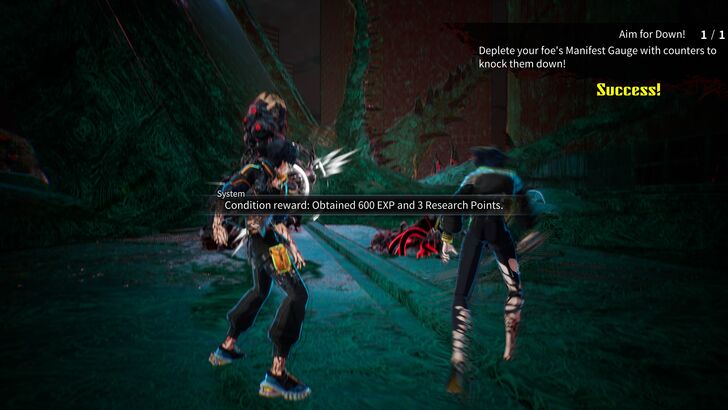
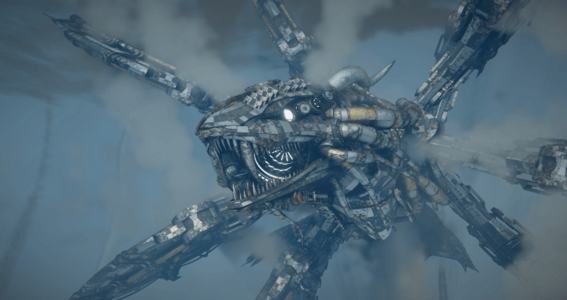
Qliphah’s enemies, the Tier Ones and Aberrations, are former humans turned abominable sludge monsters, and they only hammer in the point that Qliphah’s combat quickly outstays its welcome. Apart from maybe a distinguishable shape here or there, they all mostly look the same and have the same movesets regardless of a distinct backstory that may or may not be there. It gets old fast, even with boss fights actually changing it up enough to actually give the game some much needed life.
The repetitive nature of the combat only feels worse with the stark lack of variety outside of it. The combat half may be underwhelming, but the visual novel half truly brings it down a few notches. The gameplay loop mainly consists of reading a few investigations, getting some upgrades, and then fighting indistinct enemies that barely have any context to them.
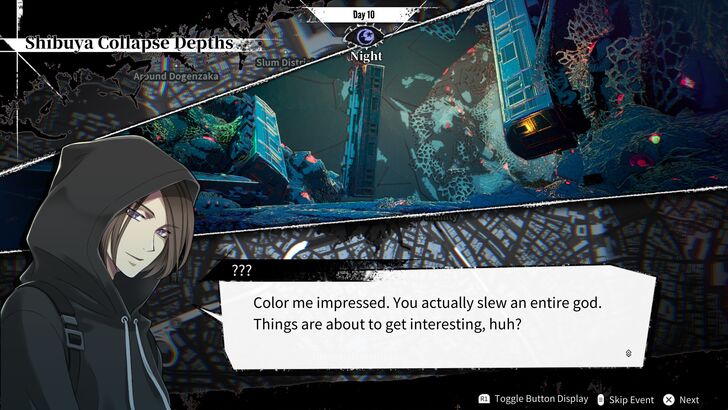
Granted, this is part and parcel for the visual novel genre normally, but as an amalgamation of two genres it completely kills the game’s pacing. Other games that actually marry the visual novel format with a more active gameplay loop, like Persona or Danganronpa, at least pace these halves well and intertwines the two in a way that rewards actively engaging with both ends. Qliphah, meanwhile, barely gives the combat room to breathe as you end up fighting the same enemies, and then reading more belabored exposition, and I was ready for it to end hours before it actually did.
A Critical Mismatch For A Game This Unique
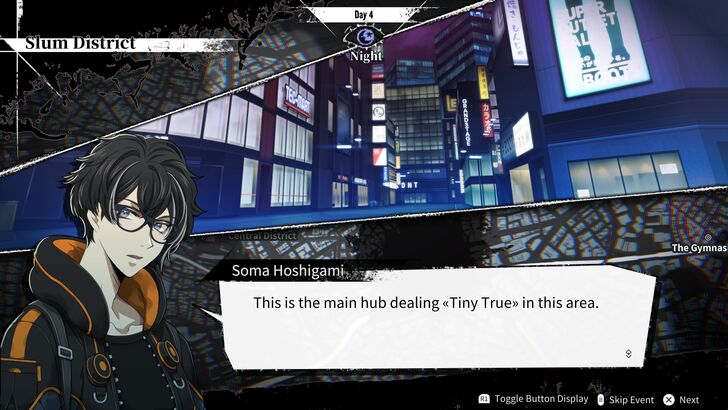
The choice to make Qliphah a visual novel was, admittedly, a brave one. Much like most of the experience, I respect its ambition and what it wanted to do. The execution of the VN half of the game, however, might be one of the clumsiest implementations of the format I’ve ever seen. It ultimately betrays the game’s ambitious core premise that the format lands as flatly as it does.
Dense text boxes and linear storytelling are a core part of visual novels, especially critically acclaimed "kinetic" VNs like Umineko When They Cry. Bridging the gap between gaming and literature this directly has resulted in some of the most loved works in the medium, and during normal circumstances I truly can’t fault a VN just for being noninteractive. I like books as much as I like video games, maybe even more, so that really isn’t a problem. It escapes me completely, then, why they decided this was the appropriate format for Qliphah’s dense, clearly lived-in world—one that invites active engagement not just from its design but from its very mechanics.
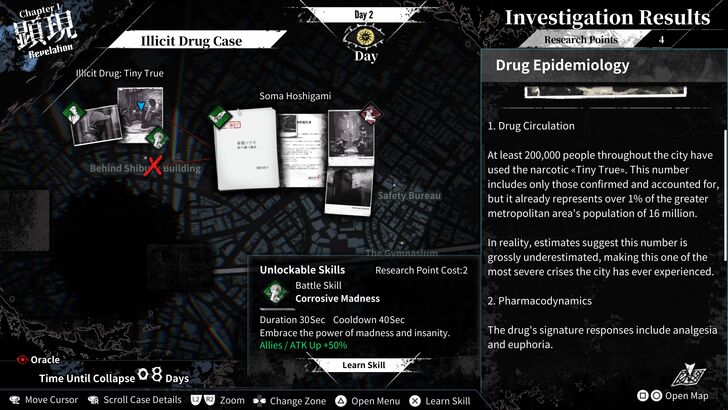
This disconnect is best seen in the Investigations. These are Collapse-related occurrences which happen all over Tokyo. Our leads, Rena and Soma, do most of the field work for the player, and while we’re privy to their thought processes the sleuthing gets exhaustively explained anyway This, in a vacuum, is fine; honestly, the fact that most of these investigations end in a battle with that weird combat system means Qliphah is more interactive than most visual novels in general.
The problem comes with the kind of world Qliphah wants to present. The mythology of the Collapse and Tokyo’s cults are so rich and dense and increasingly active in the narrative that they’d land with the gravitas they deserved if they were shown more than told. Post-apocalyptic noir is an incomparably cool and compelling story hook, which makes it more frustrating that the investigations get reduced to dry conversations between our leads and unappealingly grey text boxes that inelegantly spoil the mystery every time.
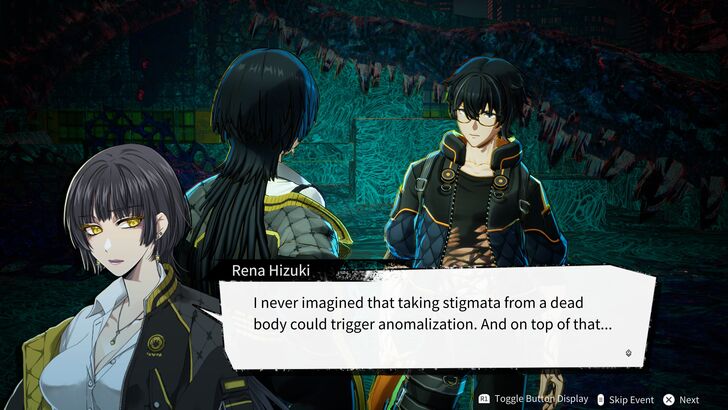
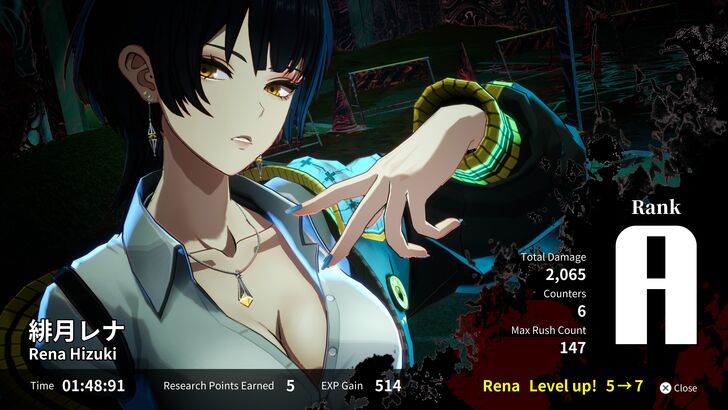
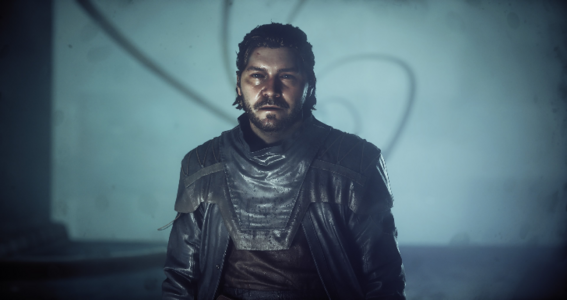
What weakens the experience even more is the lackluster presentation and writing. Dense text boxes and lore dumps aside, and I mean way to the side, the dialogue in Qliphah feels stiff and unengaging. The main cast, namely Soma and Rena’s compelling dynamic and Kieran’s cartoonishly evil personality, serve as the lone saving grace in a game full of characters that either embody an uninteresting archetype or serve as walking exposition. Even these bright points, though, don’t shine bright or consistent enough to keep the experience interesting.
It is, ultimately, a visual novel, and usually I wouldn’t be this pressed over a VN that throws too much text at you. However, Qliphah overextends its "tell, don’t show&quo;’ approach way too far, even only a few hours into the experience. There is an undeniably jarring dissonance between the power fantasy of being a post-apocalyptic half-demonic fighter and being the reader to a story you’re never quite involved in, and it never quite makes peace with these two halves.
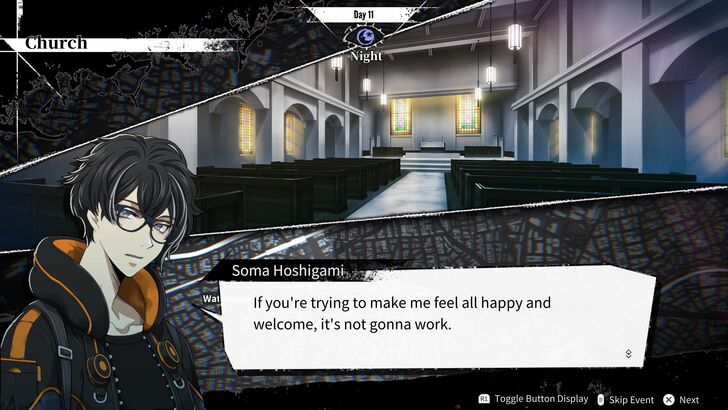
I’m not saying Qliphah shouldn’t have been a visual novel; many games have become smash hits by intertwining that classic gameplay format with something more active. It does, ultimately, stand as a fundamentally massive mismatch to make Qliphah’s visual novel side as noninteractive as it is. It only makes it more exhausting and noticeably repetitive when you get ripped away from being a badass swordfighter to a passive reader.
A Simple, Fun Story Buried Under Horrific Pacing
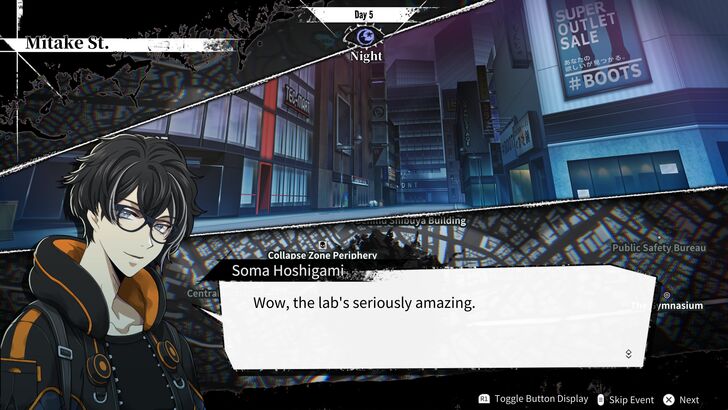
Qliphah in Providence’s Shadow presents a Tokyo that, while reminiscent of things we’ve seen before, shakes things up just enough to have its own personality. There’s a notably grounded, sci-fi grit to the game’s world that feels unique to its otherwise macabre and fantastical setting, and it works to make the story feel a lot more urgent than it otherwise is. It still is, ultimately, nothing we haven’t seen before; I’d compare it to Shin Megami Tensei meets Tokyo Ghoul and Jujutsu Kaisen.
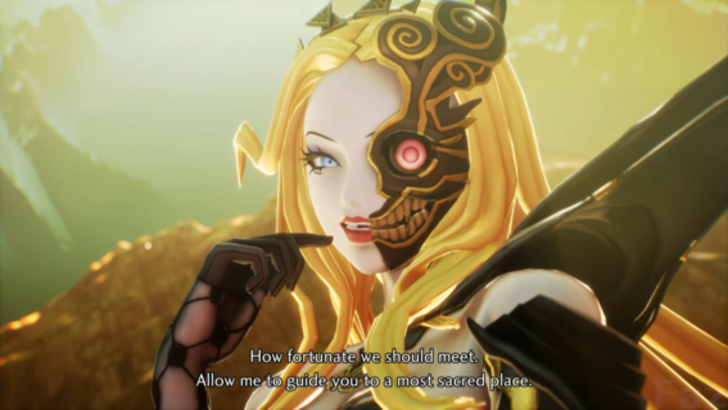
Post-Collapse Tokyo is at least written to be a deeply damaged and dangerous setting, completely overrun with Aberrations, Tier Ones, and strange, thorn-like foliage covering skyscrapers. Qliphah’s worldbuilding is strong, dense, and sets up a genuinely interesting premise surrounding half-mutant half-human monster hybrids, a drug called "Tiny Truth" that turns people into demons, and a police department investigating a cult. Rena and Soma are great protagonists that serve as fun parallels to each other, and it makes their growing relationship fun to watch. It certainly makes controlling them in combat and seeing them work together incredibly satisfying and makes some story beats hit hard.
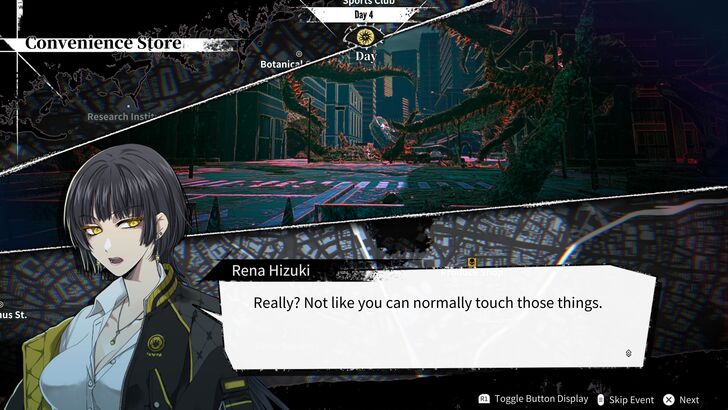
The aforementioned story presentation, though, really does hurt this story quite a lot. It burdens the narrative, fascinating as it is, with pacing issues and a needlessly hard to parse context that the game never quite explains in a snappy and memorable way. The relentless monotony of going between combat and visual novel is, already, a ridiculous stopgap for story progression. Where the pacing really suffers is having to stop dead in your tracks, every time, to find the right text box and read through its usually dense contents every single time just to make sense of everything.
After a certain story moment in chapter 3 completely upends the status quo, I had to revisit more finished investigations and text logs that explained how we even got to that point. I don’t mind having to reread text boxes if I have to, especially in a VN, but it robbed the scene of its momentum after having to read 5 long, convoluted explanations. It felt like finally getting a car to go up to speed, then having to pull the e-brake right after. It feels like the game failed to properly build up its narrative outside of retrospective logbooks you have to revisit, and by that point the tension is long gone.
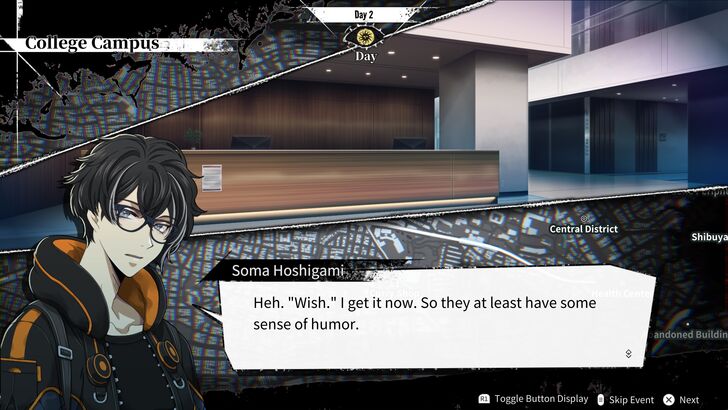
It's not like the core mystery requires that much obfuscation either. The dense mythology and quasi in-media-res story structure hide a central story that’s actually quite straightforward. The Tiny True drug was spread by the cult to turn people into monsters, the only story relevant Aberration is a chosen-one type character by both police and the cult, and so on. This, by itself, isn’t a problem; I’m a comic book fan after all, and if there’s something I can relish in its needlessly convoluted mythologies that set up simple, fun stories (Krakoa-era X-Men, anyone?).
Where this structure fails is, again, in the presentation and how it harms the narrative’s pacing. Qliphah’s already simple story fails to hit its mark thanks to how truly difficult it is to follow, having to constantly refer back to dry and overly-explaining text boxes just to remember and make sense of the moment-to-moment events. I would’ve liked this story way more if it just embraced its simpler side. I can forgive it for not shooting for the game’s lofty heights, but it's truly unfortunate that Qliphah can’t help but get in its own way even when it has a lot going for it.
The Apocalypse Draped in Grey and Red
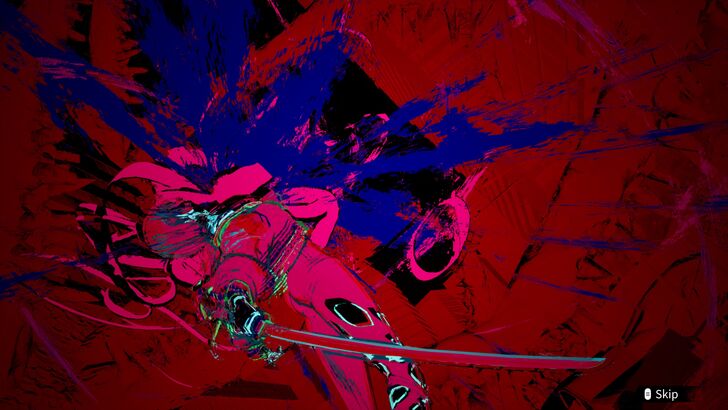
As a game with a combat system that places a lot of emphasis on colors, it should come as no surprise that Qliphah’s use of color in its art style is well done. Qliphah’s visual style is a striking fusion of macabre and cyberpunk tied together by cel-shaded, anime-inspired art style, and it serves its purpose well as a vehicle for both narrative and combat spectacle. It’s an incredibly vibrant world for the most part, with the color palettes and UI giving the game a distinct personality.
While a visual novel not having much in the way of 3D environments or expensive, animated cutscenes is to be expected, the backdrops during dialogue do a lot to convey the narrative as it unfolds. They’re well drawn, expressive, and help flesh out Tokyo quite a lot during pivotal story moments. Unfortunately, Tokyo itself is mostly presented as a drab, gray map with a few checkpoints thrown in there, almost like a map on a police corkboard, and it does require all the help it can get in being presented as a compelling setting.
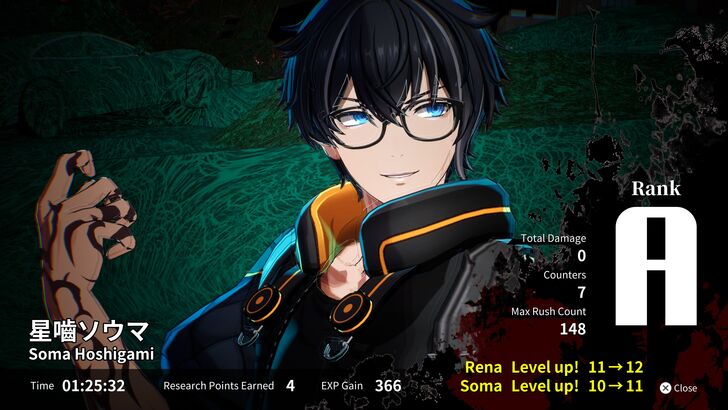
Where the game really pops, though, is during combat. The 3D cel-shaded models for Rena and Soma look fantastic during fights, their animations are smooth and convey the weight of attacks quite well, and their animated super moves are incredibly fun to watch. Even the pre-battle cutscenes look fantastic, compensating for the overworld maps’ boring structure by presenting Tokyo as the damaged city it is.
Unfortunately, even the game’s visual style runs its course quite fast. There aren’t enough unique backdrops or combat animations to make the game feel like it’s progressing in a meaningful way. It also obscures Tokyo as a vibrant post-apocalyptic wasteland, since the city is barely seen or interacted with, and all we get to see Tokyo are… those damned text boxes.
Is Qliphah in Providence's Shadow Worth It?
Only Worth It for the Novelty, Wait for a Sale Otherwise
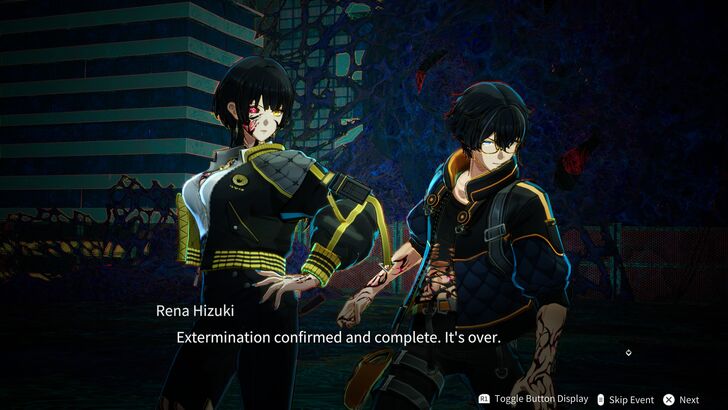
Qliphahs’ ambitiousness and unique approach to its genres of choice are perhaps the game’s strongest selling points. At $24.99, if you’re specifically looking for a brand new take on visual novels or action RPGs, then this mostly delivers. Otherwise, its lack of postgame content or branching routes make the experience hard to revisit, while stiff writing, lackluster presentation, and repetitive structure are bound to annoy even its strongest believers—myself included. I really, really wanted to love Qliphah, but it's a game that never feels at home with itself, deeply struggling with presenting an identity that’s conceptually rock solid. Still, games that take risks this big are always commendable in their own way, and if the novelty of an experience like this captivates you then the asking price won’t feel like much of a barrier.
Game8 Reviews






Basket Bros Hello i am kavin, its my first time to commenting anywhere, when i read this paragraph i thought i could also create comment due to this good piece of writing.