
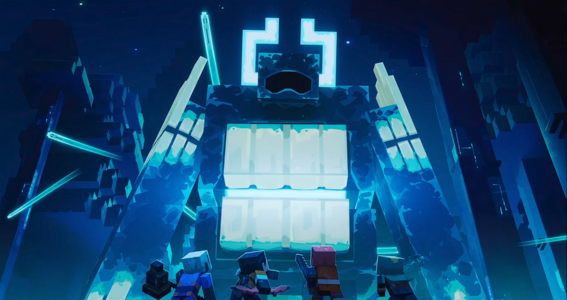




Minecraft Dungeons II is a fast-paced dungeon crawler and the direct sequel to Mojang’s Minecraft Dungeons. Read our first impressions review to see what it did well, what it didn’t, and whether it’s worth trying.
Everything We Know About Minecraft Dungeons II
Minecraft Dungeons II Story
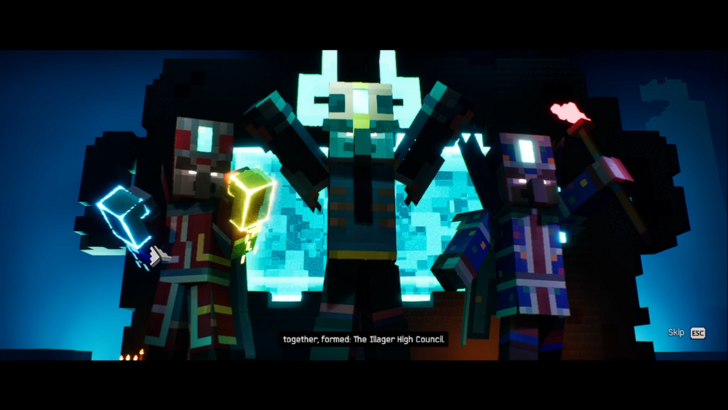
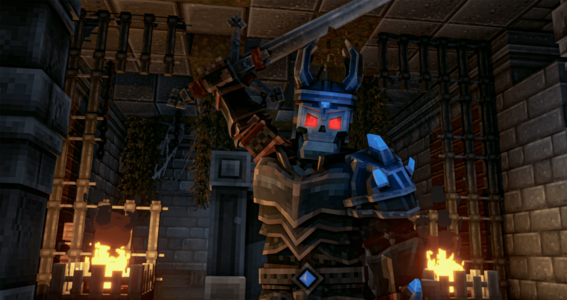
Minecraft Dungeons II’s story follows a brand-new adventure set at an unspecified time after the first game’s conclusion. With the Arch-Illager defeated and their forces routed, it was up to the remaining heads of the Illagers, the Illager Council, to use leverage a newfound power and strike back at the Hero.
With the new Sift Dimension unlocked, the Illager High Council now dominates the original continent, forcing the Hero and the surviving Villagers to seek refuge on an island out at sea and reclaim what was once theirs.
Minecraft Dungeons II Gameplay
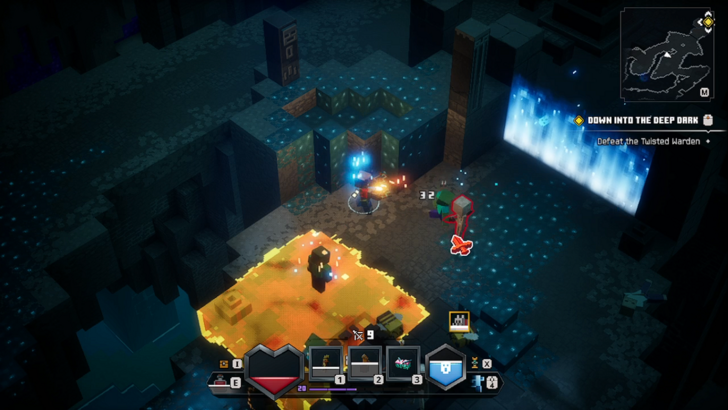
Minecraft Dungeons II builds on the first game’s point-and-click, fast-paced RPG system by introducing streamlined versions of the first game’s mechanics, or new mechanics entirely. Carrying an expanded item system allowing up to four equippable armor pieces and an expanded selection of weapon classes, Minecraft Dungeons II also introduces the new Trinket item class as rewards for major story missions.
Minecraft Dungeons II Release Date and Time
Released on September 29, 2026
Minecraft Dungeons II released on September 29, 2026 for Steam, Xbox Series X|S, PlayStation 5, Nintendo Switch, and Nintendo Switch 2. The game will be released at 8:00 AM UTC, which is 12:00 AM PDT / 1:00 AM MDT / 2:00 AM CDT / 3:00 AM EDT in the United States.
| Digital Storefronts | |||||
|---|---|---|---|---|---|
 Steam Steam |
 PS PS |
 Xbox Xbox |
|||
 Switch Switch |
 Switch 2 Switch 2 |
||||
| $29.99 | |||||
Minecraft Dungeons II Review [Early Access]: More of the Same, But in A Good Way
Making New Things The Mojang Way
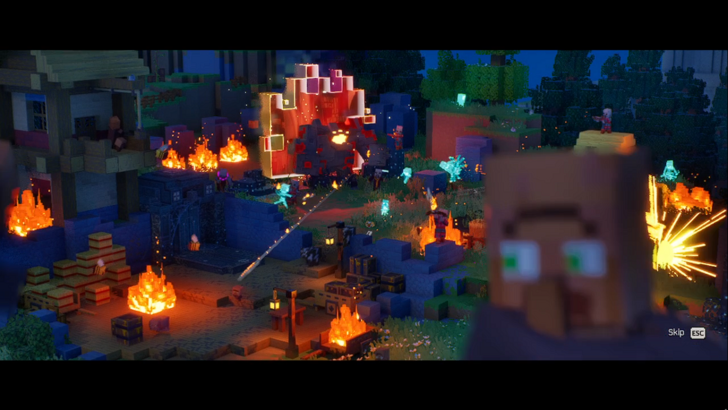
Though it wasn’t the Minecraft announcement most people wanted from Mojang this year, Minecraft Dungeons II was anything but unwelcome. Following a niche but well-loved dungeon crawler from 2020 (short runtime and heavy reliance on DLC notwithstanding), the plainly titled sequel was beset by similar expectations from the get-go.
Having been fortunate enough to try it early, I can say that what it’s shown so far sits squarely within said expectations. That is to say, it’s iteration over innovation manifest. That’s the Mojang way; always has been, and Minecraft Dungeons II pretty much kept that torch burning, no stick and coal needed.
New Villains, New Dimension!
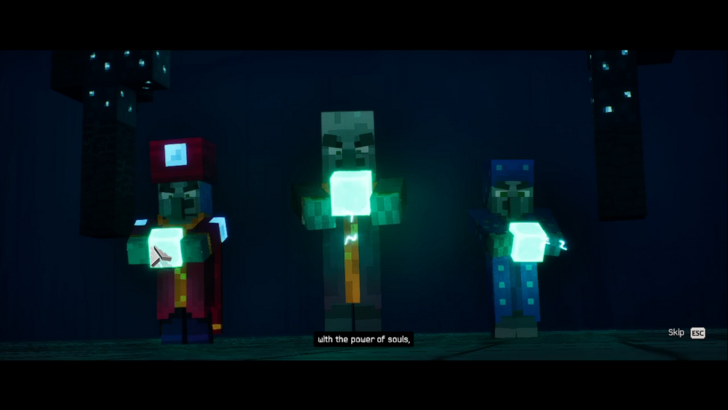
No facet of Minecraft Dungeons II shows this focus on improvement over new features better than the game’s narrative layer, which is technically new, but unequivocally linked with the events of the first game’s arc.
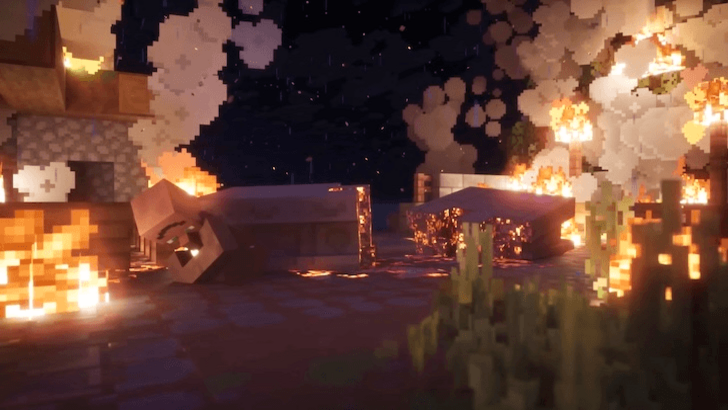
MC Dungeons II opens to a new dimension, The Sift, and the remaining Illager forces attempt to harness its Soul Power to get back at the Hero. And get back they did, driving the Hero and the remaining Villagers to a whole new city across the sea after sacking and burning the last one.
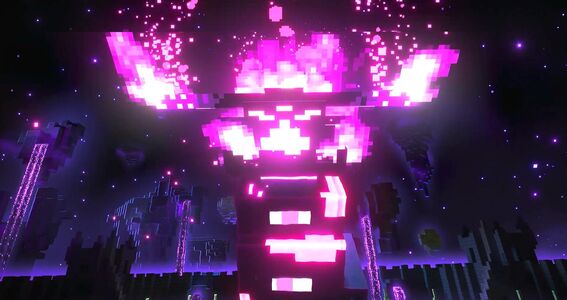
As a lover of all things Minecraft, new lore and setting additions always get me excited, and The Sift Dimension is no exception. Functioning something like the Feywilds for those of you who are familiar with D&D lore, The Sift is home to an ecosystem of magical, soul-powered creatures, and it’s the closest thing MC Dungeons II has to something completely new.
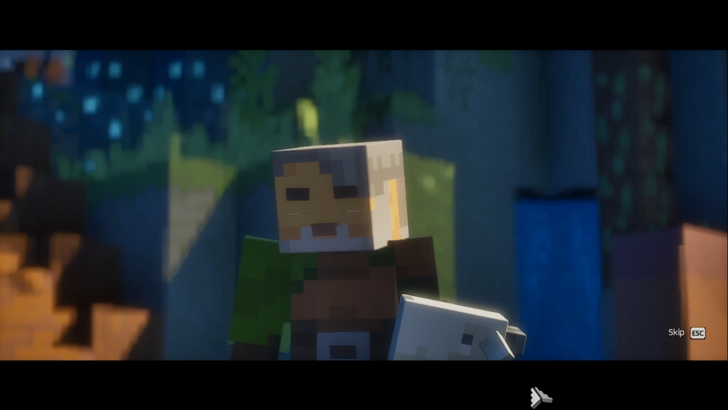
Of course, since the Hero is a player character and player insert, them being "new" has no narrative bearing whatsoever. In fact, it’s technically the same Hero from the last one, just a bit older and too weak to face the new threat.
I’ve yet to conclude this new adventure, but I’m enjoying the sights, sounds, and ideas it puts forth along the way. The Sift is a distinct dimension unlike anything Minecraft has produced over the years—standing out even against legendary fan creations like the Aether. Ultimately, its pulsing alien energy and massive menagerie of new mobs breathe life into a narrative that would otherwise just be treading water, giving it a genuine shot at being unique.
Digging the New Item Slots
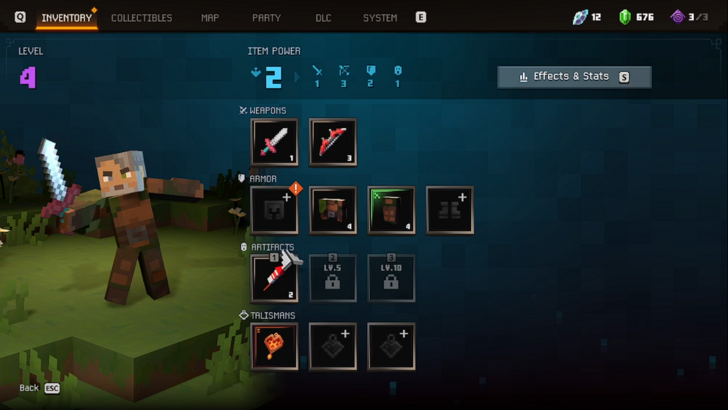
Moving on to gameplay now, same as with its story, MC Dungeons II still adheres to the base features and mechanics of the first game, just with a few streamlines and changes on top, and something completely new to round it out.
The most noticeable thing about the sequel’s version of the standard RPG loadout is its expansion from the original four main types (Melee, Ranged, Armor, Artifact) to five (Melee, Ranged, Armor, Artifact, Trinket) with the inclusion of the new Trinket loot type. A new type of loot is great, and all, especially if it’s a customizable set of major passives that you can have up to three of, but the real pull here is the Armor slot—or should I say slots?
That’s right, what was once a single armor slot has been expanded into four bespoke slots for helmets, torso armor, leg armor, and foot armor. An amazing improvement, if you ask me, because apart from having more options to bling out your Hero, having four slots of swag and all, players are also afforded more modularity with their builds.
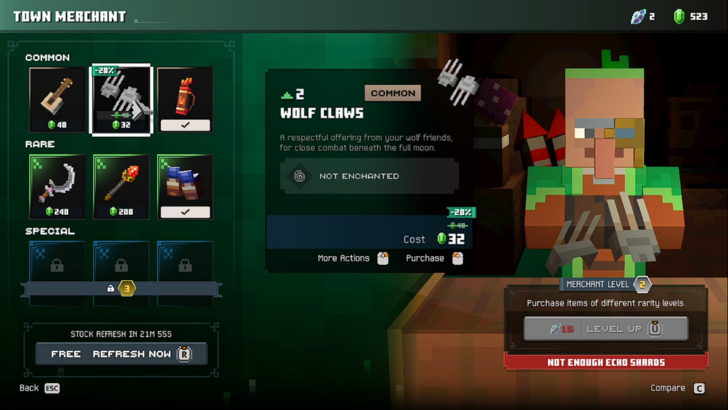
Four new armor slots mean four new possible enchantments, up to four times the equipment affixes possible, and, for good measure, four more reasons to go loot farming for the highest rarity. Through a simple tweaking of numbers, both replayability and overall balance have been tipped to the player’s favor; an efficient stroke that Mojang is as known for as their scarcity of new content.
These, combined with the tweaks to melee combat that include a new jump attack option, tweaks to ranged combat that make ammunition infinite but on a cooldown, make up the game’s core dungeon crawl gameplay loop. It’s still point-and-click combat like the first game, but driven by many more layers, and with more than double the possible permutations available for maximum replayability.
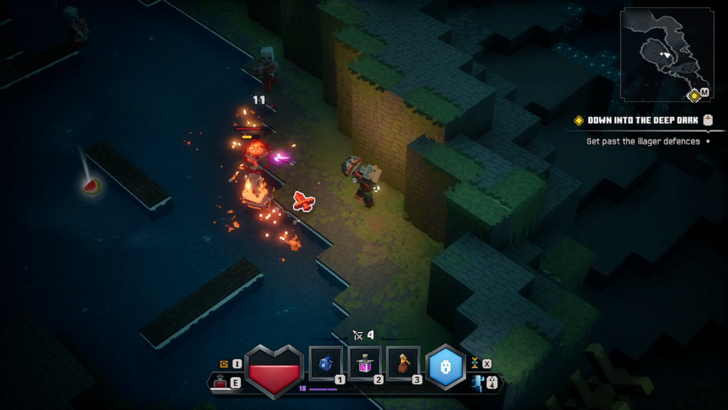
If I must point something bad about MC Dungeons II so early, though, it has to be the controls. Pointing at enemies and running their fade instantly is fine, but having the pathfinding of a newborn horse just to get there isn’t, and the fact that keyboard-and-mouse players specifically must deal with this is incredibly annoying. I’ve died many times to things that don’t make sense simply because the game’s pathfinding interpreted a wayward click as a command to run around the horde of zombies and eat 15 hits in the process.
It’s the same as the first game’s; wonky for K and M, acceptable for console controls. Difficulty balancing is also rearing its head as early as a third of the game’s entire run, with some boss encounters being borderline impossible if not dealt with as a group. A skill issue, perhaps, but a concern nonetheless. At least difficulty can be toned down from the settings menu at any point, so it isn’t so damning a criticism.
A Proper Minecraft World This Time Around
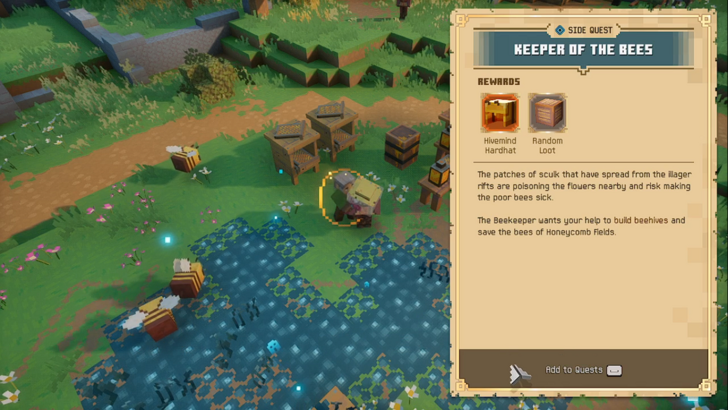
Another aspect of Minecraft Dungeons that started off from the original and eventually budded onto the sequel are dungeons (duh), but the latter did manage to make something of itself based on how the former did it then. MC Dungeons was originally a mission-based situation with a hubworld for upgrades, the sequel is an explorable, interconnected world consisting of multiple biomes.
That’s right, gone are the confines of dungeon walls inexplicably making a Minecraft game feel claustrophobic, and in are seamless transitions from simple meadows to shadowed woods and even the Deep Dark. Players can actually explore the Overworld by walking and encountering enemies in waves as they do. And if they want to feel how the game felt back then, there are dungeons galore spread about, as well as portals through the Sift that players can take for a unique sort of dungeon instead.
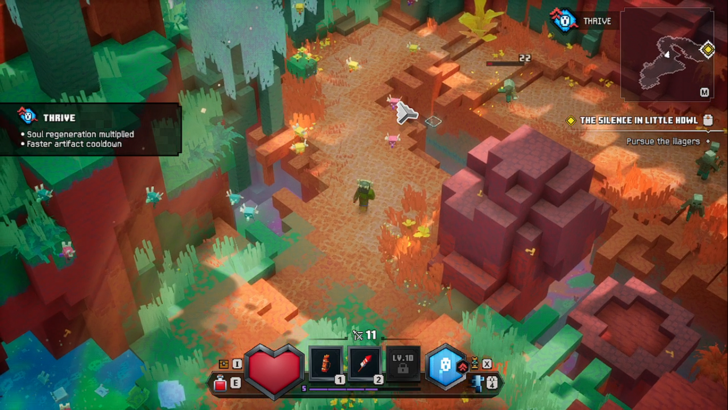
With the advent of an explorable world comes new mechanics entirely, like sidequests for even more loot, destructible overworld terrain and interactables, and just a lot more chances for players to get loot. This new way to get loot also changes the game’s pace from a step-by-step escalation of difficulty into a continuous crawl across a massive world.
I love it. It’s the closest Minecraft Dungeons has ever been to being just plain Minecraft, though it isn’t without its downsides. The poor controls I mentioned before have been extended from a dungeon-only issue to an ever-present one, what with everywhere being completely explorable and all.
So Far A Textbook Sequel, If A Tad Boring
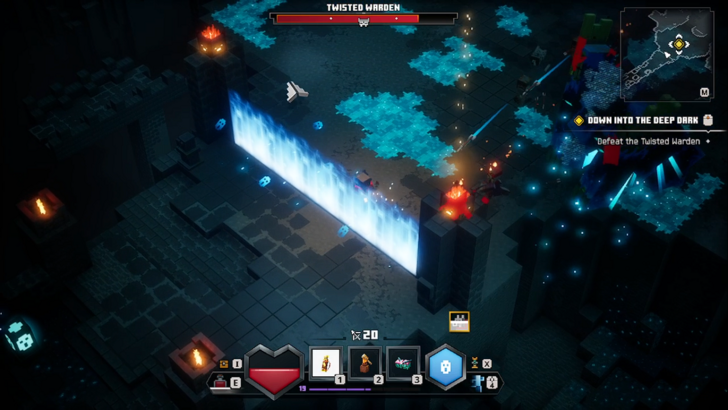
And so we reach the end of Minecraft Dungeon II’s first few levels. There are far more levels to follow as I spelunk deeper into this cuboid crusade against undead and dark-dwelling mutants. I’ve seen a great deal of improvement and a fair share of new things already, and yet so many expectations remain in check.
Will this game be as short as the previous one? Will it end up relying on DLC as much? Do all of these efforts to streamline and iterate on the previous formula equate to a proper sequel, or was Mojang better off just spending their resources on a new update for Minecraft instead?
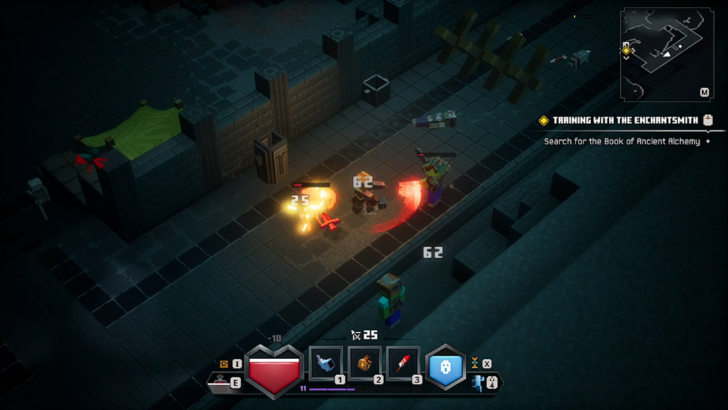
So many things to discover, but I do have answers for some. This game has been a textbook sequel so far. Not so much groundbreaking, but definitely better and more expansive than the previous entry. My iron chestplate is yet to be blown away, and I’m hovering over unimpressed right now despite my appreciation for what it tried to do. I want my socks knocked off and my breath taken, and it’ll take more than a few fixings to achieve that.
Game8 Reviews








Before choosing a privacy or security app, write down the problem you want to solve. Public Wi-Fi, unwanted browser advertising, suspicious files and reused passwords call for different tools. These WebDefenseLab sections provide a starting point for comparing the available approaches and following the related buying guides. A VPN shortlist should reflect your routine: home use, travel, public Wi-Fi or several devices. Read how the provider describes logging and independent audits, then che