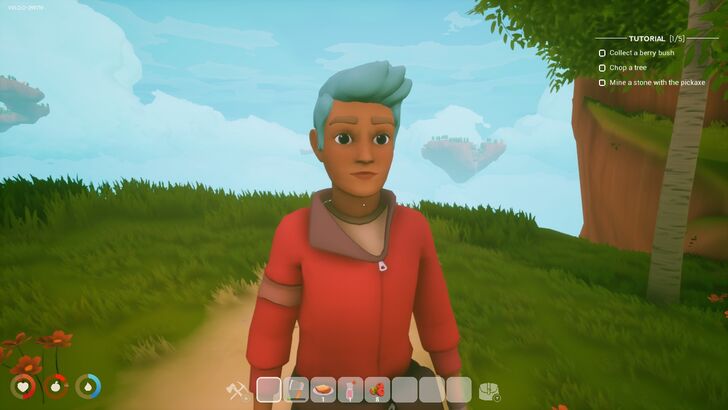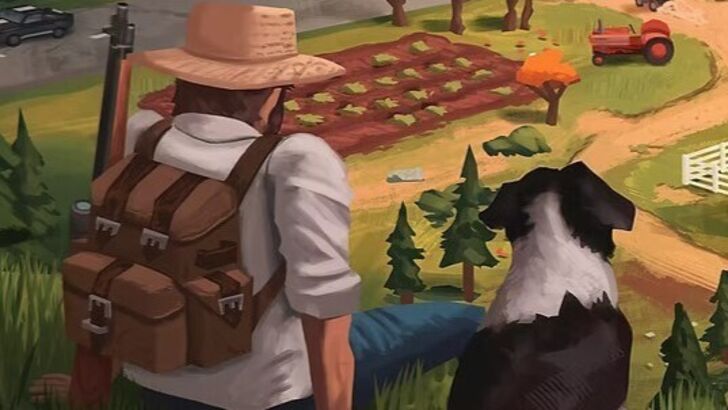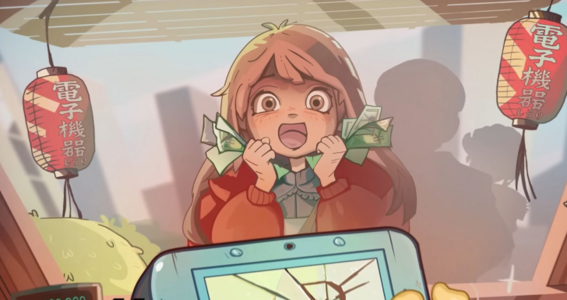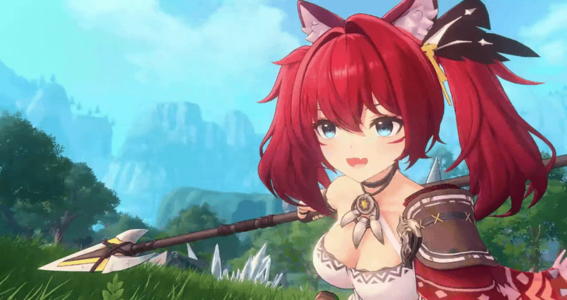



Doloc Town is a post-apocalyptic cozy game with vertical farming. Read our review to see what it did well, what it didn't do well, and if it's worth buying.
Overview
What is Doloc Town?
Doloc Town is a cozy platformer and farming sim developed by RedSaw Games Studio and published by Logoi Games. Set in a post-apocalyptic world, players must hunt and gather supplies and use them to create a proper living space in the wasteland.
With over 40 different types of resources, including plants, junk, and other materials, these valuable items will be vital in shaping a sustainable home. Aside from farming, players can also roam around, meet other people, and make their way through perilous areas swarmed with enemies that hold key treasures.
Doloc Town features:
⚫︎ Side-Scroller With Vertical Platform Building
⚫︎ Unique Weather Hazards
⚫︎ Wasteland Scavenging and Combat
⚫︎ Cozy Game With Farming and Ranching
⚫︎ Crop Gene Modification
| Digital Storefronts | |||||
|---|---|---|---|---|---|
 Steam Steam |
|||||
| $19.99 |
Doloc Town Review: Every Farming Sim Fan Should Play This
A Hidden Gem of a Cozy Game
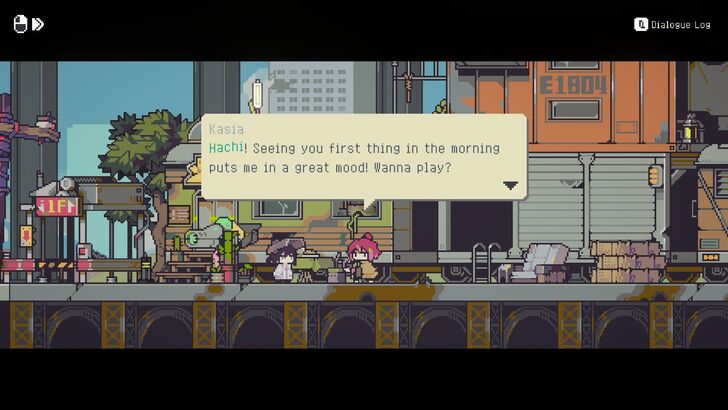
I have played more farming sims than I can count on both my hands and feet, yet very few have stayed on my mind the way Doloc Town has. I first tried it during its Early Access days and only spent a handful of hours with it, but that was enough to see what RedSaw Games was cooking up. Even in that unfinished state, the amount of ideas crammed into one game felt very ambitious. It wasn’t trying to reinvent the genre, but it paced so many interconnected systems together that every upgrade opened the door to another goal, another optimization, another reason to dismantle my farm and start anew.
More than a year later, it’s back in my library for its 1.0 release. Doloc Town is still a game that rewards players who love squeezing every bit of efficiency out of a farm, but it now has the content and polish to support those long hours. It isn’t without its flaws, but it’s hard not to appreciate how much care has gone into almost every corner of this game.
Life Finds a Way Even After a Post-Apocalyptic Event
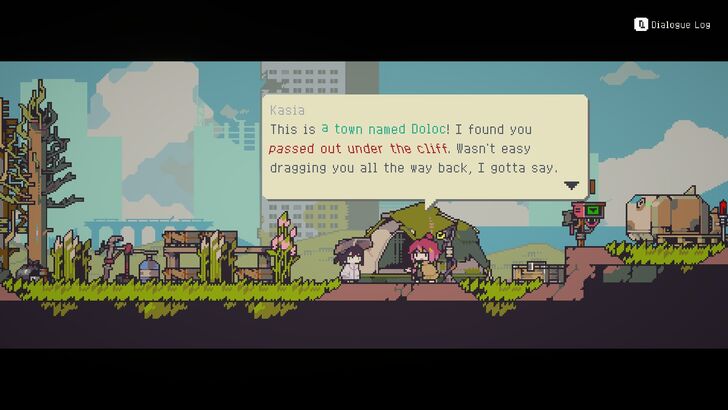
Doloc Town’s premise is simply chef’s kiss. Unlike Stardew Valley or Story of Seasons, you are not moving in a pastoral escape after inheriting your grandfather’s farm. You play as Protti, a young woman returning to her hometown after years away. Doloc Town was forced to evacuate during a war that left the world in ruins. The conflict has long since ended, though peace never truly followed. Acid rain still falls across the land, and the few communities that remain are simply trying to survive another day.
It is a setting I did not expect to work as well as it does for a cozy farming game. The world has clearly been through unimaginable hardship, yet life continues in whatever way it can. The residents have turned abandoned freight trains into homes. Others live beneath crumbling bridges or inside buildings that somehow managed to survive the war. Protti herself begins with little more than a tent and an overgrown plot of land.
As a result, expanding my fields never felt disconnected from the world around me because every upgrade reflected the gradual recovery of the settlement itself. Farming, of course, is still what you’ll do most here, though it exists alongside a larger goal. You are searching for something known as the Legacy of Eden, a relic that could hold the key to restoring this forgotten land. The game does a good job of introducing that mystery early without revealing too much, and it gave me enough motivation to keep pushing the story forward whenever I finished another round of chores.
The premise is easily one of Doloc Town's strongest qualities.
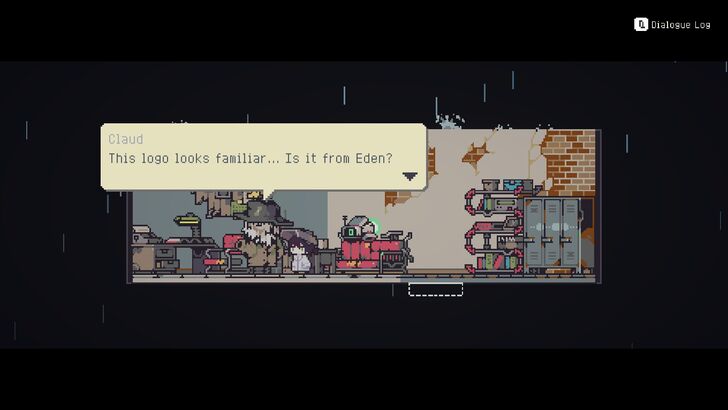
The story itself, however, settles into fairly predictable beats after its opening hours. Rebuilding a struggling community, helping its residents overcome personal problems, and gradually uncovering the truth behind the world all play out much as I expected.
I never found the writing bad by any means; it’s quite funny, actually. I simply found myself predicting many of its revelations well before they happened. The Legacy of Eden and the whereabouts of a person named Ponka remained interesting throughout my playthrough because the road to them led to upgrades I needed for my farm, though the path toward it was fairly standard.
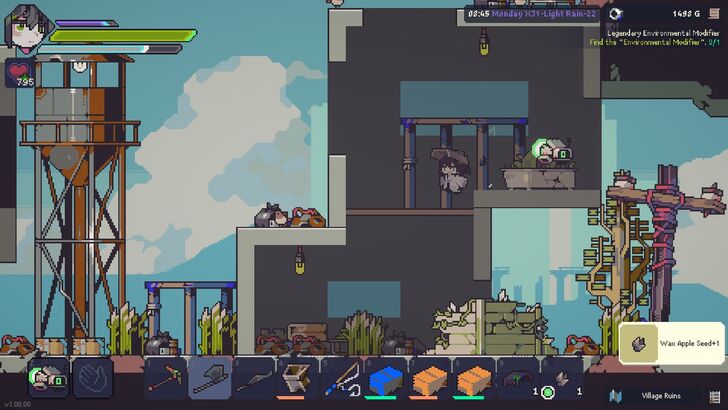
The biggest obstacle to the story is its pacing. This is a cozy farming game, so it stands to reason that you take everything at your own pace. RedSaw Games estimates that players can finish the main story in roughly thirty hours. However, it took me around half that time just to feel as though I had made a big dent in it, mostly because I was constantly missing materials needed for the next objective. One quest would ask for crafted components that required machines, which needed another machine, then another and another. Soon after, I had spent several in-game days expanding my farm before I could continue the main quest.
Oddly enough, I don’t think this is entirely a bad thing. Doloc Town is at its best when it encourages you to lose yourself in its many systems. I would often set out with the goal of advancing the story, only to realize several hours had passed because I became occupied with exploring a newly discovered area or preparing my farm for the next season.
They made the game incredibly easy to sink into. They also slowed the narrative to a crawl. I never felt frustrated by the detours because I genuinely enjoyed them, though they do affect the overall flow of the narrative.
The Heart of Doloc is Its Residents
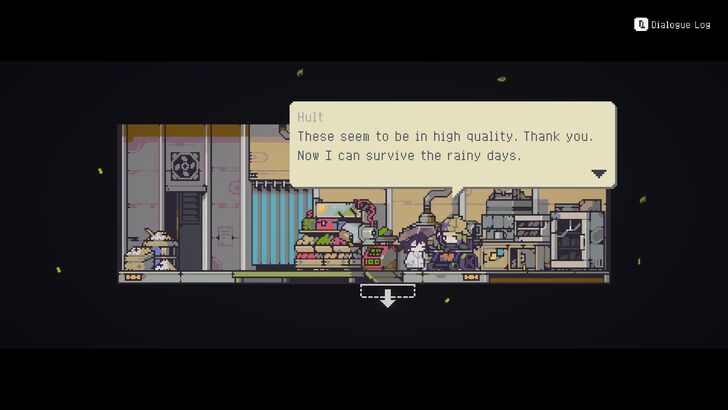
Even if the main story did not constantly grab my attention, the people living in Doloc Town eventually did. I have to admit that I barely cared about most of the residents during my first several hours. Unlike other games like Rune Factory, the map doesn’t show where these characters are in town, save for if they have a quest for you. Characters like Villain, then, just became that cool-looking robot I barely talked to save for when I needed Endyam seeds. Hult was simply that merchant I visited when I needed supplies.
This changed as I unlocked their friendship events. Much like Rune Factory, raising friendship through conversations and gifts opens new character quests. There is no romance here, which saddened me due to the existence of Kasia and Zenis, but it’s fine. These stories are more interested in showing how ordinary people continue living after such devastation.
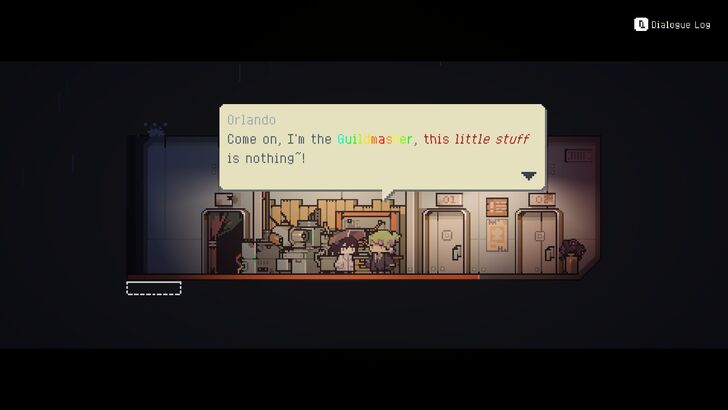
Orlando, for instance, is the head of the Doloc Guild. He carries himself with the confidence of a hero. Beneath that bravado, though, is someone still trying to come to terms with what the war took from him. His friendship quests reveal a man carrying his own fears and grief despite the image he presents to everyone else.
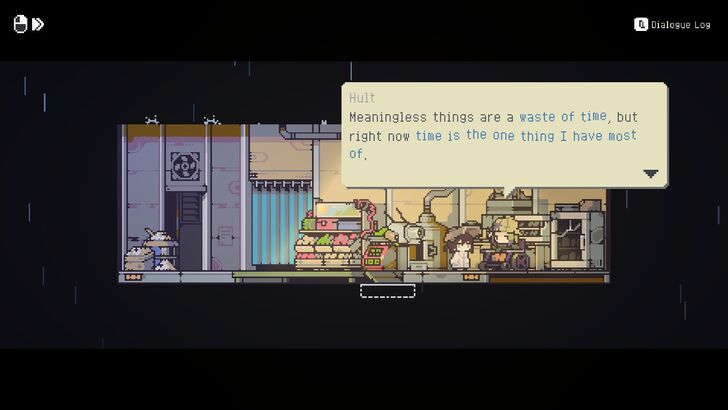
A detail I came to appreciate is that these friendships don’t exist in a vacuum. Residents regularly talk about one another or reveal pieces of the town’s history that another character never mentions. Getting to know one person often added context to somebody else, and over time, you get a better understanding of how these people live.
The friendship quests themselves are varied enough that they never felt like the same errand repeated over and over. Some have you gathering materials for a resident. Others send you to a specific location for a story scene, while a few only continue once you've reached a certain season, time of day, or weather condition. They're fairly simple, but I always looked forward to seeing where each character's story would go next.
One Upgrade Leads to Another, Which Then Leads to Another, Whch Then...
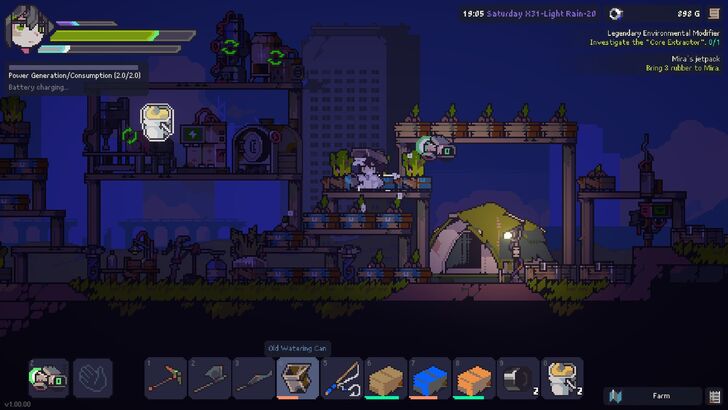
More often than not, though, I'd get sidetracked long before I reached the next cutscene. Doloc Town follows a gameplay loop that isn’t too different from other farming sims. You wake up, water your crops, gather resources, craft new equipment, and expand your farm. It doesn't try to disguise those inspirations. What kept pulling me back was how closely every system is tied to another. It's rare to spend an entire day working toward just one goal because almost everything you accomplish feeds into something else waiting a few steps ahead.
I ran into that early when the story asked me to bring a character rubber so I could unlock an upgrade that would let me reach a new area. It sounded simple enough until I looked at everything required to make a single piece. Rubber needed a Resin Press. The Resin Press needed electricity. Electricity meant building a generator. The generator needed refined materials, which meant producing ingots. Keeping that production going efficiently meant setting up a reliable source of coal, which meant chopping down more trees and building more machines to process everything. On top of all that, I needed to upgrade my skills to unlock the necessary recipes to even build these machines.
Before I realized it, one quest item had turned into an entire production chain. I couldn't simply rummage through abandoned junk piles and hope to find what I needed. I had to build the infrastructure first.
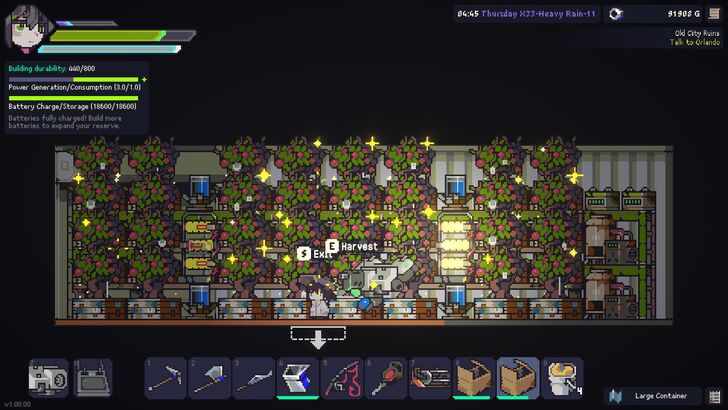
That became one of my favorite parts of the game. The farm sits at the center of everything, though it never feels isolated from the rest of the game, nor does it overpower everything else. Crops earn money, fulfill requests, and provide ingredients for cooking, but they also feed directly into crafting, research, and exploration. The materials I gathered while exploring eventually unlocked better tools back home. Those tools opened paths to new regions where even rarer resources waited. Every upgrade naturally created another objective, and I always had something new to work toward.
Even farming itself feels a little different because of the setting. You're assembling planting boxes out of reclaimed scrap instead of neatly tilling a patch of fertile soil. Soon, you'll probably start stacking them into vertical farms to make the most of your limited space. Then you also have to think about the constantly changing weather, like the acid rain and heatwaves that could spell doom for your crops and structures.
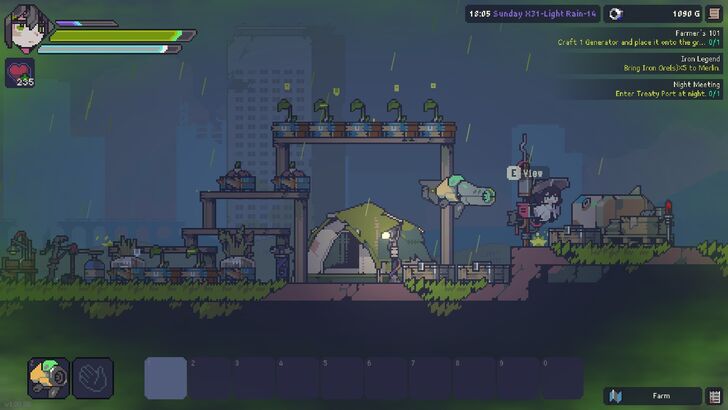
I am happy that Doloc Town never rushes you through any of these. The days move by quickly, and I almost never managed to finish everything I had planned before it went dark. However, it’s never stressful. It’s a cozy game, first and foremost. Unless you’re dealing with a timed request, the game is perfectly happy letting you ignore the main story for several in-game weeks if you’d rather reorganize your farm or prepare for the next season. As I said, that freedom certainly hurts the pacing of the story, but that’s a tradeoff that would actively hurt the game even more if it rushed you.
That slower pace gives the game plenty of room to introduce new mechanics without feeling overwhelming. The opening hours focus on the basics before steadily expanding your list of responsibilities. Livestock, aquaculture, workshops, cooking, fishing, crop genetics, automation, and increasingly complex production chains all arrive one after another. I appreciated how each new system built on something I had already learned instead of asking me to memorize several mechanics at once.
My own farm is probably the best example of that learning process. Looking back at the first iteration of my farm, it was a complete mess. Machines sat wherever I happened to have space. Plant basins were scattered around with little thought about where I would actually need them. I barely considered efficiency because I was more interested in unlocking the next machine than planning where it should go. If your farm ends up looking anything like mine did, don't be afraid to spend a few in-game days tearing everything apart and building it again from scratch.
Eventually I reached a point where production almost took care of itself. Drones harvested crops while other machines processed materials in the background, leaving me free to explore or simply watch everything work together. The game just scratches that one itch on your back that you can’t seem to reach.
You're Going to Backtrack a Lot, Especially Early in the Game
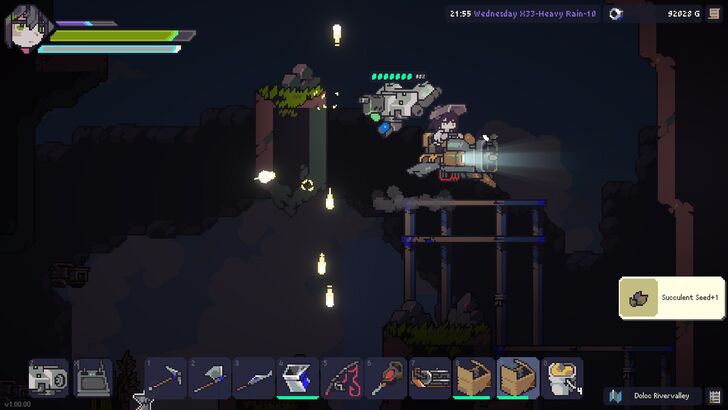
Watching my farm slowly automate itself meant I could spend far more time outside the settlement, though getting there wasn't always as enjoyable as I hoped. Protti walks at a pace that quickly begins to wear thin once your objectives start sending you across the map. You do unlock a dash fairly early, which makes platforming feel a little smoother, but it doesn’t really address the amount of time spent simply moving from one place to another.
You eventually unlock buses that function as a fast travel system, although that takes many hours and a sizeable investment before it becomes practical. Floating motorcycles help even later, but by then I had already spent dozens of hours making the same long walks between regions.
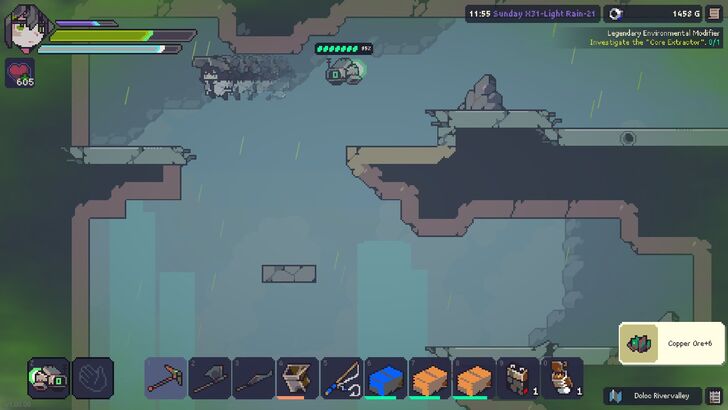
Those trips become even longer whenever you realize you've forgotten something back at the farm. Unless you've unlocked a particular upgrade, every storage box stays exactly where you left it. Forget one crafting material or quest item, and there's a good chance you'll have to abandon whatever you were doing, head all the way home, then make the journey back again. Portable storage boxes soften the inconvenience since each one can hold several items inside your inventory, but I still found myself making more return trips than I would have liked.
It's an issue that stood out to me because exploration occupies so much of the game. Every new region introduces resources you can't find anywhere else and environmental hazards that demand new equipment. Most of my upgrades began with a trip into the wilderness and ended back at the farm, where those materials turned into another machine, another tool, or another production line. I enjoyed that cycle from beginning to end. I simply wish the time spent travelling between those moments had been trimmed down.
There’s a Teleport Spell in Rune Factory games that I abused whenever I was in a dungeon and had no way to get back home quickly enough to beat the time of day. Something similar exists here in Doloc Town, but as a consumable. This means use it once, and you’d have to craft or buy another one to do so again.
Combat is Serviceable
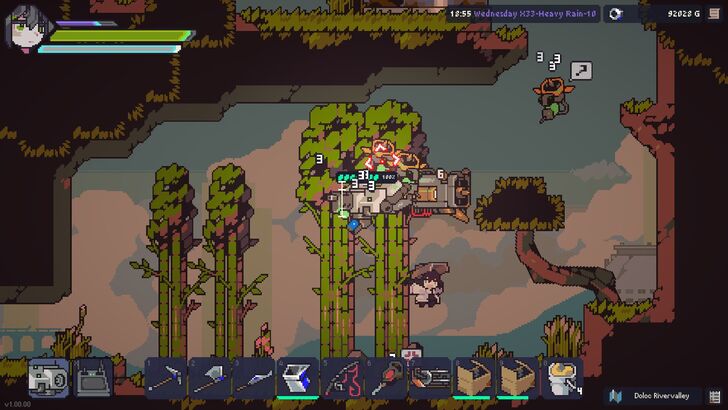
Once you’re out there in the wild, you are at the mercy of your drones. Combat stayed simple throughout my playthrough. Your main weapon is a customizable drone that can either be controlled manually or left to fire automatically. I chose the latter almost the entire time because Doloc Town is not Silksong where I have to "git gud,"
There are enough upgrade options to experiment with different builds if you want to, though combat never tries to become the main attraction. It exists to make exploration a little more dangerous and to break up long resource runs, which was enough for me.
Is Doloc Town Worth It?
Yes, It's the Perfect Game to Cozy Up With
$20 isn’t cheap, but it’s not expensive either. For the price of a cup of coffee, Doloc Town gives plenty of content to justify this price. My first playthrough comfortably passed thirty hours, and I still had machines I wanted to build, areas I hadn’t fully explored, and a farm that I knew could be laid out much better. I can easily see that number stretching well past a hundred hours for players who enjoy squeezing every bit of efficiency out of their production lines.
At the same time, though, this is very much a game that knows exactly who it’s for. If you’re looking for a farming sim that keeps things simple, Doloc Town probably asks for more patience than you’re willing to give. It gets the most out of players who enjoy planning several steps and don’t mind spending an evening rebuilding their entire farm just because they found a better way to organize it.
I don’t think Doloc Town will replace every farming sim in my library, nor do I think it needs to. It found its own place by giving me a farm I constantly wanted to improve, even after I told myself I was done for the night. My first thought when I finished the story wasn’t that I had finally finished the game. I walked away from Doloc Town with a farm I was happy with. I also walked away convinced I could build a better one if I started over tomorrow. I think that's a pretty good problem for a farming sim to leave me with.
Doloc Town FAQ
How Long to Beat Doloc Town?
Doloc Town’s main story takes around 30 hours, but since it’s a cozy farming sim, you can easily sink 100+ hours into it depending on how much you like to take your time.
Game8 Reviews