




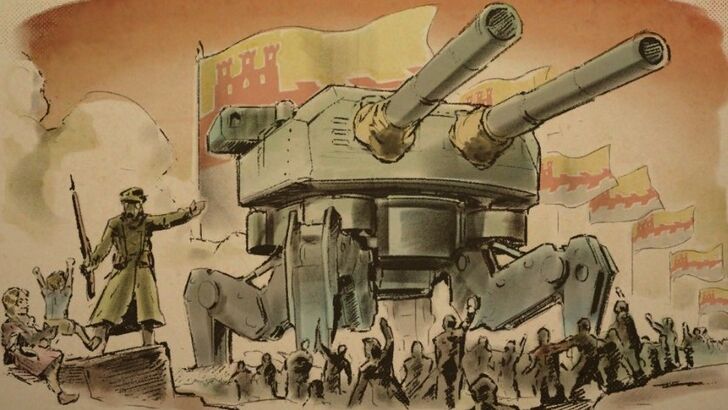
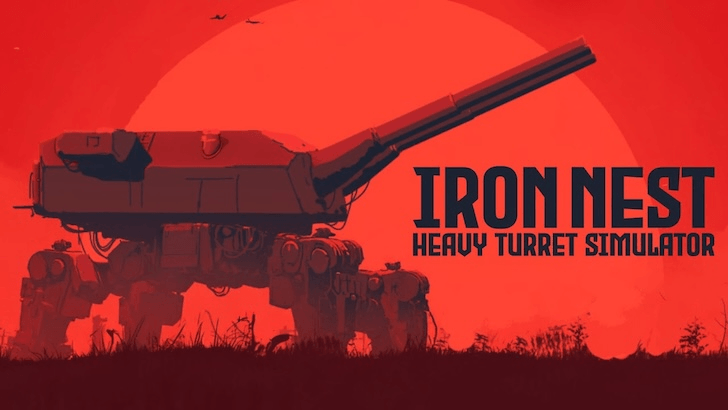
IRON NEST: Heavy Turret Simulator is a dieselpunk artillery game focused on targeting, calculations, and firing shells at designated targets. Learn more about the game’s plot, gameplay, release date, our first impressions, and more.
Everything We Know About IRON NEST: Heavy Turret Simulator
IRON NEST: Heavy Turret Simulator Plot

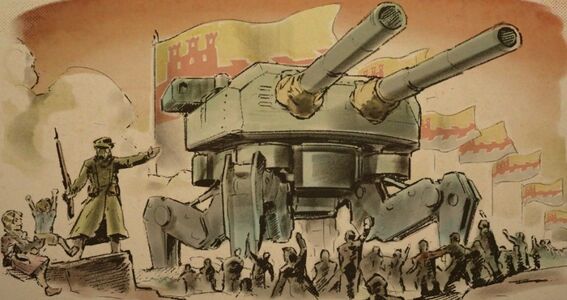
IRON NEST: Heavy Turret Simulator places players in the role of an Iron Nest operator serving the nation of Castille during a conflict against anti-monarchist forces. Missions are carried out through orders received from command, while news reports and personal correspondence gradually suggest that the official narrative surrounding the war may not fully reflect what is happening on the ground.
IRON NEST: Heavy Turret Simulator Gameplay
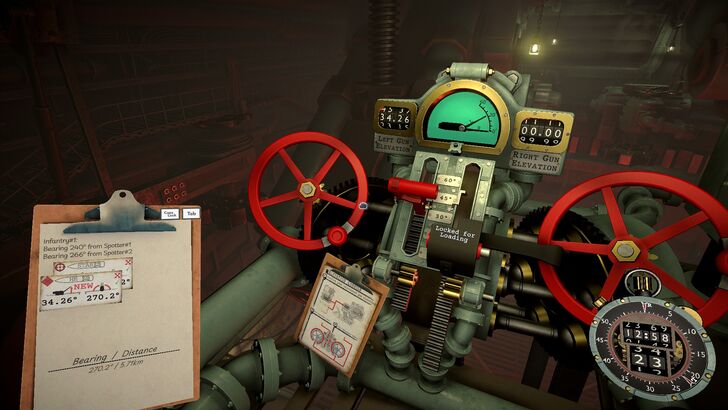
IRON NEST: Heavy Turret Simulator is played from a first-person perspective inside the Iron Nest war machine, where players receive reconnaissance reports, record target coordinates, calculate artillery bearings and elevation, prepare the guns, and confirm strikes through map reports and reconnaissance updates rather than direct battlefield visibility.
The game gradually introduces additional systems such as managing multiple guns, requesting ammunition and reconnaissance support, choosing the appropriate shell type for each situation, and responding to counter-battery threats under time pressure. A clipboard system allows players to track coordinates, calculations, and firing adjustments while moving between different stations inside the Iron Nest.
IRON NEST: Heavy Turret Simulator Release Date
IRON NEST: Heavy Turret Simulator was released on August 6, 2026 for PC via Steam and GoG.
| Digital Storefronts | |||||
|---|---|---|---|---|---|
 Steam Steam |
 GoG GoG |
||||
| $19.99 | |||||
IRON NEST: Heavy Turret Simulator Review (First Impressions)
One Man War Machine
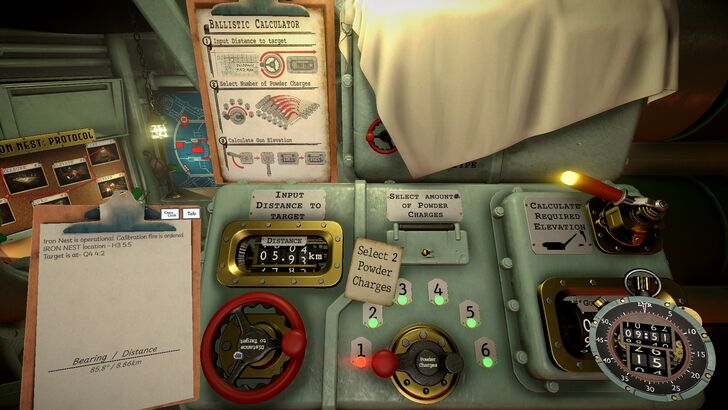
Military simulations are hardly a niche curiosity anymore, but most of them focus on the chaos of the battlefield itself. IRON NEST: Heavy Turret Simulator takes a different approach by placing the player inside a massive dieselpunk artillery platform where the battle is experienced indirectly through scout reports, map coordinates, firing calculations, and the constant operation of an industrial war machine.
That perspective gives the game a distinct identity. The opening missions are less concerned with reflexes and firefights than with maintaining a firing workflow: recording coordinates on a clipboard, calculating bearings and elevation, preparing the guns, requesting reconnaissance support, and waiting for confirmation that a shell has landed where it was intended. By keeping the battlefield at a distance, the game turns artillery operation into a process that is as much about information management and machine handling as it is about destruction.
The opening hours still leave important questions unanswered, particularly regarding the broader conflict in Castille and how the Iron Nest’s systems will continue to evolve as the campaign expands. What is already clear, however, is that the game’s combination of tactile machine operation, layered artillery procedures, and oppressive industrial atmosphere gives it a distinctive identity that feels markedly different from the typical military shooter formula.
Good Soldiers Never Question Orders
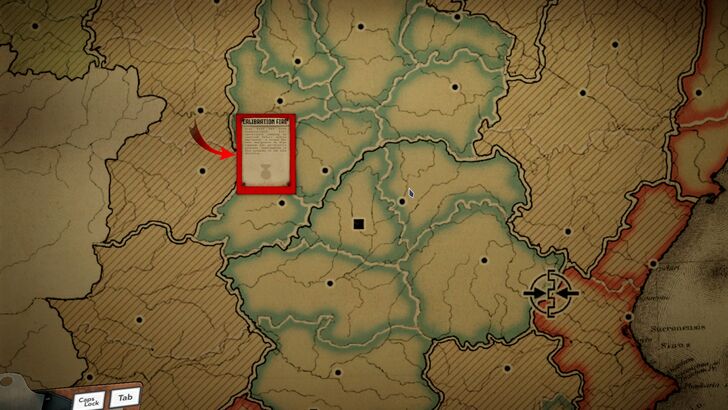
IRON NEST places players in the role of an operator serving the nation of Castille from within the Iron Nest, a newly developed four-legged artillery war machine whose appearance and capabilities appear to be largely unknown to the wider public during the early missions. The opening operations quickly establish that this is not a conventional heroic military story. What initially appears to be a routine calibration exercise is later reported by the press as a rebel bombing of a civilian area, and subsequent missions continue to suggest that the official narrative surrounding the conflict cannot be taken at face value.
The game provides very little information about the operator beyond their role inside the machine. There is no clear explanation for why this character was chosen to pilot the Iron Nest, nor is there any strong personal motivation driving the campaign. Rather than feeling like a fully developed protagonist, the operator currently comes across as a largely blank slate whose primary function is to receive orders and carry them out. That approach supports the game’s detached, procedural atmosphere, although additional glimpses of the operator’s background or personal beliefs could have provided a stronger contrast with the destruction they are capable of inflicting.
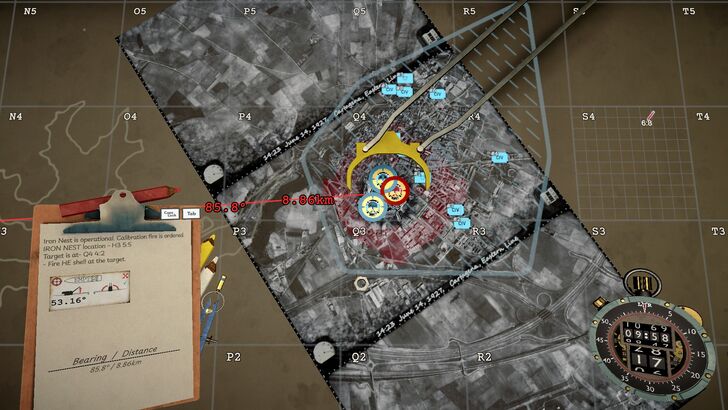
One of the most effective narrative moments arrives through a letter from a Castille soldier named Tomas, who describes surviving an artillery strike after falling into one of the Iron Nest’s massive footprints while the rest of his squad was killed nearby. The letter is compelling precisely because it refuses to spell out what Tomas feels toward the operator. He recalls his mother saying that God must have put the hole there to save him, only to conclude, "But God didn’t put that hole there. You did." The line can be read either as bitter condemnation or as an acknowledgement that the same event that killed his comrades also unintentionally saved his life, and the game leaves that interpretation entirely up to the players.
The game’s most interesting choice is that it withholds both moral certainty and personal motivation. The early missions strongly suggest that the official version of events is unreliable, yet the operator is never given an opportunity to question, refuse, or even meaningfully react to those orders. Combined with Tomas’ letter, this creates a narrative built around responsibility without perspective. The player is powerful enough to level city blocks, but knows remarkably little about the people issuing the orders, the civilians affected by them, or even the protagonist they are controlling.
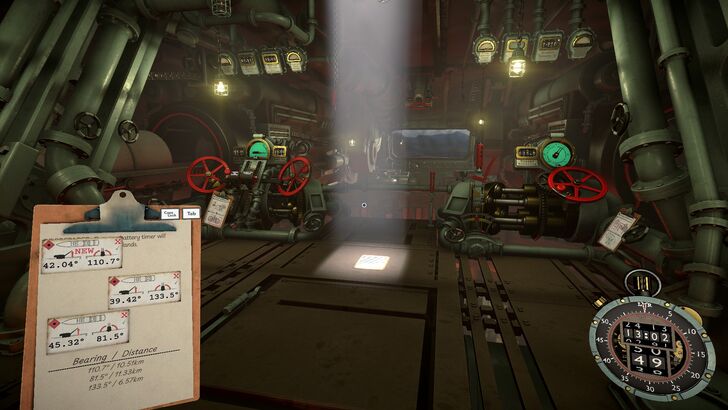
That tension is what gives the opening hours their uneasy tone. The game rarely asks the player to witness the battlefield directly, relying instead on maps, reconnaissance reports, and printed photographs to communicate the results of each operation. Because the destruction is experienced almost entirely through procedures, coordinates, and after-action information, it becomes surprisingly easy to think about targets as tasks to complete rather than people caught in the blast radius.
That growing sense of detachment is where the game’s storytelling feels most effective, not because it forces the player to feel guilty, but because it demonstrates how routine and impersonal overwhelming firepower can become when experienced from inside a machine far removed from the battlefield itself.
Gather Your Bearings And Take Aim
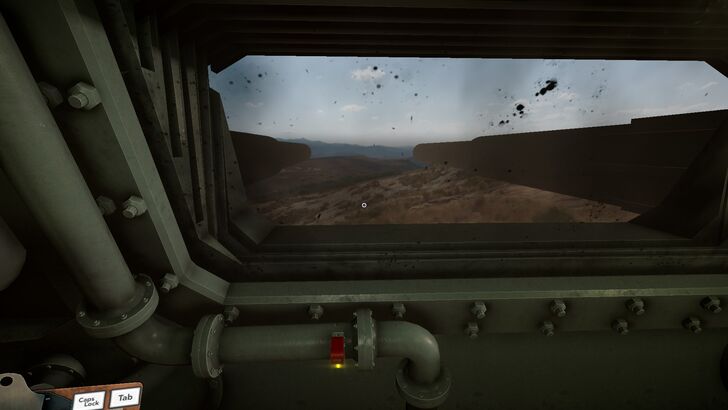
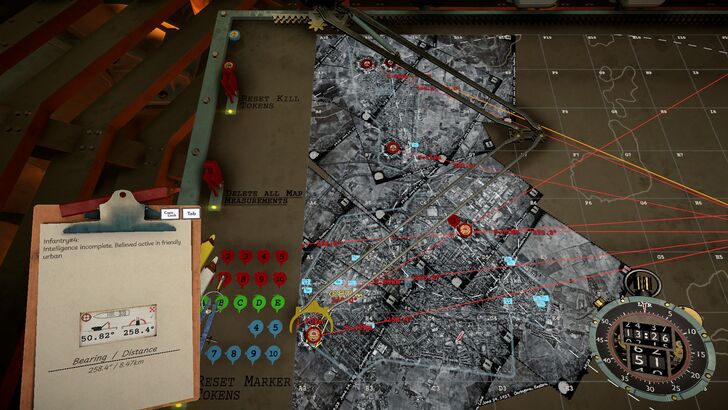
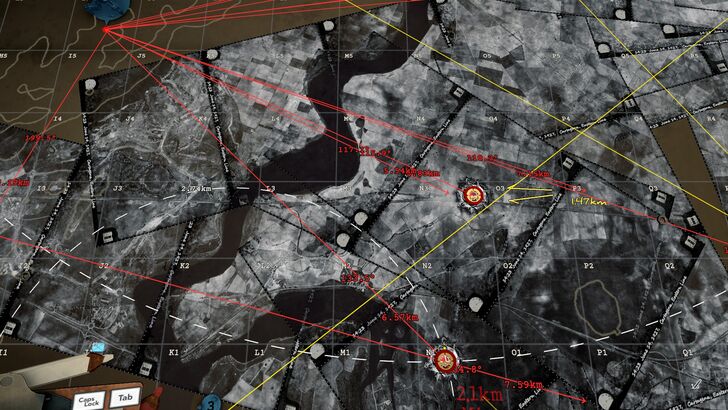
That sense of procedural distance becomes much more convincing once IRON NEST’s artillery systems enter the picture. Since the game doesn’t function like a traditional shooter, it revolves around receiving battlefield coordinates from scouts, plotting firing solutions on a map, adjusting elevation and bearings, preparing the guns, and waiting for reconnaissance reports to confirm whether the shot landed where it was intended. Because actions cannot be performed preemptively and mistakes such as underloading, overloading, or entering the wrong firing data have to be corrected through the machine’s existing systems, each successful strike feels earned through the procedure rather than treated as a disposable attack command.
Orders and scouting updates arrive as text reports, and the clipboard becomes central to managing the Iron Nest’s increasingly complex workflow. Relevant lines can be copied directly onto the board, removed when no longer needed, and completed calculations automatically generate notes containing the bearing and elevation values for the planned shot. Once the second gun is introduced, the ability to keep multiple firing solutions, target coordinates, and correction notes visible at the same time becomes especially useful, allowing one gun to be prepared while the other is already cycling through its firing sequence. Because the clipboard records the information the player has calculated rather than automatically solving the encounter, any mistake in the firing data still comes down to the operator rather than the interface.
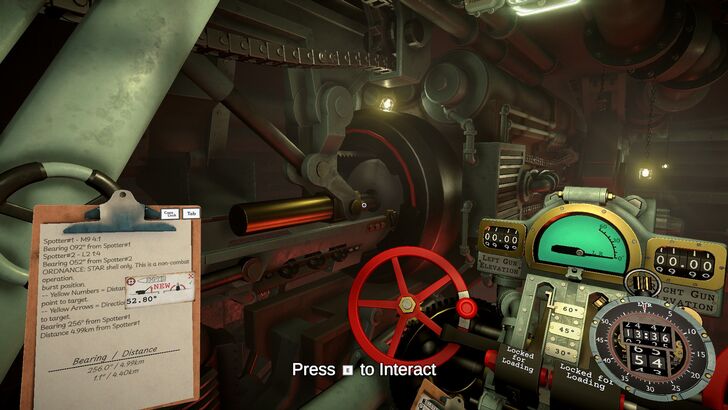
The physical interaction with the machine is what elevates the experience beyond simple map-based artillery management. Elevation and bearing adjustments are handled through large cranks that can be locked into continuous rotation with a lever. Because the mechanism has momentum, it continues spinning briefly even after being returned to neutral, and trying to stop it manually can overload the system, forcing the player to relieve pressure through nearby valves before continuing operations.
Small touches like this make the Iron Nest feel less like a menu-driven weapon platform and more like a temperamental piece of industrial machinery that demands respect. Because the machine can resist, drift, or even punish careless input through overloads and pressure management, routine adjustments become active decisions rather than automatic setup between shots.
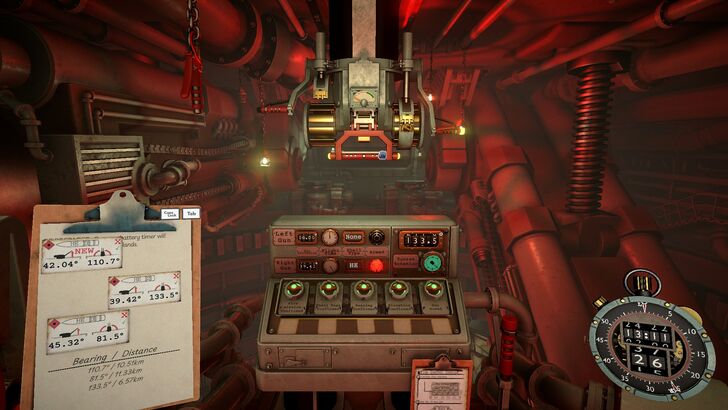
Firing the guns reinforces that same sense of weight: the hydraulics groan under the strain, the entire screen shakes when a shell is launched, and a brief ringing effect lingers afterward, giving each shot a tangible physical impact. Importantly, the tension does not end when the trigger is pulled. Because targets are rarely visible directly, there is often a delay between firing and learning whether the shell struck its intended position.
That delay turns reconnaissance updates and firing corrections into an important part of the engagement rather than a simple confirmation screen. Even reconnaissance has limitations. STAR shells illuminate a large area for temporary observation, while scout planes reveal units along a chosen flight path and provide a snapshot of enemy positions rather than continuous real-time tracking. Later missions introduce situations where that information is no longer fully reliable, such as discovering additional artillery emplacements after the originally identified batteries have already been destroyed, forcing firing solutions and target priorities to be adjusted as new reconnaissance data arrives.
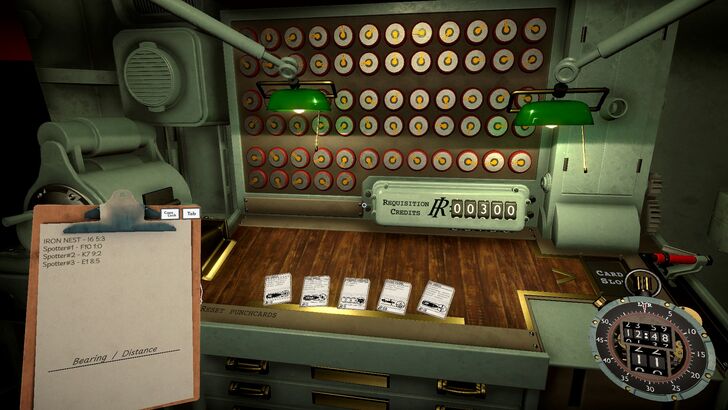
The game also does a good job of expanding its systems over time. The opening mission focuses primarily on basic firing procedures, the second introduces a second gun to manage, and the third adds access to the requisition bay, allowing requests for additional ammunition and reconnaissance support such as scouting aircraft or STAR shells. Those resources matter because every missed shot consumes limited ammunition, additional supplies cost requisition points, and friendly-fire incidents can leave fewer resources available for later support requests. As a result, the game encourages careful calculation and confirmation before firing instead of treating artillery strikes as easily repeatable actions.
Counter-battery operations add another layer of pressure through a countdown timer tied to incoming enemy artillery fire; if the hostile emplacements are not destroyed quickly enough, the Iron Nest itself is struck. That threat prevents the simulation from becoming a purely relaxed artillery exercise. What surprised me most was that the satisfaction comes less from watching explosions and more from successfully navigating a battlefield that I could not see directly.
Triangulating target locations from scout reports, logging the necessary coordinates on the clipboard, correcting firing solutions, moving between stations inside the Iron Nest, and managing the machine’s internal systems created a rhythm that remained engaging well after the initial novelty wore off, and I eventually began operating the machine from memory rather than from the tutorial notes. That gradual shift from consciously following instructions to instinctively following procedure is the clearest sign that IRON NEST’s core operation loop is working.
The Beauty in the Certainty of Steel
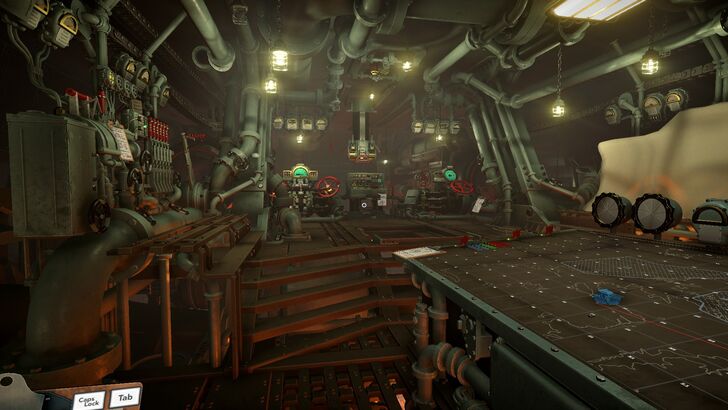
You do not spend much time admiring sweeping landscapes in IRON NEST, as the game keeps the player largely confined to the interior of the Iron Nest itself. Fortunately, that interior is impressive enough to carry the presentation. The structure is unapologetically brutalist, filled with enormous steel supports, exposed piping, heavy loading mechanisms, and constantly moving machinery. Even routine actions such as spinning the bearing wheels or watching shells being fed into the cannons have a satisfying physical presence. The visible recoil that ripples through the machine when a shot is fired reinforces the impression that the Iron Nest is an immense industrial weapon rather than a static control room.
The audio is what truly brings that illusion to life. The grinding of gears, the hiss of pressurized pipes, the groaning hydraulics, and the deep concussive boom of each shell combine to create an unusually convincing mechanical soundscape. I often kept the Iron Nest’s record player running while working through firing solutions, partly because the music itself was enjoyable and partly because it provided a welcome contrast to the constant industrial noise surrounding the operator.
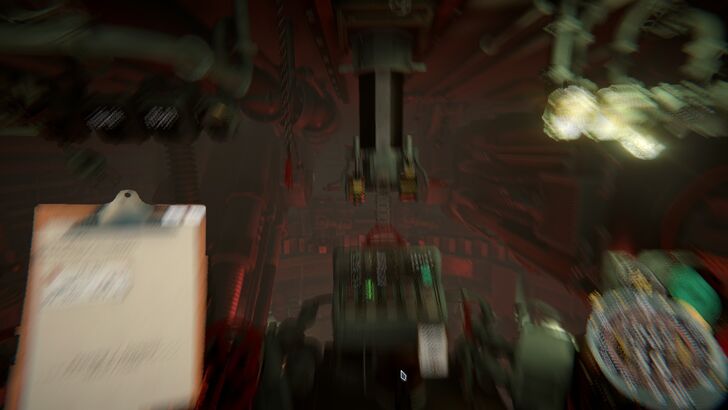
Even with the soundtrack playing, however, the machinery never fades into the background completely. The creaking steel, spinning mechanisms, and heavy hydraulic movements remain consistently audible, giving the impression that the Iron Nest is always working around you. That constant mechanical presence is what makes the audio so effective. Rather than simply accompanying the action, the sound design reinforces the feeling that the player is operating a massive industrial machine whose moving parts are never truly at rest.
From a technical standpoint, the presentation was mostly smooth during my playthrough. The interface is straightforward and easy to navigate, which is important for a game built around calculations, reports, and firing procedures. I did encounter occasional minor stutters, which was somewhat surprising given that most gameplay takes place within the relatively enclosed interior of the Iron Nest, but the hitching was infrequent enough that it never meaningfully disrupted the experience.
Marching Forward With Enthusiasm
IRON NEST still feels like a game that is only beginning to reveal the full scope of its campaign. The broader conflict in Castille remains only partially understood, the operator is still largely a mystery, and it is unclear how far the later missions will continue to push the Iron Nest’s artillery systems and reconnaissance mechanics.
What lingered with me most was how quickly a completed strike stopped feeling like a dramatic battlefield event and started feeling like another entry on the clipboard: check the coordinates, correct the bearings, prepare the next shell. That quiet transformation from spectacle to routine is the strongest impression IRON NEST left behind, and it is what makes me curious to see where the campaign takes that operator’s perspective next.
Game8 Reviews

You may also like...

Iron Nest Product Information
 |
|
| Title | IRON NEST: HEAVY TURRET SIMULATOR |
|---|---|
| Release Date | August 6, 2026 |
| Developer | Nick Nieuwoudt, Dominik Latos |
| Publisher | Nick Nieuwoudt, Dominik Latos |
| Supported Platforms | PC |
| Genre | Simulation |
| Number of Players | 1 |
| ESRB Rating | RP |
| Official Website | Iron Nest Official Website |










Welcome to the best sex dating site -- Hot21.fun
Interesting! ))