





ReStory: Chill Electronics Repairs is a cozy simulation game where you restore old and broken devices in your small Japanese repair shop set in the 2000s. Learn more about the game's story, gameplay, release date, our first impressions, and more.
Everything We Know About ReStory: Chill Electronics Repairs
ReStory: Chill Electronics Repairs Plot
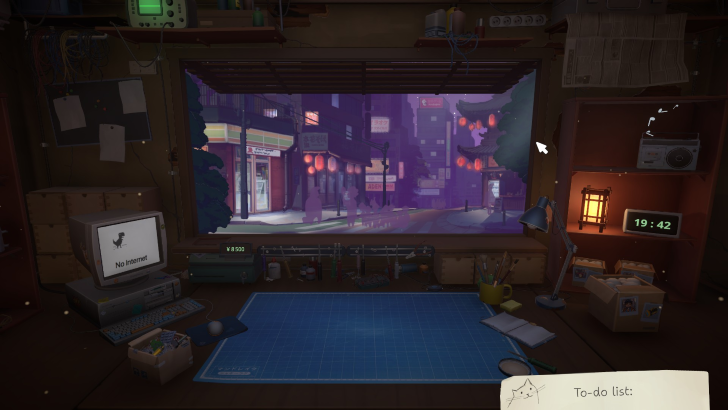
The plot of ReStory: Chill Electronics Repairs centers around you and your budding repair shop as you fix broken electronics, gaming consoles, and other devices from the mid-2000s. Along the way, you'll interact with the townspeople in a small Japanese town, get to know their lives and stories, and discover how their experiences eventually affect your own.
The story gradually unfolds as you interact with more NPCs and repair more devices. As your reputation grows, you'll take on increasingly difficult repairs, and your shop will become a popular destination for the locals.
ReStory: Chill Electronics Repairs Gameplay
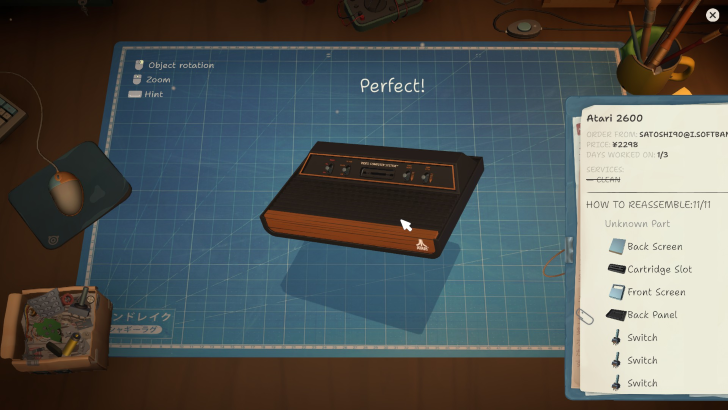
Gameplay in ReStory: Chill Electronics Repairs is a cozy simulation experience, similar to games like PowerWash Simulator and Farming Simulator. You run your own small electronics repair shop, where you’ll tinker with broken devices customers bring in.
Throughout the game, you’ll do more than screw and unscrew electronics. You’ll solder broken circuitry, hack devices, and even use an old computer to order replacement parts.
ReStory: Chill Electronics Repairs Release Date

ReStory: Chill Electronics Repairs was released on August 7, 2026, for PC via Steam.
ReStory: Chill Electronics Repairs Review [First Impressions] | More Than Just a Nostalgia Trip
Putting Coziness in Restoration
The gaming industry has always been home to plenty of niche genres that continue to attract their own dedicated audiences. From grindy extraction shooters like Mistfall Hunter to co-op adventures like Big Walk, there's a genre for just about every type of player. Among this wide variety of genres, however, one has always found a welcoming place in the community: cozy games.
Cozy games are the perfect antidote to stressful competitive matches filled with toxic teammates or opponents. They're where many players spend their downtime and simply unwind without someone yelling in their ears every few minutes. ReStory: Chill Electronics Repairs is one of those games, blending the familiar appeal of a simulation with the nostalgic charm of running an electronics repair shop during the heyday of mid-2000s Japan.
Developer Mandragora has traded its usual survival-focused experiences for a more worry-free adventure where players can simply relax and repair electronics. Whether it's a PlayStation Portable with a fried circuit board, an Atari with a cracked front cover, or a kid's Tamagotchi with a dead battery, these are just some of the gadgets you'll learn to fix throughout the game, with plenty more waiting to come your way.
As I spent my first few hours working through the game's growing pile of devices that needed cleaning or repairing, I was honestly surprised by how quickly the time flew by. This game somehow put me in a trance that I didn't think was possible. Was it the nostalgia of watching all these childhood gadgets being taken apart and repaired right before my eyes, or was it the serene atmosphere of mid-2000s Japan drawing me in? The answer is both, and even as I write this review, I still find myself wanting to jump back into my little repair nook.
Gadgets and Gizmos Aplenty
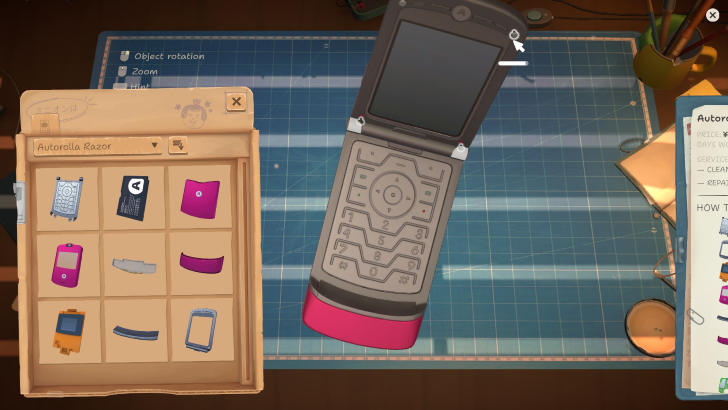
You can already tell from the very beginning that ReStory: Chill Electronics Repairs is banking on Y2K nostalgia. It recreates a time when gaming was steadily making its way into the mainstream, and consoles like Sony's PlayStation Portable and PlayStation One were becoming household names. It was also an era when devices like Walkmans and Tamagotchis were a common sight. Now, we've traded all of that for minimalist slabs and plain designs
Like walking down memory lane, the quaint Japanese setting works so well because it places you at the center of a technological boom that gave rise to many of today's best-selling consoles. Watching these machines evolve from their simple designs in this game into the more stylish and sophisticated devices we have today really puts into perspective just how much technology has advanced in the span of only 20 or so years.
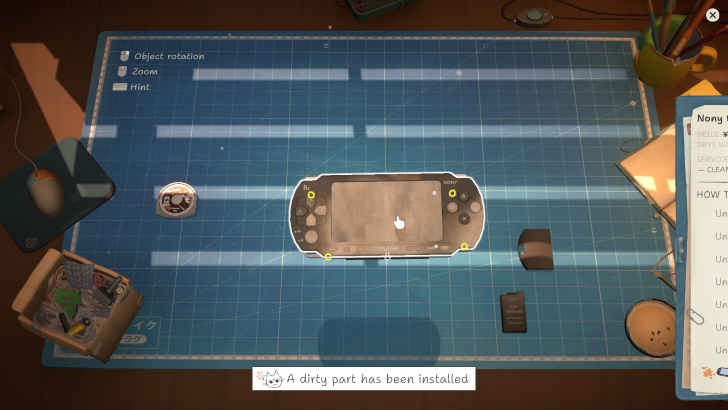
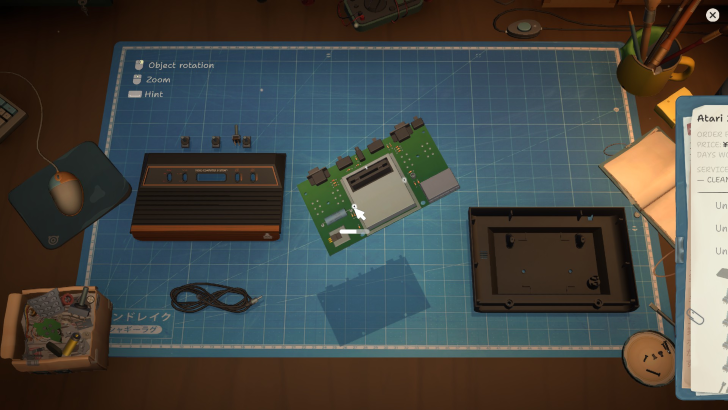
That said, this isn't a game that's only meant for people in their late 20s or older. It's a simulation game through and through, so you'll spend your days tinkering with these machines using screwdrivers, brushes, and soldering irons. What makes the experience even better is just how detailed each device is. Surprisingly, for a game that's only around 1 GB in size, there's an impressive variety of electronics to work on. I have to admit, I didn't even know the Atari Lynx ran on four AA batteries until I played this game.
While ReStory lets us tinker with these broken machines, it's not exactly trying to teach us how to repair electronics, much like how Farming Simulator isn't designed to teach us how to manage our own three hectares of fertile land. Instead, ReStory exists to familiarize players with these gadgets inside and out. As a result, you naturally start learning how each device works after your tenth repair, from knowing which panel to open first to figuring out which screws need to be removed. Eventually, the whole process becomes second nature after a couple of hours, making repair work faster. Who knows? This might be a gateway to a whole new hobby for this new generation of players.
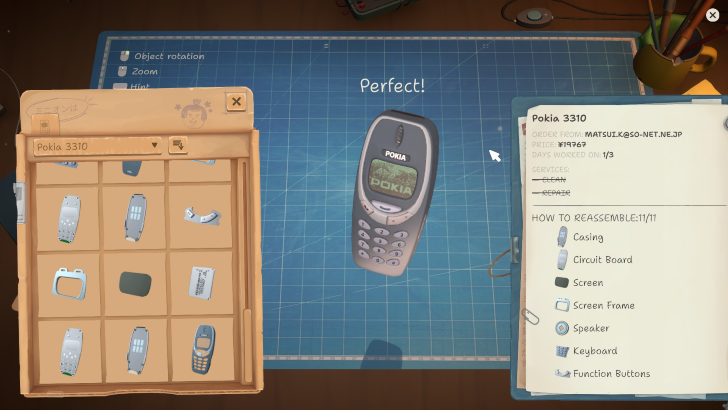
And while these gadgets aren't officially named after their real-world counterparts, the game does a great job of making it obvious which devices they're inspired by. For example, the iconic Nokia 3310 is cheekily renamed the Pokia 3310 for copyright reasons, of course.
The Surprisingly Addictive Repair Loop
The best thing about ReStory isn't just its cozy Y2K atmosphere. The restoration work is front and center, and it's easily the aspect I want to talk about the most. There is a story mode, but it only exists to push you to unlock more items to repair rather than ultimately changing the course of the game.
For starters, the main goal of the game is to repair as many gadgets as possible and build a reputation for your growing business after the previous owner mysteriously leaves.
There's no strict time limit on how many jobs you can finish, and the game never really tells you to stop working, even after what feels like a 24-hour shift. There are no consequences for overworking yourself here, so it's admittedly a little strange, but for a cozy game, I don't mind it one bit. In fact, it adds to the game's addictiveness. It's like the game trusts you to work at your own pace without ever feeling pressured to stop. Eventually, though, you'll have to call it a day if you want the story to move forward, as new deliveries and clients won't exactly be showing up at your doorstep in the middle of the night.
I know I've said this before, but I'll say it again: ReStory is insanely addictive. I never knew there was such a meditative appeal to screwing and unscrewing the parts of an old Atari console or brushing the dust off a PSP. The sound design plays a huge part in that, too. Every snap as a component clicks back into place and every screw you tighten feels incredibly satisfying, especially when you've put everything back together correctly. There were plenty of moments when I slipped into a flow state, completely laser-focused on finishing every repair order before the day was over.
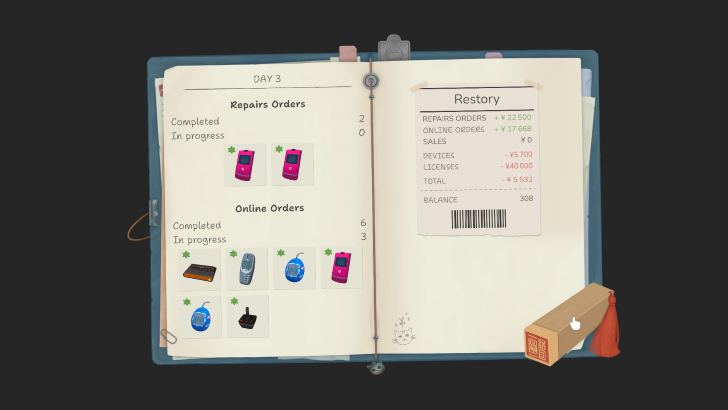
That's because ReStory isn't simply limited to opening a Motorola Razr for the nth time and cleaning it with a brush. The game has a great progression system that gradually introduces more complex devices, but before you can work on them, you'll need to earn the proper repair license. Without one, all you can do is stare at the device sitting on your workbench.
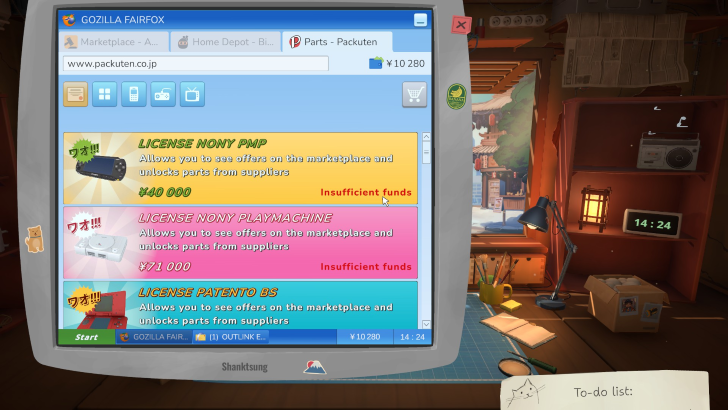
It's a smart way to pace the player's progression. Licenses are expensive, and you have to apply for them online using your in-game computer. They typically cost around five times your daily earnings, making each one feel like a genuine milestone in your journey as a repair technician.
Once you unlock them, the difficulty ramps up considerably. Devices like the aforementioned Atari Lynx are packed with tiny components, screws, and connectors that need to be carefully taken apart and reassembled. Broken circuit boards need to be soldered before they can function again, while devices with software issues have to be hacked to get them working properly.
My biggest nightmare so far has been the Sony Walkman, with its countless knobs, buttons, and tiny parts that I still can't seem to get used to. No wonder those things were so bulky.
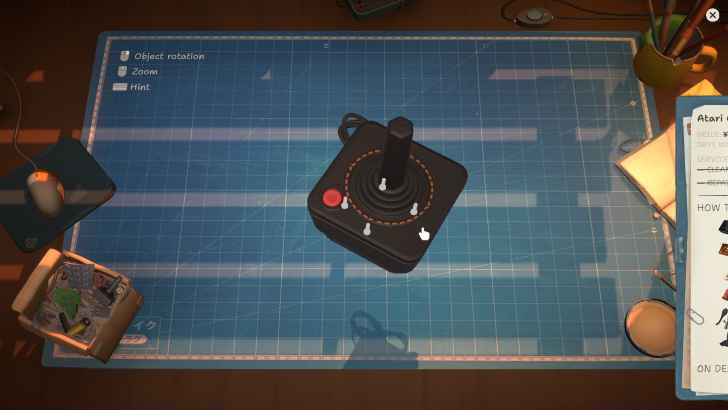
If you're worried that the repair work in ReStory might be overwhelming, don't be. It's not exactly rocket science, as the game has a simple control scheme that guides you every step of the way. Don't know what a particular component is? There's a handy reference guide right beside your screen. And if a device has missing or broken parts, you can simply order replacements online using your delightfully outdated computer.
What's even better is that you can unlock new tools to streamline your repair work. If you find the default screwdriver too slow, for example, you can upgrade to an electric screwdriver that removes screws with a single click. You can also unlock tools like a blower to clear away dust in seconds. There are still plenty more upgrades I have yet to discover, but the tools I've unlocked so far have already made a noticeable difference in speeding up my repairs.
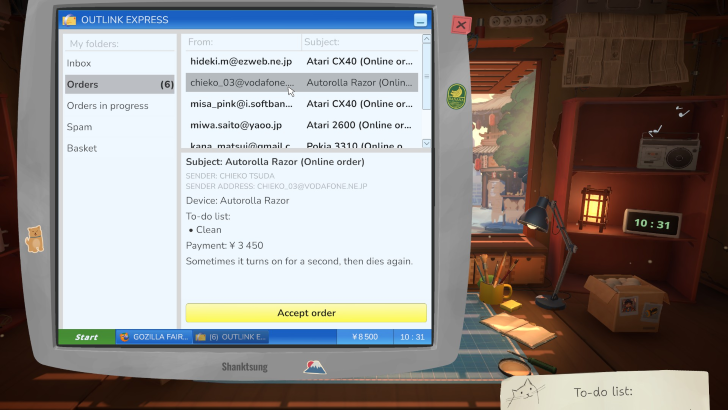
And here's what makes things even more interesting: you can actually play the entire game using just one hand. Most of the controls are mapped to the mouse, and you'll barely need to touch the keyboard outside of pressing the Escape key. That leaves your other hand free to doomscroll on your phone or snack on a bag of chips if you're aiming for maximum coziness.
The first five hours of my playtime were spent in awe of the inner workings behind my favorite childhood gadgets. Part of me even thinks I could try fixing my old PlayStation Portable now, but deep down, I know I can't.
The Story Problem in ReStory
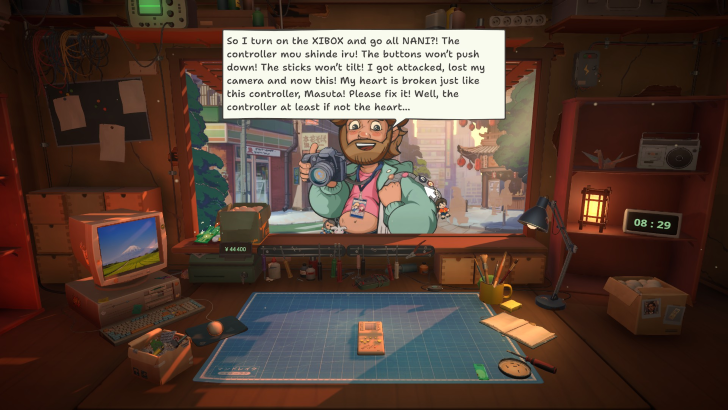
Gameplay-wise, ReStory has been nothing short of addictive. Unfortunately, I can't say the same about its story. For a game called ReStory, there's surprisingly little to latch onto in its narrative, and I think that's largely due to its cast of NPCs, many of whom I simply couldn't find all that likable.
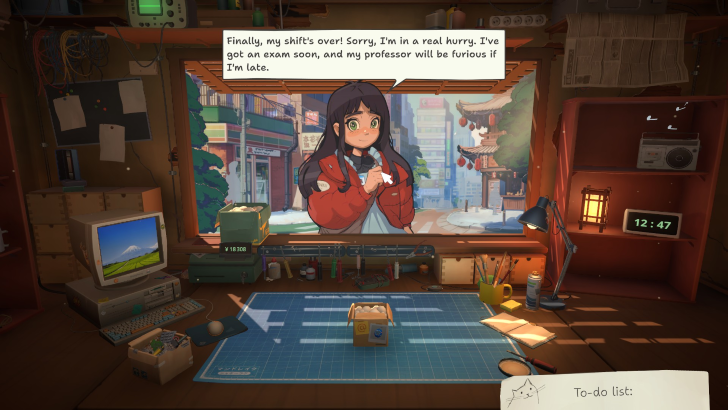
The game features a wide cast of characters and customers who regularly stop by your shop with devices in need of repair. One day it might be a Yakuza member reminding you who runs this turf, and the next it could be the local mailman delivering your daily letters while asking if you can fix his broken Atari console.
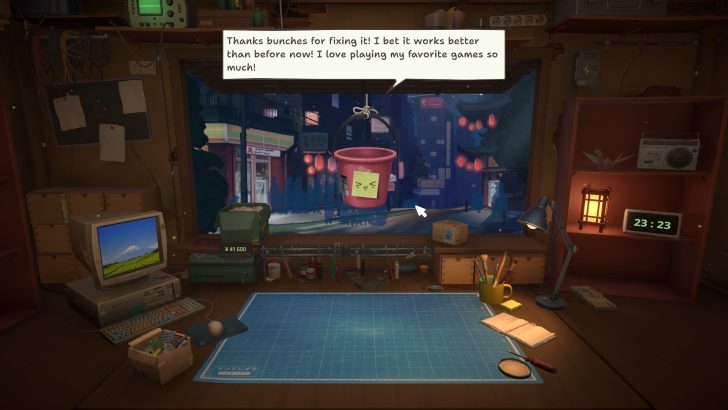
The longer I played, the more they started to feel like generic quest-givers rather than actual characters, and I found myself caring more about fixing their gadgets than following their personal stories. One factor is that you never really know who's going to walk through your front door each day. They largely exist to give you more gadgets to work on, and the visual novel-style format isn't as compelling as I initially thought it would be.
One unique aspect of ReStory's story is how you can actually influence these NPCs' lives by choosing between different dialogue options. Do you rat out a thief who's been giving you gadgets to repair, potentially cutting off your extra source of income? Or do you charge a kid for repairing her broken Tamagotchi? These are great setups, to be honest, but the writing feels so shallow that I can't take these characters too seriously. Most of them come across as caricatures and familiar tropes rather than genuinely fleshed-out people.
Maybe my opinion will change as I get further into the story, but for now, these characters are easily the weakest part of the game for me.
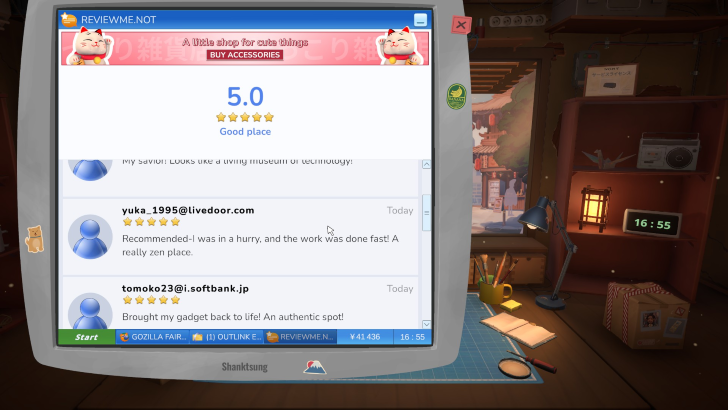
The one exception for me was the neighbor living above my repair shop. They'd lower their broken gadgets down in a little bucket whenever they needed repairs, usually accompanied by some lighthearted small talk. It's a simple gimmick, but it ended up being one of the game's more charming recurring interactions.
As for the rest of the characters, much of their stories unfold in the background, so you're rarely present for the moments when anything significant actually happens. It's quite different from games like Coffee Talk Tokyo, where you actually get to see their stories unfold right in front of you. Both games confine us to a small shop, but I tend to pay more attention to longer conversations and character interactions than brief snippets about how their days are going. It's not a huge problem, though, because ReStory has plenty of other ways to keep me hooked, and its gameplay is easily the biggest reason why.
Can’t Stop, Won’t Stop
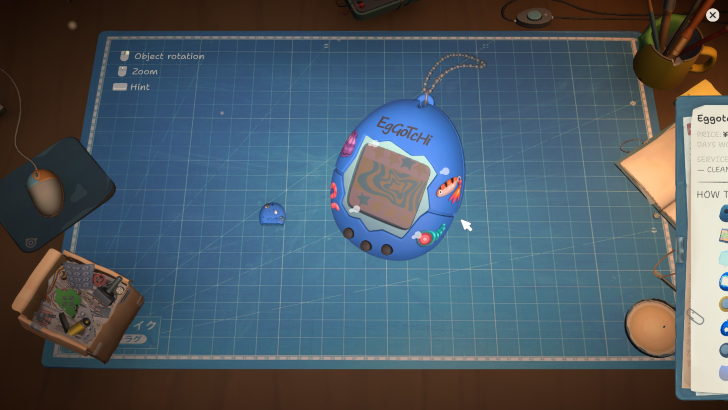
As of writing, I’ve been itching to jump back into my repair shop and finish whatever jobs I have left. For a game that costs around $20, there’s more than enough content here to keep you hooked for hours. You’re never really stuck doing the same thing over and over, even if you end up repairing the same types of gadgets, because each device comes with its own collection of tiny moving parts and repair quirks that keep the process feeling fresh.
There's still plenty left for me to discover in ReStory: Chill Electronics Repairs, and as I take on the game's more complex repair jobs, I keep finding myself intrigued by this robot dog toy that the game keeps teasing me about. I know robot dogs like it actually existed back then, but I'm genuinely excited to see where the game takes things once I finally get my hands on it and pry it open.
Game8 Reviews

You may also like...





ReStory: Chill Electronics Repairs Product Information
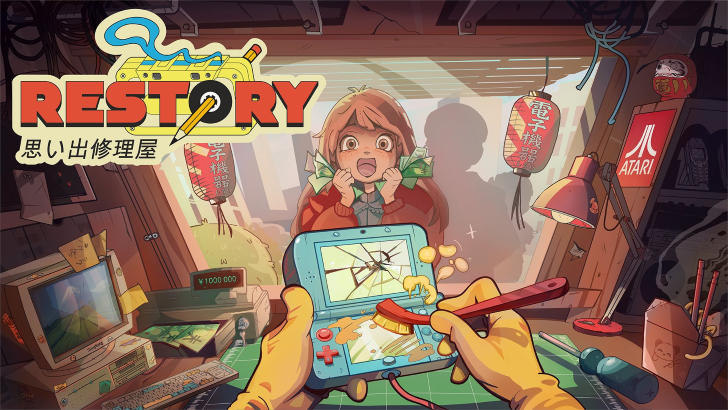 |
|
| Title | RESTORY: CHILL ELECTRONICS REPAIRS |
|---|---|
| Release Date | August 7, 2026 |
| Developer | Mandragora |
| Publisher | tinyBuild |
| Supported Platforms | PC |
| Genre | Cozy, Simulation |
| Number of Players | 1 |
| ESRB Rating | E |
| Official Website | ReStory: Chill Electronics Repairs Official Website |












Welcome to the best sex dating site -- Hot21.fun