
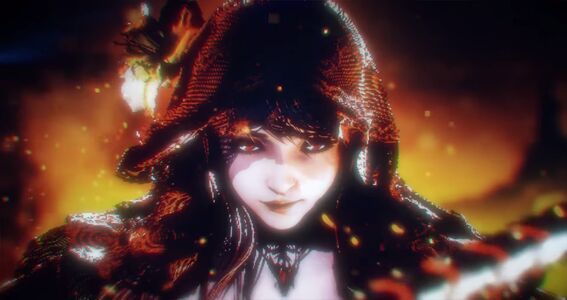



Final Fantasy Resonance brings the series back to its 2D roots! Learn more about the game’s plot, gameplay, release date, our first impressions, and more.
Freed From Gacha, a Mobile Final Fantasy Becomes a Classic
The Old-School Final Fantasy Fix I’ve Been Missing
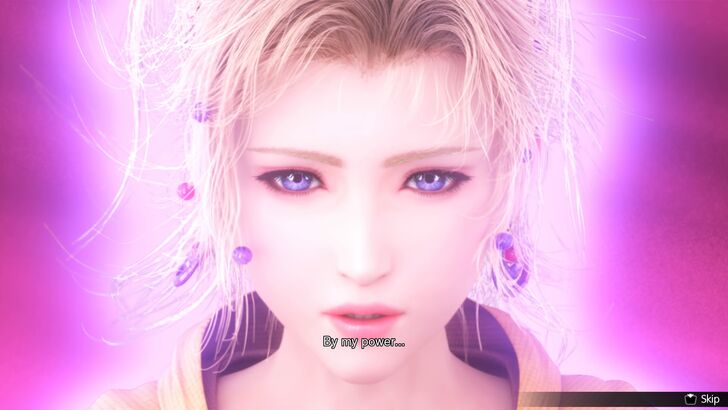
Turn-based combat used to be the beating heart of Final Fantasy. For a lot of us somewhat old folks, that slower pacing defined our childhoods. But the series has moved on. Ever since Final Fantasy X, the numbered entries have pushed further from those origins to instead favor much more active battle systems. There are still plenty of ways to get that old-school fix, of course, though you have to look toward the spin-offs and Square Enix’s other RPGs to find it. Games like Octopath Traveler and Bravely Default have done a fine job keeping those classic conventions alive, but a surrogate only goes so far; few things scratch the same itch as a proper Final Fantasy adventure.
Which is why I adore Final Fantasy Resonance so much. It rescues the story and cast of the defunct mobile game Final Fantasy Brave Exvius and builds them a new home in the shape of a traditional, full-scale RPG. With the gacha pulls and microtransactions stripped away, the journey is finally allowed to stand on its own merits. As it turns out, gambling was the final boss all along.
Free of those mechanics, Resonance becomes a love letter to the era that started it all. Its pixel art and familiar tropes bring back the simple pleasure of an old favorite. Flaws linger, to be sure, but its beauty remains in watching this forgotten side of the series step triumphantly back into the light.
A Tale as Old as Time…
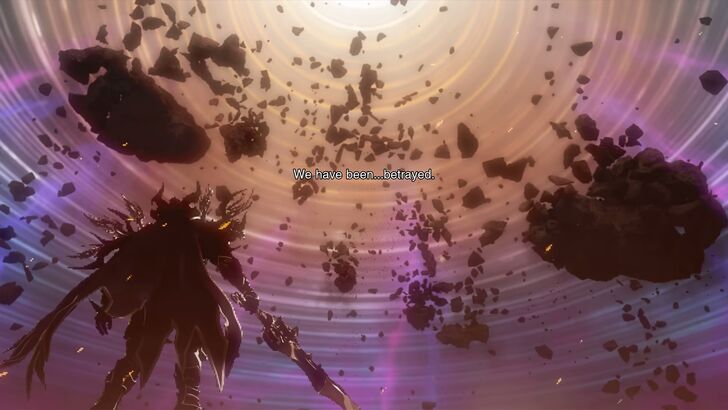
If you're unfamiliar, Resonance adapts the first narrative arc from Brave Exvius. Square Enix substantially overhauled the script for this standalone release, but the broad beats remain intact, and they rely on the comfort food JRPG tropes we know by heart.
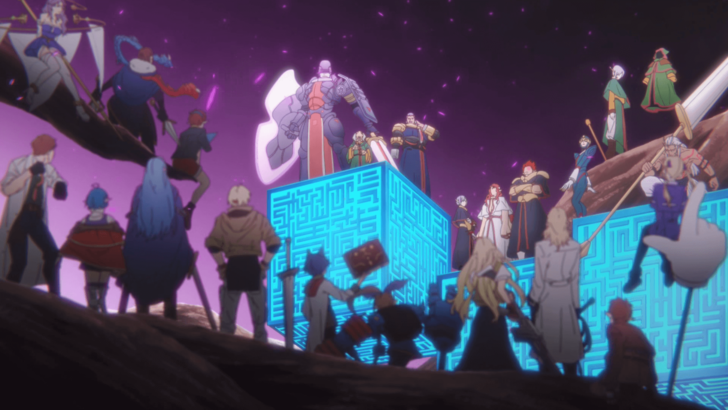
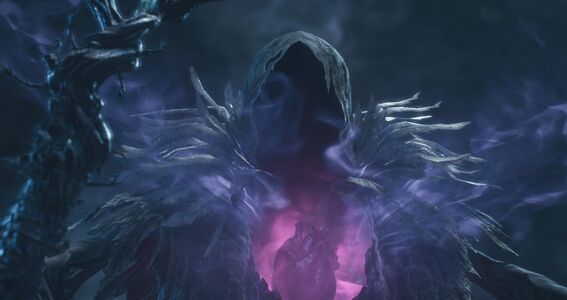
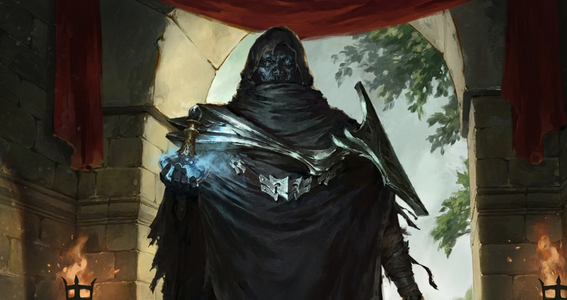
The trouble begins when the Earth Crystal shatters. Rain, a young knight entrusted with command of the Kingdom of Grandshelt’s airship squadron, is sent to investigate the weakening barrier around the Earth Shrine. His childhood friend and fellow knight Lasswell joins him on the mission, which takes a disastrous turn when a black-armored warrior named Veritas of the Dark appears. The stranger proves more than a match for the two knights and destroys the Crystal, which leaves death and ruin in his wake.
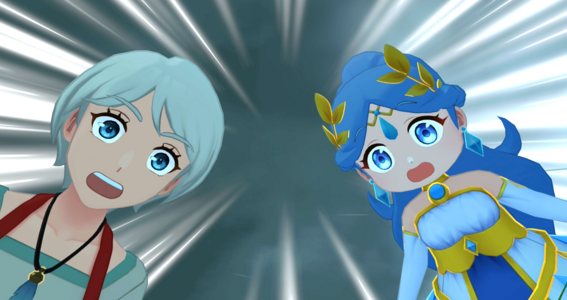
Soon, Grandshelt comes under attack, and the pair chase a threat that reaches far beyond their kingdom. With Fina, a mysterious girl who has lost her memories, joining their ranks, Rain and Lasswell set out to protect the remaining Crystals and uncover Veritas's and the Sworn Six's intentions in Paladia. It is a classic burden, laid upon the shoulders of a young man who still has an awful lot to learn.
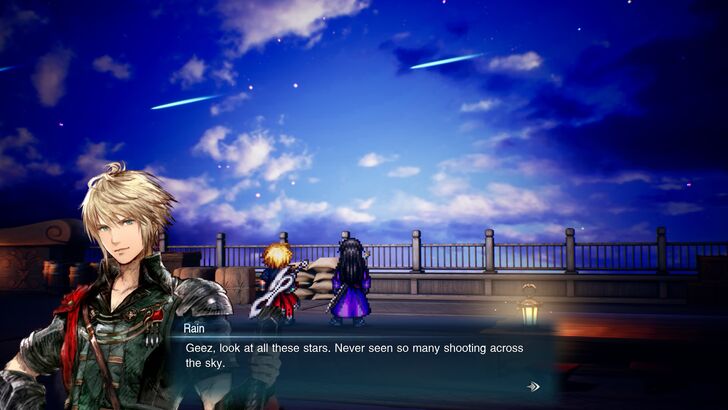
If it’s not apparent enough from its influences, Resonance feels like a visit to an older era of Final Fantasy, when elemental Crystals sat at the heart of grand adventures and a band of unlikely companions could carry an entire world behind their backs. Its kingdoms, airships, and escalating threat to the realm recall Final Fantasy games of old. These familiar pieces have an enduring appeal. Witnessing them assembled with such tender affection is nostalgic, especially for those who grew up alongside the older entries and still cherish their earnest approach to fantasy. Resonance knows precisely the sort of journey it wishes to be, and it rarely strays far from that well-trodden path.
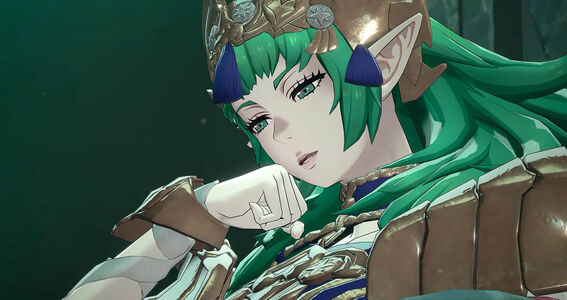
The flip side of that predictability is that characters can feel a bit tropey out of the box. Rain is the bright-eyed, headstrong protagonist who jumps into danger purely because he can't ignore someone in pain. He’s classic Final Fantasy protag material, though his unresolved grief over his absent father adds a nice layer of friction. Lasswell is his stoic and more disciplined counterpart, a dedicated swordsman whose loyalty to Rain runs deep. Fina, meanwhile, provides an aura of wide-eyed wonder and mystery, though her innate connection to the Espers (and the fact that she looks like the Archwitch who opposed Veritas) makes it obvious early on that she’s central to the entire plot. The rest of the crew fit neat archetypes too: Jake is the flirt, Nichol is the cold tactician/mage, and Lid is the quirky engineer.
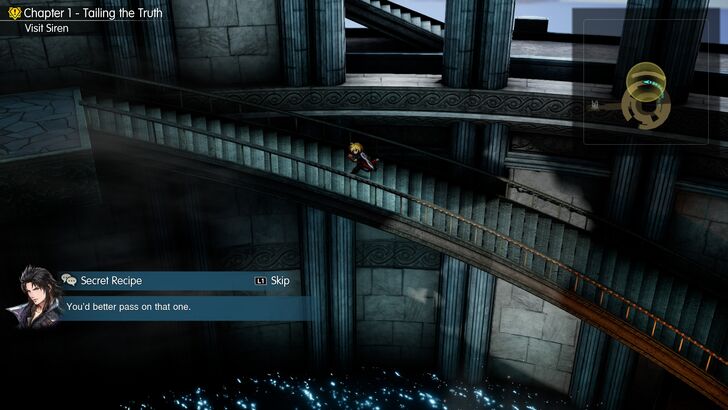
You can usually spot where a character arc is going miles before it gets there. Yet despite the tropes, the cast is pretty likable. Rain and Lasswell’s kinship gives their scenes a natural cadence, and their differences provide a regular source of camaraderie and affection. Even normal conversations become enjoyable when the cast gets to bounce off one another. The occasional Active Time Event lets them chat outside the main story, much like the skits in the Tales of series. Some of these exchanges are admittedly pretty funny.
Some of the strongest moments with these characters come from the side quests. With the main plot keeping its eyes on the Crystals and the threat hanging over the world, these smaller detours give the cast time to reckon with personal histories and the places they call home. Their troubles lend the world a greater sense of life, and the characters become easier to care about. The best of these quests revisit a party member's past or show how their relationships change over time.
The Narrative Leaves Its Best Ideas Untapped
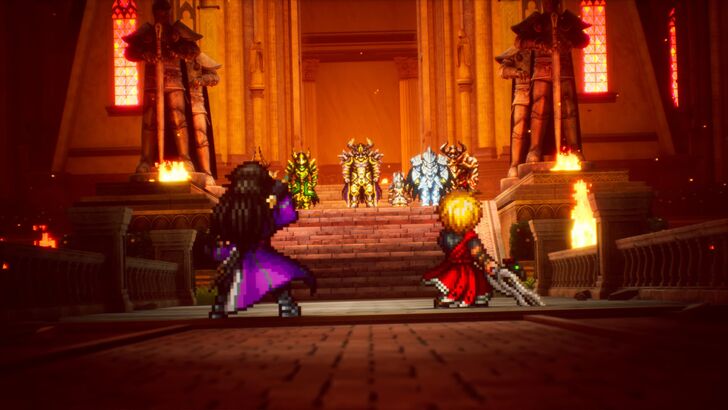
However, I do wish more of that nuanced world-building made its way into the main story. Resonance teases interesting political conflicts and regional rebellions through its party's backstories, but it rarely lets those ideas head at least some aspect of the adventure. The plot moves from one Crystal crisis to the next, with revenge and the Sworn Six’s designs supplying the immediate reasons to press forward. Its attention remains fixed on the threat to the world and the high-fantasy concepts behind it. The kingdoms and their people often serve as the backdrop for that conflict.
That narrow focus holds Resonance back from reaching the narrative depth of the series' newer entries. Despite many of their faults, Final Fantasy XII made power and political ambition central to its conflict; Final Fantasy XV tied its grand fantasy to the personal cost of war and duty; and Final Fantasy XVI pushed its kingdoms, prejudice, and systems of exploitation into the foreground. Even the HD-2D Square Enix game Triangle Strategy found drama in the difficult choices people make when political ideals collide with survival. Resonance brushes against similar material, particularly through its characters' histories and the rebellions that shape some of its regions, then returns to the usual ground of a Crystal-driven quest. The stakes grow larger as the journey continues, but the ideas beneath them rarely grow much deeper.
I still have a soft spot for old-school Final Fantasy. A story about Crystals and a party of heroes saving the world is an easy sell to me. Much of Resonance's appeal comes from that simplicity. Its familiar structure gives the characters a clear path to follow, and the cast makes the journey worthwhile. Yet a likable group of heroes and a story that leaves a lasting impression are two different things. Resonance nails the likeable cast, but its grand main plot rarely takes big risks.
More Final Fantasy Games Need to Be Remade Into HD-2D
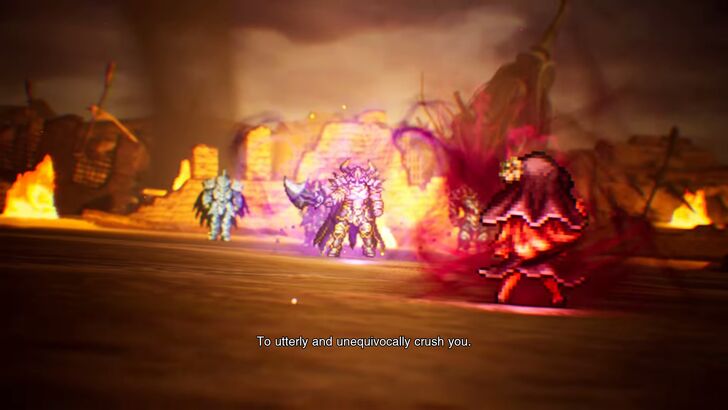
For all its familiar comforts, Final Fantasy Resonance understands how to make a scene feel larger than life. Its HD-2D presentation gives it a cinematic flair that goes far beyond the simple novelty of pixel art in a modern engine. The camera moves with an eagerness rare for the genre. It shifts angles to frame a confrontation and lets moments of stillness linger and breathe. The characters carry a sense of physical weight, and their animations lend emotional gravity to even the smallest figures on screen. A single dramatic exchange can carry the sweep of an epic stage play, a loving nod to the theatrical spirit of classic Final Fantasy. Every grand entrance and heroic clash earns its spectacle.
What makes this presentation so compelling is how deeply it trusts these moments to speak for themselves. Dynamic framing gives the world a sense of scale, and the contrast between ornate environments and expressive pixel art makes each scene feel carefully composed.
The game leans into the grandeur of fantasy without shedding the warmth of its retro roots, which gives familiar tropes a renewed sense of occasion. The writing has its limits, and cinematic flair cannot deepen every idea in the script, but it makes the journey a pleasure to watch. Seeing what Resonance achieves with HD-2D makes me want to see Final Fantasy VI get the same treatment.
Rewarding Albeit Repetitive Combat
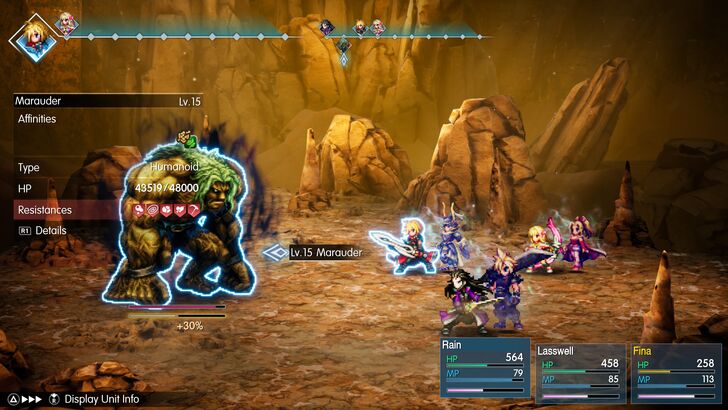
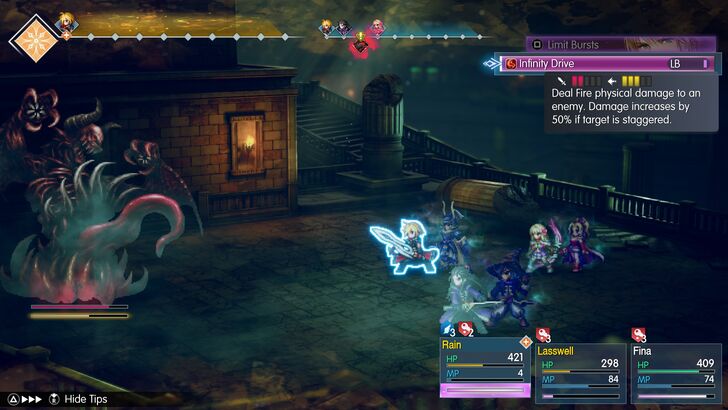
The game takes the series back to turn-based combat, and I think that is where its identity becomes clearest. Every character has a place in the party, every enemy has a weakness worth exploiting, and every turn gives you something to consider. A timeline at the top of the screen lays out the order of actions, so you can plan around an incoming attack or stop an enemy before it gets the chance to move. The stagger gauge beneath an enemy's health bar gives you another reason to think beyond raw damage. Hit a weakness and you can deplete that gauge faster, leaving the enemy vulnerable and stripping away its next turn. The system is easy to understand, yet it gives normal encounters enough strategy to keep them engaging.
Staggering every enemy at once triggers a Sweeping Stagger, which grants the party a bonus phase before you unleash a powerful Resonance attack through one of your equipped Visions. These attacks come with elaborate cinematic sequences, and seeing familiar heroes deliver their signature moves gives each one a satisfying sense of occasion. Building toward an attack feels especially good when you have to account for several enemies with different weaknesses. The catch is that the same sequence can become awfully repetitive across multiple encounters with the same enemies. Once you know how to break an enemy's guard and capitalize on the opening, ordinary battles become a routine you perform on the way to the next boss.
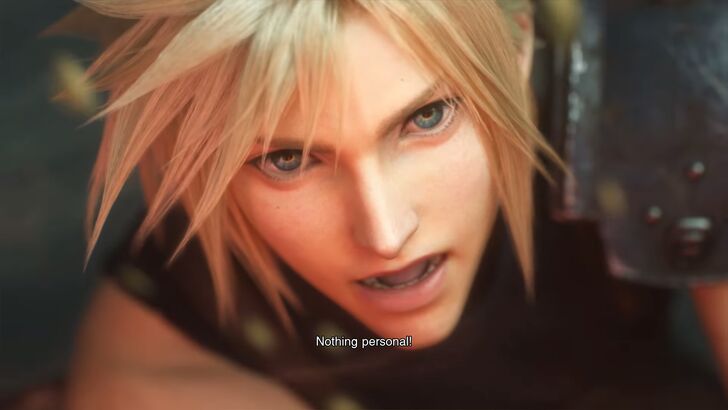
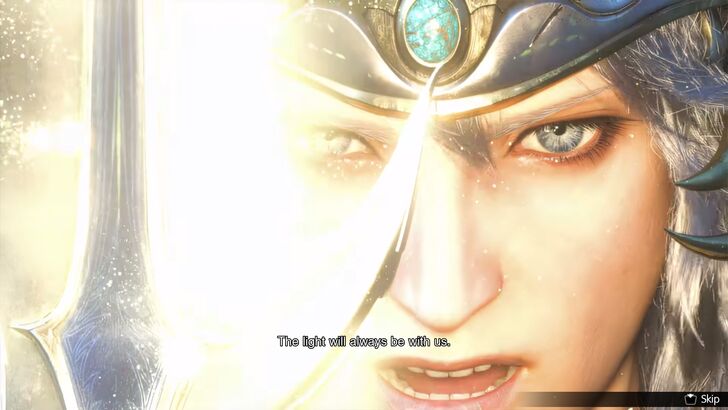
Thankfully, the game has welcome fan service in the form of Visions to give combat some fresh twists. Visions are manifestations of characters from across Final Fantasy’s history, from Warrior of Light to Clive Rosfield. Each one comes with its own abilities, passive bonuses, and specialization. Equipping a Vision gives a character access to its skills, and fighting with it gradually builds affinity. Master an ability, and you can equip it permanently, even after switching to another Vision. Rain, for example, can expand his natural affinity for fire into a much broader selection of attacks and spells. You can build a character around a particular strength or give them enough versatility to cover gaps in the party. Anyone who loves tinkering with jobs and abilities in Final Fantasy III and V will recognize the appeal immediately.
The nostalgia helps, of course. Seeing Cloud tear through an enemy with a spectacular finishing move is a treat, especially when the game gives these attacks the full cinematic treatment. Still, some Visions are more useful than others, and the freedom to mix abilities means little if a handful of skills eventually become the obvious choices.
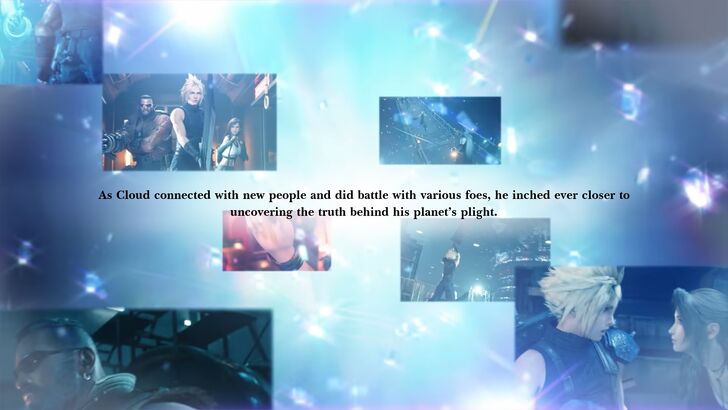
Traditional summons return as Espers, which join the party for a limited number of turns before unleashing a finishing attack. They offer another way to turn the tide of battle, and their temporary presence gives them a different role from the Visions that shape your characters' abilities. Limit Breaks round out the traditional collection of powerful attacks, alongside the usual assortment of buffs, healing spells, and elemental magic.
You have a satisfying amount of control over how your party comes together, even if the balance between offensive and support abilities can feel uneven. Powerful attacks are easy to appreciate when they produce enormous damage numbers. A dependable healer matters just as much when a boss refuses to go down, and every turn starts to count.
Towns and Dungeons Are Just Okay
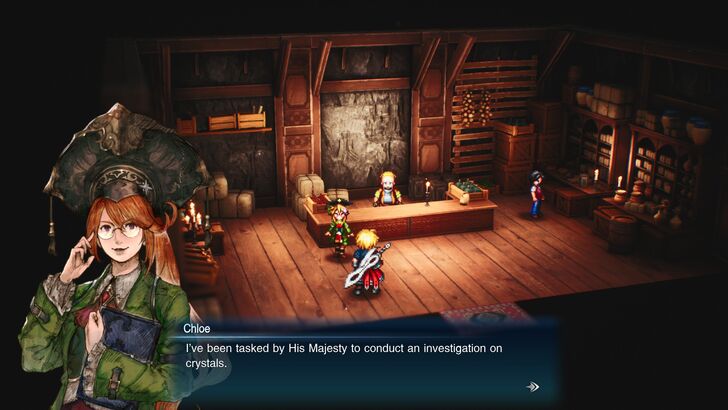
Outside battle, Resonance follows the old JRPG routine of traveling across a world map, visiting towns, entering dungeons, and chasing down optional rewards. Vision shrines hold new abilities, hidden items reward a closer look at your surroundings, and formidable enemies give you a reason to stray from the main quest. Finding a new Vision can be particularly worthwhile because the reward feeds directly back into the combat system. A new ability might open up a different build, or a passive bonus might make an existing character considerably more effective. Exploration has a clear purpose here, and finding something that makes your party stronger gives you a tangible reward for taking the scenic route.
Unfortunately, the world itself is less compelling between those discoveries. Towns have their own identities and are filled with people to talk to, but the spaces connecting them lack much of that character. Dungeons tend to be short and straightforward, with few detours or hidden rooms to make exploration feel like a discovery of its own. Chests are easy to spot, objectives are marked on the map, and fast travel makes revisiting earlier locations painless. These conveniences keep the adventure moving, though they can make the journey feel a little too carefully arranged. The world starts to resemble a series of stops on the way to the next battle or reward.
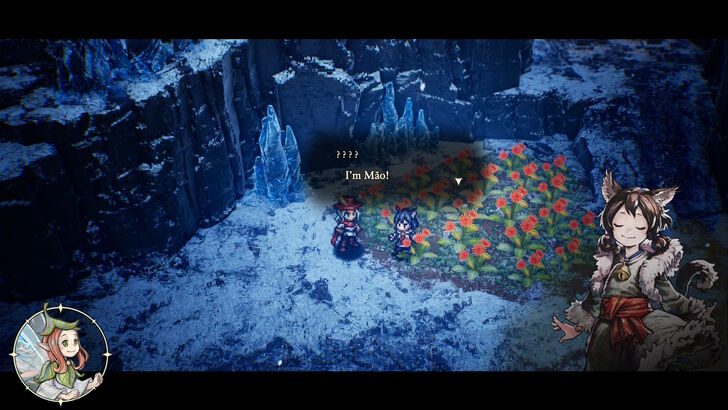
Side quests offer more equipment and some Visions. Those rewards give me a reason to take a detour. Fast travel helps streamline this process. However, the errands themselves are less exciting. Too many boil down to collecting an item, revisiting a dungeon, or talking to someone after a brief trip elsewhere. I don't need every side quest to deliver a dramatic story or a memorable character, but I do want the task to justify the time it takes.
Dungeons rarely overstay their welcome, and random encounters are spaced out enough that grinding shouldn't be necessary for most players. I appreciate that restraint. Plenty of modern RPGs seem determined to fill every spare hour, and a more compact adventure has its own appeal. The random battles can still interrupt the flow of exploration, particularly when I've already seen everything an ordinary encounter has to offer. A battle-speed option helps, but an auto-battle feature would have made the less demanding fights easier to get through.
The Classics Truly Never Get Old
There is still so much of Final Fantasy Resonance I want to see, and that feeling goes a long way in a genre built around long journeys and worlds that keep opening up. For JRPG fans, 2026 has been a pretty good year to be playing catch-up with the genre, and Resonance gives us another reason to clear a weekend and settle in. Sometimes, all I want from a game is a party I enjoy spending time with and a battle system that makes me think twice before picking a command. Resonance has me curious about what else is waiting beyond the next town.
I can see this becoming one of those games I keep returning to when I want a proper old-school RPG fix. There are still more characters to get to know as the adventure goes on. I haven't seen everything Resonance has to show me yet, and for the time being, that's a pretty good reason to keep playing.
Game8 Reviews

You may also like...


Final Fantasy Resonance Product Information
 |
|
| Title | FINAL FANTASY RESONANCE |
|---|---|
| Release Date | October 22, 2026 |
| Developer | Square Enix LANCARSE |
| Publisher | Square Enix |
| Supported Platforms | PC (Steam) PlayStation 5 Nintendo Switch 2 Nintendo Switch Xbox Series X|S |
| Genre | HD-2D, JRPG |
| Number of Players | 1 |
| ESRB Rating | ESRB E |
| Official Website | Final Fantasy Resonance Official Website |







My partner and I stumbled over here by a different web address and thought I may as well check things out. I like what I see so now i am following you. Look forward to checking out your web page yet again. Check out my blog ... <a href="<a href='https://mylifestyleee3.blogspot.com/2026/07/crisis-management_0651438048.html">' target='_black' rel='nofollow'>https://mylifestyleee3.blogspot.com/2026/07/crisis-management_0651438048.html"></a>เพิ่มผู้ติดตาม</a>
I am truly thankful to the owner of this site who has shared this fantastic paragraph at at this time. Here is my webpage :: <a href="<a href='https://pure-pods.com' target='_black' rel='nofollow'>https://pure-pods.com</a>"><a href='https://pure-pods.com' target='_black' rel='nofollow'>https://pure-pods.com</a>/</a>
Hi there everybody, here every one is sharing such familiarity, therefore it's good to read this web site, and I used to pay a visit this webpage every day. Also visit my web site: <a href="<a href='https://pure-pods.com' target='_black' rel='nofollow'>https://pure-pods.com</a>">vape pods shop</a>
Xin chào, E39 đang là nền tảng ổn định với giao diện đẹp. Kho game phong phú từ game bài, hỗ trợ tốt. Mình cảm thấy ok, ai đang tìm nhà cái thì đăng ký ngay nhé! <a href="<a href='https://e39app.com/">e39</a>' target='_black' rel='nofollow'>https://e39app.com/">e39</a></a>