




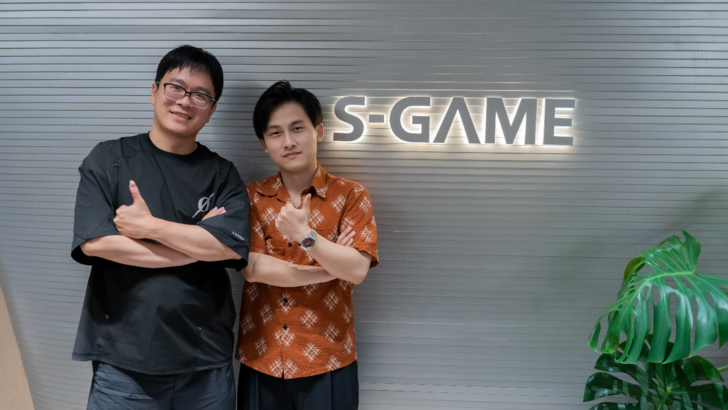
Not a single developer on the S-GAME team has yet managed to clear Phantom Blade Zero’s brutal “66-Day Mode” without dying. Read why this achievement is so elusive and learn about their philosophy behind the game.
Phantom Blade Zero Interview: Why Even the Devs Can't Do a Deathless Run In Its Hardest Mode
Not Just a Matter of Memorizing Patterns
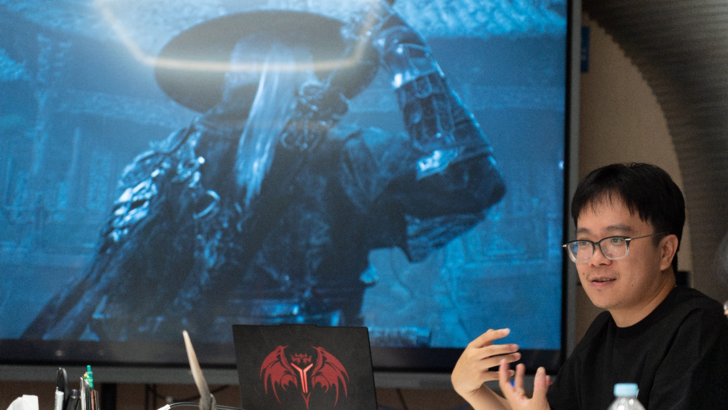
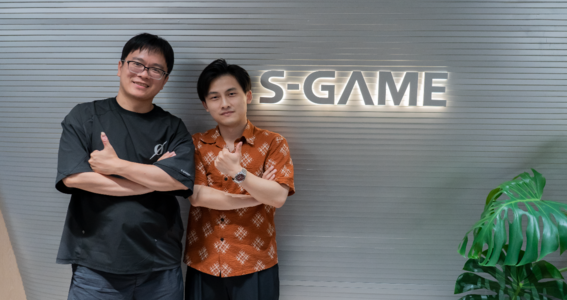
One might expect that the devs who create the games would know its secrets inside and out, being able to make short work of any challenges in the game they've spent years creating. But during our interview with S-GAME Director Qiwei "Soulframe" Liang and Music Composer Bo Caisheng, Soulframe (often shortened to S) admitted something surprisingly candid: not a single developer on the S-GAME team has yet managed to clear Phantom Blade Zero’s brutal "66-Day Mode" without dying.
"As of right now, nobody on our team has pulled off a deathless run," S shared with a grin. "Because of how the adaptive AI responds, even when a veteran developer knows a boss inside and out, the boss will completely alter its attack strategy on the fly. You can't just memorize patterns and back-dodge your way to a flawless victory."
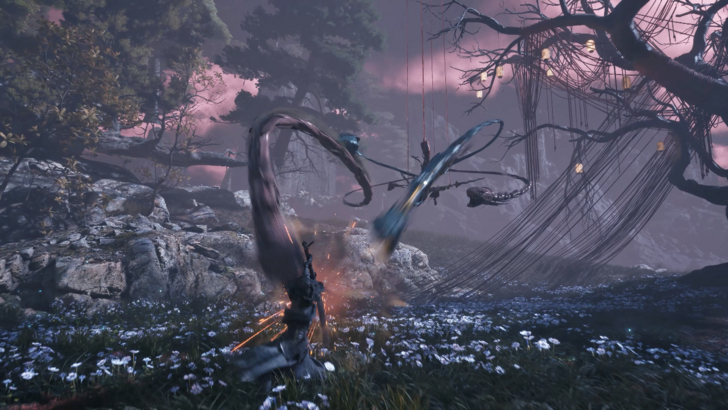
Having recently spent six hours hands-on with the game's campaign and mid-game boss fights, this claim is likely to hold true well after the game's release. However, S and Bo’s insights reveals a project that isn't aiming to create a pointlessly difficult challenge, but rather is attempting to pioneer a brand-new subgenre.
Disclaimer: This interview was conducted in Japanese and translated from Chinese. That Japanese was then translated with some liberties into more natural-sounding English to use in this article. As a result, there may be things lost in translation, but the overall intent should remain accurate.
What Makes a Deathless Run in 66-Days Mode So Difficult
The Difference Between Hard Mode and 66-Days Mode
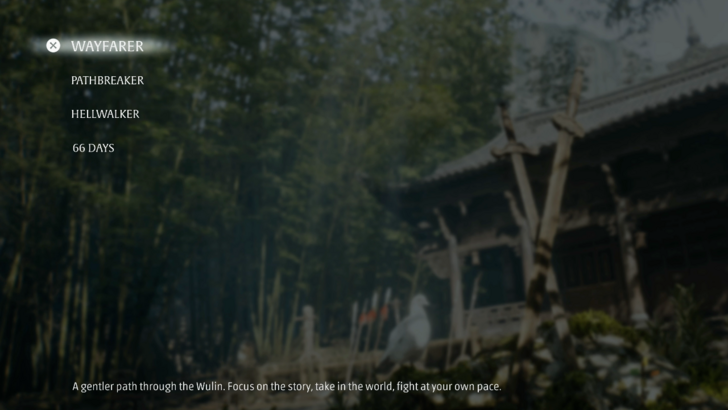
To understand why a deathless run is so agonizingly elusive, you have to look under the hood of Phantom Blade Zero’s top-tier difficulty settings. Sure, in terms of just enemy behavior, Hellwalker (the hardest difficulty setting) and 66-Day Mode feature the exact same enemy AI. But it's the imposed limitation that sets it apart.
"The AI in 66-Day Mode is identical to Hellwalker. What makes 66-Day Mode uniquely punishing is the strict time limit: you are granted exactly 66 deaths total. If your death counter hits zero, your journey ends," S explained.
This 66-death cap directly mirrors the central narrative stake of the campaign. After being framed for murder and mortally wounded by his blood brother Zuo Shang, protagonist Soul is fitted with an artificial heart by a mysterious healer known as the Flesh Sculptor, granting him exactly sixty-six days left to live. By tying the permadeath counter to Soul's canonical lifespan, S-GAME turns every single death into a meaningful narrative penalty.
PvE That Feels Like PvP
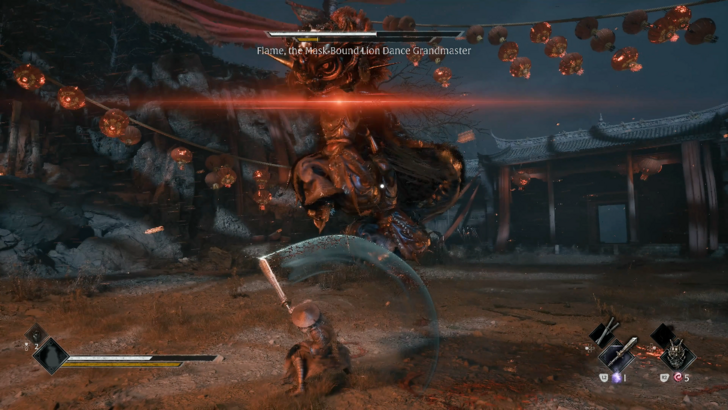
On top of that, unlike most hard modes that simply bloat boss health bars or crank enemy damage to one-shot levels, S-GAME focused entirely on behavioral complexity. The boss AI is constructed on intricate behavior trees designed to emulate a human player in a high-stakes PvP match.
"PvE action games usually fall into the trap of making a higher difficulty nothing more than a numerical flex," S explained. "For high-level players, that gets boring fast because every match plays out identically."
"In our high-difficulty modes, we designed the AI as if you were facing a human opponent in a competitive PvP match," S said. "The boss will use feints to bait out your parry. It might cancel a combo halfway through, wait for you to commit to an evasive action, and then execute a counter-move based on your specific reaction."
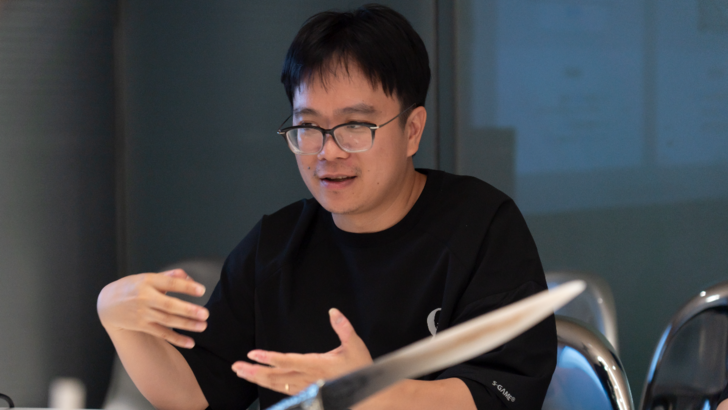
Crucially, S clarified that this isn't achieved through cheap "input reading," the frustrating trick where the CPU instantly counters your button presses frame-for-frame.
"We calibrated our behavior trees to capture the feel of fighting a living person without crossing into unfair territory. There is no input-reading under the hood," S assured.
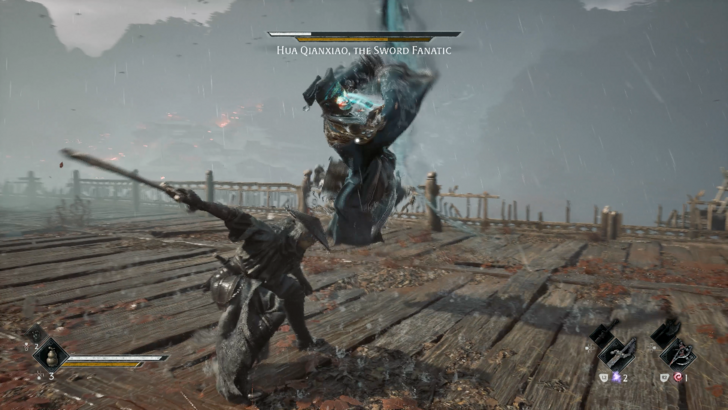
Instead, the game evaluates positional distance, player aggression tendencies, and defensive habits. Using that, it learns how to respond in real time.
"We wanted to capture the feeling of fighting a living person. The enemy will feint, bait out your parries, stop a combo halfway through to wait for your reaction, and then punish whatever defensive option you choose."
50+ Bosses and the Art of Boss Weaknesses
A Different Strategy for Every Boss
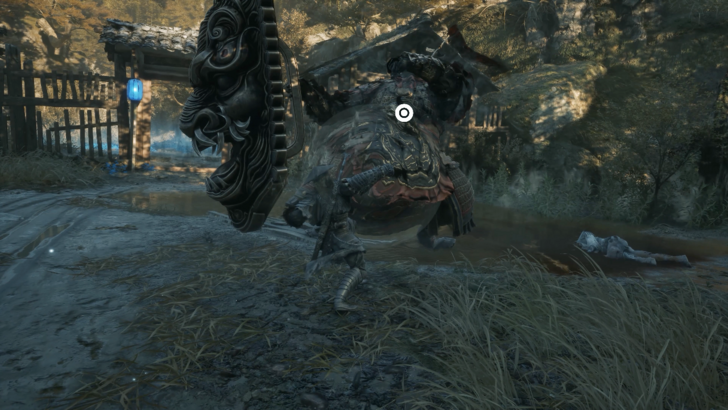
Another thing that makes a 66-Day deathless run out of reach is the sheer number of bosses.
"People originally heard that there were around 30 bosses, but that number actually refers to our primary weapons," S explained. "We have over 30 primary weapons and more than 20 secondary weapons known as Phantom Edges. Because every single weapon and Phantom Edge is obtained by defeating a specific boss, there are at least 50 distinct boss fights across the full game."
To keep more than 50 boss fights from feeling repetitive, S-GAME designed encounters around three distinct kinds of weaknesses:
Hard Weaknesses: Encounters where specific boss defenses require a dedicated weapon type to break. "The most obvious example is the shield-bearing enemy we showed during the State of Play," S said. "If you try to cut through that massive shield with a lightweight sword, you will deal almost no damage. But if you switch to heavy iron fists, a warhammer, or the Dread Axe, you can easily shatter their guard."
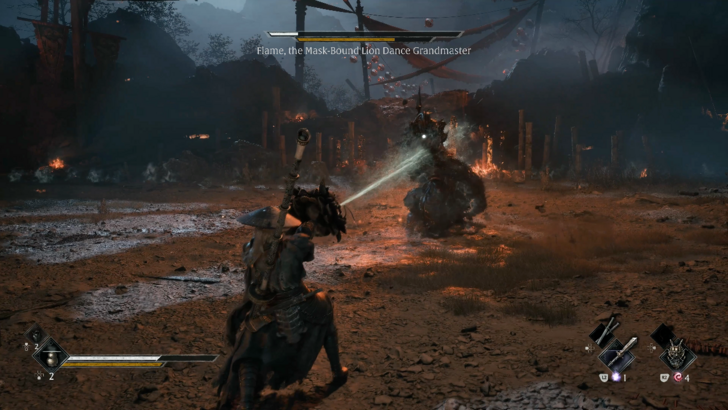
Soft Weaknesses: Enemies feature elemental or mechanical vulnerabilities that make fights significantly smoother without making them mandatory. During our boss fight with Flame, the Lion Dance Grandmaster, equipping a water-elemental weapon allowed us to douse the burning lion puppet, noticeably slowing its aggressive movement and cooling its fiery sweep attacks.
Narrative-Driven Weaknesses: Hidden interactions tied directly to the lore and relationships between characters. "If you understand the story and know that two characters share a past connection, you might try equipping a specific weapon tied to their history," S revealed. "If you do, the boss might react with unique mid-fight dialogue lines or altered behavioral phases. We built these hidden surprises for players who dig deep into the world."
S has mentioned that even with these weaknesses being built in, it's never required to use them to defeat the boss, and in fact, it is theoretically possible to beat the game with the training wooden sword obtained from the beginning of the game.
Optional Side Bosses Might Not Be So Optional
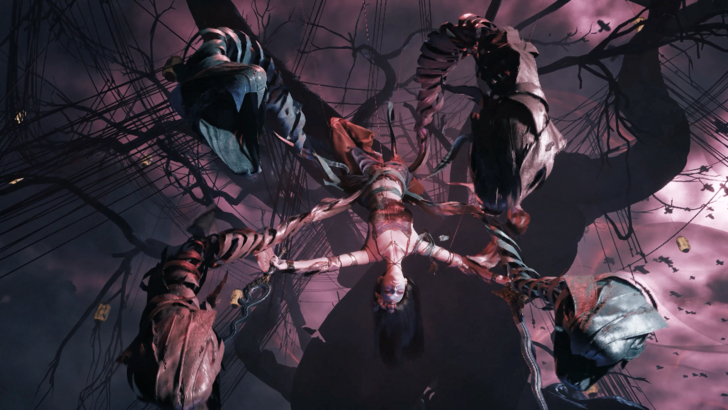
Beyond main story roadblocks, the world of Pangzhen is peppered with hidden optional bosses tucked away in branching side paths. One might think that avoiding these optional bosses would be your best bet for completing a no-death run. But that might actually end up making things more difficult for yourself.
Overcoming these optional challenges yields substantial rewards. Defeating a formidable side boss grants high-tier weapons that can drastically ease upcoming story chapters.
"Our side quests are not isolated distractions," S emphasized. "They expand the world building, reveal character motivations, and directly influence narrative branches, world events, and ultimately, the endings."
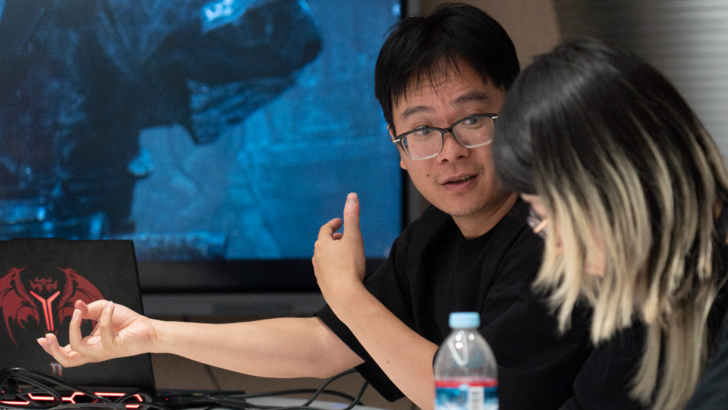
But rather than scaling side bosses to match the main story's smooth power curve, S-GAME designed optional encounters with sharper difficulty spikes and highly specialized mechanics.
"Main story bosses are balanced fairly evenly because every player is required to complete them," S explained. "Side bosses, however, feature much greater variance in difficulty. They are designed to test specific skills or present unique gimmicks."
For those who know what they're doing though, the side bosses might not be an issue. "Hidden side-story bosses aren't simply raw powerhouses. They feature unique characteristics, and once you figure out the trick, the difficulty drops drastically."
Phantom Blade Zero's "Pyramid" Design Philosophy
An RPG At Its Base
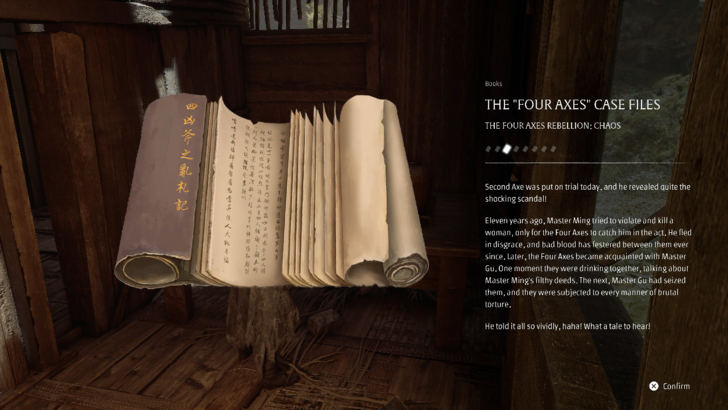
When Phantom Blade Zero was first revealed during the 2023 PlayStation Showcase, its lightning-fast swordplay and cinematic parry clashes led many to assume it was a linear soulslike or a QTE-heavy character action game. However, spending extended time in Chapter 1 quickly shatters that misconception.
"Because combat is fast and visually striking, it is the easiest thing to showcase in trailers," S admitted. "That created an impression that our game is a straightforward character action title. But in reality, our game is structured like a pyramid."
According to S, the broad base of the pyramid consists of deep RPG progression, rich story narrative, and extensive world exploration, while the middle section features intricate soulslike level design, interconnected branching pathways, and environmental puzzles. Then, at the very top of the pyramid is the high-speed, kinetic combat shown in promotional trailers.
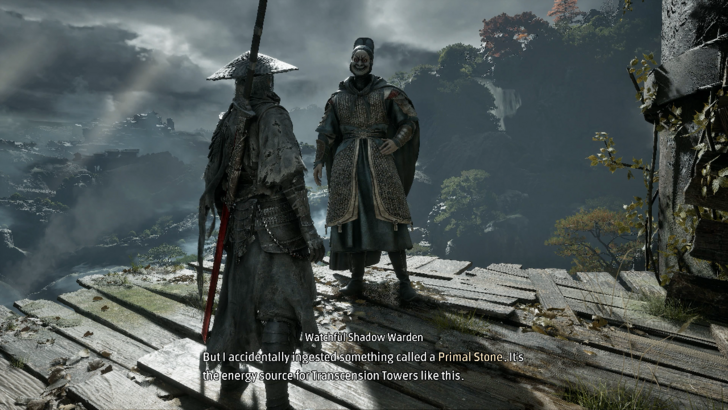
"The combat is merely the tip of the iceberg visible above the water," S emphasized. "The foundation supporting that combat is a full-fledged action RPG."
Our hands-on with the game confirmed this architectural design. Exploring the fog-drenched, dilapidated valleys around Pangzhen involved navigating branching paths, uncovering hidden side quests, finding accessories, and unlocking equipment that directly alters how you navigate the environment and how you approach your battles.
Enemies Don't Respawn Because S-GAME Doesn't Want You to Grind
Respeccing How You Want, When You Want
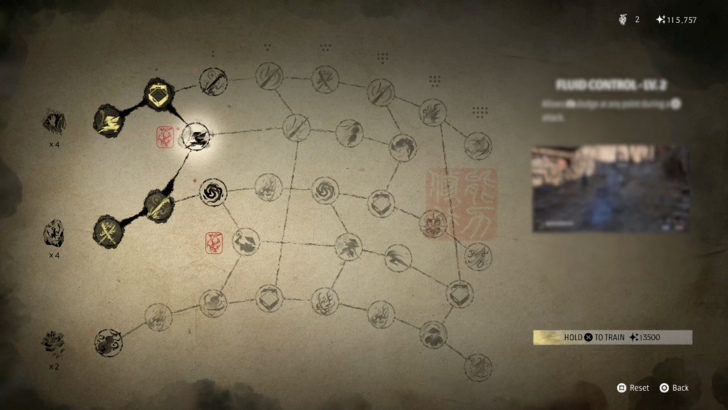
This RPG foundation shines brightest in how Phantom Blade Zero handles character progression and quality-of-life systems. One of these standout features is the complete elimination of build lock-in.
Players can reset a weapon's upgrade level at any time, instantly recovering 100% of their invested materials to redistribute into new gear. "If you hit a wall against a boss, you don't need to spend hours grinding reaction times," Liang advised. "You can freely respec your stats, reallocate upgrade materials into a different weapon type or accessory combination, and approach the fight with a fresh build."
While it isn't the first game to do it, it is a welcome feature that may push for broader adoption within the genre. This total elimination of build anxiety allows for constant experimentation across its vast arsenal without needing heavy time investment.
Respecting Player Time and Exploration
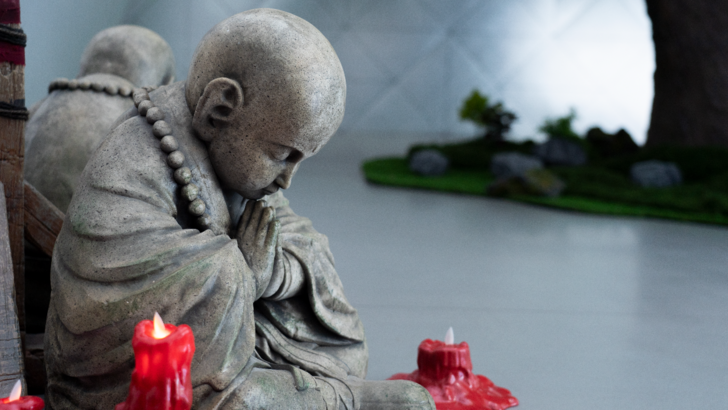
To further respect player time, S-GAME implemented a bold design choice regarding enemy encounters: standard enemies DO NOT respawn when resting at checkpoint Bells.
"For combat, meeting a new enemy for the first time brings the greatest sense of surprise," S observed.
In almost every Soulslike title, where this mechanic is most commonly found, resting at a checkpoint resets every standard mob in the area, a mechanic often used to let players farm resources. Phantom Blade Zero soundly rejects this design trope. When you rest at one of the checkpoint Bells scattered across the map, Soul’s health, medicine vials, and Phantom Edge ammunition are fully restored, but defeated enemies stay dead.
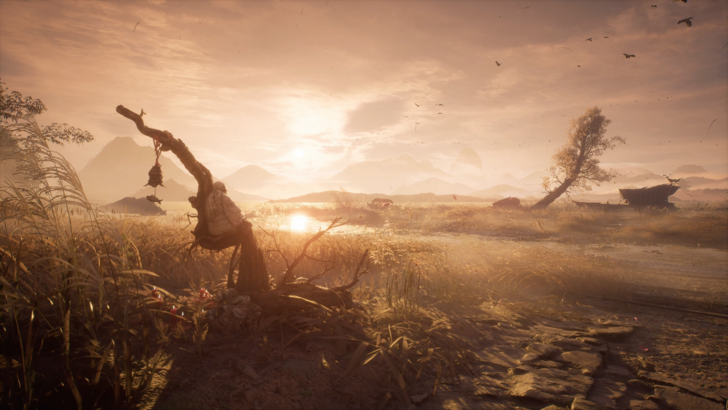
"We want every minute a player spends in our game to feel valuable," S emphasized. "We don't want players repeating the exact same content or grinding the same mob loop just to farm materials."
"If you need more resources or stronger stats, the solution isn't to re-farm an old area, it's to push forward and explore somewhere new."
This design decision shifts the game's pacing into an aggressive forward march. Because map resources are finite per region, the game continually entices you to venture down side paths, track down secret side bosses, and clear environmental puzzles to earn your upgrades.
You Don't Need to Do a No-Death Run to Feel Like a Kung Fu Master
"Wayfarer" Easy Mode Will Still Make You Feel Badass
For players who are looking for a more laidback experience than aiming for a deathless run on its hardest mode, Phantom Blade Zero includes a more accessible difficulty level named Wayfarer mode. However, rather than just turning enemies into fragile punching bags, S revealed that adjusting the difficulty down does not drastically alter baseline numerical statistics.
"The stats do change slightly, but not as drastically as you might imagine," S explained. "The primary change is in the AI's aggressiveness and how it reacts to your actions. The AI adopts a pacing similar to classic martial arts cinema, where martial artists circle each other, take stances, and strike with measured gaps. Their intent to attack isn't as aggressive. This gives players ample time to react, break guards, and execute stylish moves."
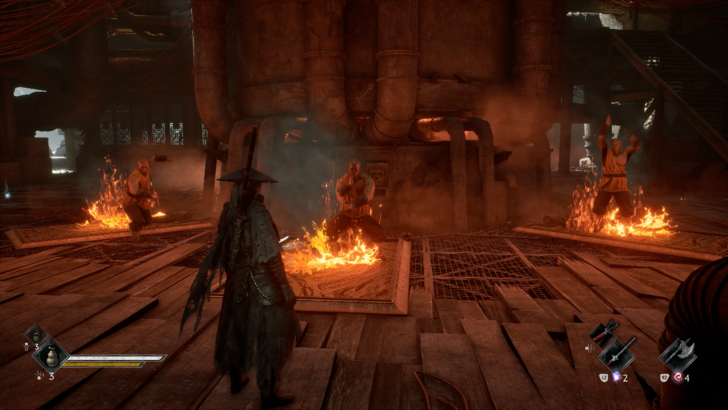
Cinematic spectacle is enhanced while technical execution demands are relaxed. This approach ensures that accessible gameplay remains deeply engaging.
"We did a lot of tuning for Wayfarer mode so that regular players can pass through smoothly without feeling bored. We couldn't just let players one-shot monsters, because while that makes it easy, it becomes boring," S emphasized. "These are designed so casual players feel powerful. It feels like watching a Wuxia action film while executing simple button inputs. "
"As we said in the State of Play, we want everyone to feel like a Kung Fu Master."
Kungfupunk is at the Core of Every Design Decision
Martial Arts, Machinery, and Mystic Arts
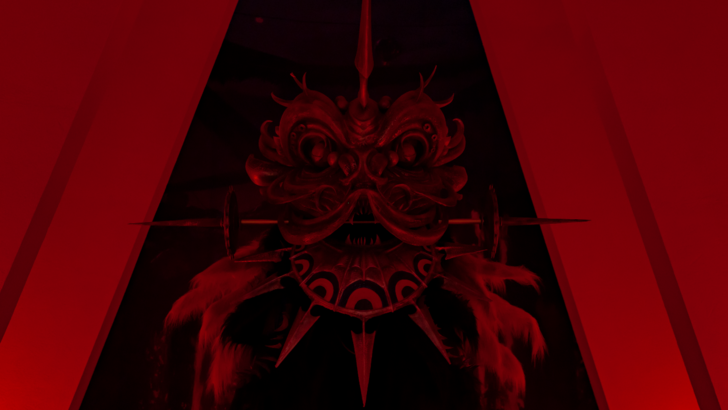
Even if difficulty and pacing are consistent, facing over fifty distinct foes could easily feel disjointed and haphazardly thrown together. However, S emphasizes that every encounter is tightly bound by a singular aesthetic vision.
"All of them are unified under our style, which is the kungfupunk aesthetic," Liang explains. "As you saw in the playtest, there are large-bodied bosses, small-bodied bosses, bosses holding shields, and bosses riding horses. But underneath it all, you will see an underlying thread: all of them originate from traditional Chinese Wuxia roots, while incorporating our own new and novel elements to innovate. That is where the unity comes from."
S describes the "Kungfupunk" aesthetic specifically as a fusion of traditional Chinese Wuxia folklore, dark fantasy, and rusted steampunk machinery. Ancient wooden temples are fitted with brass gears, and assassin blades are retrofitted with chainsaw edges and flamethrowers.
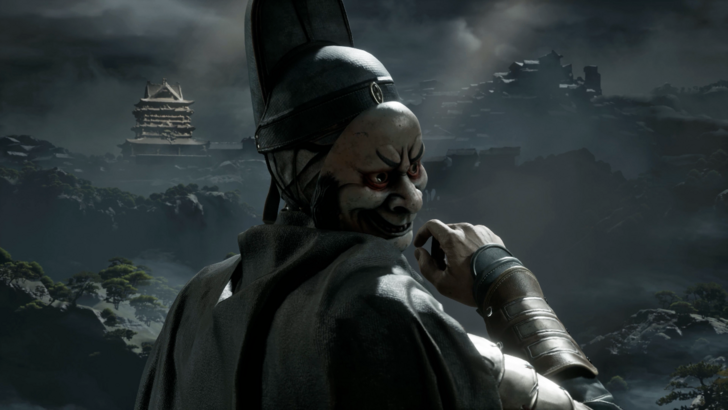
To establish the unique tone of Kungfupunk, S-GAME had to navigate a careful middle ground within the Wuxia genre. Traditional martial arts fiction generally stretches across two distinct extremes: completely grounded, gritty physical weapon combat where characters rely strictly on steel and muscle, and over-the-top Xianxia fantasy where fighters fly through the clouds, summon celestial deities, and achieve literal immortality.
Phantom Blade Zero deliberately carves out its own distinct middle tier.
"Our world features no gods and no ghosts, but we have our own set of fantastical elements," S emphasized. "We balance everything across three core pillars: physical martial arts training, intricate steampunk machinery, and mysterious mystic arts."
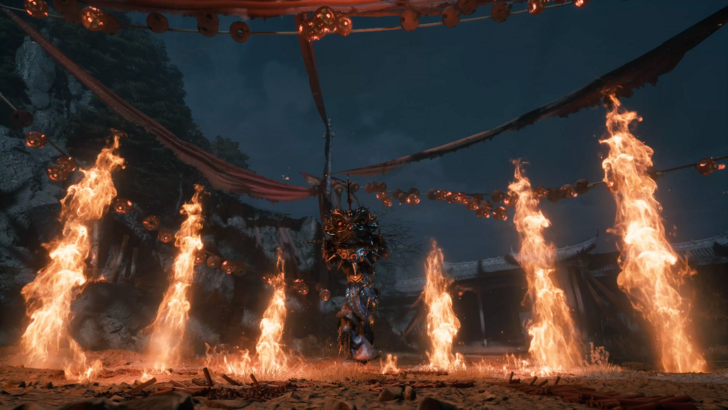
Martial arts is self-explanatory; it's the physical movements of the fighting and what people think of when they hear kung fu. Machinery leans into the steampunk aspect, where impossible effects are powered by steam, gears, and mechanical movement. Mystic arts is the not-quite-magic magical elements you'll commonly see in Wuxia that rather relies on something more spiritual.
A blade that leaves trails of radiant Spider Lily flowers or one infused with lightning is the result of a combination of martial arts and mystical arts. The Tiger Cannon seen in the trailers, on the other hand, heavily leans in the machinery aspect. This fusion allows for visually stunning, fantastical effects while keeping the narrative stakes deeply personal, human, and anchored in themes of betrayal, honor, and survival.
Form Over Function, Art Over UI
Art-Led World Guidance
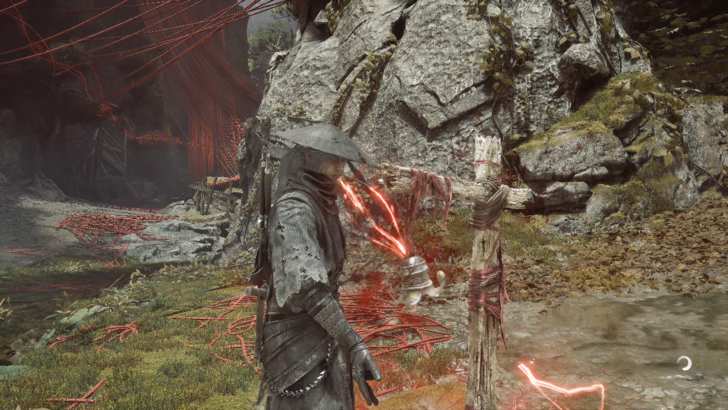
To navigate this dark world without ruining environmental immersion, S-GAME opted against heavy, immersion-breaking UI elements like cluttering mini-maps or intrusive objective markers. Instead, they pioneered an art-led guidance system designed to keep players visually hooked to the game world.
"We wanted to guide players naturally through art rather than relying entirely on a standard UI," S explained. Throughout the environment, striking crimson "red threads" weave through the dreary gray and brown landscapes.
Red threads in Asian culture symbolize linked fates, usually surrounding marriage and love. Similar to Cupid's arrow in the West, tying a red thread between two people makes an unseverable connection.
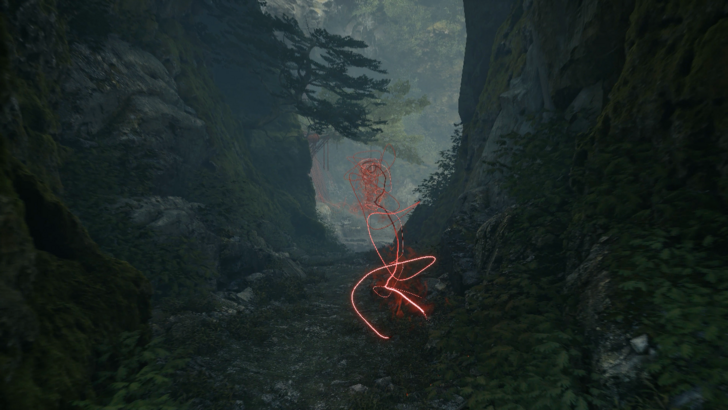
In Phantom Blade Zero, these threads serve a dual purpose: narratively, they symbolize the tragic bonds of fate entangling the protagonist, Soul; mechanically, following the path of these glowing red threads naturally guides players toward nearby checkpoint bells.
"The red thread serves as both a vital visual guidance element and a symbolic representation of the character being bound by fate," S noted. Combined with hand-painted ink maps, this art-driven direction ensures you stay deeply immersed in the world rather than staring at a corner of your screen.
This stylistic core provides a sturdy backbone for immense mechanical and environmental diversity. Each boss demands distinct counter-strategies, weapon matchups, and tactical approaches tailored to their unique body types and forms. Furthermore, S teases that what players experience in Chapter 1 is merely the introduction, promising that the richness, scale, and eccentricity of future encounters will multiply as the journey deepens into the heart of the martial underworld.
Bo Caisheng Extends Kungfupunk Into the Soundtrack As Well
Reimagining Wuxia Soundscapes
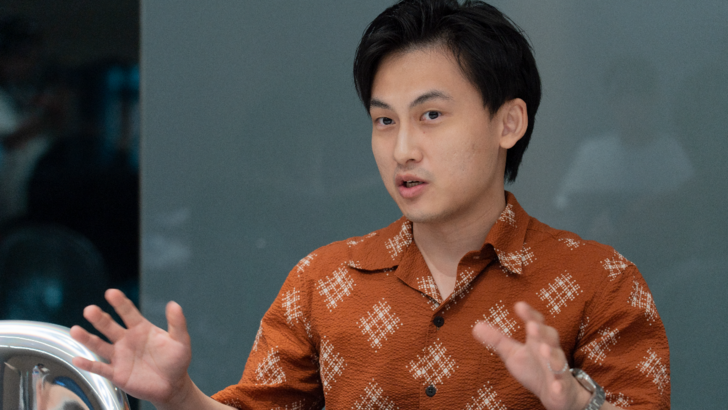
The auditory identity of Phantom Blade Zero is just as unconventional as its visual style. While traditional Wuxia titles typically rely on sweeping, conventional orchestral scores with light traditional flutes, Phantom Blade Zero hits you with an electrifying blend of Chinese traditional instruments, heavy metal drums, electric guitar riffs, and synth beats.
For Music Composer Bo Caisheng, who has been working alongside S on the franchise since its early indie days as Rainblood 18 years ago, this genre blend is actually a return to historical roots.
"If you look back 30 or 40 years ago at classic Wuxia cinema, directors weren't using outdated music, they were using the absolute most cutting-edge electronic synths and modern recording techniques available at the time," Bo explained. "Wuxia culture has always evolved, and the music needs to evolve with it."
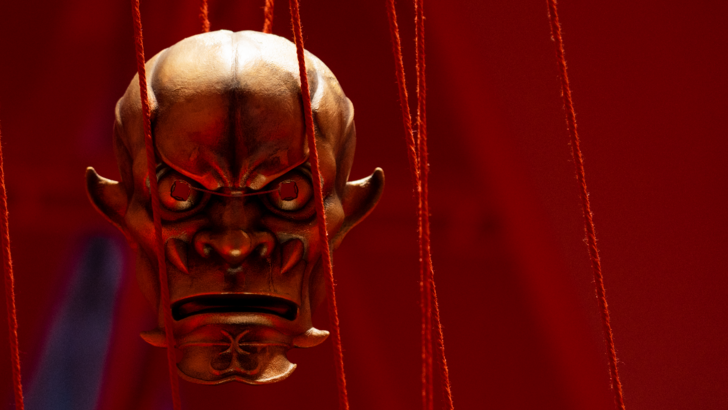
To achieve this unique sonic landscape, Bo collaborated with top-tier Chinese master instrumentalists playing traditional instruments like the Pipa and Erhu, recording raw performances and weaving them into heavy rock and electronic frameworks.
"In modern film and gaming scores, there's a standardized formula that everyone follows," Bo said. "I wanted to break that standard answer entirely. If the industry convention says to write a scene one way, I purposefully go in the complete opposite direction. I want to test what kind of emotional impact we can achieve when we throw out the rulebook."
During our preview, this soundtrack philosophy proved its worth. High-octane boss battles felt intensely cinematic, with traditional strings shredding alongside thunderous metal riffs, elevating the adrenaline of every parry and last-second dodge.
Donnie Yen Collaboration Brings Hong Kong Action Cinema Into Gaming
Breaking the Traditional Approach
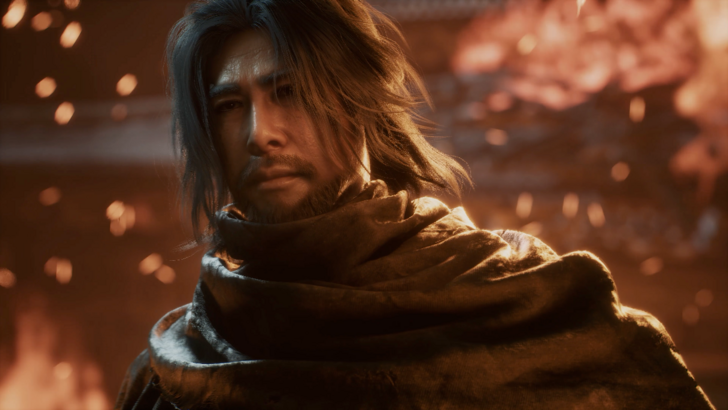
One of the most captivating aspects of Phantom Blade Zero is how naturally its combat flows. Swords clash, sparks fly, and character movements carry authentic physical momentum.
This cinematic quality is no accident; it stems from S-GAME’s unique development pipeline, heavily influenced by legendary martial arts icon Donnie Yen, who serves as the game's Creative Consultant and the motion capture actor for Mo Yuan, a major character in the game.
Standard game development typically follows a fairly rigid pipeline: game designers write a complete list of required moves, animators storyboard them, and motion-capture actors execute those exact actions on a stage. S-GAME threw that traditional approach out the window in favor of classic Hong Kong action cinema spontaneity.
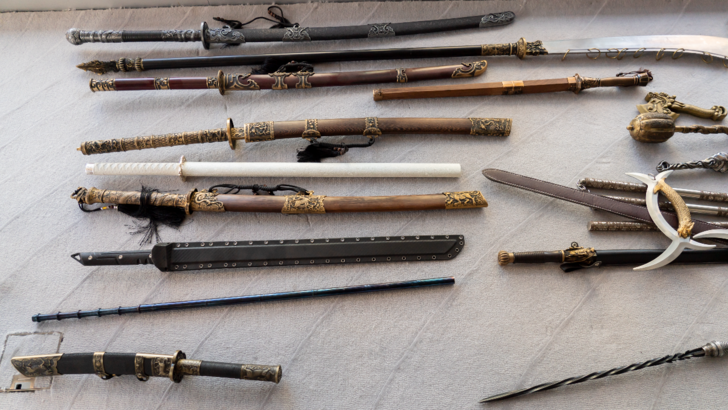
"Donnie Yen explained to me how Hollywood action filmmaking differs from classic Hong Kong filmmaking," S recounted. "In Hollywood, every shot, wire angle, and storyboard frame is pre-planned and strictly executed. But in traditional Hong Kong martial arts cinema, the director gives a vague setup: 'These two characters fight in an alley for five minutes, and Character A wins.' Then, two master martial artists get on set and freestyle."
S-GAME adopted this exact philosophy. S provides a high-level, thematic concept, such as a drunken master who wields flying swords.
"He'll probably have charge attacks, throw wine jugs, or perform ranged attacks," S provided as an example brainstorm. "Since this person drinks a lot, they'd be unhinged. What does an unhinged person look like?"
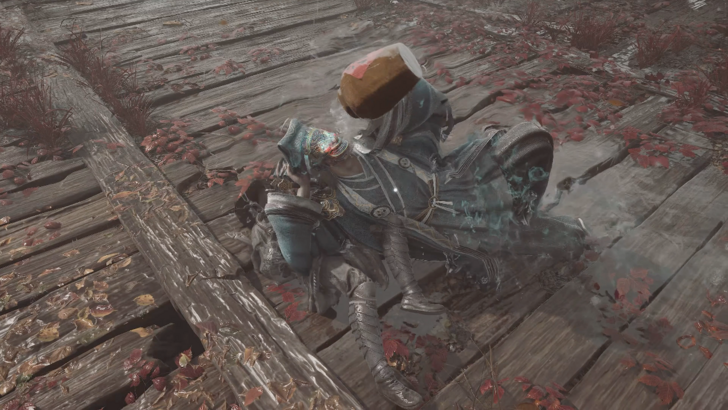
From there, he hands it over to combat director Master Yang Liu, stunt performers, and Donnie Yen. The martial artists freestyle fight sequences on the mocap stage, capturing dozens of natural variations.
"So the process isn't a straight line from A to B; it's an iterative loop, going from A1 to B1 to A2 to B2 to A3 to B3, moving gradually from vague concepts to clear mechanics."
S-GAME’s team then analyzes the raw motion data, selects the most visually striking transitions, and iteratively refines them into playable weapon mechanics.
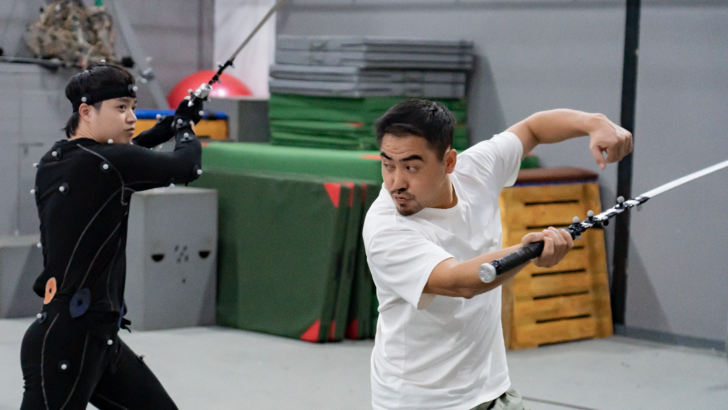
"Then, by combining Chinese Kung Fu and traditional motifs, we're able to solidify the character's design, story, and personality."
This collaborative loop results in fight choreography that feels genuinely weight-bearing, organic, and grounded in real martial arts principles.
Master Yang Translates Wuxia Combat Into Player Expression
Balancing Grounded Realism With Aesthetics
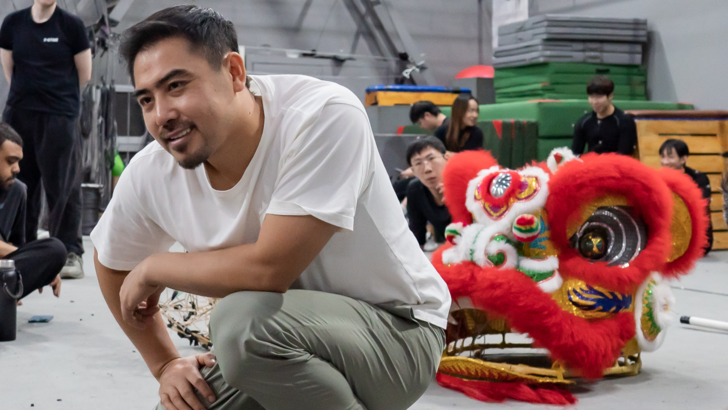
Translating Hong Kong cinema spontaneity into responsive video game code requires an extraordinary level of performance art inside the motion capture. Combat Director Master Yang insists that authentic Wuxia action cannot exist without its underlying cultural and philosophical foundation.
For Yang, whose background spans traditional martial arts training since age nine, a film production master's degree, and stage theater direction, martial arts choreography is an external expression of deep-rooted cultural values. During a live mocap presentation, Yang addressed the challenge of maintaining grounded realism while delivering the exaggerated visual flair expected of modern gaming.
"Once the fight starts, we can't let it lose realism. It must maintain a grounded, realistic feel, as if a real person would actually fight this way," Yang stated. "It shouldn't feel overly exaggerated or detached from reality."
"At the same time, we need to create rich combat expressions. We must make it logical, realistic, and aesthetically pleasing all at once."
This cultural logic directly informs gameplay mechanics, such as in the case of the previously mentioned Drunken Master fighting style. Far from being comedic slapstick, Yang explained that drunken combat in Chinese martial history is an intentional mind game designed to mislead opponents.
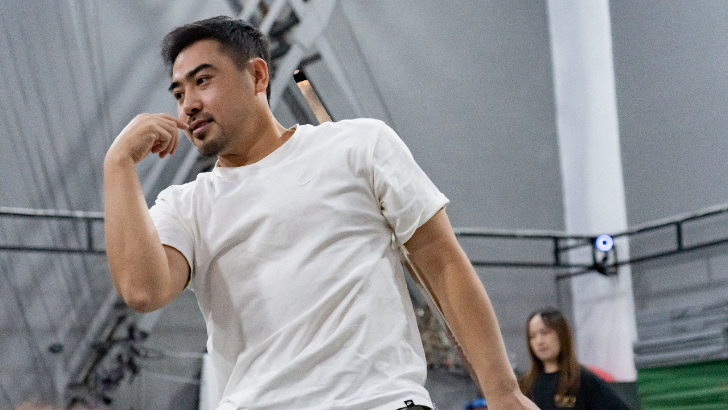
"Drunken combat isn't about being genuinely intoxicated. It's a strategic deception," Yang revealed. "The origin of drunken style fighting is to lower the opponent's guard. Acting intoxicated makes the opponent drop their defense or make a move, and that allows you to strike unexpectedly."
In Phantom Blade Zero, this translates directly into player mechanics: drinking from Soul's flask lowers enemy vigilance and opens windows for devastating counter-attacks. "Drinking grants a temporary buff of boldness and heightens the combat atmosphere," Yang noted, proving that every fantastical mechanic in the game is tethered to historical fighting logic.
Modular Movement Design
Translating this philosophical depth and physical weight into digital avatars requires an extraordinary level of performance art inside the motion capture. As Yang demonstrated during a studio tour, stunt performers must engage their entire bodies, even utilizing "shwing shwing" vocalizations during clashes to channel physical impact.
"You have to engage every single cell in your body so that the power, rhythm, and tension can truly come across," Yang said. "If an actor doesn't embody this, the performance loses its essence."
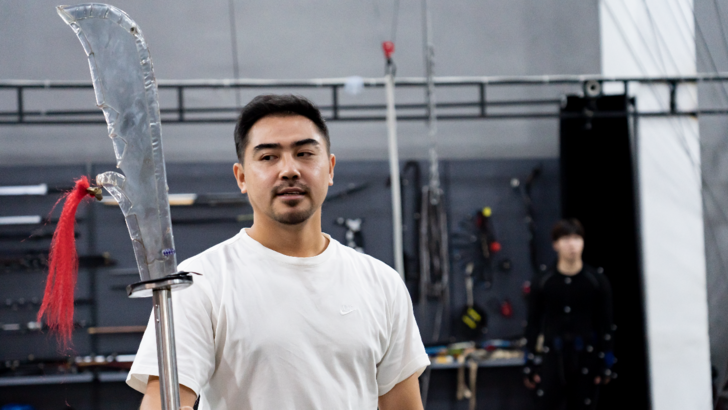
"In reality, a prop weapon is made lightweight for safety and endurance, but we still must visually convey heavy physical weight," Yang explained. "How do you convey that weight? Through performance technique and bodily expression. Sometimes for a single parry action, we might shoot 100 takes, not because the movement fails, but because the emotional weight and expression aren't hitting right. If the expression doesn't anchor the scene properly, it feels wrong."
The secret to Phantom Blade Zero's fluid combat lies in a conceptual framework for deconstructing real-world martial arts into modular building blocks that players can seamlessly reassemble through controller inputs.
"The first thing I think about is: when a player attacks me, how should I respond?" Yang explained. "I imagine the incoming strike, and that translates into my parry and blocking action. If they attack continuously, I need to break it down step by step so that every single hit has a response."
Rather than forcing players into rigid, pre-canned events, Yang's design philosophy prioritizes player agency and improvisational freedom. This modular architecture allows different players to express their own fighting styles while remaining within a polished, cinematic framework.
"Because every player's control habits and play styles vary, I have to account for many different player behaviors, whether they play a certain way or not, and determine if every approach is logical," Yang noted.
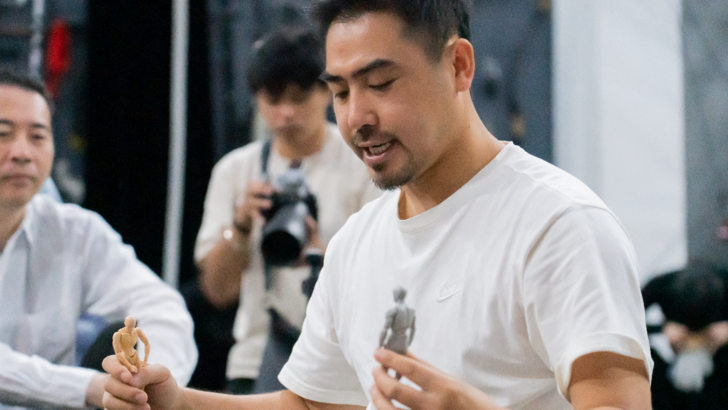
"In my mind, I have to orchestrate thousands of such combat scenarios," Yang shared. "When players play the game, they experience what I envisioned through this modular disassembly and assembly. When I break down these combat movements, I have to mentally assemble them first to visualize the flow. My job is to imagine, break down, and ensure that players can reassemble the experience dynamically when they play."
Yang pulled back the curtain on how the studio captures and digitizes this physical vocabulary. Rather than recording rigid, linear attack sequences, the team systematically breaks down combat into distinct spatial phases.
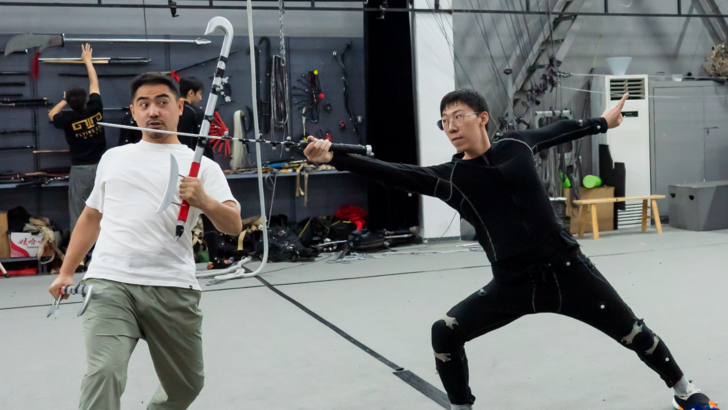
"When designing combat mechanics, we break it down into steps. Once you find one way to close the distance, you can evolve it into 10 different ways for them to approach each other. And once you find one pattern for what they do after getting close, you can develop 10 different variations of post-close combat."
By capturing these modular approach routines, idle stances, and defensive parries individually, the team creates a rich motion vocabulary that empowers players to construct their own fight scenes in real time.
"Everything we do must be learned and built up step by step so that every individual movement translates into vocabulary, and only with vocabulary can you articulate complete expressions."
A Deathless Run Will Surely Be Achieved
Even If Its Not By the Devs
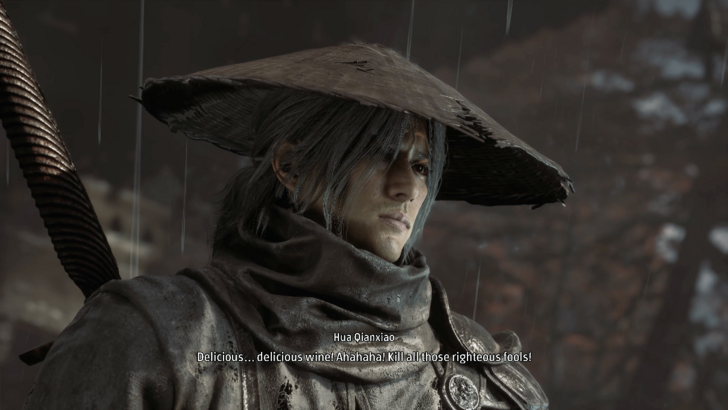
While a deathless run on the 66-Day Mode may elude the devs for now, S remains convinced that master action players may eventually achieve the impossible.
"Right now no one on the team has done it," S admitted, "but in the future, I am certain there will be a player who achieves it."
From its adaptive, non-input-reading boss fights to its Hong Kong movie choreography and anti-grind exploration philosophy, Phantom Blade Zero is shaping up to be far more than just a visually striking action title. S-GAME has taken their 18-year indie legacy and scaled it into an ambitious, highly responsive ARPG that honors traditional martial arts culture while boldly pushing modern game design forward.
Whether anyone will actually manage to clear the daunting challenge remains to be seen when the game launches on October 29, 2026. But one thing is certain: death or deathless, every second spent holding the blade in Pangzhen promises to be an absolute thrill.





Hey just wanted to give you a quick heads up. The text in your content seem to be running off the screen in Internet explorer. I'm not sure if this is a format issue or something to do with web browser compatibility but I thought I'd post to let you know. The style and design look great though! Hope you get the problem solved soon. Kudos Also visit my web blog :: <a href="<a href='https://hebei.vn/may-vat-ly-tam-cong-nghiep/">M' target='_black' rel='nofollow'>https://hebei.vn/may-vat-ly-tam-cong-nghiep/">M</a>áy vắt ly tâm</a>
Hi colleagues, how is all, and what you want to say on the topic of this article, in my view its really amazing in favor of me. Also visit my homepage: <a href="<a href='https://hebei.vn/">Hebei' target='_black' rel='nofollow'>https://hebei.vn/">Hebei</a> Machinery</a>
Specific, thanks. My experience says the same that a permit is not paperwork. Limits were my problem, so now I read the rules before depositing. Worth reading to the end. my blog post :: <a href="<a href='https://wiki-babylonsignalis.org/index.php/User:IrishBloodsworth">promotion' target='_black' rel='nofollow'>https://wiki-babylonsignalis.org/index.php/User:IrishBloodsworth">promotion</a> rules</a>
I found this quite insightful. my web blog :: <a href="<a href='https://trabmediawiki.governancaegestao.wiki.br/index.php/User:ShariFrome35">identifying' target='_black' rel='nofollow'>https://trabmediawiki.governancaegestao.wiki.br/index.php/User:ShariFrome35">identifying</a> jewelry items with RFID</a>
Spot on with this write-up, I truly feel this web site needs a lot more attention. I'll probably be returning to see more, thanks for the information! my site; <a href="<a href='https://assignmentlk.com/">academic' target='_black' rel='nofollow'>https://assignmentlk.com/">academic</a> writers in sri lanka</a>