




| Harvest Moon: Echoes of Teradea | |||
|---|---|---|---|
| Release Date | Gameplay & Story | Pre-Order & DLC | Review |
Harvest Moon: Echoes of Teradea gives players a large open world to explore and restore. Read our review to see what it does right, what it doesn’t, and our overall thoughts on the game.
| Digital Storefronts | |||||
|---|---|---|---|---|---|
 Steam |
 PS |
 Xbox |
|||
 Switch 2 |
 Switch |
||||
| $49.99 | |||||
Harvest Moon: Echoes of Teradea Review: So Colorful, Yet So Soulless
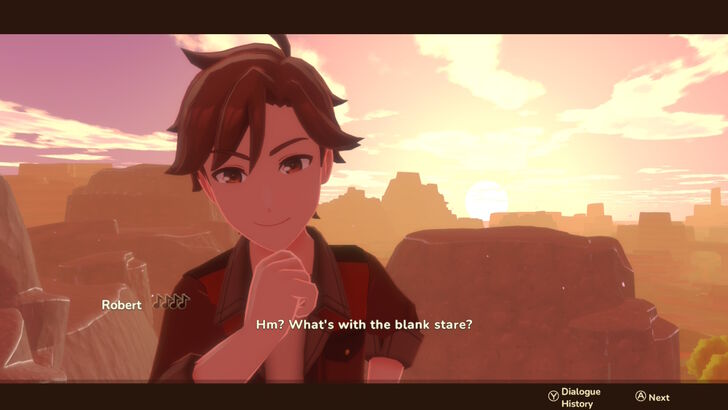
Cozy games make poetry of the mundane. They transform the burdens of reality into something tender to the embrace. In truth, few of us long to till soil or make the daily pilgrimage into a small town, yet here, routine becomes solace. We return because every small act leaves a mark that weaves our effort into a sanctuary where we truly belong. Without that reward, that feeling of roots taking hold, the magic dies, and devotion degrades into mere labor.
Harvest Moon: Echoes of Teradea greets you with a bright smile and the promise of a life fulfilled. Yet beneath its colorful facade lies an unyielding emptiness. You toil through the hours, but your hands build nothing that lasts; the farm remains stagnant, and the world stands silent around it. Hours vanish into a void where your presence leaves no trace, until the daily routine ceases to feel like a life being built and becomes merely a sequence of chores performed in a world that refuses to breathe back.
Saving Teradea Mostly Means Ticking Off Checklists
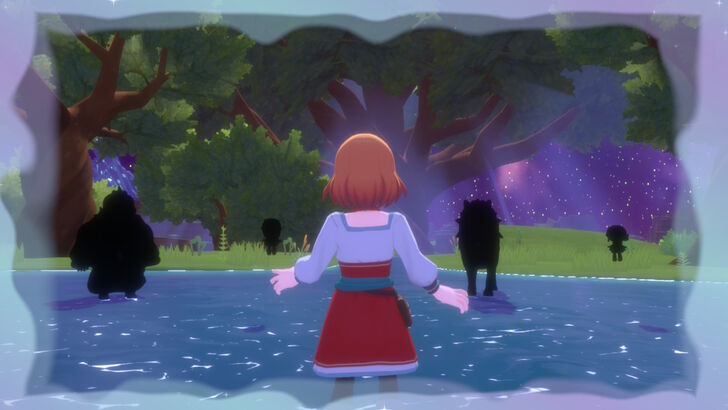
It begins as every pastoral game does: in a quaint town facing a problem much larger than any single plot of land. In Bloomfield Village, an ominous mist from the Forest of Echoes has thrown the surrounding land into disarray. Wolves roam the outskirts, and the other towns are dealing with disasters of their own. Alongside your childhood friend (really, whichever gender you didn’t choose at the beginning of the game), you step forward to mend the land and help the people caught up in strange occurrences.
The journey spans four towns, each anchored by a withered Spirit Tree and a slumbering Guardian Spirit. To heal the soil, you must gather power for the Harvest Goddess and breathe vitality back into roots that have long forgotten how to bloom.
It is somewhat of a tired narrative for a farming game, yet one that yields well enough for a world as vast as Teradea. Echoes of a journey like Rune Factory: Guardians of Azuma ripple through its design; there is always another horizon to chase or another crisis to soothe to give your cozy days a sense of purpose beyond the tilling of soil. Though completing a region’s story requires only its first chapter, the remaining parts give you more time with the residents and introduce additional events, including new festivals.
It’s unfortunate, though, that even as you travel and clear the mist isolating towns from one another, the game keeps NPCs trapped in their isolated corners of the map. It creates a jarring disconnect between gameplay and worldbuilding—a sign that the writing rarely rises to meet the ambition of its premise.
Echoes of Teradea has a fairly straightforward story about bringing a dying land back to life, and there’s nothing wrong with that. It needs no complex political intrigue to be compelling. However, it does need heart. For a journey about revival to land, you have to care about the soil beneath your feet and the people who walk upon it.
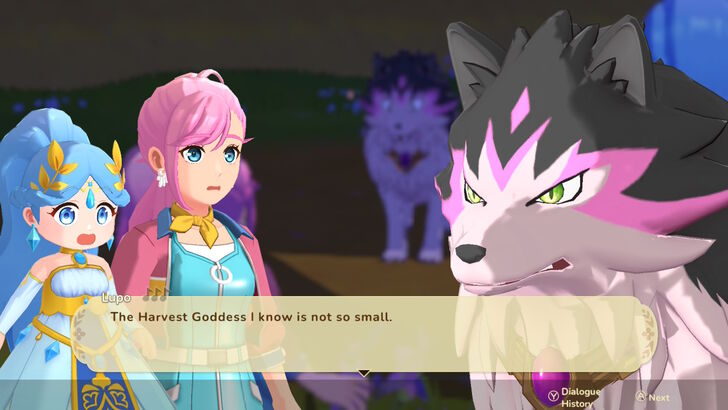
Mechanically, the game ties these threads together through Happilia, a resource gathered from your daily activities that fuels the Goddess’ magic and restores the land. It’s a neat way to tie the gaming loop to the main story. Every day you spend getting to know your neighbors or resolving requests contributes to the recovery of your surroundings. However, the emotional connection thins because the people you are saving feel strangely detached from the labor itself.
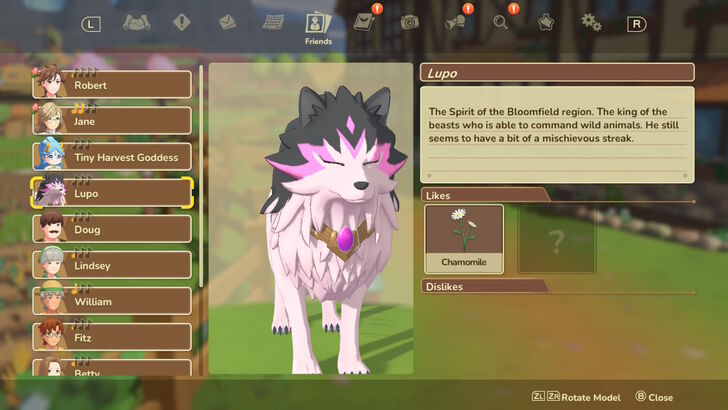
Consider Bloomfield Village. A pack of wolves surrounds the town, which cuts the villagers off from the world outside. The danger is clear, even if the wolves look more like puppies. But the root of the crisis rests with Lupo, the local Guardian Spirit, whose hostility stems from a superficial gag. His introduction could have been a chance to explore the relationship between the village and the creatures that now threaten it, or to give the withered Spirit Tree some history that makes its decline feel tragic. The game has a much simpler explanation in mind, however.
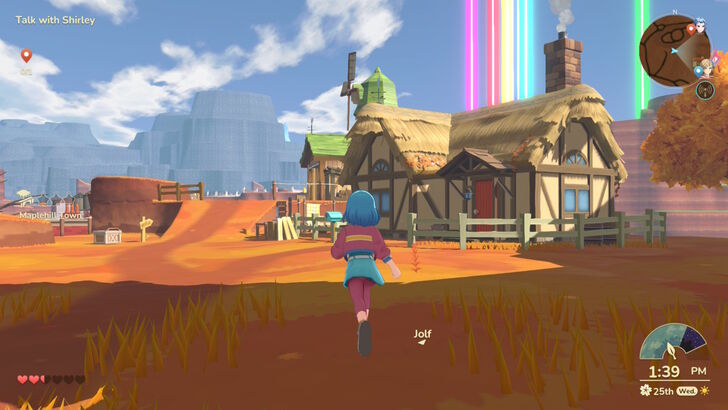
Reaching that resolution is a matter of endurance, too. Early story beats are buried beneath a mountain of errands and tutorials masquerading as plot points. Sure, teaching mechanics is necessary, but the first chapter keeps you on such a tight leash that the story never allows itself to take a breath. Once you solve the wolf situation, the story feels as though it has checked another point off of its list for you to move on. Happilia gives the mundaneity of your everyday tasks a functional purpose, but unfortunately it cannot manufacture emotional resonance where none exists.
The quest journal can be vague about what certain tasks require or where to find the items you need. I didn’t mind this too much, though. Part of the fun of a cozy farming game is wandering off the beaten path and figuring things out at your own pace. Without the pressure to rush toward the next story beat, exploration becomes its own reward.
Some towns fare better than others. Maplehill is probably my favorite of the four in terms of its story, partly because its identity as a cultural center gives it a conflict that is more specific to the people who live there. Its musical scene and the tensions surrounding traditional and newer forms of music offer something more interesting to explore than another town waiting for its Spirit Tree to be restored. Even here, though, the larger structure can make the story feel like a series of tasks you need to finish before the next chapter opens up.
A Lot of Characters Are Flat
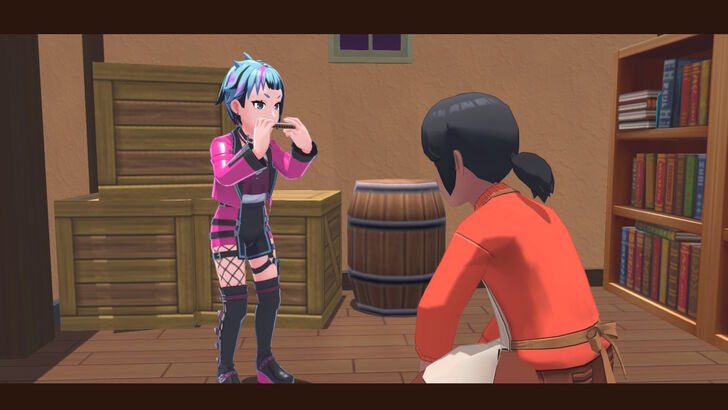
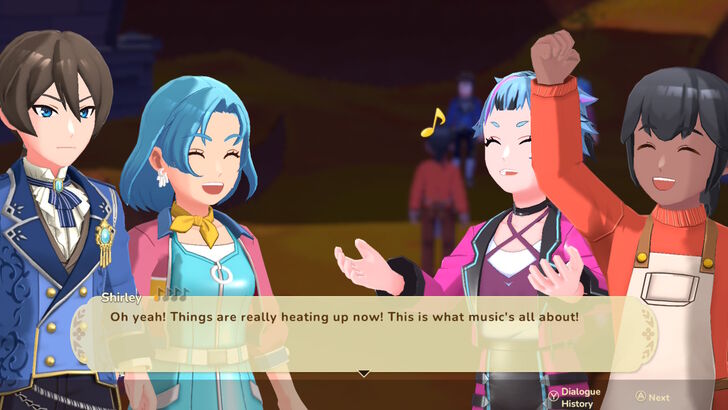
The character side stories fare a little better because they give the people you meet some space to talk about their own lives. Lorelei’s responsibilities in Quarrytop’s mining guild give her a personal stake in the community’s problems; Shirley’s involvement in Maplehill’s punk music scene, meanwhile, makes her stand out in a game filled with characters who have more conventional village roles. Their stories give you something specific to learn about them, and I found those details more interesting than the main plot's repeated cycle of restoring a town and moving on.
The quality varies across the cast, though. Some characters like the abovementioned have identities and personal concerns that make their side stories worth following. Others feel rather bland, even after you’ve spent time getting to know them.
This is felt worse in the spaces between those events. Casual interactions feel mechanical, as though you’re checking in with a character to maintain your relationship level before returning to whatever task is next on the list. The dialogue rarely gives me much reason to linger, and the stiff character animations don’t help sell the idea that I’m talking to people with lives of their own.
Exploring Is Decent, But Why Even Give the Option to Jump?
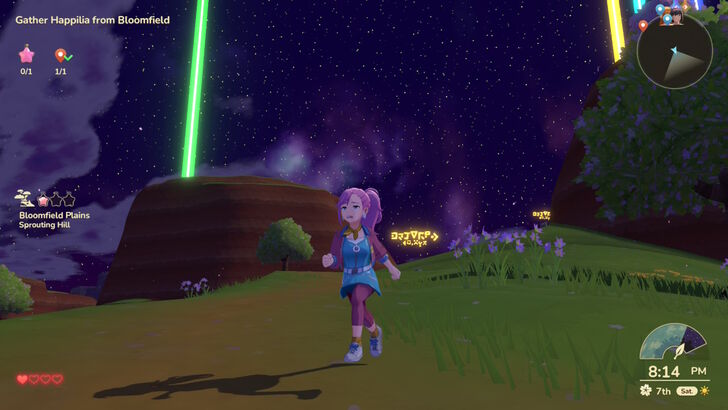
If Echoes of Teradea gets one thing right, it is giving you a reason to look past the boundaries of your own soil. The world unfurls across four regions, each with its own towns and landscapes full of hidden corners that reward a curious eye. Caves wait in the shadow of mountains. Mines run deep into the earth. Sometimes, distant reaches demand that you grow before they yield to your footstep. It echoes the wanderlust of The Winds of Anthos, which built much of its appeal around exploration.
Yet, moving through this world is not always a graceful thing. Slopes that appear inviting suddenly bar your way; paths that look perfectly passable end at ledges you cannot jump across. Getting to a destination can often take more work than it should. It’s a frustrating snag in a game whose wide landscapes so clearly invite you to wander.
But then when you do step into the unknown, the wild usually answers. Hidden Power Wisps unlock upgrades. You can also receive new seeds from Harvest Sprites that somehow got stuck inside weeds. My personal favorite, though, is sneaking up to creatures of the forest waiting for your hand to pet them. Away from the hearth, there is almost always a secret worth finding.
The Simple Poetics of Daily Chores
Back at the farm, life finds a rhythm any farming game fan knows by heart. You turn the earth, sow seed into soil, water the green shoots, and wait. Controls here are very, very new-user-friendly. You’re basically doing the labor streamlined. Instead of constantly switching between tools, you work with contextual actions. If you’re standing in front of untilled soil, a single press of the button uses the hoe. Once the soil is tilled, you plant seeds. Afterwards, you water them. You can’t use tools just because you want to use them.
It makes the act of farming somewhat second fiddle to the exploration, but I somewhat see the benefits of this change, especially for those who have yet to touch a farming game—or any game at all, really.
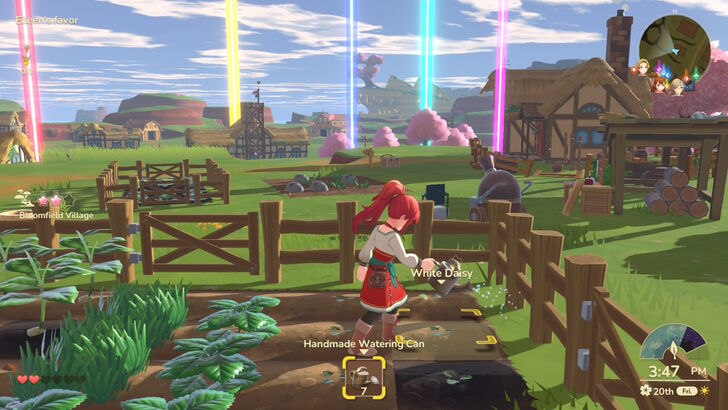
Despite this, you can upgrade your equipment to cover large patches of land, and the game gives you a few reasons to pay attention to the condition of your fields. Soil quality deteriorates when you grow the same crops repeatedly, so you’ll need fertilizer and crop rotation to keep your farm productive. Certain crops can even mutate when grown outside their usual climate. Even with most of the farming streamlined, the game finds plenty of excuses to have you experiment with the seeds you find across Teradea, especially when your farm starts to feel like more than a patch of land for making money.
Regardless, your freedom to shape the place is quite limited. You can decorate your home and develop the farm, but the restrictions on its layout and the lack of deeper home customization make it harder to turn either space into something distinctly yours.
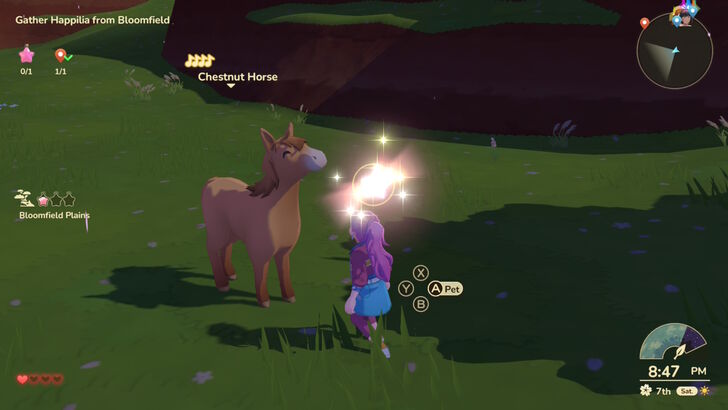
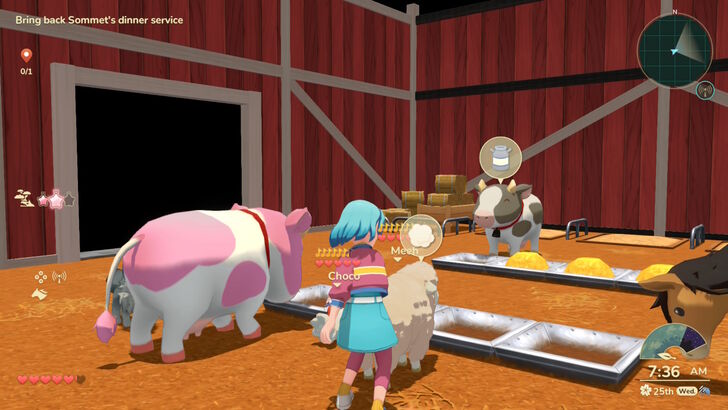
The animals, too, tether you to this rhythm. Barns fill with the hum of livestock that demand daily care. But the wild beyond holds a different kind of life that made me swoon. I especially love discovering polar bears and foxes. You can earn their trust and invite them to walk alongside you. Pets have useful abilities in the wild, and mounts feel necessary due to how far point A stretches to point B in this game. Cockatiels can deliver items back to your farm for free, and hares can reward your growing bond with random items.
Animal collecting, then, has a practical purpose outside of filling the farm with cute faces. To earn the devotion of a wild creature is to feel, for a moment, that the world has grown just a little smaller and a little kinder.
When night falls, the wild reminds you that it is not entirely yours. Predators stalk the high grass, and the game offers no sword to strike them down. All you have is your own alertness and quick feet. To fail here is to be cast back to the safety of the farm without many of your items. Your pets can help deter predators, though, so it’s useful to have a companion along.
Routine as Solace
Still, the hours fill easily between the sowing and the harvest. You can sit by the water with a line, split timber in the woods, cook by the fire, or shape furniture for your home. Better tools carve time out of hard work, and a warm meal grants strength for the trail. On nights when the wilderness pulls at you, a cup of coffee buys a few more precious hours beneath the stars. Yet with so many paths open, the days can crowd around you and ask, what are you truly working towards?
The mundaneity is one reason, yes. It satisfies you for the first couple of hours. But really, forming relationships with the game’s residents is the ultimate goal for most players. All villagers, even the Guardian Spirits, have musical notes next to their names. These point to their level of trust in you. They grow through small gestures: You talk to them, give a gift they love or like, finish their requests, and so on.
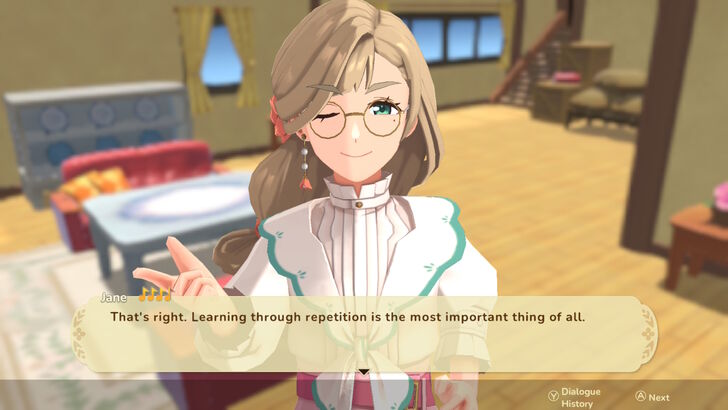
Ten bachelors and bachelorettes walk these towns, their likes and dislikes clearly noted for those who care to look. Regardless of your chosen gender, you can woo and marry any of them.
It is a thoughtful touch, though a filled heart-meter can only measure intimacy; it cannot create it. The true test remains whether the soul behind the words gives you a reason to keep waking up every day in-game. The actual dating system only unlocks after the main story’s credits, though, so you’ll have to wait until then to court someone properly.
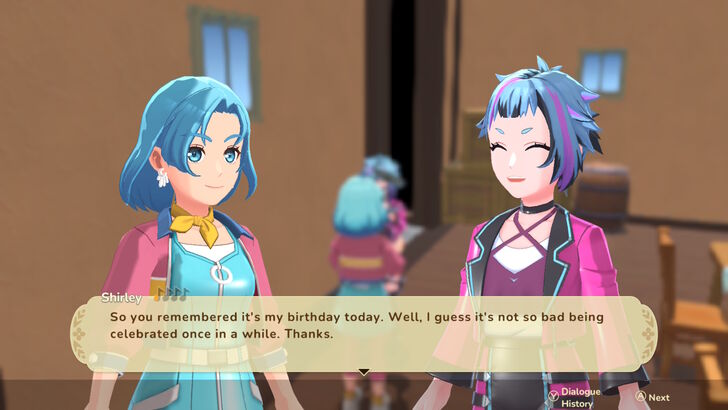
Personally, for my first few hours in the game, due to the limited options in Bloomfield Village, I woke up each day raring to court Jane, the village teacher who loves to read and write and makes a mean cake.
Once options opened up, I went with Shirley. Soon enough, I just went ahead and gave gifts to whoever I fancied to unlock their side stories. I still have my own problems with how surface-level many of them are, but at the very least, they did keep me entertained for a while.
Technical Issues Are Everywhere
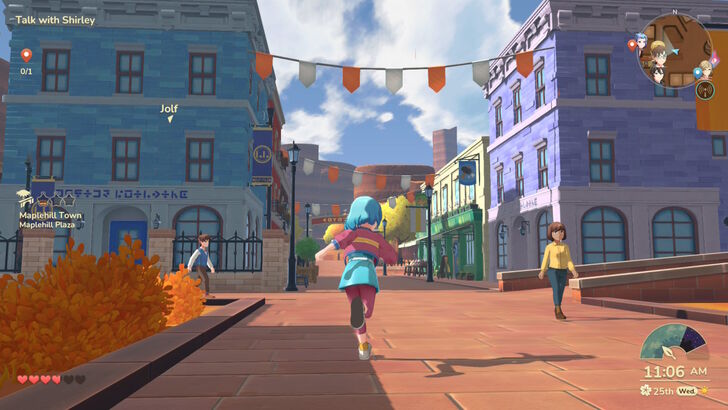
Unfortunately, it’s hard to settle into Teradea when the game’s technical state keeps pulling you out of it. On the original Switch, frequent pop-ins and jagged frame drops spoil the simple pleasure of a stroll around town. The load times only deepen the fatigue. You are constantly stepping through doors—whenever you check in on a neighbor or turn over a quest—and each transition demands you wait for more or less five seconds. Over hundreds of days, those pauses stack up until the experience feels hopelessly fractured.
What makes this worse is that the game apparently struggles even on the much more powerful Switch 2. Other players have reported performance problems on that version, too, which raises some questions about how well the game has been optimized across the board. I can speak to the original Switch version, where the technical state is already difficult to stomach at this price. It brings back uncomfortable memories of Rune Factory 5 at launch on the Switch, a comparison no game in this genre ever wants to invite.
Even with a colorful palette and a step forward from The Winds of Anthos, the game remains fundamentally uninviting to look at. Its world carries the tired aesthetic of two console generations past, far beneath the capabilities of even the Nintendo Switch. Up close, the terrain dissolves into triangular grass patches smeared with rudimentary effects. Much worse, the character models and animations feel hollow and lack the artistic heart needed to make them truly live.
Is Harvest Moon: Echoes of Teradea Worth It?
Not at Full Price; Wait For a Sale
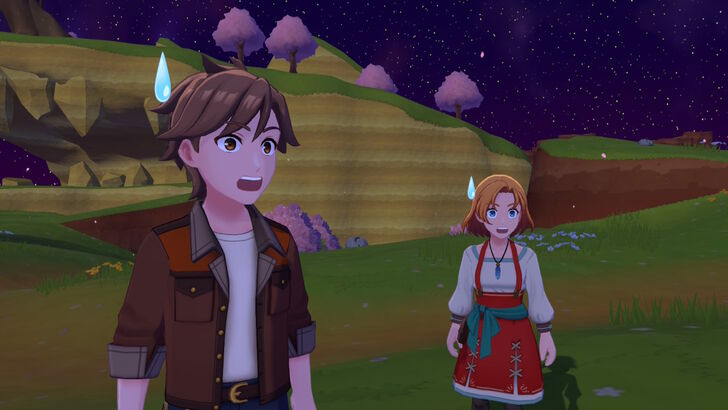
The question comes down to what you are willing to pay for a piece of peace. Echoes of Teradea costs $50 on most platforms, $60 if you are playing on the Switch 2. It feels too much to ask for a cozy game, especially one where the seams begin to fray after only a few hours. Its story can last up to 30 hours, depending on how quickly you barrel through finding the necessary items to progress. Teradea has good intentions and potential; there’s no denying that. You really have to be down on your luck to mess up the gameplay loop of most farming games. However, even with that, there’s a lot more polished games you can buy for $50.
There is a lovely game buried beneath these pastel-colored fields. Wandering its landscapes can bring joy... for a time, and the creatures you meet offer sweet detours from the daily grind. The trouble is that the story rarely gives its towns much life, and the endless errands can make restoring them feel like work for work’s sake. The technical troubles only make that repetition heavier to bear. A cozy game ought to feel like a warm room to step into at the end of a long day. Teradea promises this, but too often it forces you to wrestle with the machine when you should simply be enjoying the stillness.
I would have a far easier time welcoming Echoes of Teradea at a gentler price point. Longtime fans who can look past the rough edges may still find plenty of hours to keep their fields green. For everyone else, I’d wait for a sale.
FAQ
How to Attend Festivals in Towns in Harvest Moon: Echoes of Teradea
Regional festivals (like those in Tidewind, Quarrytop, or Maplehill) remain locked until you complete Chapter 1 of that specific region’s storyline and restore the town’s connection to the Guardian’s Spirits.
Game8 Reviews

















Every book begins with a few simple notes that gradually develop into a complete story. Just as writers use helpful tools to organize their ideas, TikTok users can use a TikTok downloader no watermark free to save videos for offline viewing. Having an easy way to keep useful clips can help users revisit creative ideas, enjoy entertaining content, and collect videos they want to watch again. <a href='https://tktokdown.com/' target='_black' rel='nofollow'>https://tktokdown.com/</a>
Ahaa, its pleasant conversation concerning this piece of writing at this place at this weblog, I have read all that, so now me also commenting here. my web page: <a href="<a href='https://crabcodex.com/index.php/Wie_Oft_Die_Berufsbekleidung_Wechseln_In_Der_Pflege">MEIN-KASACK.de</a>' target='_black' rel='nofollow'>https://crabcodex.com/index.php/Wie_Oft_Die_Berufsbekleidung_Wechseln_In_Der_Pflege">MEIN-KASACK.de</a></a>
I think this game is really fun. It may not excel in any particular area, but overall, it’s a very enjoyable experience. Even though the frame rate can drop in certain areas on both Nintendo Switch 1 and Switch 2, especially on the original Switch, it’s still perfectly playable without any major issues. The stamina management system while traveling adds an extra layer of strategy, and gathering wild resources and cooking are pretty decent, too. Overall, I’d give it an 8.5/10. I just wish the