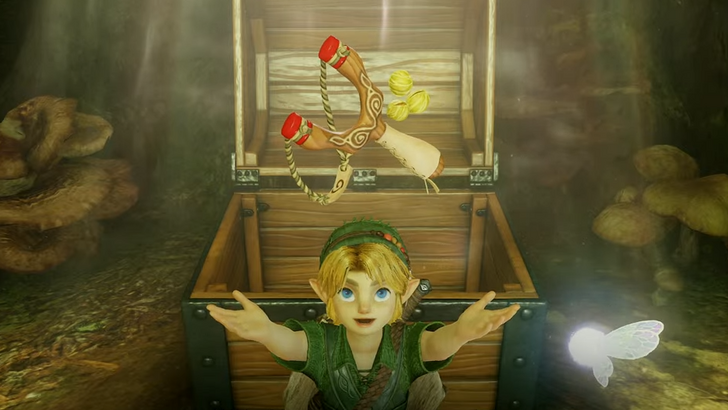
The Legend of Zelda: Ocarina of Time remake officially revealed its November 5, 2026 release date and extended gameplay during The Legend of Zelda 40th Anniversary Direct.
The Legend of Zelda: Ocarina of Time Remake Gets Official Launch Date and Extended Gameplay
Explore Hyrule with Navi on November 5, 2026
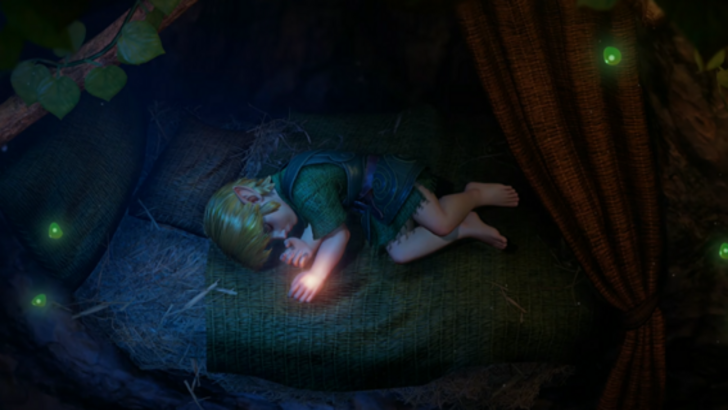
The Legend of Zelda: Ocarina of Time (OoT) remake confirmed its November 5, 2026 release date and revealed an extended look at gameplay on September 8, 2026, during the series’ 40th Anniversary Direct. The remake of the 1998 N64 classic was initially announced during the June 9, 2026, Nintendo Direct, with a cinematic trailer packed with OoT easter eggs and a 2026 release window. Digital and physical pre-orders are now open on the Nintendo online store, priced at $59.99 and $69.99, respectively.
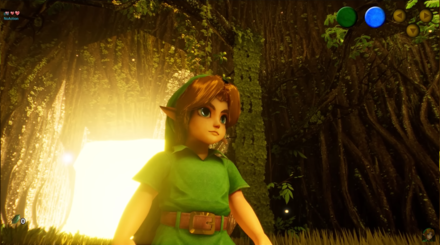
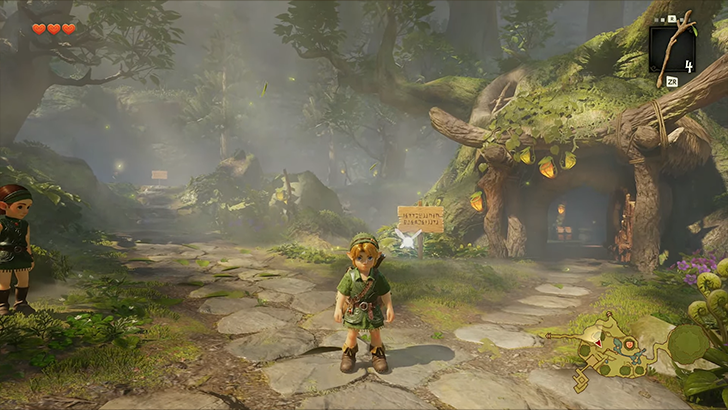
Series Producer Eiji Aonuma headed the presentation, introducing the remake as a "faithful interpretation using modern technologies." The new gameplay footage featured Link traversing Kokiri Forest and various locations in Hyrule alongside his fairy companion Navi, including Hyrule Field and Hyrule Castle Town. It also showcased new features and gameplay improvements, such as a new 3D art style, a rotating camera, jumping at will, improved swimming mechanics, a tapestry that fills in with progression, and more.
Visuals Redone with Realism and Nostalgia in Mind
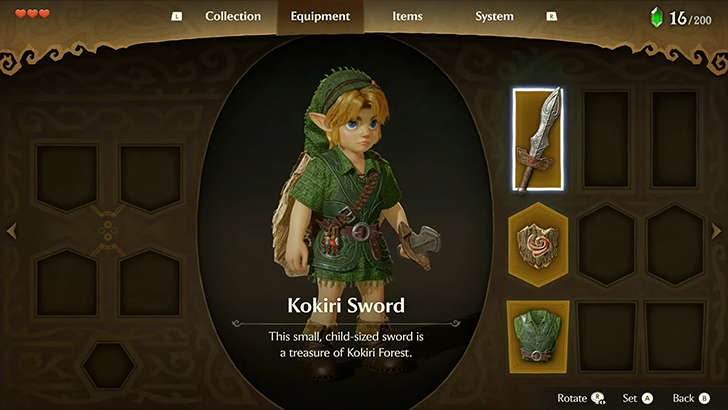
The remake’s art style was conceptualized with both realism and nostalgia in mind, according to Aonuma. Outfits and equipment were specifically intended to emphasize texture and realism while staying faithful to the original game’s beloved aesthetic.
The inventory screen has also been reimagined, featuring a more minimalistic wood-themed display compared to the original’s classic multi-colored rotating cube layout. Additionally, a fully rotating camera will replace the original’s static framing, which was a design limitation of the N64 controller’s singular control stick.
Jump At Will, Swim, Dive, Roll and Sprint
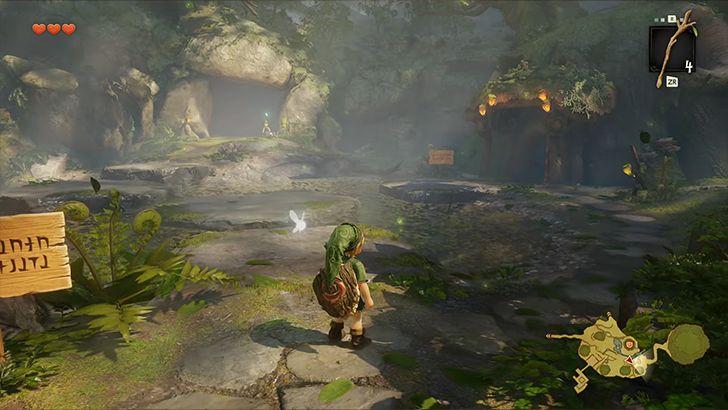
Guided by his fairy companion Navi, Link can explore various locations in Hyrule and the Kokiri Forest. The Direct showed Link walking around Kokiri Forest, entering the Great Deku Tree dungeon (one of many dungeons in Hyrule), running across Hyrule Field, and exploring Hyrule Castle Town.
The remake allows more freedom of movement than the original by giving players the option to jump at will and swim and dive for treasure in any body of water. In the original, players were limited to automatic jumps between ledges, and swimming mechanics were more restricted.
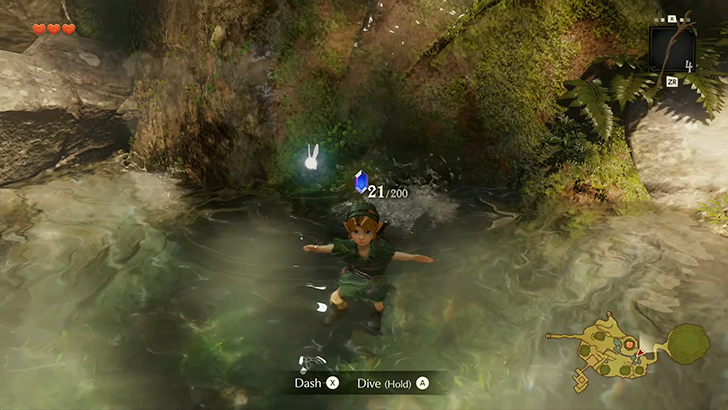
An ode to the time-honored tradition of rolling to move faster from the original game, Link will roll before sprinting in the remake. He can also climb vines, throw items at enemies, and fight foes using the original game’s classic target-locking system. The original layout of the target-lock has even been preserved for nostalgic effect, along with loading screens between locations.
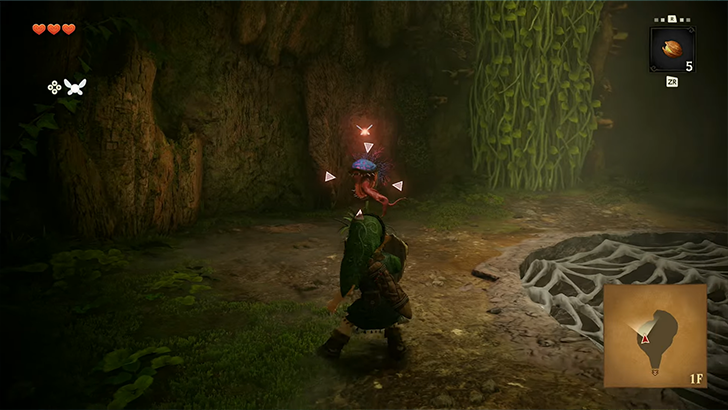
While Aonuma confirmed that OoT offers a different experience from Breath of the Wild’s open-world exploration, the remake notably makes some changes to the original’s map system. For one, Hyrule Castle Town now has a map of its own. Maps also appear to be readily available for dungeons, whereas they had to be obtained from chests before. The presentation did not specifically touch on maps while explaining exploration.
Quest Tracker, Tapestry, Mini Games, and a Playable Ocarina
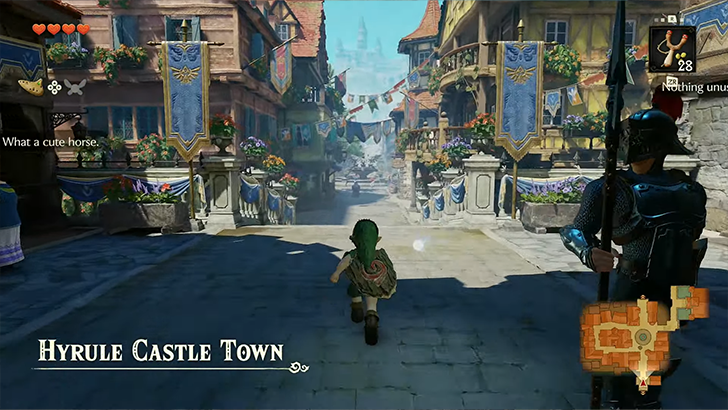
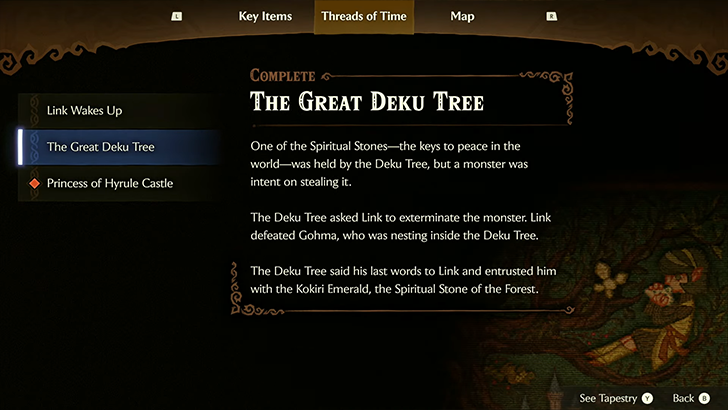
A quest tracker called Threads of Time will be accessible through the menu in the remake, serving as a guide and archive for players. A tapestry will also fill out to chronicle Link’s hero journey. By way of side quests, Hyrule Castle Town offers mini-games and gossip for players to stick their nose into, and areas that were previously only backdrops are now explorable. Aonuma encouraged players to talk to as many NPCs as possible, as "everyone has a different personality." The presentation did not show gameplay of any mini-games.
Notably, time flows differently in the remake. While in town, time will continue to pass, whereas it stopped in the original game. Because events in-game are locked to the time of day, Aonuma showcased the power of the Ocarina of Time to change time by playing Sun’s Song. The Ocarina of Time was also shown to have other capabilities, such as summoning a horse that adult Link can ride with Epona’s Song.
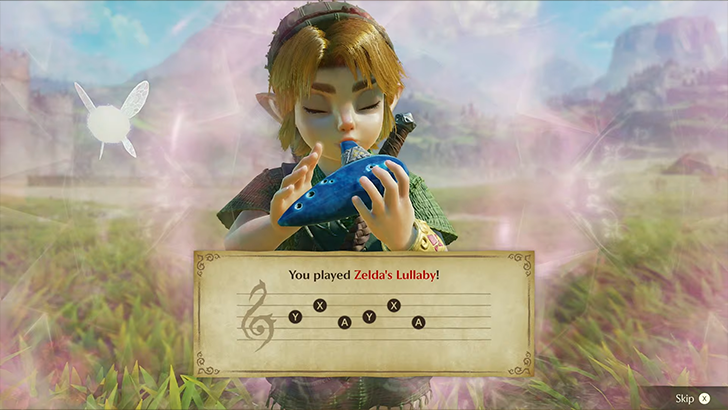
Players can directly play the Ocarina by humming music scores that Link has learned into the Switch 2’s mic. Tying in with Hori’s playable Electric Ocarina of Time, the game also recognizes notes from instruments. The Ocarina is now available for pre-orders through Hori’s official website.
Aonuma concluded the presentation by confirming voice acting for all cutscene NPCs, sharing that the title screen theme will immediately be available on Nintendo Music, and most importantly, announcing the game’s release date.
The Legend of Zelda: Ocarina of Time remake launches exclusively for the Nintendo Switch 2 on November 5, 2026. To stay updated on the latest news about the game, check out our article below!
Sources:
The Legend of Zelda 40th Anniversary Direct 9.8.2026