


| Chronoscript: The Endless End | |||
|---|---|---|---|
| Release Date | Gameplay & Story | Pre-Order & DLC | Review |
Chronoscript: The Endless End is a Metroidvania Platformer that delivers a beautiful audiovisual experience in this demo.
Come for the Art, Stay for the Punishment
Premise That Ends Just as It Starts
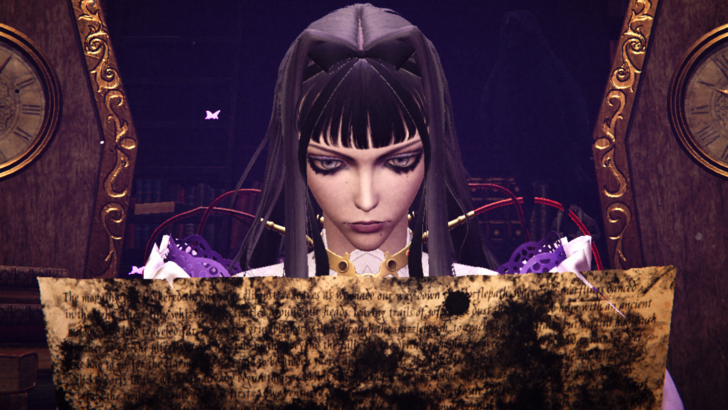
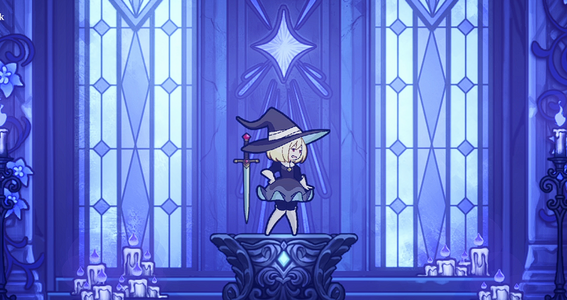
Imagine yourself as a humble editor who has just wrapped up a long-running series, only to receive an invitation from a mysterious new author living in an estate hidden deep within the mountains. Naturally, things go south the moment you arrive. You lose consciousness, wake up inside the pages of her unfinished manuscript, and discover that your gracious host is not only the Mistress of the estate, but also a vampire.
That's also where Chronoscript: The Endless End’s story stops. For all the intrigue surrounding the manor, the manuscript, and the Mistress herself, the demo doesn’t evolve beyond its opening premise. It establishes the mystery, introduces the central figure, then calls it a day. Even its ending feels less like a cliffhanger and more like the opening paragraph of a much longer novel.
By the time I finally come face to face with the Mistress, she delivers what is essentially an apology. Like an author who knows full well they're about to put their favourite original character through absolute misery, she asks for forgiveness for two things: first, that the manuscript isn't finished; and second, for what that manuscript is about to put me through.
It's an intriguing promise… but just a promise nonetheless. The demo gives nothing to speculate on beyond that conversation. No meaningful glimpse into her motives, no hint at why this suffering is necessary, no breadcrumb substantial enough to obsess over while waiting for the full release.
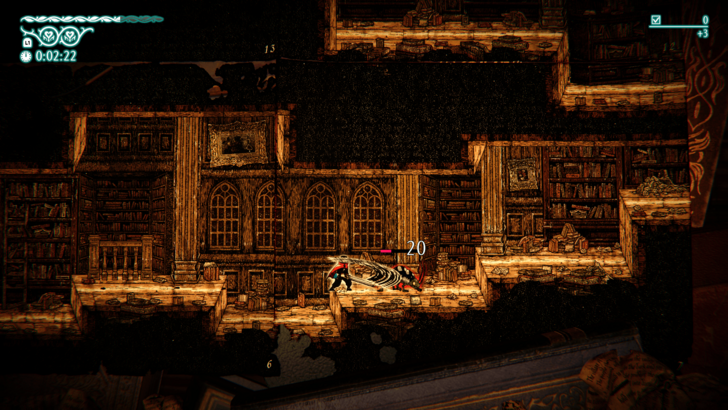
In most cases, I'd find that frustrating because a demo should leave me desperate to see what comes next, not merely aware that something comes next. However, despite leaving me with just a setup, I can't say it completely lost me. While the demo does an excellent job of leading me down a primrose path by refusing to elaborate, it also plants a small seed of curiosity.
The Demo Is Holding On To Its Best Cards
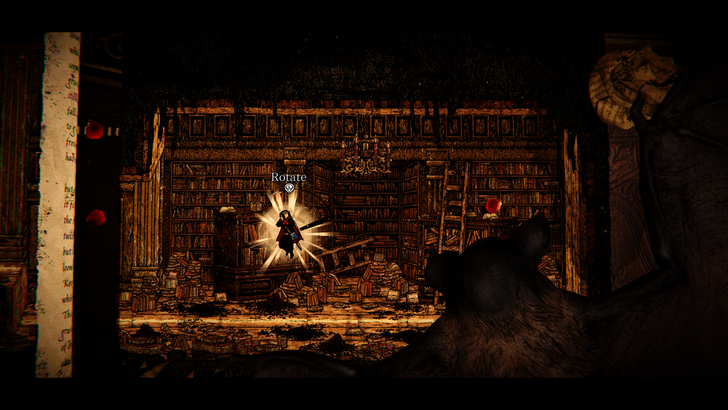
At its core, Chronoscript: The Endless End is a 2D platformer that has you progressing through chapters. There are abilities called "Ink Memories", that, while not yet tackled in the demo, is promised to be a core mechanic of the game. At least, that's what the marketing materials are implying.
The demo, however, keeps those cards firmly tucked away. Instead, it focuses on teaching the fundamentals. You'll learn how to jump, double jump, Ink Dive, and dodge, alongside a simple sword attack. It's a small toolkit, but one that immediately establishes movement as the heart of the experience.
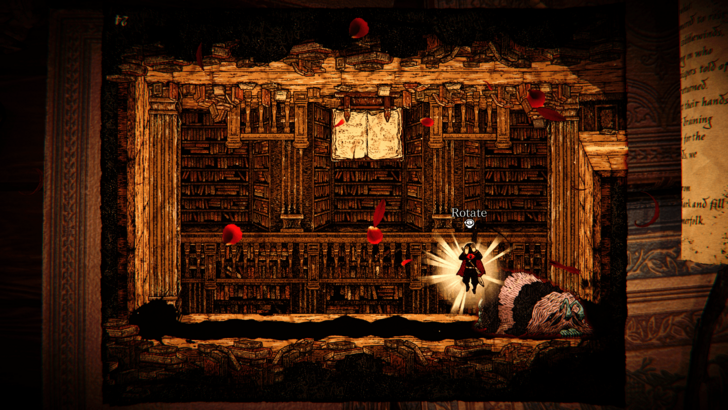
Ink Dive is the mechanic that stood out to me the most. It lets you swim through pools of ink scattered across the manuscript before launching yourself out, allowing you to clear wider gaps and maintain your momentum while exploring. It also doubles as an evasive tool in combat, since getting out of ink lets you jump a greater distance around enemies, instead of relying purely on your standard dodge. Giving one mechanic multiple applications makes traversal feel naturally intertwined with combat.
The dedicated dodge complements this nicely too by granting a brief moment of invulnerability. Rather than simply creating distance, it rewards timing and precision, encouraging me to weave together jumps, Ink Dives, and dodges depending on the situation. Even with only a handful of mechanics available, combat already hints at a satisfying rhythm of movement over standing still and trading blows.
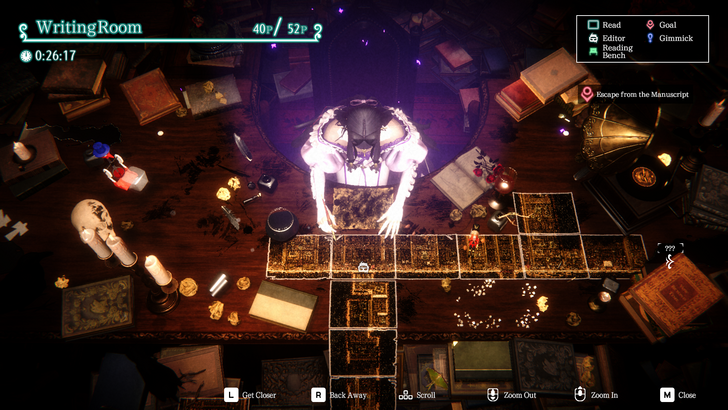
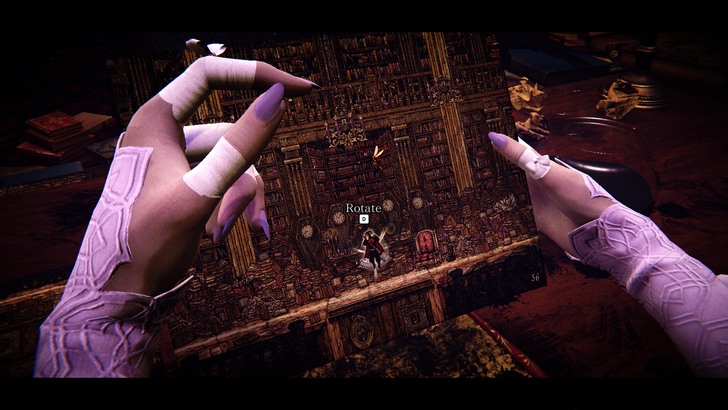
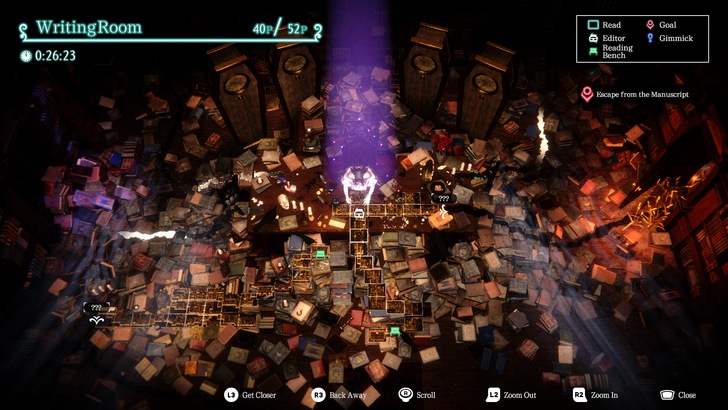
The demo also teases another mechanic called the Bug's Eye View, allowing you to observe the Mistress' entire chamber from a higher perspective. At the moment, its purpose remains deliberately vague. My assumption is that it'll help players identify where the manuscript has expanded and uncover new paths as the story progresses, but the demo doesn't spend enough time demonstrating exactly how this changes exploration.
I understand the desire to preserve the novelty of unlocking new abilities in the full release, but I think the demo is a little too conservative. Still, what is available now is an indication of something bigger, and a good metroidvania-style progression isn't just about moving on to the next level, it's about making movement itself increasingly expressive and rewarding players with new ways to interact with spaces they've already explored.
World That Extends Beyond Its Pages
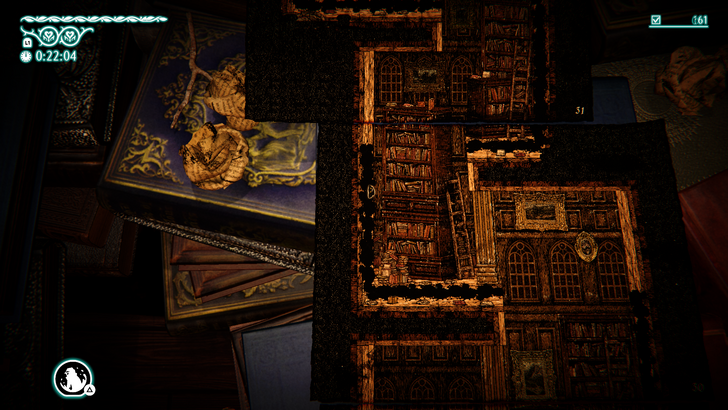
While the story and gameplay remain reserved, the visuals are anything but. Chronoscript: The Endless End is an absolute feast for the eyes.
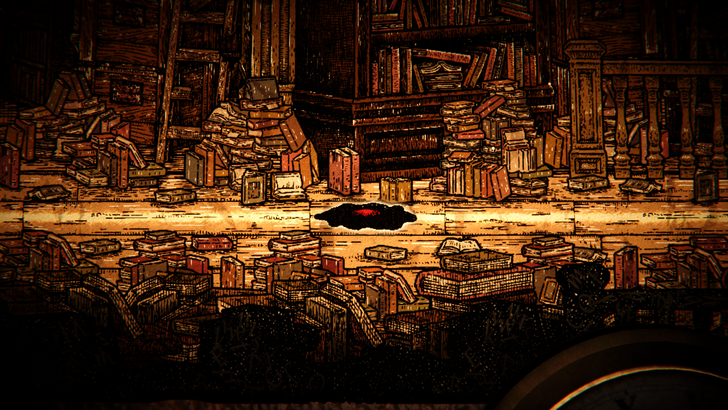
The paper-crafted aesthetic is an ingenious foundation, but what truly sold me wasn't the pages themselves, it was the illusion that those pages are only a tiny fragment of a much larger world. Every "room" unfolds atop sheets of paper, yet your eyes are constantly drawn beyond their borders. You see the wooden desk beneath them, books scattered around the manuscript, and torn or overlapping pages that physically expand and reshape the world as you progress. It's a clever visual trick that help reinforce that you’re in a manuscript, exploring a story that's literally being written around you.
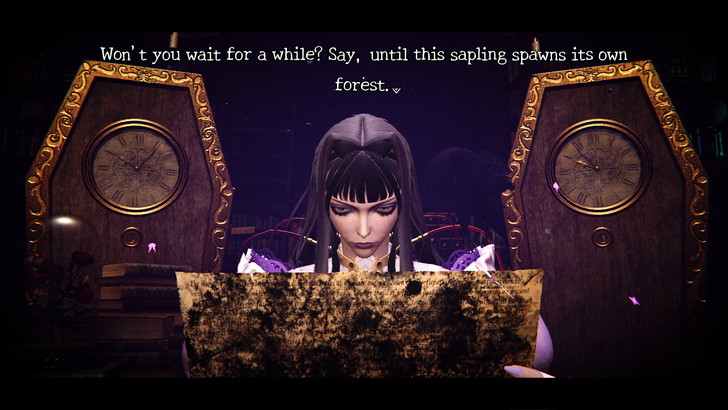
One detail I found myself noticing is the importance of clocks. Given the title Chronoscript, where "chrono" derives from the Greek word for time, it immediately made me wonder whether time itself will become a central theme or mechanic later on. The demo never confirms that suspicion, but sprinkling it within the environment does plant the idea.
An Enchanting Soundtrack
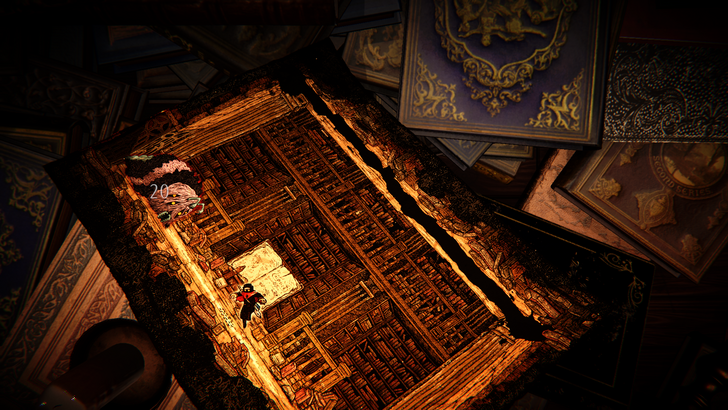
The presentation wouldn't be nearly as effective without an equally compelling soundtrack, and thankfully, Chronoscript: The Endless End delivers on that front too. The main menu OST complements the world so naturally that it becomes difficult to separate the music from the experience itself. It's whimsical, melancholic, and fantastical all at once. In fact, even if I never booted the game up again, this is the sort of OST I'd happily maladaptive daydream to for hours.
What I especially appreciated was how the music reinforces the game's identity rather than simply accompanying it. Woven into the track is the subtle ticking of clocks, a small detail that, again, reminds you of the importance of time.
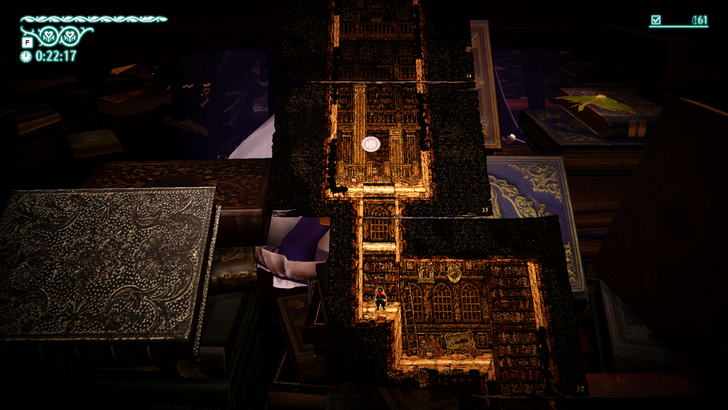
Whether it's foreshadowing future story developments or simply reinforcing the themes behind Chronoscript, that recurring motif helps tie the audio back to the game's visual identity. Good game music creates atmosphere, but great game music reinforces the themes without you consciously noticing.
Hint Of A Rewarding Progression System
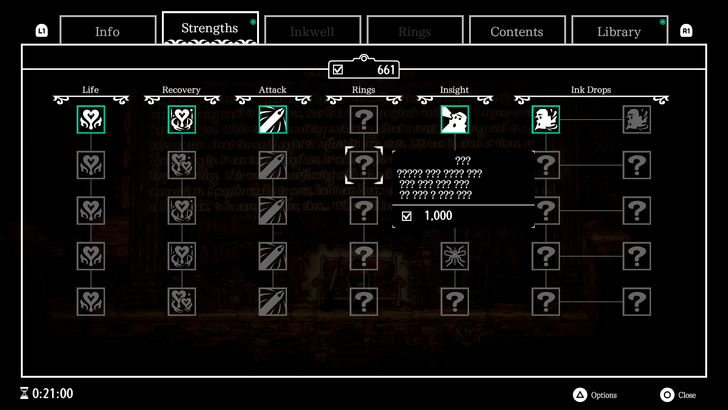
Now let's talk about the skill tree which takes a much more straightforward approach. Instead of sprawling branches with dozens of paths, progression follows a linear upgrade track divided into categories such as Life, Recovery, Attack, Rings, Insight, and Ink Drops.
Life, Recovery, and Attack are exactly what you'd expect, offering direct improvements to your health and damage dealt. Insight is the more interesting of the bunch, as it expands your Bug's Eye View, allowing you to observe a larger portion of the Mistress' chamber. Even though the demo doesn't fully demonstrate why this matters, I can already see its potential as an exploration tool once the manuscript begins opening up and hiding more secrets.
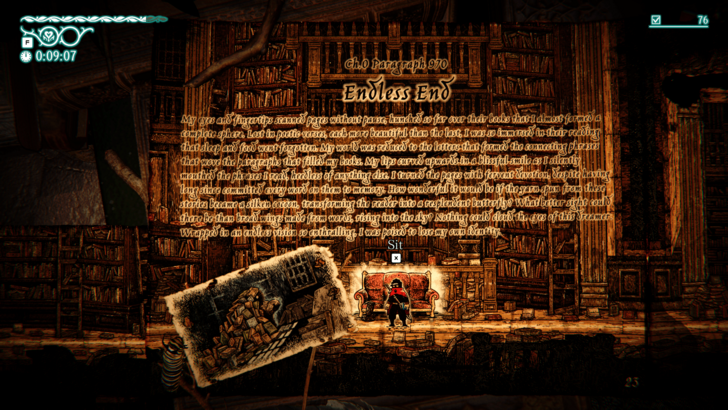
The remaining upgrade paths—Rings and Ink Drops—are still largely mysteries. The demo introduces them without fully explaining what role they'll play, so it's difficult to judge how impactful they'll ultimately be.
Even so, I like the philosophy behind the progression system so far. Rather than overwhelming me with countless upgrades from the outset, Chronoscript appears to separate meaningful abilities from passive enhancements.
Combat Is a Carefully Choreographed Dance
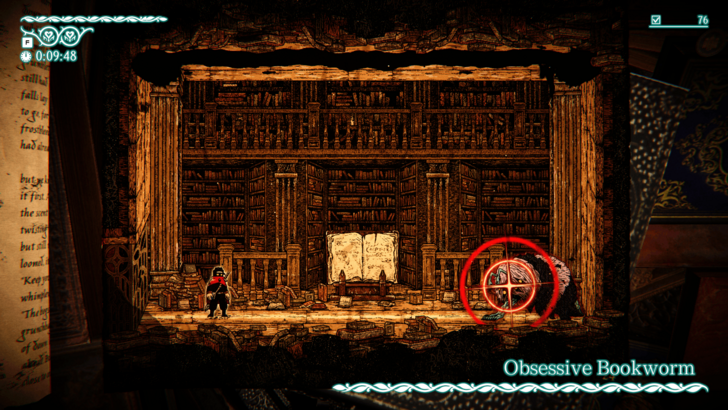
Combat was probably the biggest surprise for me. Despite being a 2D platformer, Chronoscript: The Endless End carries a design philosophy that feels heavily inspired by Soulslikes. Victory isn't about overwhelming enemies with damage (trust me, I tried). It's about observing, learning, and eventually mastering their attack patterns.
That philosophy becomes even more apparent because of the game's 2D perspective. Unlike a 3D action game where you can often sidestep an attack or dodge with plenty of room, every inch of movement here matters. Being even a centimetre out of position can mean walking directly into an incoming damage. As a result, fights begin to resemble a carefully choreographed dance where every jump, dodge, and swing has to happen at exactly the right moment.
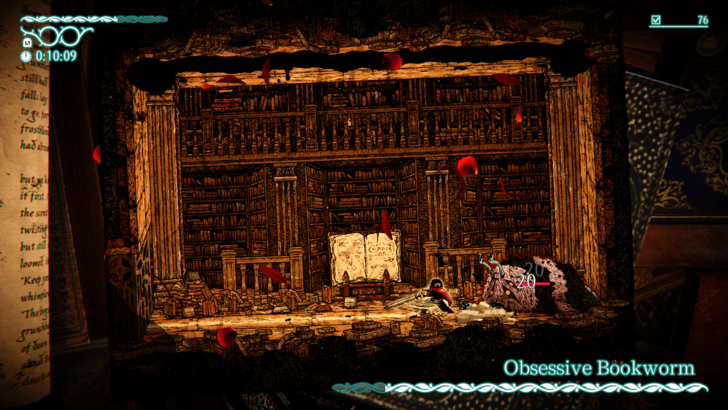
It's also not enough to simply memorize what the enemy is doing. The environment itself constantly demands your attention through hazards that are just as capable of punishing careless play. Instead of focusing on a single threat, you're forced to keep track of multiple moving pieces at once. That creates encounters that can't simply be brute-forced through raw aggression. Success comes from maintaining situational awareness, reading the battlefield, and executing your movements with intention.
Even your own attacks contribute to that rhythm. The sword has a deliberate pace to it, preventing you from mindlessly button mashing. Every swing is a commitment, meaning you have to think not only about when the enemy is open, but also whether you have enough time to get away before the next attack begins. Swing too greedily, and you'll often find yourself caught mid-animation as the enemy starts another attack.
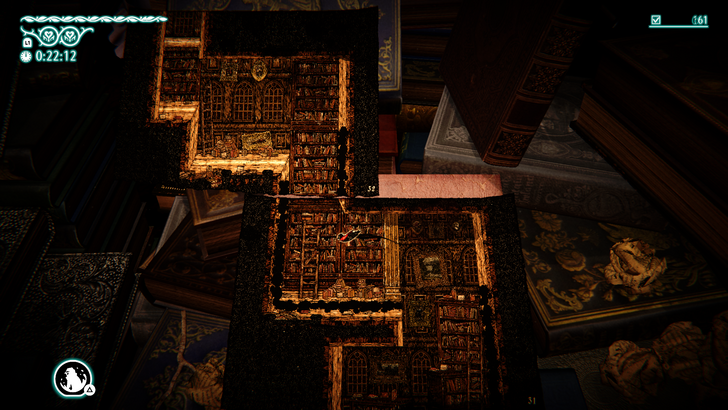
For the demo, learning the chapter's main boss and eventually defeating it took me around thirty minutes, which felt like enough time to understand its mechanics without overstaying its welcome. The optional Boss Challenge, however, is an entirely different beast.
Brutal Boss Challenge Showcases Potential, But Not Necessarily Fairness
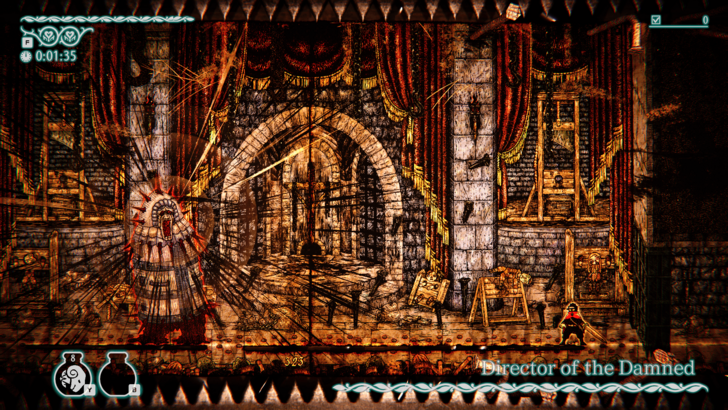
The optional Boss Challenge is, for lack of a better word, exactly what it advertises: challenging. Everything the demo teaches you leading up to it suddenly comes together. You're expected to recognize attack patterns, account for environmental hazards, carefully time your dodges, and weave in your attacks whenever a safe opening presents itself. On paper, it's an excellent culmination of the mechanics the game introduces.
In practice, however, I found it leaned a little too far into frustration. This is, again, also where the demo suddenly hands you an Ink Memory without any explanation of how you acquired it or how this ability fits into the broader progression system. Mechanically, it's satisfying to use, but it isn’t without its own set of frustrations.
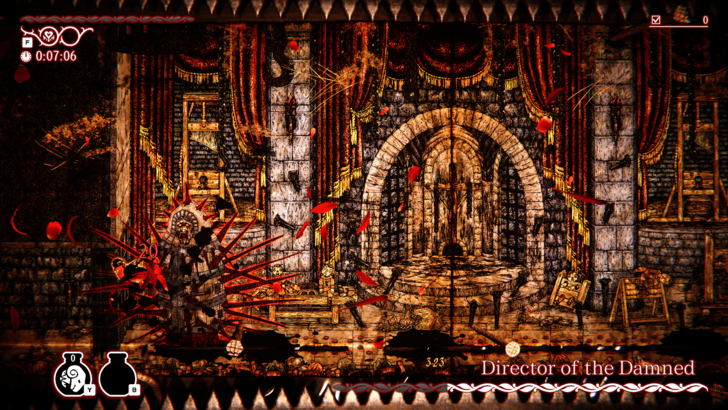
See, the Ink Memory is limited to a fixed number of charges, in this case the available memory had eight charges. The demo never explains whether those charges can be replenished during combat. I certainly couldn't find a way to recharge them, which meant every use was incredibly precious. That immediately turns the ability into a resource management exercise rather than the centrepiece of your strategy.
The stats only reinforce that feeling. My character had roughly 100 HP, while the boss' health pool was enormous by comparison. Even if every Ink Memory landed successfully, dealing around 70 damage each, landing all eight Ink Memory charges only shaved off roughly half of the boss' total health. Inevitably, the remainder had to be earned through sword attacks.
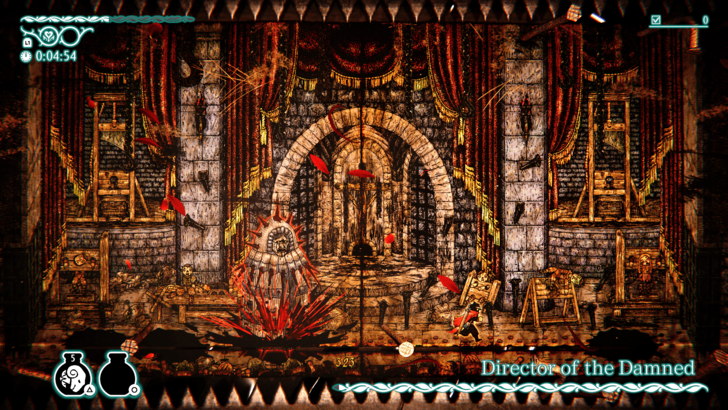
That's where the encounter began to lose me. The boss leaves such incredibly brief vulnerability windows that closing the distance and landing a melee hit often meant accepting damage in return. When your safest option is to stay away, but your only reliable source of damage requires standing right beside the boss, the encounter creates frustration.
Difficulty itself isn't the issue. In fact, I enjoy games that demand pattern recognition and precise execution. But a challenge feels most satisfying when mastery consistently leads to success. Here, even after understanding the fight, the lack of safe opportunities to capitalise on that knowledge made victory feel more like persistence than improvement.
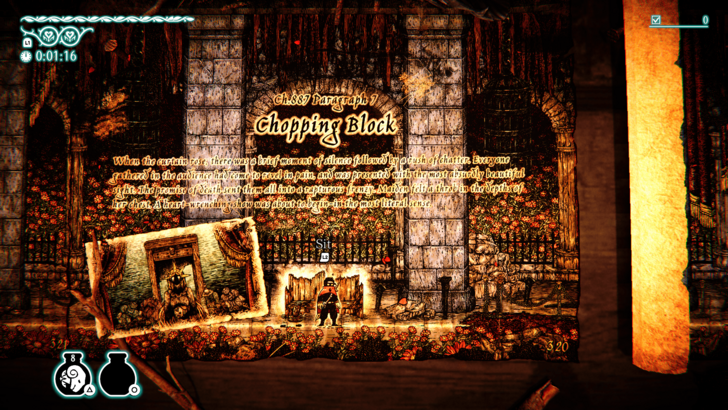
I also think this is where the expectations of a demo come into play. Many demos intentionally let players feel slightly overpowered by giving them access to exciting abilities or a generous toolkit. It's a chance to experience the fantasy of what your character will eventually become. Chronoscript takes the opposite approach, presenting a brutally demanding encounter while withholding much of its progression system.
That approach could ultimately go either way. For some players, the challenge will be an exciting glimpse of the skill ceiling awaiting them. For others, it may leave the impression that the game is more punishing than empowering. Since the full release will presumably provide a much broader arsenal of Ink Memories and upgrades, it's difficult to know which side this encounter truly represents. As a standalone demo, though, I think the Boss Challenge does a better job of demonstrating the game's difficulty than it does selling the full potential of its combat.
Beautiful Chapter Worth Keeping An Eye On
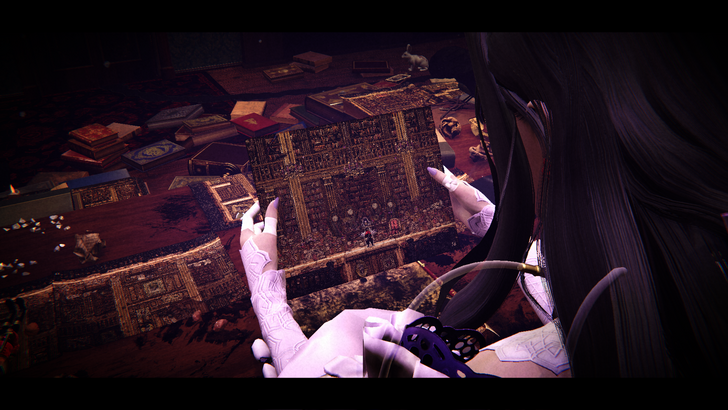
Still, Chronoscript: The Endless End leaves me optimistic. While its story is little less than a prologue and its gameplay deliberately withholds many of the systems that seem destined to define the full experience, what the demo does reveal is enough to show a remarkably strong foundation.
Its greatest strength is unquestionably its presentation. Between the handcrafted paper aesthetic, the gothic vampire atmosphere, the recurring clock motifs, and a soundtrack that effortlessly ties everything together, Chronoscript feels like an interactive storybook brought to life.
There are question marks surrounding the progression systems, the narrative, and how Ink Memories will ultimately shape the experience, but those are questions that stem more from the demo's restraint than from a lack of potential. If the full game successfully builds upon the foundations established here, I can easily see Chronoscript: The Endless End becoming something special.
Game8 Reviews

You may also like...


_GameName Product Information
 |
|
| Title | CHRONOSCRIPT: THE ENDLESS END |
|---|---|
| Release Date | 2026 |
| Developer | DeskWorks |
| Publisher | Shueisha Games |
| Supported Platforms | PC |
| Genre | Action, Adventure, Platformer, Metroidvania |
| Number of Players | 1 |
| ESRB Rating | TBA |
| Official Website | Chronoscript: The Endless End Official Website |