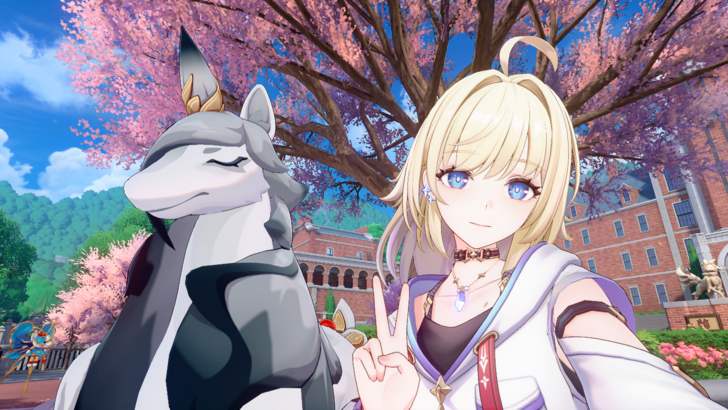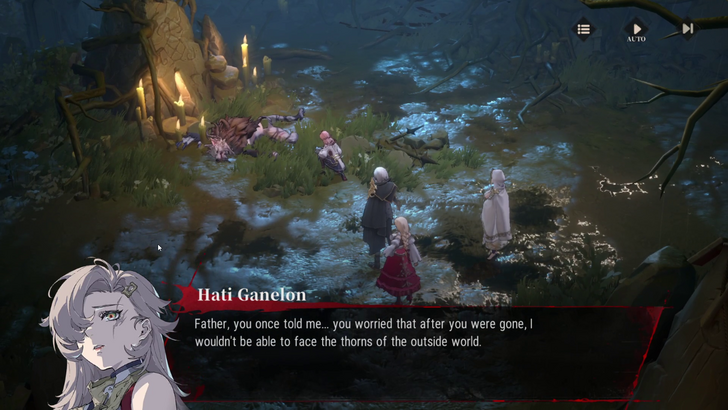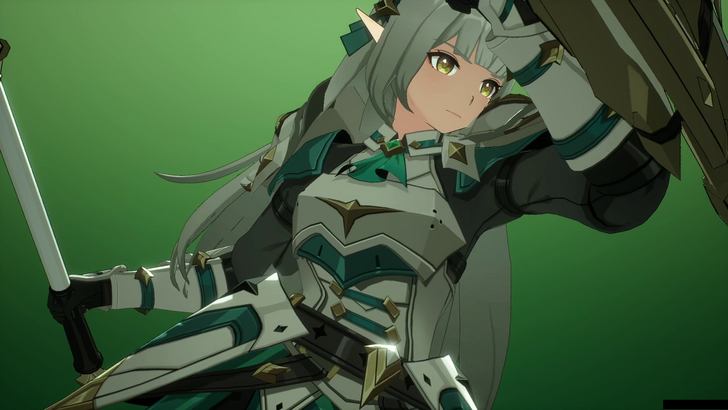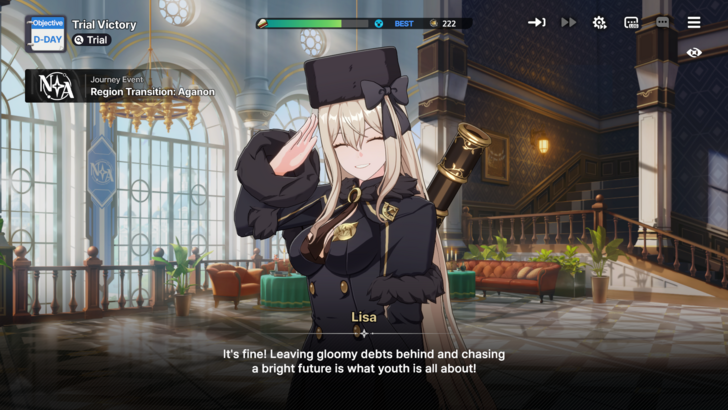



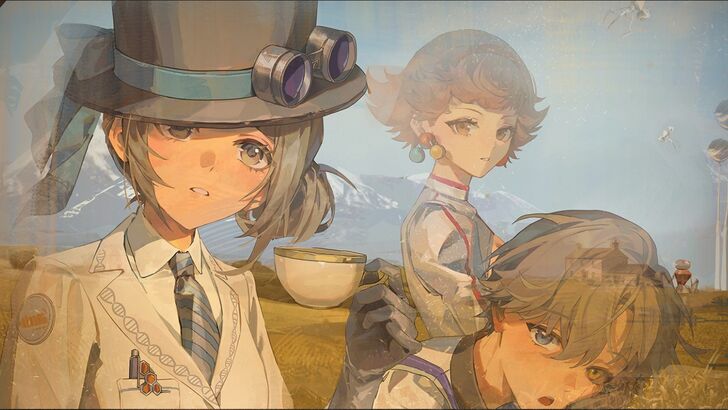
Reverse: 1999 is collaborating with the 2023 retro-futuristic shooter, Atomic Heart. Read our story review to see what it did well, what it didn't do well, and if its story is something to be remembered.
Overview
What is Reverse: 1999?
Reverse: 1999 is a free-to-play turn-based RPG from Bluepoch for PC and mobile devices. The game follows Vertin, a Timekeeper who can survive an event known as the Storm, a phenomenon that causes time to move backward and eras to disappear. Traveling through different periods of the 20th century, Vertin investigates the truth behind the Storm while meeting Arcanists—individuals with superhuman abilities who become part of her journey.
Combat in Reverse: 1999 is built around a card-based system where players create teams of Arcanists, combine their abilities, and plan their moves around each character’s strengths. Outside of battles, players progress through the story, upgrade their characters, and collect new Arcanists through the game’s gacha system. The game also receives regular events that introduce new stories, characters, and settings inspired by different points in history.
| Digital Storefronts | |||||
|---|---|---|---|---|---|
 App Store App Store |
 Google Play Google Play |
||||
 Dedicated Client Dedicated Client |
 Steam Steam |
||||
| Free-to-Play | |||||
Reverse: 1999 Story Review (Atomic Heart Collab): Vertin Fits Right Into Facility 3826
"Welcome, Comrade!"
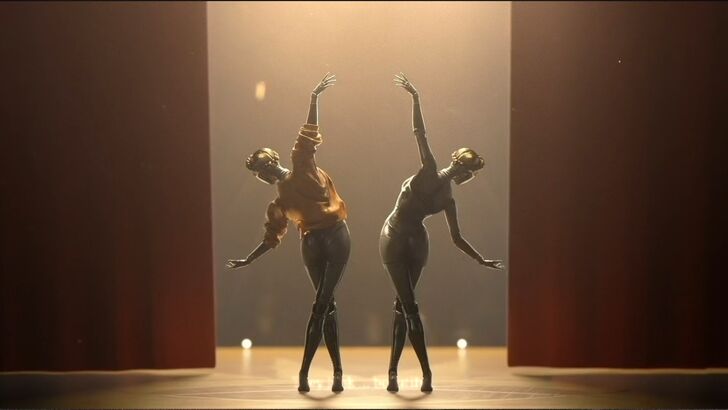
Reverse: 1999 has one of the strongest stories I’ve experienced in a live-service game. Behind its time-travel premise is a world where history twists in myriad ways, where the Storm sweeps entire eras out of existence, and where Vertin travels across the remnants of time searching for people who can survive it. Of course, there’s more to it than that one sentence. Its main chapters are complicated. I even had to pull out a pen and paper and turn to Google to unpack all the literary and historical details.
That complexity naturally changes whenever Reverse: 1999 crosses over with another series. Understandable. A collaboration story doesn't and shouldn’t move the main plot forward, nor should it ask players to understand every mystery surrounding the Storm. It should be able to stand on its own while finding common ground between two very different worlds. Last year's Assassin's Creed crossover did exactly that with Ezio Auditore and Kassandra. Atomic Heart follows the same idea and drops Vertin into an alternate Soviet Union built on robots and a promise of a better future.
Despite a few issues I’ll get into later, I liked it. After finishing the event, I closed my phone wanting to see the game continue bringing worlds like these together, especially since they found a nifty excuse in-game to explain these crossovers.
WARNING: HEAVY SPOILERS FOR THE ATOMIC HEART COLLABORATION BELOW
It’s a Tragedy About Looking Forward and Leaving Behind the Past

This collaboration once again makes use of the "Stage in the Rain," also known as the Huygens-Fresnel Interferometer, a device developed by X to explain the shenanigans that happened in the Assassin’s Creed crossover. Unlike the much scarier Storm Vertin deals with in the main story, this lets them observe and interact with another world’s history without tearing apart their own.
This time, the Interferometer drops them into Atomic Heart's version of the Soviet Union. They are mesmerized by what they see. Everything looks perfect. It’s a world that champions "science, rationality, and order." Maglev trains glide across endless fields; robots tend to farms instead of people. Everything runs with efficiency.
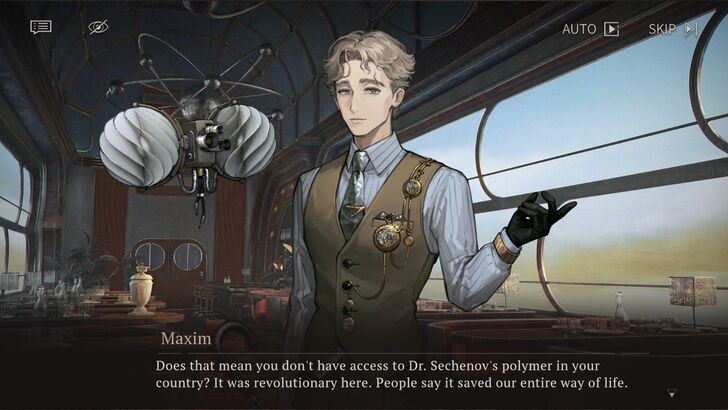
On the train, they meet Maxim, a journalist who explains that this new society was only made possible because of Dr. Dmitry Sechenov’s inventions. Polymer is essentially the foundation of Atomic Heart's world. It's a programmable liquid material created by Sechenov that essentially became the backbone of nearly every technological advancement. In this world’s history, it was also the key to creating Redemption, a vaccine that stopped the spread of the Brown Plague, a pandemic that killed millions across the Soviet Union.
With so much of the country's population gone, robots were developed to fill the labor shortage and eventually became integrated into nearly every aspect of society. These machines are connected through a neural network called Kollektiv, which allows them to coordinate with one another.
The next step in that vision is Kollektiv 2.0, which introduces THOUGHT Devices, implants that allow humans to control robots directly with their minds.
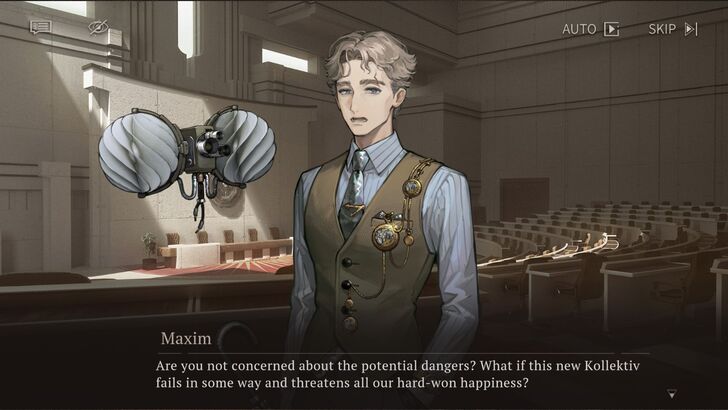
There’s admittedly a lot to take in during the first few chapters, but I didn’t really mind it. Reverse: 1999 has always liked teaching players about the time period they’re visiting before throwing them into the conflict, and this event follows that same structure. The game weaves its Soviet lore right into the background, so by the time everything goes to hell, you have a good idea of what's being destroyed. For now, everyone seems to love living in this utopia.
That admiration doesn’t go unquestioned, though. During Sechenov’s presentation, Maxim is the only person willing to publicly ask whether Kollektiv 2.0 is really safe. If the entire population is expected to connect their minds to a single network, what happens if something goes wrong? Sechenov dismisses the concern, insisting the THOUGHT devices have been thoroughly tested, but the question hangs over the rest of the story.
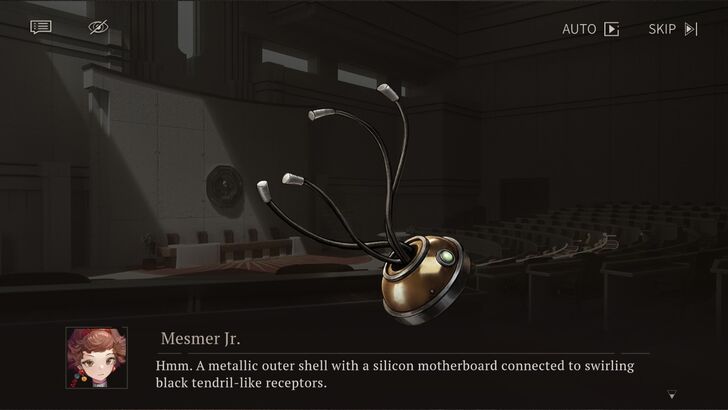
Even as everyone paints this picture of a technological utopia, little things already feel off. Mesmer questions whether placing so much trust in Kollektiv 2.0 is really a good idea, while X, being X, immediately injects himself with the Redemption vaccine just to see whether he can interface with a THOUGHT Device. I don't think anyone familiar with him would be surprised. He's not as wild as Medicine Pocket, but he’s the kind of person who'd risk himself if it meant satisfying his curiosity, while Mesmer spends the entire event trying to stop him from doing exactly that.
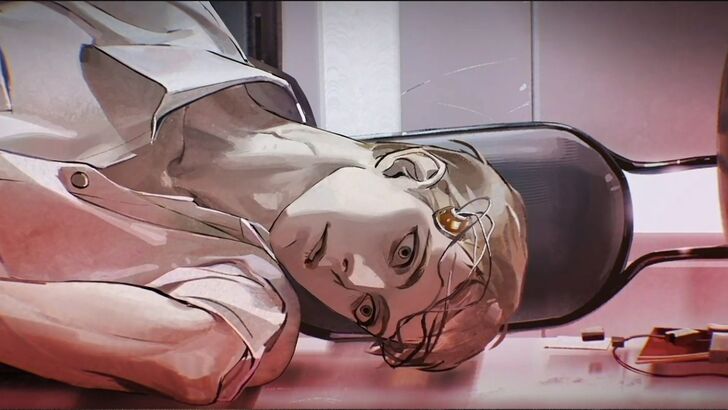
Things go wrong quickly. What should have been Sechenov’s grand presentation for the unveiling of his revolutionary project turns into a disaster as robots suddenly attack the exhibition hall and scientists who wore the THOUGHT Devices begin losing control of themselves.
One of the first people Vertin's group tries to save is already dead by the time they reach him. Or at least that's what they think. His THOUGHT Device keeps transmitting what remains of his brain activity, letting him speak long after he has become a corpse. It’s not as horrific as it looked, thanks in large part to Reverse: 1999’s art style, but it haunted Mesmer enough to wish they had at least learned his name before his brain waves fully gave out.
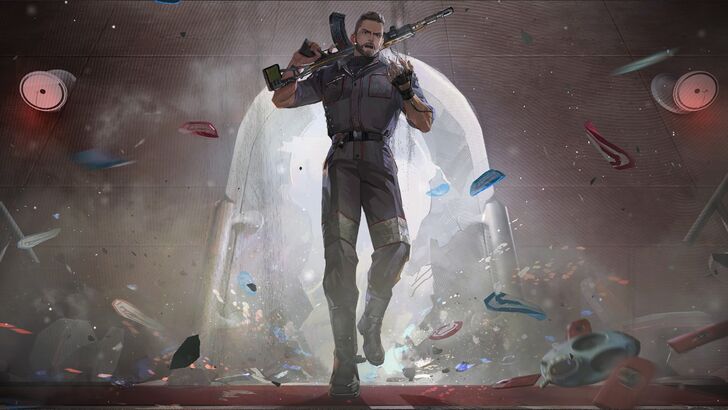
Soon after, the event finally introduces Major Sergey Nechaev, better known as P-3, the protagonist of Atomic Heart, alongside the AI in his hand, CHAR-les. I liked how their first meeting immediately turned into a misunderstanding. From his perspective, three scientists from abroad with no immigration records suddenly appearing during what looks like a terrorist attack is suspicious enough to justify chasing them down.
Vertin and the others aren't exactly innocent-looking either, especially after using arcane abilities in a world that isn't supposed to have them. It is a much more natural way to bring the two casts together than having everyone immediately just trust each other.
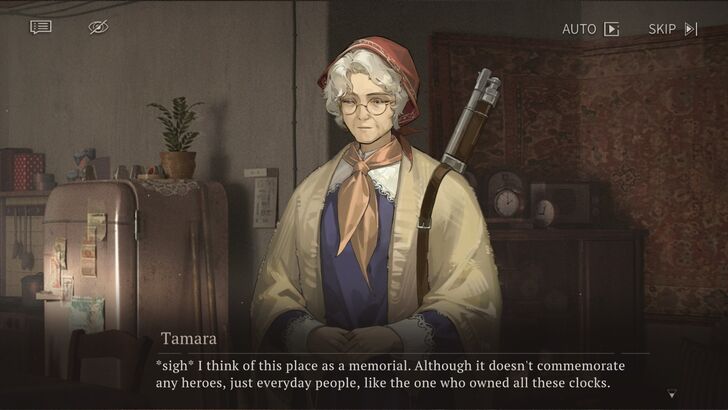
The story slows down once Vertin, X, and Mesmer find shelter inside Tamara’s apartment, and I think that’s where the collaboration started winning me over. Up until this point, Atomic Heart’s world is mostly explained through inventions, robots, and the scientific breakthroughs that people keep gloating about. Tamara instead reminds everyone what those inventions were trying to save before this.
She keeps the belongings of families who died during the Brown Plague exactly where they left them, almost like preserving a moment history moved on from. An old alarm clock still wishes a little girl a happy birthday every time it rings, even though she never lived long enough to hear it. Parents never came home. Entire families disappeared. Reverse: 1999 usually tells history through ordinary people instead of famous figures, so this fit right in.
As they rummage through the remnants of the past, they discover that Maxim was the little boy whose memories still fill Tamara’s apartment. One clue leads to another, and the attack on the exhibition hall all points back to him. The only thing left was figuring out why.
Maxim is Easy to Empathize With
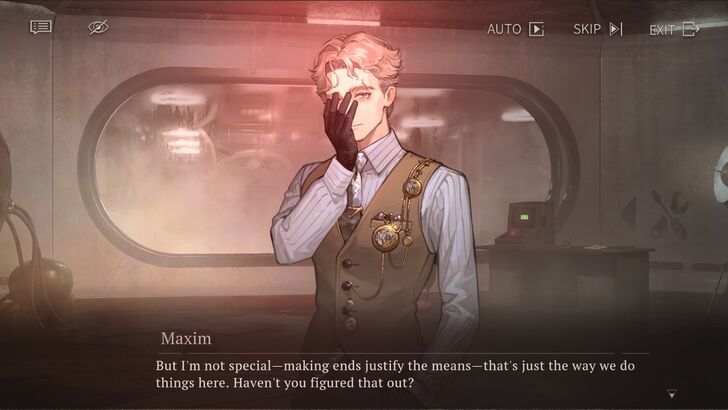
Maxim is a good antagonist. I can excuse how quickly his change in demeanor came about mostly because of how well his original story fit both the themes of Reverse: 1999 and the world of Atomic Heart. Up until that point, I thought he was just there to explain Atomic Heart’s world to players who hadn’t played the game. How naive of me.
The story really picks up after that revelation. What I found interesting was that Maxim never came across as someone who hated science or technological progress. If anything, he admired the world his parents helped create. His anger was directed at what came after.
Throughout the events, Sechenov is celebrated as the man who saved the Soviet Union from the Brown Plague. His inventions are why people looked toward a future that seemed brighter than yesterday.
Looking at it from Maxim’s perspective, though, that future had forgotten the people who made it possible. His parents gave their lives treating patients during the plague and making the robots that aid mankind. Countless others did the same, yet history remembered only one name.
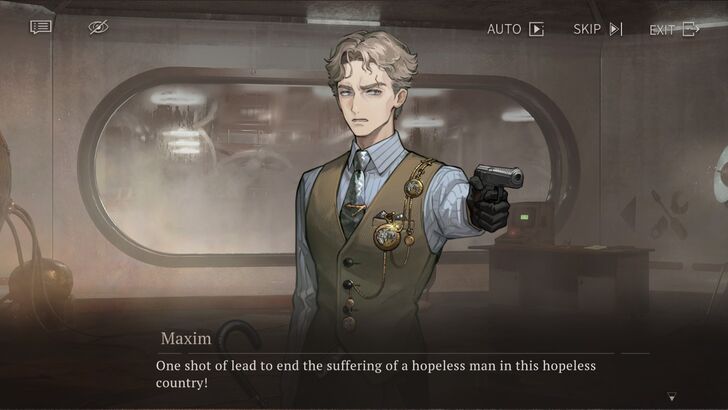
I thought that was a much stronger motivation than simply wanting revenge against Sechenov. The event never argues that Sechenov didn't deserve recognition for his achievements. Polymer really did save lives, and the Soviet Union only reached this point because of the breakthroughs he pioneered.
At the same time, though, I wouldn’t say Maxim is entirely wrong either. History has a habit of condensing the efforts of thousands of people into a handful of names. Doctors, engineers, factory workers, and ordinary families become statistics while inventors and political figures become the faces everyone remembers.
It’s a much more grounded conflict, one that fits naturally with Reverse: 1999’s own fascination with history and the fragility of memory.
One Contrivance, One Great Payoff
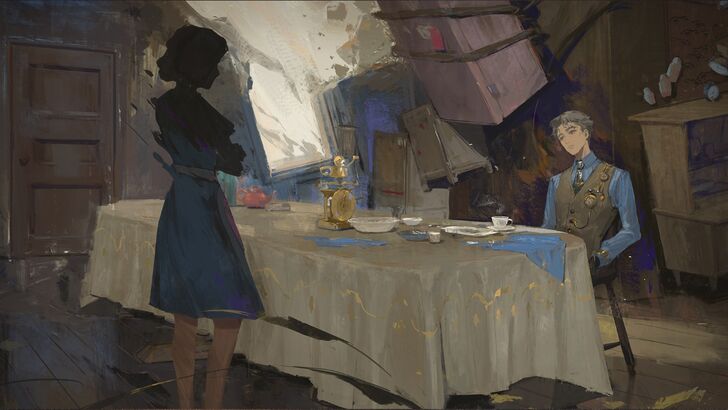
Maxim’s rant about whether robots feel pain or harbor resentment toward humanity touches on the reality of Facility 3826. The machines here operate on neural networks that blur the boundary between code and human consciousness. This also mirrors the ongoing struggle in Reverse: 1999, specifically over arcanist identity and society’s habit of treating living beings as disposable tools. Maxim represents the human collateral damage left behind by Sechenov’s push for technological dominance, bitter that the mass production of machines obscured the millions who died building that foundation.
When Vertin asks Maxim for the antidote to the neurotoxin poisoning the scientists, he laughs her off, claiming that Sechenov deserves punishment and that the end justifies the means. Even after Vertin points out that he has already succeeded in delaying the launch of Kollektiv 2.0 and that no more people need to die, Maxim refuses to yield. Knowing he’s lost, he puts a bullet in his head and triggers a self-destruct sequence.
This forces Vertin and Mesmer Jr. to use Artificial Somnambulism on Maxim’s corpse. Since polymerized humans retain lingering brainwaves shortly after death, diving into his dying hippocampus before it degrades completely is the only way to extract the self-destruct password from his memories and save everyone.
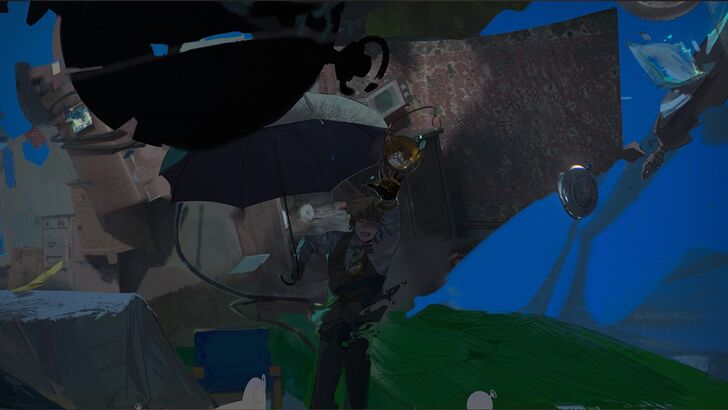
Mechanics-wise, this setup leads into the strongest part of the collaboration, even if the real-world writing gets sloppy. The idea that Vertin, X, and Mesmer could piece together a complex dream-diving machine out of random factory scrap in under fifteen minutes is a massive plot contrivance. Bringing NORA into the scene to build the required glass harmonica was ridiculous, though her aggressive dialogue is such an iconic staple of Atomic Heart that I could not help but laugh.
Thankfully, the story recovers once Vertin and Left enter Maxim’s subconscious. Inside, the active Polymer in Maxim's brain reconstructs his childhood home as it was during the early months of the Brown Plague. Experiencing that pandemic through Vanya's eyes makes his hatred understandable. He loved the world his parents tried to build, but hated that Sechenov swept their sacrifices under the rug to claim total credit for saving humanity.
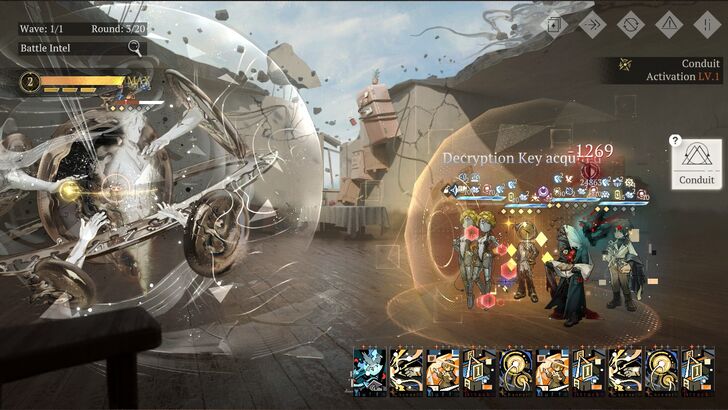
Making you fight Maxim inside his subconscious forces you to engage directly with his breakdown. The real turning point, though, comes right after, when his pocket watch allows him to at least converse one last time with his parents, even if they’re merely memories. Hearing their voices asking if the country survived completely changes his perspective. It exposes how blind his rage was, especially when they died hoping he would just live.
After Vertin breaks through Maxim’s rage inside Limbo, his dying mind starts collapsing, threatening to trap her inside forever. Mesmer forcibly disconnects Vertin to save her life, leaving Left behind in the subconscious to pull the password alone. Outside in the real world, the electrical feedback from Maxim’s degrading brain threatens to fry Left's systems before she can finish. Refusing to abandon her partner, Right links her own processing power directly into Left's unit to absorb the overload. Both Twins hold the line as their physical bodies char and burn, successfully extracting the code and stopping the self-destruct sequence with seconds to spare.
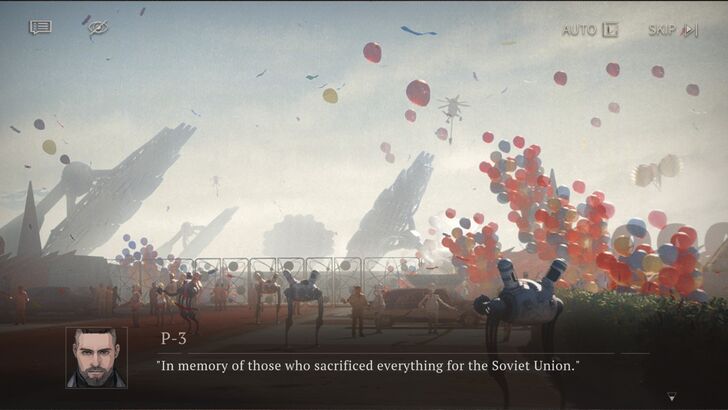
With the facility saved, everyone takes a moment to thank each other for getting through the ordeal. The twins also manage to survive, albeit in a new body, while Sechenov thanks Vertin for her help and admits that he believes Maxim was not the only person behind what happened. Before leaving, P-3 and CHAR-les speak with Vertin about what comes next, accompanied by the sound of nearby people remembering the "Families of the Fallen Heroes." The story ends with Vertin returning to their timeline. However, those who have played Atomic Heart before know that things are far from over.
Where are the Rest of the Atomic Heart Cast?
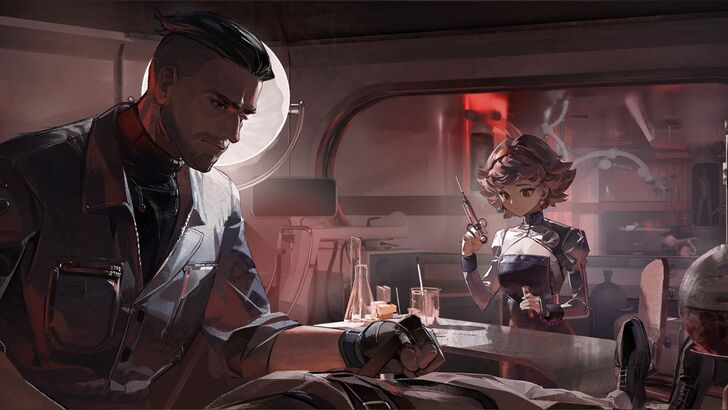
If you read my summary of the collab above, you might notice that I don't talk about the Atomic Heart characters as much. Well, that’s mostly because they aren’t around that much either. P-3, for example, appears in the story, but he doesn’t do much of anything. Really, CHAR-les does more to resolve the conflict than he does. They never really get the same focus as Vertin, Mesmer Jr., and X. Granny Zina only gets a few scenes, while NORA, who becomes a 4-star unit in the game, exists mostly as a Deus Ex Repair Vendor for the Artificial Somnambulism.
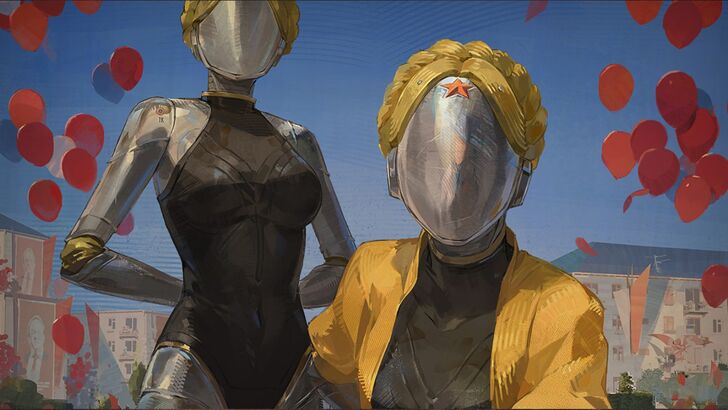
The Twins probably get the most attention out of the Atomic Heart cast, but even their story feels fairly restricted compared to what they go through in the original game.
I understand that the event takes place before Atomic Heart, so there are obvious limits on what it can show. The problem is that it also means a lot of these characters don't really get much of an arc here. There are references to things fans of Atomic Heart will recognize, like the importance of Tchaikovsky's "Waltz of the Flowers" to P-3 and the Twins, Zina’s daughter, and the history between Sechenov and Molotov, but the story doesn’t really go anywhere with them.
Everyone comes across as walking on eggshells to avoid discussing certain things since they can't reveal too much just yet. The characters have some fun moments together, like Vertin being princess-carried by Left, but I wanted more of those interactions.
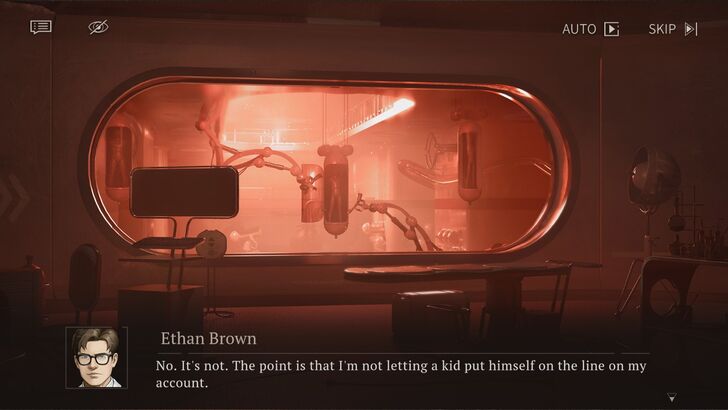
Fortunately, the original characters for this story are great. I’ve already talked at length about Maxim above, but Tamara and Ethan Brown were also some of the characters I found myself liking. Tamara's role in preserving the belongings of people who died during the plague was one of the more memorable parts of the event. A lot of those people don't even have proper graves, so her keeping those items became the only way their lives were remembered.
Ethan Brown, on the other hand, gives a strange first impression, as the cast meets him drunk and rude to them, but he eventually becomes the first person willing to test an antidote that could put his own life at risk. This conflict fumbles due to how quickly it gets resolved, but it does help in solidifying Ethan Brown’s rather small arc and the relationship between Mesmer Jr. and X.
There are still moments where I wish the story had more room to breathe, especially with how much history Atomic Heart already has behind it. But I appreciate that this collaboration did not feel like it was only here to give players two new characters and send them on their way. When it ended, I was still thinking about what happened and where things could go from here.
Even with its shortcomings, I had a good time seeing Reverse: 1999 step into a world as different as Atomic Heart. Part of the fun of these collaborations is seeing how Vertin and the rest of her crew fit into places they were never meant to be, and this event had plenty of moments where that idea worked. If this is the direction Reverse: 1999 continues taking with future collaborations, I’m interested to see where the story goes next.
Game8 Reviews