

FixForce is a cooperative physics sandbox where players work together to repair broken machines across post-apocalyptic worksites. Read our review to see what it did well, what it didn't, and our overall impressions of the game.
Overview
What is FixForce?
FixForce is a cooperative physics-based repair game where up to six players join a crew to restore damaged infrastructure across hazardous worksites. Taking on daily repair contracts, teams use a multipurpose repair gadget alongside interactive environmental objects to reconnect machinery, clear obstacles, and restore facilities while navigating collapsing structures and unstable terrain with makeshift pathways. Completing primary objectives and odd jobs earns credits that add up to a run's quota, while additional credits can be spent at the shop to purchase scrap used to repair machinery on-site. With physics-driven interactions and multiple ways to approach each objective, FixForce revolves around coordinating repairs, adapting to environmental hazards, and making the most of the tools and objects available on-site.
FixForce features:
⚫︎ Physics-Driven Cooperative Repair Gameplay
⚫︎ Open-Ended Environmental Problem Solving
⚫︎ Three Unique Locations with Multiple Variants
⚫︎ Interactive Props and Multipurpose Repair Gadget
⚫︎ Dynamic Repair Objectives and Optional Side Jobs
⚫︎ Online Co-op Multiplayer
| Digital Storefronts | ||
|---|---|---|
 Steam Steam |
 Epic Epic |
 Xbox Xbox |
| $7.99 | ||
FixForce Review: Built Like a Well-Oiled Machine
Clocking In
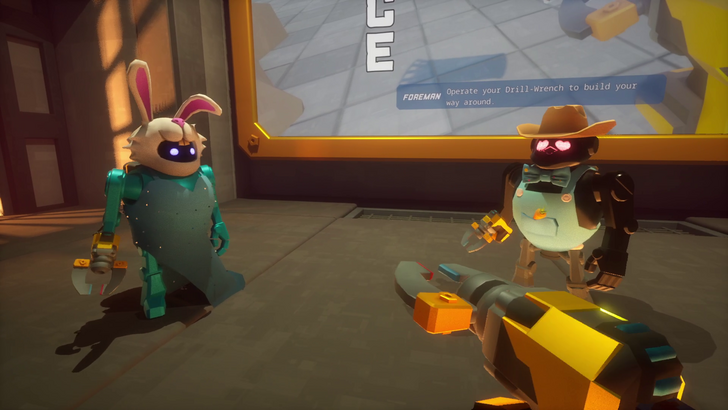
Games like Lethal Company, R.E.P.O., and more recently, Burglin' Gnomes have shown just how entertaining cooperative games can be when simple objectives collide with player-driven chaos. While each game has its own twist on the formula, they all share a common thread: giving players enough freedom to improvise, experiment, and occasionally make a complete mess of an otherwise straightforward task. More often than not, the funniest moments aren't scripted at all. They're the result of a plan going spectacularly wrong, with everyone somehow making the situation even worse in the process.
FixForce takes that same philosophy and applies it to repair work instead of scavenging. Players are tasked with restoring damaged infrastructure across a variety of locations, earning enough credits to meet each shift's quota before returning safely to the van. On paper, it's a fairly ordinary premise, but every job quickly becomes more involved as collapsed buildings, broken machinery, environmental hazards, and limited resources force teams to improvise their way forward. FixForce provides a versatile gadget, physics-driven interactions, and plenty of objects scattered throughout each map, encouraging groups to experiment and figure things out together instead of funneling them toward a single solution.
That freedom ultimately defines the experience. By trusting players to solve problems on their own, the game turns routine repair jobs into consistently engaging cooperative chaos, with its few rough edges rarely getting in the way of the creativity and experimentation that make every shift feel a little different from the last.
Keeping the Job Brief
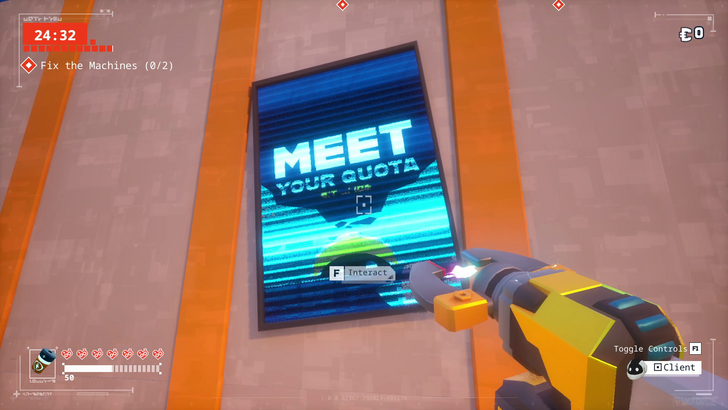
FixForce doesn't put much stock into its story, and that's perfectly fine. Players take on the role of Fixers, maintenance robots sent into abandoned facilities to repair damaged machinery before the end of each shift. Meet the daily quota and the team lives to work another day. Come up short, and those same Fixers are scrapped.
That's about as much as the game tells players outright. The rest is left to environmental storytelling, with overgrown facilities, flooded cityscapes, and massive bodies of water hinting at a world that's long since fallen into ruin. It's enough to establish the setting, but the narrative never grows beyond its premise. FixForce is clearly more interested in letting players loose in its cooperative sandbox than spending time fleshing out the world around it.
The Best Plan is No Plan At All
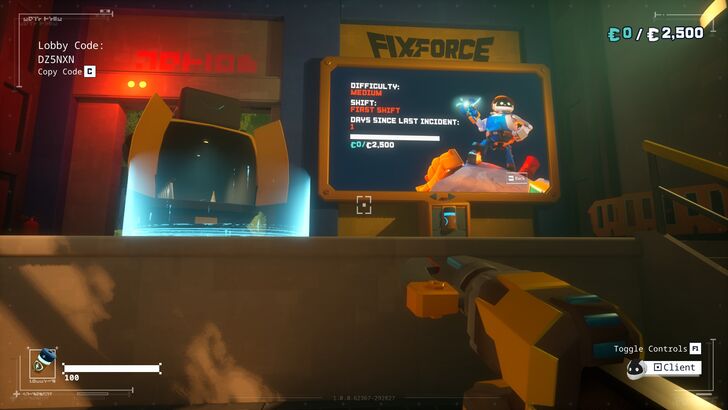
FixForce keeps its objective simple. Every shift has three phases that take place over the course of one day—morning, afternoon, and night. Each phase tasks players with repairing enough machinery to meet a required credit quota before time runs out. Along the way, smaller odd jobs can also be completed for extra cash, whether that's repairing a poster or slotting in a gear to old machinery. The loop itself is easy to understand, but deciding how much more work the team can squeeze in before heading back to the van gives each run a nice sense of tension.
Actually getting to those repairs is where most of the gameplay happens. Every map is filled with obstacles that prevent players from simply walking from one objective to the next. Flooded streets, collapsed pathways, rogue robots, and locked-off areas often force the team to look for another way around, turning what should be a straightforward repair job into a series of environmental puzzles that should really provide hazard pay.
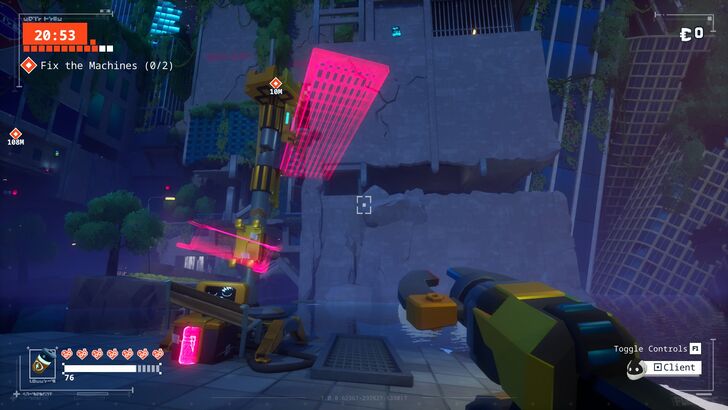
That sense of problem-solving only grows stronger as players become more familiar with each map. Nearly every loose object can be picked up and moved, while tools like jump pads, healing stations, and portals can be carried almost anywhere. Before long, it becomes less about finding the intended path and more about creating one. Building makeshift bridges, repositioning useful equipment, or finding unconventional shortcuts during a run are what made a FixForce shift exceptionally memorable. Few solutions feel off-limits, making experimentation one of the game's biggest strengths.
Part of what made those moments satisfying was figuring them out naturally. FixForce explains very little beyond its basic controls, which can be pinned to the corner of the screen for quick reference. Everything else is left for players to discover on their own. Many of the game's best moments come from experimenting and seeing what works, whether it's dragging a healing station across the map, using props to create a new path, or finding out that even a traffic cone is more than enough to stop an explosive drone headed your way. I enjoyed that hands-off approach, but it also means some players may take a while to realize just how flexible many of its mechanics really are.
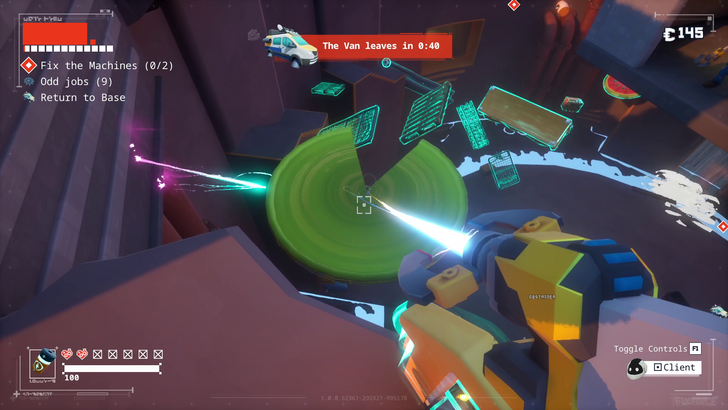
That same creativity occasionally runs into a few limitations. Carrying large props across improvised bridges or narrow walkways already requires a fair bit of coordination, but I often wished the game gave players a little more freedom to work around those obstacles. Every platform built from props needs some form of support, whether that's part of the map or another nearby object. Remove a single supporting piece, and an entire improvised bridge can come crashing down in seconds, making leapfrog bridging practically impossible. I had to learn that the hard way with only three wooden planks to my name and a dream. It's a fairly situational limitation, but one that made traversal feel a little more restrictive than I had anticipated.
The repairs themselves don't always deliver the same sense of satisfaction either. Restoring elevators, dispensers, and other pieces of infrastructure can completely change how a map is navigated, making them rewarding objectives to pursue. Some optional repairs, however, simply award credits after the required part has been installed, with little indication of what was actually fixed.
One moment that stuck with me was when my group repaired an elevator by installing both a battery and a gear, immediately opening up a new route through the map. Moments later, we slotted a gear into another nearby machine sitting beside what looked like a glass door... and nothing happened. It wasn't until later that we realized battery slots were the indicator for machinery that actually interacted with the environment. It's a small distinction, but the lack of feedback made some repairs feel less rewarding, especially when it wasn't immediately clear whether anything had changed beyond the team's credit total.
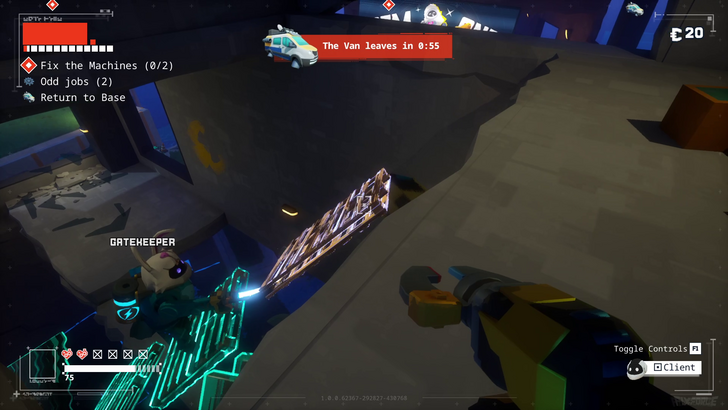
That said, those shortcomings are mostly limited to the repairs themselves. Physics are where FixForce really comes into its own. Nearly every object reacts the way I'd expect it to, making it easy to drag props into place or quickly throw together an improvised solution without wrestling against the game's systems. That same responsiveness also leads to some genuinely hilarious moments. Watching a teammate brush against a red barrel only to see their head launched halfway across the map, or scrambling back to the van across a bridge of hastily lined-up benches and steel columns only for someone to panic and plunge into the water below, will never not be funny.
FixForce trusts its players to come up with their own solutions. Finding a new route across the map, building a bridge out of whatever happens to be nearby, or simply laughing off a repair job that went spectacularly wrong is all part of its charm, rewarding experimentation while keeping every shift interesting. No two runs ever played out the same way, and every time the van dropped us off, it felt like another opportunity to apply what we'd learned during the previous shift—for better or for worse.
Looks Good, Sounds Better
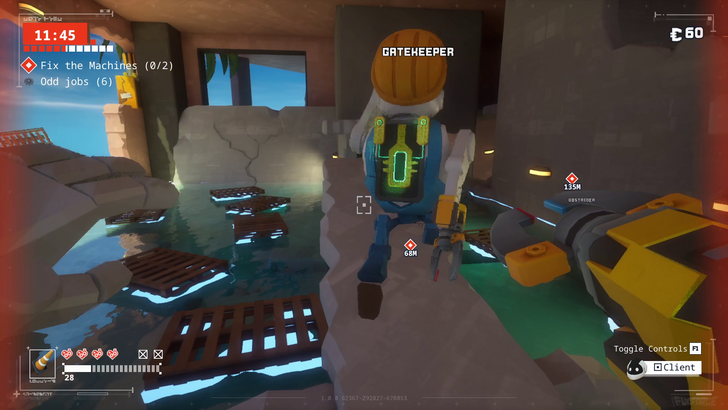
FixForce's presentation does a good job of supporting its cooperative gameplay. Its three locations—the Resort, City, and Islands—feature multiple variations that keep individual shifts feeling fresh while remaining distinct enough to learn over time. That same clarity extends to the game's props, with wooden pallets, steel columns, and other useful objects standing out naturally against the environment, making it easy to identify potential building materials during a hectic repair job.
The soundtrack similarly keeps things understated, providing a fitting backdrop without distracting from the cooperative chaos unfolding on screen. Performance was also solid throughout my time with the game, as it maintained a stable frame rate while offering a settings menu that clearly explains what each graphical option affects, alongside dedicated Steam Deck presets, which I honestly wasn't expecting to find.
There were, however, a few technical hiccups. Our group's proximity voice chat occasionally required the affected player to reconnect before it functioned properly, and we also encountered occasional visual desynchronization where certain props still appeared on one player's screen despite having already disappeared for everyone else. Neither issue happened often enough to derail a session, but they were noticeable when they cropped up.
Is FixForce Worth It?
Worth the Overtime
FixForce succeeds because it trusts players to figure things out for themselves. Its satisfying blend of creative problem-solving, physics-driven interactions, and cooperative teamwork turns even routine repair jobs into memorable experiences, rewarding experimentation as much as successful execution. It's the kind of game where the best moments often come from solutions the developers probably never intended, making every shift feel just a little different from the last.
That freedom does come with a few trade-offs. Some mechanics are left for players to discover on their own with little guidance, which can make it easy to overlook just how flexible its systems really are. Repairs also aren't always consistent in communicating their impact on the world, and while the occasional technical hiccup never derailed our sessions, they were noticeable enough to remind me that FixForce still has room for refinement.
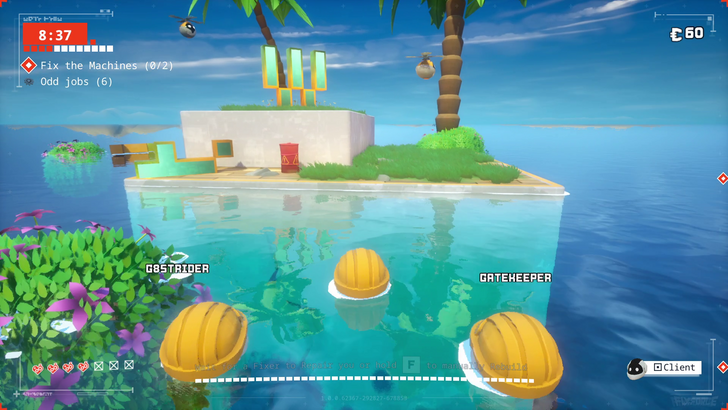
One of my favorites came near the end of a shift, when a simple rescue attempt spiraled into three of us floating helplessly in the water as nothing but disembodied heads, unable to recover our bodies and laughing too hard to care. Moments like that are exactly why I'd recommend FixForce to anyone looking for a cooperative game to enjoy with friends. Even with some shortcomings, its systems consistently create the kind of unscripted moments that make every shift memorable.
Game8 Reviews