


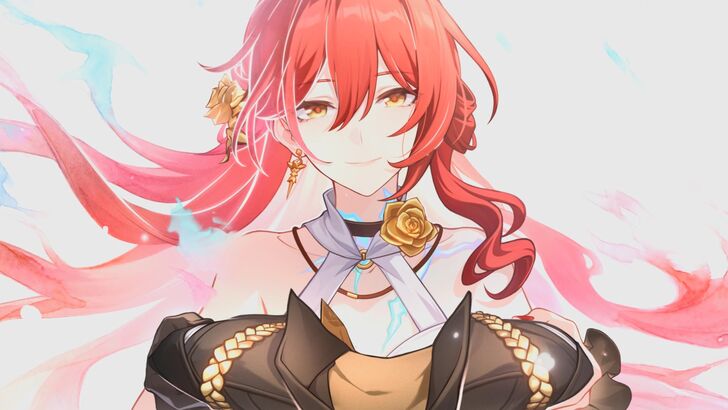
Honkai: Star Rail 4.4 continues Planarcadia's story with higher stakes and emotional revelations. Read on to learn everything we know, our review of this chapter, and more.
Honkai: Star Rail Review History
| Review | Date | Score |
|---|---|---|
| 4.0 ~ 4.3 Update | June 2026 | 
|
| 1.0 Release | April 2024 |  |
Overview
What is Honkai: Star Rail?
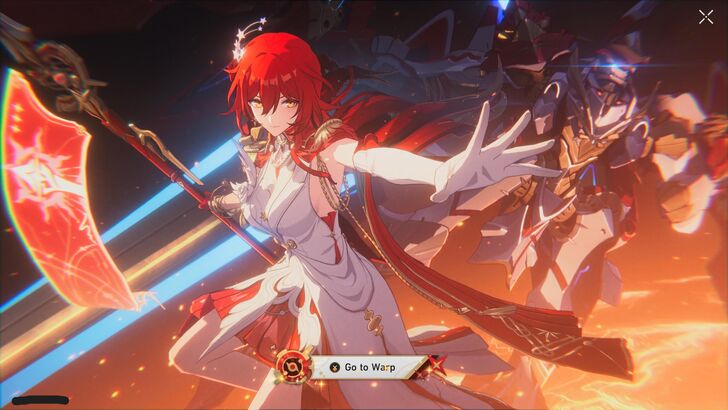
Honkai: Star Rail is a turn-based RPG that pairs strategic, party-based combat with an ongoing sci-fi fantasy epic. As the Trailblazer, players journey across worlds, meet a growing cast of unique characters, and build teams around different combat Paths and elemental synergies. Alongside its battles, the game offers exploration, puzzle-solving, side content, and regularly expanding story chapters that gradually weave together its larger, interconnected universe.
| Digital Storefronts | |||||
|---|---|---|---|---|---|
 HoyoPlay HoyoPlay |
 Playstation Playstation |
||||
 Google Play Google Play |
 App Store App Store |
 Epic Epic |
|||
| Free to Play | |||||
Honkai: Star Rail Story Review [4.4 In Ravages Does the Whistle Sound] | The Best Stories Make You Question Everything
Expectations Shattered as Planarcadia Reaches Its Turning Point
HSR’s version 4.4 is here, and with the story now firmly in the middle of Planarcadia's arc, it's only become more compelling. The stakes continue to climb, every major development carries greater weight than the last, and the sacrifices demanded of its cast make every victory feel increasingly hard-earned. Rather than losing momentum halfway through, the narrative does the exact opposite, it keeps finding ways to escalate both its emotional and narrative payoff.
When I reviewed Versions 4.0 through 4.3, I kept asking myself one question: how do you possibly top everything Amphoreus accomplished? Those chapters had already done such a remarkable tugging at a players’ heart that my expectations for Planarcadia couldn't have been any higher. Somehow, 4.4 still managed to completely blow them away.
Its pacing doesn’t let the story lose steam, moving confidently from one major moment to the next while giving its emotional beats enough room to land. The characters continue to be one of the narrative's greatest strengths, but what impressed me most was its execution. Just when I thought I had a clear idea of where the story was heading, Honkai: Star Rail found another way to surprise me. The twists never felt like they existed purely to shock; instead, they naturally built on everything that came before, making each reveal feel both unexpected and earned.
If 4.4 is any indication, Planarcadia isn't simply maintaining the standard set by previous updates, it's continuing to raise it.
WARNING: HEAVY SPOILERS FOR 4.4 TRAILBLAZE MISSION BELOW.
Mystery Built on Memories, Miracles, and a Desperate Rescue
4.4 wastes no time picking up exactly where the previous chapter left off. Ryusuke confronts Himeko with a shocking twist, that she couldn't have possibly been trailblazing all this time when her daughter was born bearing the Withering Curse—a hereditary affliction passed down from Graphia that slowly causes its victims' bodies to deteriorate. It only becomes stranger from there as we're reminded of another revelation from 4.3, that the young Himeko once painted an older version of herself, giving it life and turning it into an imagenae, and the man she knew as her father believes the Himeko standing before him now is that very imagenae.
Of course, by this point we also know that this "father" isn't Ryusuke at all. The real Ryusuke died long ago, while the one who raised Himeko is actually Asat Pramad, a Lord Ravager who manipulated her life simply because he could.
Rather than opening with a grand battle, the story traps the two in a psychological confrontation inside a painting. Asat Pramad forces Himeko to relive her past through a series of questions, determined to uncover the truth behind the impossible. How did this version of Himeko win the Phantasmoon Games? How did she cure herself of the Withering Curse? What happened to the "real" Himeko? And perhaps most importantly, how did she restore the Astral Express and resume trailblazing after it had remained stranded on Planarcadia for decades? The answers become the centerpiece of the chapter, and each one slowly peels back another layer of the mystery.
What makes these scenes especially compelling is that Himeko never truly loses control of the conversation. She willingly plays along with Asat Pramad's game, only to eventually turn the tables and reveal that she already understands what he's really after. His obsession isn't with Himeko herself, but with Aha. Convinced that the Aeon intervened fifteen years ago to grant Himeko a string of impossible miracles, Asat Pramad is less interested in uncovering the truth behind her story, and more on uncovering how the Aeon revealed themself.
Meanwhile, the Trailblazer's side of the narrative provides the urgency that keeps the chapter moving. With everyone scattered after the previous events, the journey becomes one of regrouping and desperately trying to reach Himeko before it's too late. By the time the Trailblazer returns from the Maw to the Academy, however, Himeko is already gone, leaving behind only a message and clear objectives: reignite the Astral Express and win the Phantasmoon games.
That objective lands us back to Perdido Station, and along the way, we see just how much Planarcadia has unraveled. Every step of the way, an ally finds their way to us, and together, everyone pitches in to save the civilians, find a way to contact Pompom in the Astral Express that is now under rubbles, get Himeko out of the painting, and defeat Asat Pramad.
As with the chapters before it, everything ultimately converges into one climactic confrontation. The fate of Planarcadia hangs by a thread as Oroboros, the Voracity, awakens, Asat Pramad steps onto center stage as the big bad guy, and even the Stellaron within the Trailblazer becomes a pivotal piece of the conflict. It's a finale that successfully pays off the mysteries the story has been building while naturally setting the stage for what comes next, making it one of the strongest narrative climaxes Honkai: Star Rail has delivered since Phainon fought Nanook back in Amphoreus.
The Perfect Pacing
One of 4.4's biggest strengths is its pacing. By this point, the story has already invested so much time in developing its cast that it no longer needs to constantly jump between different perspectives just to remind you what everyone is doing. Earlier chapters did the heavy lifting, allowing this update to trust that you already understand these characters, their motivations, and what's at stake for them.
As a result, the narrative narrows its focus entirely to Himeko and the Trailblazer. Instead of interrupting the momentum with frequent point-of-view switches, other characters naturally weave themselves into the story whenever they're needed. Their arrivals never feel abrupt or conveniently timed, they simply make sense within the flow of events.
Because you're always following the same two perspectives, there's a constant feeling that you're racing against time. The story rarely gives you a chance to stop and settle, and that sustained momentum creates an underlying sense of urgency that perfectly matches the escalating stakes. Every objective leads directly into the next, every revelation pushes you forward, and before you realize it, hours have passed without the narrative ever feeling like it lost focus.
More importantly, this allows the emotional moments to land far more effectively. Rather than repeatedly cutting away to check in on every character, 4.4 trusts the player to stay immersed in the immediate conflict. That focus makes Himeko's journey feel more intimate while giving the Trailblazer's rescue mission a stronger sense of purpose, resulting in a chapter that feels consistently tense from beginning to end without relying on artificial cliffhangers or constant perspective shifts.
Twists Challenge Assumptions
If there's one aspect of 4.4 that impressed me the most, it's the execution. Time and time again, the story sets up a seemingly obvious conclusion, gives you enough evidence to start believing it, and then pulls the narrative in an entirely different direction. Not by contradicting itself, but by revealing another piece of the puzzle that completely changes how you interpret everything you've seen so far.
Asat Pramad is a perfect example of this. Throughout much of the chapter, he relentlessly insists that the Himeko we've come to know isn't the real Himeko at all, that she's merely an imagenae. The story presents his argument with enough confidence, and enough supporting details, that I genuinely found myself beginning to accept that possibility. Then, just when it feels like the mystery has been solved, the narrative introduces another revelation that reframes everything once again, forcing you to question your own conclusions all over again.
It's a storytelling technique that 4.4 employs remarkably well. Rather than relying on twists that exist purely to surprise the audience, each new revelation builds upon the previous one, constantly reshaping your understanding of the story without making earlier scenes feel meaningless. Every answer opens the door to another question, creating a mystery that remains engaging because you're actively trying to piece everything together alongside the characters.
It transforms the story from something you passively watch into something you actively engage with. You're constantly evaluating new information, revisiting previous assumptions, and wondering whether you've truly figured things out this time. By making the audience part of that process, 4.4 maintains an incredible sense of intrigue throughout its runtime, ensuring that even its quieter conversations feel just as compelling as its biggest reveals.
Narrative Parallels Make Every Scene Hit Harder
4.4 is also very deliberate at how it builds its emotional payoff. Moments that initially seem like simple conversations or isolated interactions eventually return, creating parallels that tie the characters and their dynamics together.
One example that stuck to me was the conversation between the painting of the young Himeko and Himeko herself about sacrifice. At first, it plays like an intimate character moment, but by the time the story reaches its conclusion, that same conversation is echoed in Himeko's conversation with the Trailblazer. The similarities allow the later scenes to carry the emotional weight of everything that came before.
That's what makes these parallels so effective. They're not simply callbacks meant to reward players for paying attention. Instead, they reinforce the chapter's central themes, giving earlier scenes greater significance in retrospect while making the ending feel like the natural culmination of everything the story has been building toward. It creates a sense of cohesion where every conversation contributes to a larger narrative.
By the time those ideas came full circle, I wasn't just appreciating how cleverly the story was written, I was emotionally invested. I genuinely found myself bawling my eyes out during the finale, not because the game was trying to force an emotional reaction, but because it had earned it. The setup and the parallels all came together, and it's that level of storytelling that left 4.4 lingering in my mind.
Characters That Are Full of Depth
By this point, these characters have grown beyond simply fulfilling their roles in the plot. They feel like people with their own convictions, relationships, and histories.
Even Asat Pramad is a great example of this. Despite everything he has done, there were moments where I genuinely questioned whether there was more to him than pure malice. As the story slowly peeled back his motivations, I found myself wondering if, beneath all of his manipulation, he was simply trying to understand what had happened to the young Himeko he had watched grow up. Whether that sympathy lasts or not is beside the point, the fact that the story made me entertain that possibility at all speaks volumes about how well it presents its characters.
The supporting cast continues to pull its weight as well. Characters like Nihilux still bring welcome moments of humor without feeling like comic relief that's disconnected from the story, helping break the tension without undermining it. Meanwhile, more central figures such as Yao Guang receive meaningful development in a surprisingly short amount of time. The story doesn't simply tell you who she is; it gives you enough insight into her circumstances and choices that you come away with a much clearer understanding of why she became the person she is.
I also enjoyed how naturally the existing relationships continue to evolve. Whether it's Silver Wolf's banter with Blade or the dynamic they share with Dan Heng, these interactions do more than provide entertaining dialogue. They reinforce years of shared history and differing personalities, making every exchange feel authentic rather than written solely to move the plot forward.
That attention to characterization makes a tremendous difference to the overall experience. When the people in the story feel believable, the stakes naturally become more believable as well. You're no longer invested because the game tells you the fate of the world is important, you're invested because you care about the people living in it. Every sacrifice, every difficult decision, and every emotional reunion carries significantly more impact because the characters themselves have already earned your investment.
More Than Just The Power of Friendship
On the surface, you could argue that 4.4 ultimately arrives at a familiar conclusion: people coming together, supporting one another, and overcoming impossible odds through the bonds they've built along the way. There is certainly an element of that in the finale, and the story isn't shy about celebrating the connections formed between its characters.
At the same time, I don't think it's fair to reduce everything that happens to simply being a case of "the power of friendship saves the day."
What makes the climax more interesting is that it leaves the player with the sense that there are larger forces at work beneath the surface. Even as the story delivers its emotional resolutions, it continues to draw attention to the Trailblazer and the Stellaron residing within them. The finale doesn't treat that element as a solved mystery or a convenient tool used to move the plot forward. Instead, it feels like another piece of a much bigger puzzle, one that still has significant implications for the future.
Technical Issues and Missed Opportunities Hold Back an Otherwise Incredible Chapter
For all the praise I have for 4.4, I only walked away with one genuine complaint, and unfortunately, it happened during the moment that mattered most. During the final battle, the music and voice acting completely disappeared, or at least, they did on my playthrough. Whether this was a bug or technical issue, it immediately pulled me out of what should have been one of the most emotionally charged sequences in the entire update.
I'm a firm believer that music and voice work do far more than simply accompany a scene, they're what give it emotional texture. They tell you when to hold your breath, when to feel triumphant, and when to let a heartbreaking moment truly sink in. Losing all of that during the climax made the encounter feel strangely hollow despite everything happening on screen. Ironically, it only reinforced how important the audio design is, because its absence was impossible to ignore.
I have little doubt that, had the sequence played as intended, the finale would've landed even harder than it already did.
The other point is less of a criticism and more of a missed opportunity. By the time the final battle begins, Dan Heng and March 7th have already arrived in their evolved forms—Imbibitor Lunae and Evernight, respectively. I would've loved to actually witness the moment that led to those transformations instead of simply seeing them after the fact. It doesn't create a gap in the story or diminish the climax in any meaningful way, but considering how significant those moments are for the characters themselves, showing that transition would've made the finale feel even more rewarding.
Neither of these issues came close to souring my overall experience. One is likely a technical hiccup that can hopefully be resolved, while the other is simply a scene I wish had been included. If anything, they stand out precisely because the rest of 4.4 sets such an incredibly high standard.
Fresh Take on Interplanar Jump
While 4.4 is undoubtedly a story-driven update, it doesn't neglect the gameplay either. Throughout the Trailblaze Mission, it introduces a handful of new mechanics and scenarios that help keep the experience engaging, with the standout being battles fought inside the interplanar jump.
These sequences don't simply introduce a new gimmick, they fundamentally change how combat plays out, even if only for a brief moment. The interplanar jump battles shift away from Honkai: Star Rail's traditional turn-based encounters and lean into something that feels much closer to a bullet hell, demanding far more movement, awareness, and quick reactions than players are used to.
Its Greatest Strenght Is Keeping You Guessing
If there's one thing Planarcadia has consistently proven, it's that Honkai: Star Rail is at its best when it's willing to wear its heart on its sleeve. 4.4 represents the culmination of everything the arc has been building toward, paying off running mysteries, character relationships, and thematic parallels with remarkable confidence.
More than anything, 4.4 left me excited for what's next. With Version 4.5 preparing us for the confrontation against the Voracity, the stage has been set for what could become another defining moment for Honkai: Star Rail. My biggest hope isn't simply that it delivers another spectacle, but that it carries the same emotional weight that made this chapter so unforgettable. If it can accomplish that, then Planarcadia may very well become the greatest story arc the game has ever told.
Game8 Reviews

You may also like...

Honkai: Star Rail Product Information
 |
|
| Title | HONKAI: STAR RAIL |
|---|---|
| Release Date | April 26, 2023 |
| Developer | miHoYo |
| Publisher | Cognosphere Pte., Ltd. |
| Supported Platforms | PC, Mobile, PS5 |
| Genre | RPG, Adventure |
| Number of Players | 1 |
| ESRB Rating | Teen |
| Official Website | Honkai: Star Rail Website |