


Ace Combat 8: Wings of Theve brings the franchise back to the skies and shows us that it’s only getting better. Read our review to see what it did well, what it didn't do well, and if it's worth buying.
| Digital Storefronts | |||||
|---|---|---|---|---|---|
 Steam Steam |
 PS PS |
 Xbox Xbox |
|||
| $69.99 Standard Edition |
|||||
Ace Combat 8 Review: Already Unrivaled in the Skies Yet Still Climbing Higher
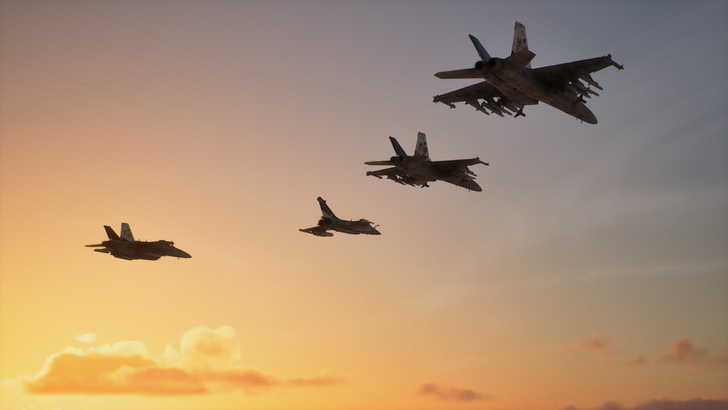
When we talk about games or franchises that got a second wind, we cannot leave out Ace Combat. The release of Ace Combat 7: Skies Unknown in 2019 (and even Top Gun: Maverick in 2022) injected new life into the series, selling so well that a Nintendo Switch port was released and, more importantly, an eighth installment was greenlit. Now, with the release of Ace Combat 8: Wings of Theve, it’s becoming evident that developer Project ACES has found the secret formula that satisfies its longtime fans while reaching a broader audience, resulting in what may be the best Ace Combat game to date.
It came to a point where it felt as if every aspect of the game improved from its previous iteration. From the otherworldly musical score and impeccable sound design to a more emotional and grounded narrative, to the flight mechanics that somehow feel even more immersive, everything feels like a step above. It somehow one-upped itself and has reached a greater height than before, which honestly feels like the series is only gaining altitude from here on.
Ace Combat 8: Wings of Theve is the ultimate love letter that the fans have been waiting for and the best introduction for newcomers. And even when it's widely considered the ace of its genre, this game proves that the series won’t crash and burn anytime soon.
A Different Perspective Results in a More Emotional Narrative
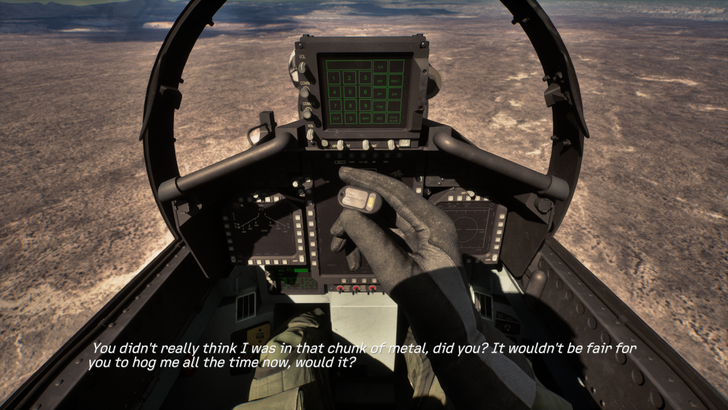
The Ace Combat franchise always had a surprisingly deep narrative concerning its fictional world of Strangereal and its many warring factions and countries. While the storytelling may vary from time to time, the theme of striving for peace amid the irony of war is prevalent across all its releases. This time, Ace Combat 8 takes a page from its sixth iteration, where it uses a first-person perspective to tell its story and create a more engaging narrative.
You play as a silent protagonist who is rescued by the Federation of Central Usea (FCU) aircraft carrier Endurance via a life raft at sea. Initially, you serve as a weapons system navigator for the ship’s ace pilot, Jan "Rex" Cope, known to the world as the legendary "Wings of Theve." In reality, though, he is merely a pilot keeping up appearances, as Cope admits he’s a fraud who runs from dogfights to maintain the illusion of his title as a symbol to boost national morale.
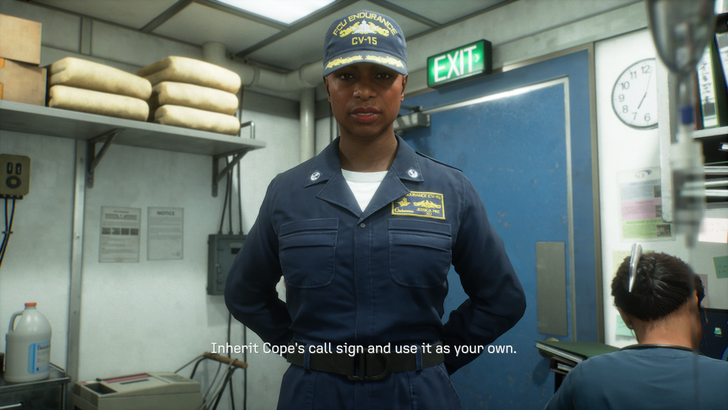
Things take a turn quickly when both you and Cope are shot down by one of the Sotoan elite squadrons, known as the Lux Lunae, or the Shadows by the FCU, due to the black paint job on their planes. The latter is killed in action, leaving you to inherit his callsign and title to maintain morale and keep the legend alive. You are then put in command of the Joker Flight squadron and ordered to defend the FCU against the invading Sotoan opposition in an effort to stop the war.
The first-person perspective makes you feel like you’re the one playing Rex. While the use of simple QTEs feels unnecessary in the cinematic cutscenes, it reinforces the sense that you’re the one in the story. Interestingly, this is also mirrored in the irony of the player character’s identity. While Rex is the callsign you adopt from Cope’s death, one of your squadmates decides to give you a different name to differentiate you from their deceased squad leader.
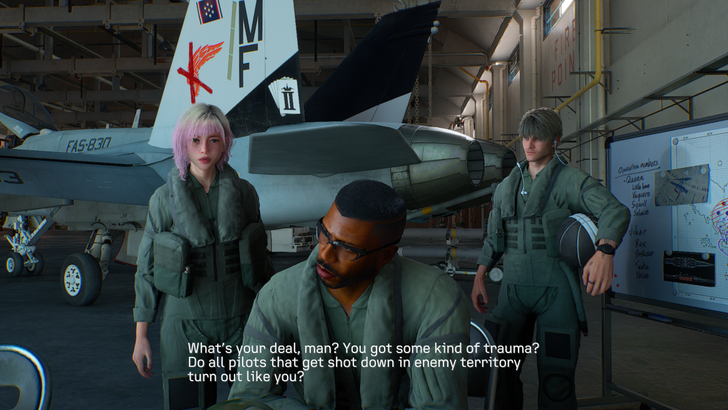
Speaking of squadmates, these characters are the most interesting part of the narrative. Your squad consists of four members including yourself, with the others being Ellington "Professor" Baxter, Anastasia "Tasha" Severskaya, and William "Noise" Coster. In both a gameplay and narrative sense, the first-person perspective changes the dynamic of how you connect with these characters, as you get to know them beyond just being co-workers on the same team.
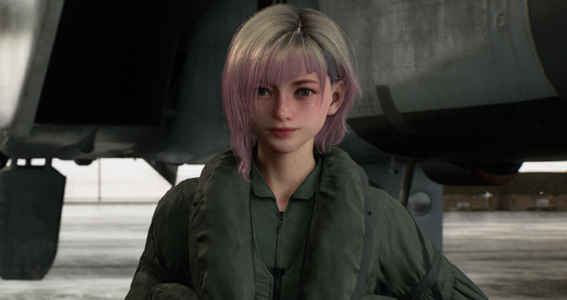
This is even more evident when you see how each character develops as you progress through the campaign. For one, Tasha isn’t even supposed to be part of the military. She’s originally a stunt pilot who was asked to shoot publicity footage before ending up stranded on the Endurance when the war between the Usea and Sotoa broke out. On the other hand, Coster is a man of few words who only talks about his interests in music and only to affirm that he will follow the orders given to him.
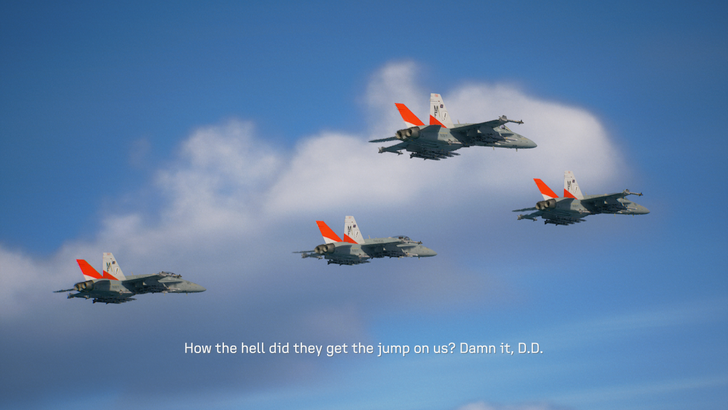
The game does a great job of showcasing their development through its more grounded storytelling and first-person perspective. Beyond the many missions in the campaign, you get to see them interact and change over the course of the war, and you become invested in their characters as a result.
The first-person perspective also enhances Cope's involvement in the story, where he lives on as the "voice in your head." He acts as your guide through the many events that unfold in the campaign, often providing additional context and guidance.
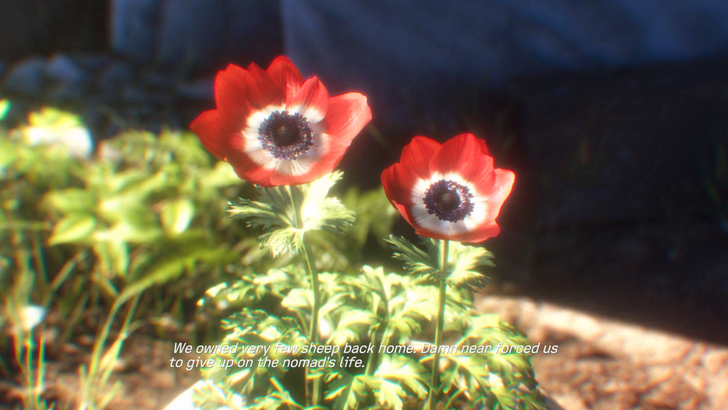
The trope of the disembodied voice in your head isn’t anything new, but the game does a good enough job of executing it. He serves as the bridge between you, a newcomer to the Joker squadron, and the many characters you encounter in the story, including your rival squadron, the Lux Lunae.
Despite the cheesy plot and dialogue and inconsistent pacing, Ace Combat 8 successfully delivers an emotional narrative by focusing on the people inside the cockpit rather than the overarching war. The result is a much more grounded and relatable story that lets you connect with the many players in the narrative through Rex's lens without alienating the audience with the many things that go on in the Usea-Sotoan war.
The Masterful Use of Music and Leitmotifs to Enhance the Narrative
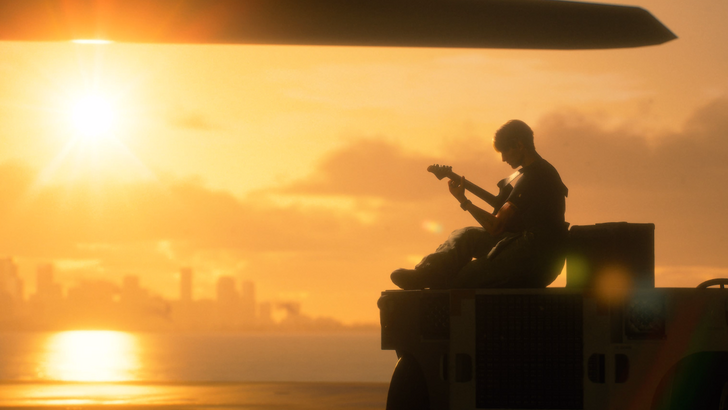
Music has always been one of the biggest highlights of an Ace Combat game, but this time around, it feels as if it's actually the core foundation of the game’s narrative setpieces.
For instance, the Lux Lunae have their own theme music, where the narrative even acknowledges this as the squadron blasts their war chant over open communications channels to announce their arrival. Throughout the campaign, you hear the same leitmotif of their war chant, accompanied by different tracks to signify the progression of the enemies you fight.
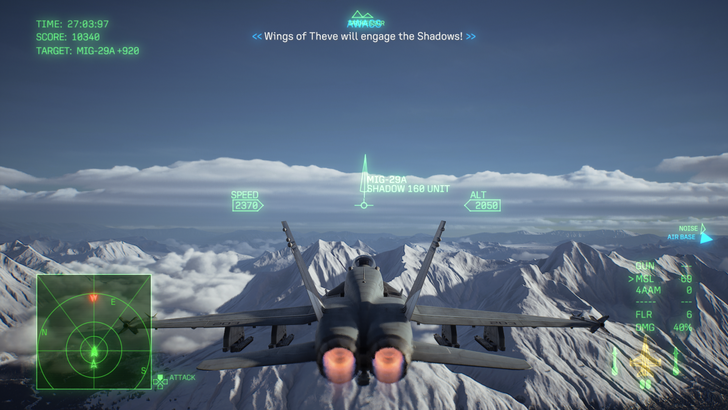
A great example of this is the track "Frostwave," which plays at the tail end of the game's third mission, setting the tone for the campaign entirely. At the time this particular track plays, the Wings of Theve, and the Joker Flight squadron by association, had a reputation to the enemy for being frauds and avoiding engagement entirely. But this time, you're the one who's leading the charge, and this time you want your get back for shooting you and Cope down.
This all culminates when Tasha asks you if it's time to run away as usual, where you have the choice to say No
using the in-game commands. Supposedly, it's the Shadow's theme song, but at that very moment it becomes yours. It's a declaration of how things are going to be different this time around with new management under your leadership, and you're going to be the victor.
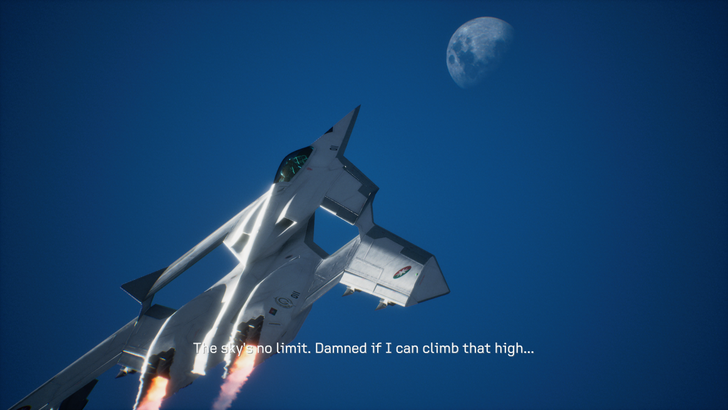
This is also evident in the game’s penultimate fight with the Lux Lunae’s leader, Carmille "Moon 11" Tewy, where her boss theme uses the same war-chant leitmotif as the Shadows but features a single female voice in harmony instead of the usual chorus you hear when they broadcast their arrival. This is what I mean by saying that the musical score also enhances the game’s storytelling, where leitmotifs, character arcs, and even theme songs become a larger part of the narrative.
Learn From the Past to Become the Best
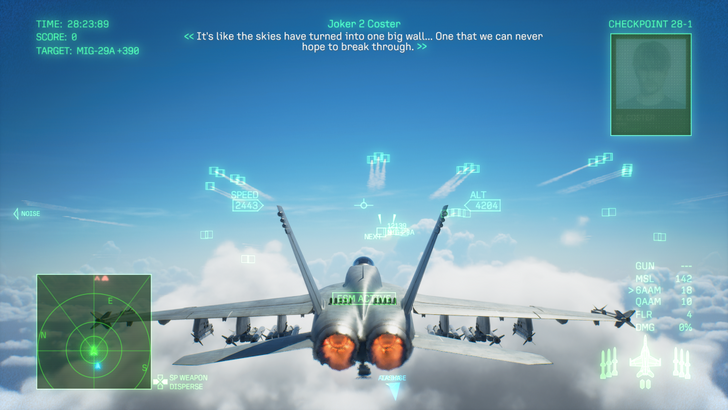
Aside from the game’s narrative, the overall gameplay also impresses by taking what the previous titles do best and integrating them into this game. Most of the gameplay aspects in the game, such as squadron commands, multiple special weapons, and even mission variety, were already highlights of previous Ace Combat titles.
Mechanics-wise, there isn’t much difference between this title and the previous title. However, what separates them both is the feel and weightiness of the aircraft, where Ace Combat 8 manages to balance the arcade nature of the series along with a sense of realism due to how hard it is to pilot an actual aircraft.
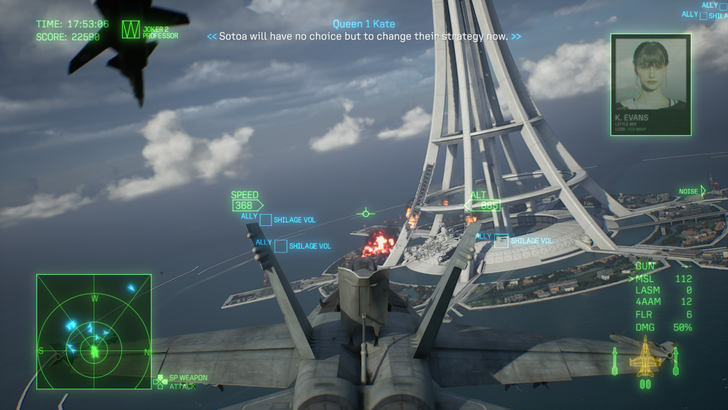
Aside from the game’s combat mechanics, the 15-20-hour campaign impresses with the variety across its missions. With a series that has survived as long as it has, it’s hard to find a mission that hasn’t been done before in its entries. But that’s not exactly a bad thing. It only becomes negative if it becomes repetitive, which Ace Combat 8 avoids by not putting missions with similar objectives and settings across its 30 missions.
On top of that, the game continues its tradition of making you feel like an actual ace pilot, and even going so far as to make you feel like you’re the chosen one that’s arrived to end the war. One particular mission that embodies this is when you are tasked to take on a whole squadron of Lux Lunae aircraft on your own, since your squad needs to escort a shuttle across an ocean.
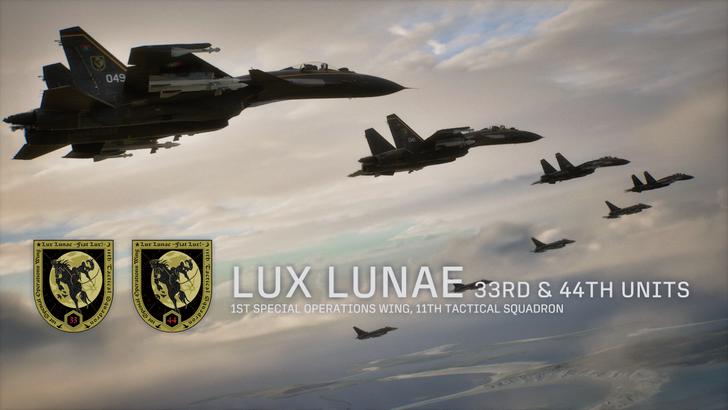
On the game’s Veteran difficulty, it was easily one of the most memorable missions the game has to offer. A dogfight where you’re outnumbered 8-to-1 is something no pilot would want to bet against. But Ace Combat 8 asks you to prove that you’re worthy of the title "Wings of Theve," and does so in droves.
And to clarify, the enemy AI isn’t a pushover either; they will constantly hound and harass you, and evade your missiles using post-stall maneuvers (PSMs) you thought only you could do. Yet it feels fair, as you can find gaps and openings using the many movement options available to you. This is the case against your archnemesis, Shadow 22: his AI isn’t your typical boss enemy AI with plot armor; it is simply a spruced-up enemy AI that loves to move erratically and outmaneuver you with Kulbit maneuvers and other high-G turns.
What makes Ace Combat 8 special is how it manages to take all of these and cram them into a single title, making it the best of what they've used before. The game doesn’t fix what isn’t broken, and honestly that’s what you should do when you’ve already done a great job in the past; just offer more of it in different ways to keep the enjoyment going.
Multiplayer is a Different Conversation
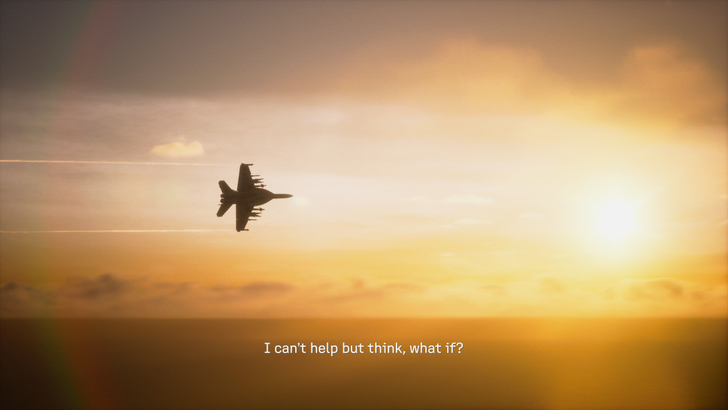
Unfortunately, Ace Combat 8 isn’t perfect, particularly in its network servers, monetization, and optimization. While there are certain problems with the multiplayer, such as the grindy nature of its progression, the servers are the bigger issue, in my opinion. It then becomes hit-or-miss, with inconsistent servers that can kick you out at a moment’s notice.
On the other hand, monetization is quite problematic, specifically with its Ace Pass. On paper, it functions similarly to any other multiplayer game’s battle pass, with tiers and rewards for playing. The problem is that this is structured as if the game isn’t priced like a $70 game, even going so far as to prey on players using FOMO with cosmetics that will not be offered after its season.
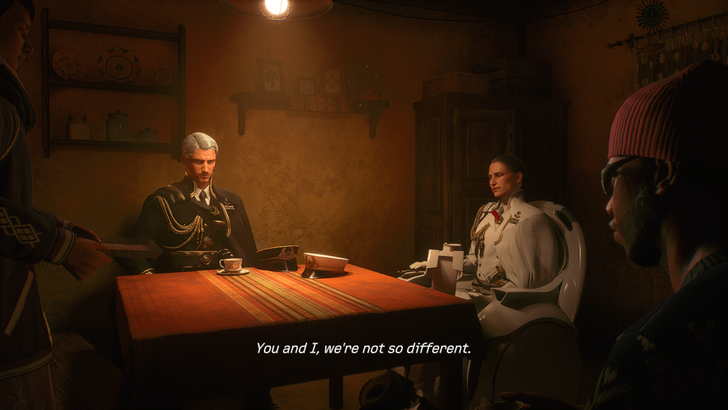
Additionally, the Ace Pass only interacts with multiplayer, which seems like a baffling choice to leave out the single-player campaign, where you can easily add challenges to progress your Ace Pass without forcing players to engage with its flawed multiplayer option.
Lastly, optimization is another problem that plagues the game, especially on PC. It’s unfortunate that this is to be expected with most games nowadays, but it should be standard that a AAA game has AAA performance to match it, not the other way around. Sure, this can be fixed with patches later down the road, but it’s regrettable that players will have to wait until those fixes arrive.
Is Ace Combat 8: Wings of Theve Worth It?
Worth It For the Single-Player Experience Alone
Ace Combat 8: Wings of Theve is by far the best Ace Combat game we’ve had in a long time, and the single-player experience alone is worth the AAA price tag. Keiko Kobayashi’s masterful musical score, stellar sound design, and an emotional narrative, all packaged in the same satisfying combat flight sim you can’t find anywhere else. If anything, it feels like it could be a crime if the game doesn’t at least win best sound design, simply because of how well the music, sound effects, and ambiance respond to your movements and current environment.
Despite the game’s issues with its multiplayer and monetization, the game is still an easy recommendation for those who are longtime fans of the game, as well as players who are interested in checking the series out for the first time. It’s a game that you don’t want to miss on your radar, especially in a year where a lot of great games have been hogging the spotlight.
FAQ
Do I Need To Play The Previous Ace Combat Games Before Playing Ace Combat 8: Wings of Theve?
No, you do not need to play the past Ace Combat games before playing Ace Combat 8: Wings of Theve. However, there are recurring characters, continued plot points, and other details that are better understood if you played the past games, as Ace Combat 8: Wings of Theve does contain cameos and references in several missions.
Which Control Scheme Should I Use in Ace Combat 8: Wings of Theve?
Ace Combat 8: Wings of Theve is best enjoyed with Expert Controls for full access to several movement mechanics that will make Certain movement mechanics are only available using Expert controls, and will actually make the game easier when you know how to use them.
Game8 Reviews