





Blue Archive is a tactical RPG set in Kivotos, where Sensei helps students navigate everyday troubles and dangerous conflicts. Read our review to see what it did well, what it didn't, and our overall impressions of the game.
| Digital Storefronts | ||
|---|---|---|
 Steam Steam |
 Google Play Google Play |
 App Store App Store |
| Free-to-Play | ||
Blue Archive Review: It's Got More Heart Than Friction
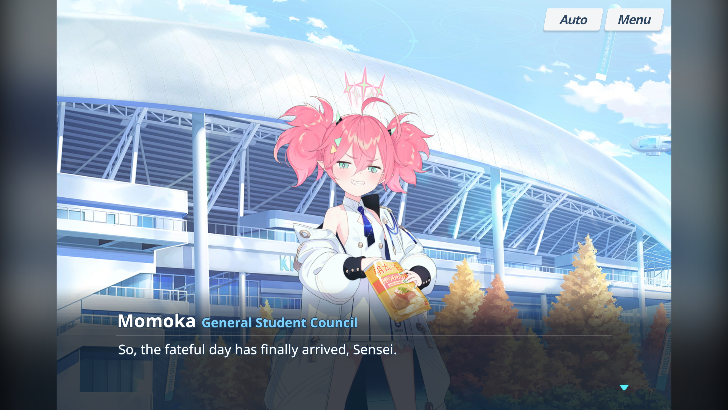
Gacha games have become remarkably good at making a simple formula feel complicated. What starts with collecting a few characters can quickly turn into an entire ecosystem of progression systems, resources, and activities built around them. Blue Archive is a particularly good example of that. Beneath its colorful cast of students and absurdly armed chibis is a game with considerably more going on than its premise might suggest.
Blue Archive is a deep game with a lot of heart behind its story and characters. There is plenty here for players to sink their time into, whether that means following the story, developing favorite students, or simply watching a group of chibis run around a battlefield with firearms. At the same time, the game tends to make itself harder to appreciate than it needs to be. It has plenty of heart, but sometimes it gets in its own way.
A Strong Narrative That's Easy to Get Lost In
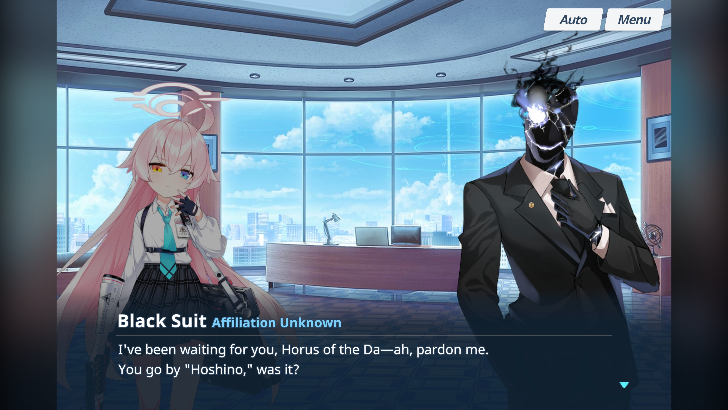
Blue Archive doesn't exactly start on a cheerful note. The Prologue opens with a somber glimpse of Kivotos, a sprawling academy city home to numerous schools and their students. From there, the story shifts to Sensei, an adult tasked with helping them navigate their problems. Much of Blue Archive's story centers on its students, with each Volume focusing on a different school and its cast.
This is where Blue Archive's writing shines. Its students can initially come across as broad archetypes, but the stories give them plenty of room to develop beyond those first impressions. Sensei's role also gives the narrative a surprisingly strong emotional foundation. Rather than simply swooping in to solve every problem, Sensei guides students through challenges they ultimately have to face themselves. That relationship carries a recurring sense of responsibility, with Sensei acting as an adult figure who provides support without completely taking away the students' agency. It is a simple premise, but one that gives many of Blue Archive's stories their emotional weight.
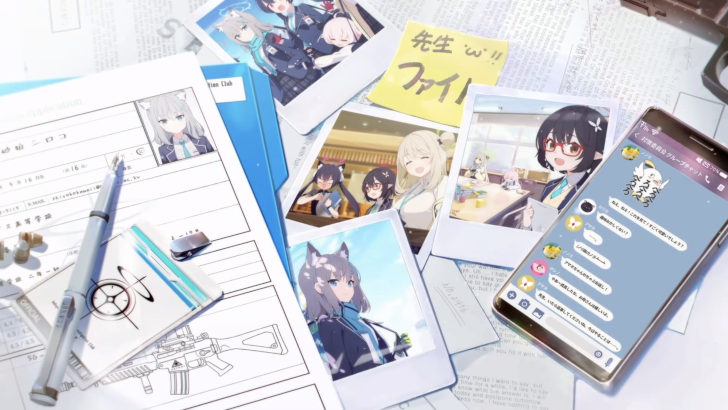
The bigger problem is getting to those stories in the first place. Blue Archive does a decent job warning players when an event contains spoilers for another story, even pointing them toward the relevant content first. The problem becomes more apparent when simply following the main story. A new Volume can unlock while the player is still working through an earlier one, presenting another major story without clearly explaining whether to read it immediately or save it for later. For a new player who's simply following the story as it becomes available, it can be surprisingly easy to stop and wonder which part should actually come next.
That's an awkward position for any story-driven game to put its audience in. Blue Archive has accumulated a huge amount of content over the years, so some complexity is understandable, but the game could do more to establish a coherent order. Its individual Volumes can be genuinely engaging, but the lack of a clear path between them makes an otherwise compelling story harder to navigate than it needs to be.
A Tactile Tactical Experience When the Girls Are at the Frontline
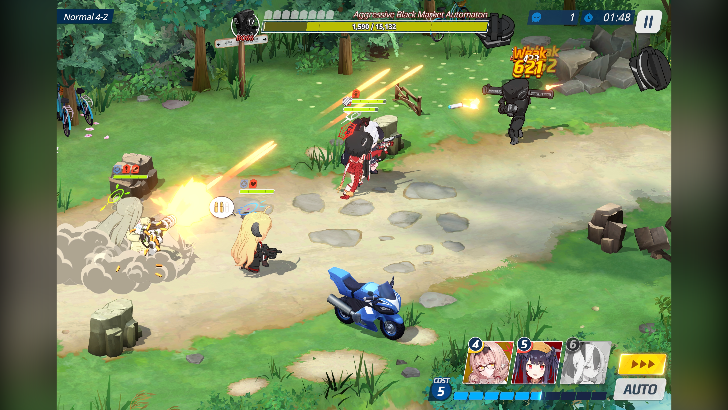
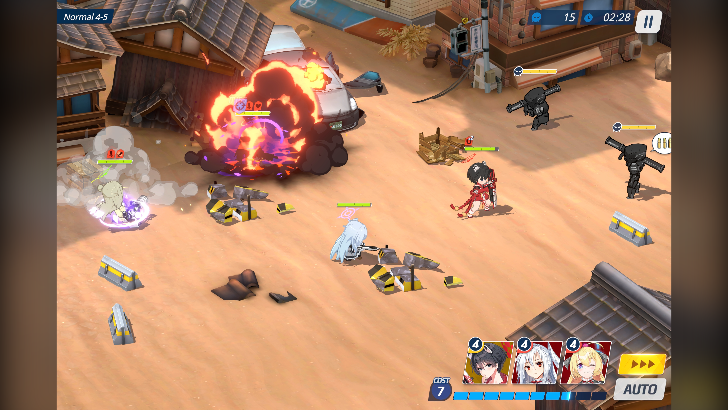
Blue Archive's combat is built on an auto-battler foundation, but it's less hands-off than that might suggest. Students handle their own movement, basic attacks, and positioning, while the player guides the battle through EX Skills, resource management, targeting, and team composition. Much like Sensei's role in the story, the player isn't there to take control away from the students, but to give them the direction they need to succeed.
A team consists of four Strikers and two Special students. Strikers fight directly on the battlefield, while Special students provide support from the background. Once combat begins, both groups largely operate on their own, leaving the player to manage the EX Skills available through a shared Cost gauge. Only three skills are available at a time, with another entering the rotation after you use one. This creates a simple but effective decision-making loop: spend Cost on what is useful now, save it for something more important, or wait for the skill that can turn the situation around.
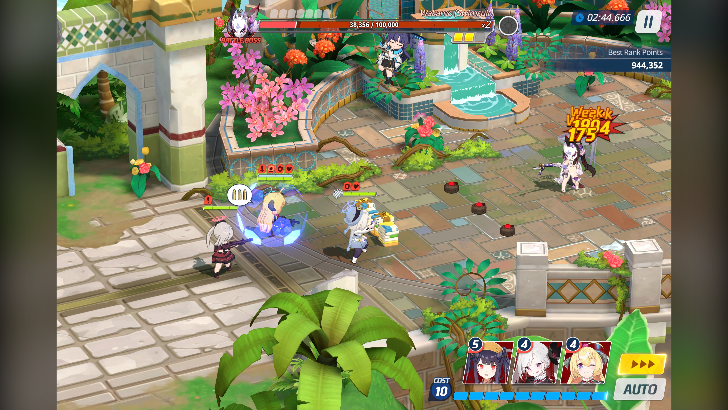
That decision-making keeps combat from becoming a glorified spectator sport. Some EX Skills require manual targeting, whether it's placing an area-of-effect attack or lining up a shot, while others can heal allies, reposition enemies, or provide other forms of support. There's also an Auto Mode that can handle those decisions for the player, but I find the manual system remains the more interesting way to engage with combat.
Enemy armor types also encourage players to consider their team composition before a battle, rather than simply bringing the strongest students available. The actual fighting is automated, but deciding how that fighting unfolds is not.
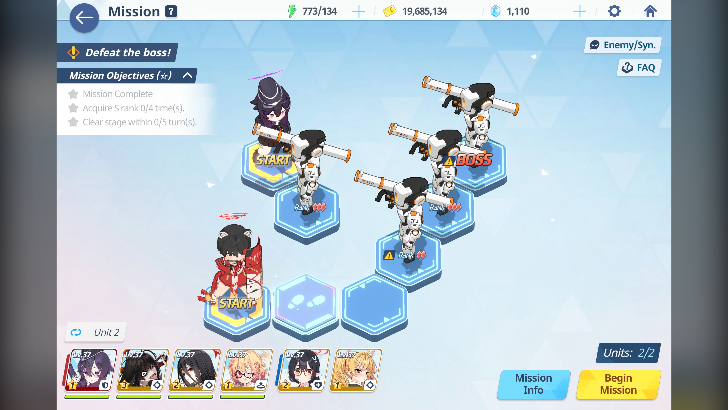
Missions add another layer around these battles. Rather than simply moving from one fight to the next, squads travel across hexagonal maps with various gimmicks, enemies, special tiles, and buffs to account for along the way. The maps are fairly straightforward, but they add a light strategic, puzzle-like element to the regular Missions beyond the combat. It is a relatively simple addition, but one that gives the game's main stages a little more structure.
Blue Archive's approach works because it knows what to automate and what should remain in the player's hands. You don't need to manually tell a student when to reload or where to move every few seconds, though some student kits do allow that kind of control (looking at you, Serika). Instead, the game leaves the player with the decisions that actually matter. It is a simple foundation, but one that gives the combat considerably more depth than its automated presentation might suggest.
Building a Student Takes Patience
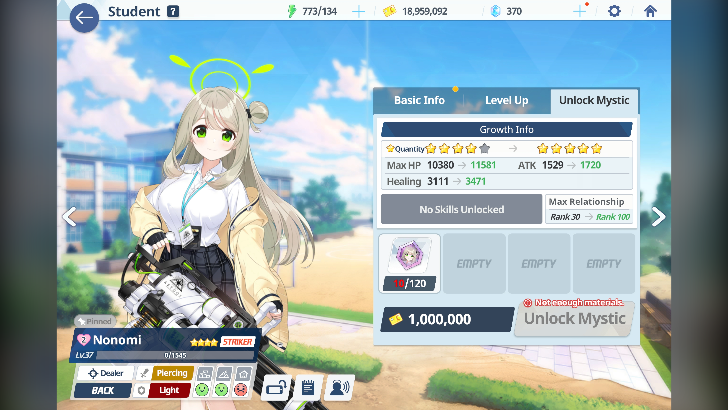
Blue Archive's progression starts simply enough. Raising a student's level, improving their skills, and equipping better gear are all familiar systems, but Blue Archive keeps adding to a student's development as they grow. Account level determines how far students can be leveled, while new equipment slots and higher equipment tiers open up as they grow. Each system builds on the last, giving students a clear path for continued growth.
That becomes more apparent with the systems sitting further down the progression curve. Affection provides stat bonuses alongside its more personal rewards, while Lessons and the Cafe give players passive ways to continue developing their relationships with students. Crafting similarly gives excess materials another purpose, letting players turn resources into gifts, furniture, and other useful items. Together, these systems make developing a student feel like an ongoing process, which fits a game so heavily centered on the relationship between students and their teacher.
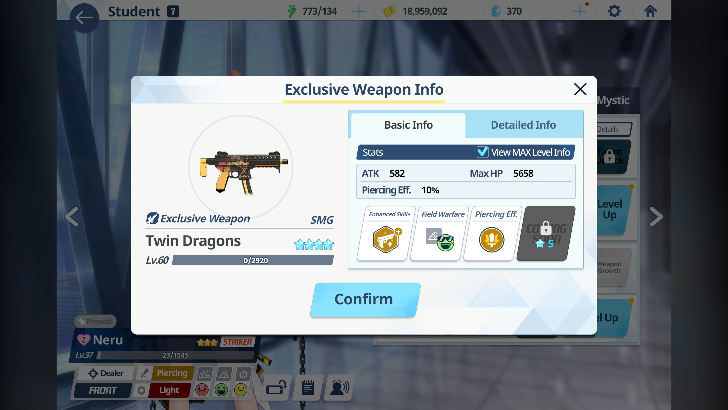
The biggest commitment comes when pushing a student toward their full potential. Reaching five stars unlocks their Unique Weapon, adding another layer of investment to an already-developed character. These weapons provide further stat bonuses and improvements to a student's abilities, giving players another way to push their favorite students further. Free players can take considerable time to get there, since Elephs can be farmed through various in-game sources, while duplicates from Recruitment can instead provide Eligma, which can be exchanged for a student's Elephs. That makes the system flexible, but it also means that one of the more meaningful upgrades available to a student requires a substantial investment of either time or resources.
That does not make lower-star students unusable. A student does not suddenly become worthless because their Unique Weapon is locked away, and the game's progression systems give players plenty of room to strengthen a character before reaching that point. The appeal is that there is always another layer to a student's development, but that depth can also make the finish line feel quite far away. Blue Archive's character progression is satisfying because it gives players so much room to invest in a favorite student, even if reaching their full potential is a long-term commitment.
Plenty of Ways to Put Students to Work, Most of the Time
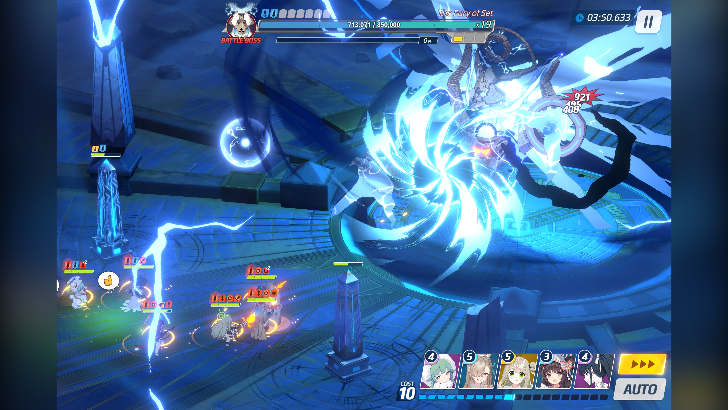
Building up students would not mean much if there were nowhere to use them, and Blue Archive has no shortage of content built around its combat system. Permanent modes such as Commissions, Bounties, and Scrimmages provide the resources needed to keep developing students, while its various combat challenges give those investments a reason to matter. Total Assault is one of the clearest examples, pitting players against increasingly powerful bosses that encourage specialized teams and different approaches to combat. Mock Battles are especially useful here, letting players experiment with compositions and strategies without using up their actual attempts.
The more specialized modes expand on that foundation. Grand Assault puts a different spin on Total Assault by having players tackle the same boss across multiple damage types, while Final Restriction Release keeps a featured challenge available for a much longer period before rotating to another.
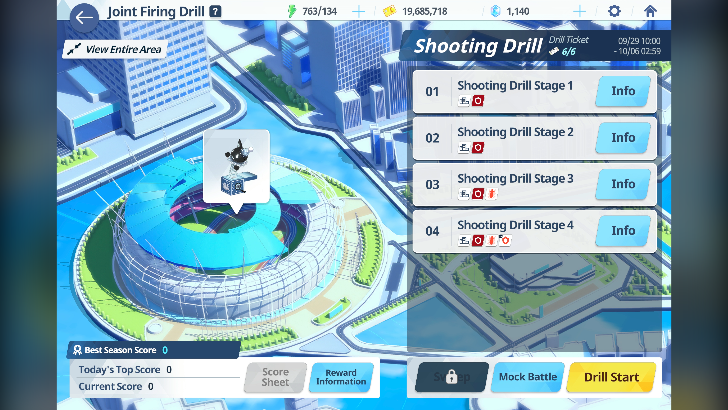
Joint Firing Drill takes a different approach, cycling through several challenge formats that test damage, defense, healing, or protecting a specific target. The variety is surprising, and the game does a good job of giving its progression systems a proving ground through player rankings and score-based rewards.
The problem is that Blue Archive can be strangely selective about when some of this content is actually available. Commissions, Bounties, and Scrimmages can be played whenever their resources are needed, while Final Restriction Release effectively keeps its format available as its featured challenge rotates. Other modes, however, simply become unavailable between their scheduled runs. Joint Firing Drill is the most obvious example. Unlike a seasonal boss event such as Grand Assault, it has no seasonal ranking structure that requires the mode itself to disappear.
This creates a strange disconnect with the rest of the game. Blue Archive spends so much time encouraging players to build specialized teams, experiment with different students, and invest in the game's progression systems, yet some of the places to test those teams are only available on the game's schedule. The problem isn't the limited-time rankings, rotating bosses, or exclusive rewards. Those give recurring content a reason to change without taking the underlying gameplay away entirely. Blue Archive already shows this with modes that keep their gameplay available while rotating featured challenges, showing that the two don't have to be tied together. The main, and arguably unnecessary, source of friction is that some modes become completely inaccessible between rotations.
That is particularly frustrating for newer players who are still figuring out what their students can actually do. Keeping modes like Joint Firing Drill available between rotations would still allow their challenges and rewards to change on a schedule without removing the mode itself. There is little reason for the entire mode to disappear simply because its current challenge has ended. Blue Archive gives players plenty of reasons to keep building their students, but not always enough opportunities to actually put them to work.
Presentation That Rightfully Prioritizes Characters

When it comes to being cute and funny, Blue Archive stands out. The story uses character sprites, expressive portraits, and occasional CGs to bring its cast to life, though its presentation is comparatively restrained outside of those moments. Combat is where the game really gets to show off its personality through its 3D chibi models. Students run across the battlefield, take cover, reload their weapons, and perform their skills with plenty of charm, while even the more ordinary characters get distinctive skill animations. The soundtrack is similarly strong, moving comfortably between serious moments, energetic battles, and the game's more absurd situations, while the selective voice acting consistently gives the cast more personality.
The UI is a little less successful. Information is generally easy to find and important functions are clearly presented, although setting up teams and managing students can involve a few more menu layers than necessary. More noticeable are the occasional moments when the interface simply fails to respond to an input. It is not a constant problem, and the menus used during missions remain responsive, but Blue Archive relies heavily on its interface outside of combat. With so much of the game built around managing students, resources, and progression, even minor responsiveness issues can make the overall experience feel less polished than it should.
A Simple Shop, Then There's The Road to 200
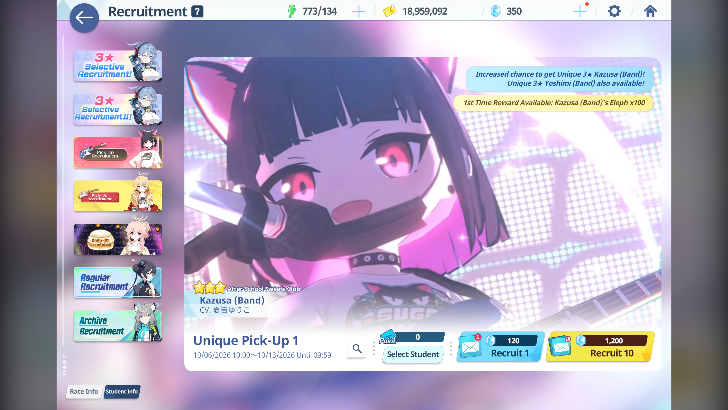
Blue Archive keeps its monetization relatively straightforward. Pyroxenes are primarily used for Recruitment, while the shop offers various packs and resources that can speed up progression. There is also no conventional battle pass, though the Monthly Pyroxene Pack serves a similar role as a recurring purchase for players who want a steady supply of extra currency.
Recruitment at least gives players a clear endpoint through its 200-point exchange, which guarantees the featured student. That is useful, but it is better described as a guarantee than a safety net. No earlier pity threshold guarantees a 3-star student, meaning an especially unlucky player can go deep into a banner without seeing one. The odds of going that long without a 3-star are low, but it's not impossible. Blue Archive's gacha ultimately provides certainty at the end of the process, rather than making that process particularly forgiving.
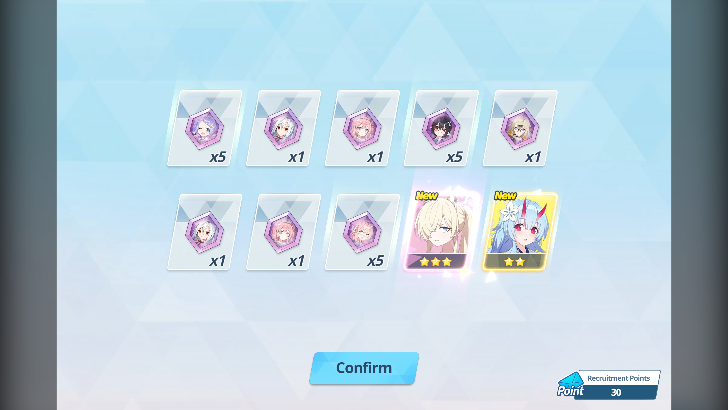
Duplicates also have some value beyond simply providing another copy. As mentioned earlier, duplicate students provide Elephs and Eligma, which you can use to further develop students through the game's existing progression systems. This means an unwanted duplicate can still help strengthen another character, although it does little to change the fact that getting a desired student in the first place can be expensive.
That leaves Blue Archive with a fairly simple distinction between spending money and spending time. Most of the resources needed to develop students can be earned through normal play, while spending can speed up the process. The monetization is easy to understand, even if the costs can still add up. It isn't the most generous gacha around, especially given how far away its 200-point guarantee is, but it's at least transparent about what players are paying for.
Is Blue Archive Worth It?
Time Well Spent in Kivotos
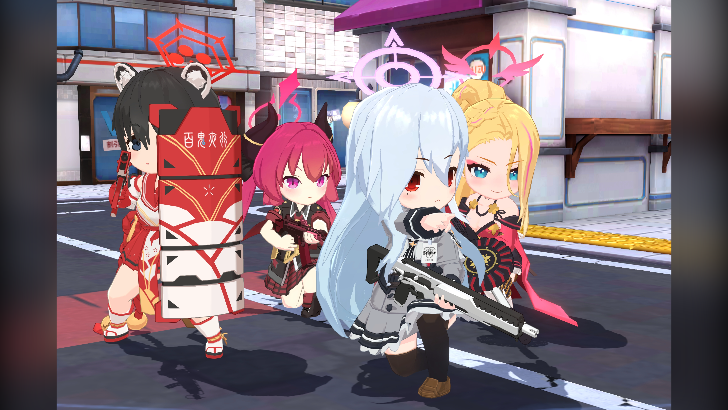
Blue Archive is easy to get invested in and even easier to recommend for new and seasoned gacha players alike. Its students are the real stars, with their stories, personalities, and relationships giving the game's many systems a reason to exist. The combat is deeper than its automated foundation suggests, while the progression systems provide plenty of room to develop a favorite student over time. There is a lot of game here to get through and poke around in.
What makes Blue Archive frustrating is that it often feels like the game is getting in its own way. At times, its systems work together beautifully, only for another part of the game to add unnecessary friction. Story progression can be confusing for new players, some combat content is needlessly inaccessible between rotations, and developing a favorite student can take significant investment. Don't get me wrong, Blue Archive is an enjoyable game, but reaching that enjoyment can be harder than it needs to be.
For all of that, Blue Archive remains compelling, all these years later. The game has a strong sense of personality, a cast worth getting attached to, and enough mechanical depth to support that investment. It isn't a perfect package, but it has a lot of heart beneath its layers of systems. Blue Archive is at its best when those systems get out of the way and simply let its characters shine.
Game8 Reviews



















Blue Archive is very good as long as you ignore some of the weirdness, like the foot kissing bit in the first Volume...and a majority of the fan base.