

| Trickcal: Chibi Go | |||
|---|---|---|---|
| Release Date | Gameplay & Story | Pre-Register & Pre-Order | Review |
Trickcal: Chibi Go is a charming gacha auto-battler filled with lovable chibi Apostles, absurd humor, and relaxing daily progression. Read our review to see what it did well, what it doesn't, and our overall impressions of the game.
Overview
What is Trickcal: Chibi Go?
Trickcal: Chibi Go is a free-to-play side-scrolling auto-battler gacha where players build teams of chibi Apostles to battle through the whimsical world of Elias. After being transported to a world inhabited by colorful fantasy races, players become entangled in a series of conflicts ranging from food shortages and political unrest to larger mysteries lurking beneath the game's lighthearted humor. Outside the main story, players strengthen their roster through character progression, equipment, and team-building while tackling a variety of game modes, all wrapped in a colorful presentation that blends absurd comedy with charming character interactions.
Trickcal: Chibi Go features:
⚫︎ Side-Scrolling Auto-Battler Gameplay
⚫︎ Charming Chibi Characters with Expressive Animations
⚫︎ Humorous Fantasy Storytelling
⚫︎ Personality- and Race-Based Team Building
⚫︎ Multiple Apostle Progression Systems
⚫︎ Auto-Battle and Sweep Features
⚫︎ Diverse PvE Game Modes
⚫︎ Fully Voiced Story and Character Interactions
For more gameplay details, read everything we know about Trickcal: Chibi Go’s gameplay and story.
| Digital Storefronts | |||||
|---|---|---|---|---|---|
 Google Play Google Play |
 App Store App Store |
||||
| Free-to-Play | |||||
Trickcal: Chibi Go Review: A Cute Gacha With Staying Power
Small Sessions, Big Personality

Gacha games are built around routines. Players log in to complete their dailies, spend their stamina, strengthen their roster, and, if time allows, push a little further into the story or whatever long-term goal they're working toward. Trickcal: Chibi Go follows that same formula, but what stood out during my time with it was how little friction there was in getting through those daily tasks.
Built around a side-scrolling auto-battler with a few auto-chess ideas mixed in, Trickcal focuses less on mechanical execution and more on gradually building a roster of quirky Apostles, the collectible characters that make up each team. Its story leans heavily into absurd comedy, its presentation squeezes as much personality as possible out of every menu and animation, and progression is designed to be chipped away at over time rather than conquered in a weekend.
That doesn't mean the experience is flawless. Story progression eventually becomes gated behind additional grinding, while the stamina system can feel restrictive for players who simply want to keep playing. Those frustrations become more noticeable the further progression pushes into the late game, even if the overall routine remains easy to fit into a busy schedule.
A World That Refuses to Take Itself Too Seriously

Trickcal: Chibi Go wastes little time throwing players into the wonderfully bizarre world of Elias. One moment, you're minding your own business. The next, you've been isekai'd into a kingdom on the verge of collapse over a nationwide sweets shortage, armed with a handgun that somehow can't shoot living things, surrounded by chibi-sized Apostles who expect you to help sort everything out. It sounds ridiculous because it absolutely is, and Trickcal knows it.
That irreverent tone defines almost every aspect of its storytelling. Whether it's repeatable game modes receiving increasingly absurd in-universe explanations, elves casually discussing their failed attempt to conquer Earth, or Queen Erpin somehow finding herself begging for bread despite ruling an entire kingdom, the game constantly finds opportunities to inject humor into situations that would otherwise be taken far more seriously. Even the world itself plays by bizarre rules. Nobody truly dies, humans don't exist, and the moral compass of just about every race seems to point in a different direction.
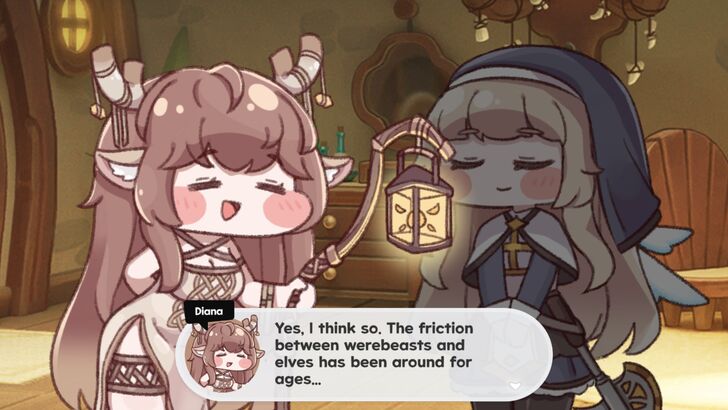
What's surprising is how well that absurdity works. Elias is filled with conflicts that, under normal circumstances, would be incredibly bleak. Food supply lines are sabotaged, entire regions are stripped of resources, prejudice exists between races, and exploitation is simply treated as another unfortunate part of everyday life. Rather than dissecting those ideas, Trickcal largely accepts them as the world's status quo and focuses on how its eccentric cast reacts instead. The result isn't a story interested in delivering social commentary so much as watching morally questionable little gremlins stumble through equally questionable situations.
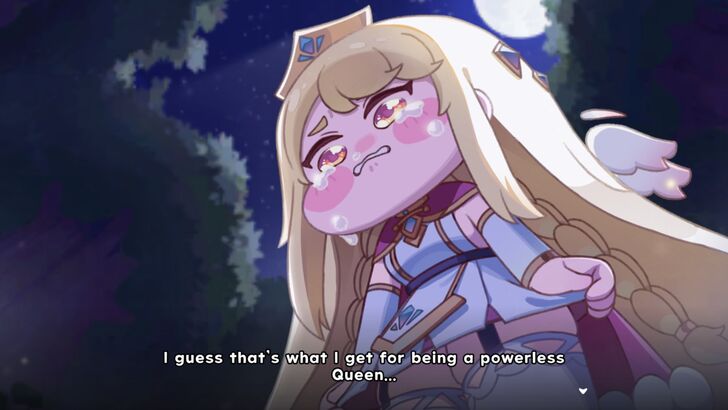
That approach also extends to its cast, who often reveal more beneath their initial gimmicks than expected. Queen Erpin was easily the biggest surprise. At first glance, she's portrayed as an immature ruler whose obsession with sweets and general incompetence make her an easy punchline. Spend enough time with the main story, however, and another side begins to emerge. She's painfully aware that many of her own subjects don't take her seriously, quietly struggles with feelings of inadequacy, and genuinely wants to become someone worthy of the throne. The story never completely abandons her comedic role, but it adds just enough vulnerability to make her more than the butt of every joke.
Other characters benefit from similar treatment. Whether it's Vivi's determination to maintain the flawless purity of a ruler by masking her true nature behind strict cleanliness, Elena's desperation to return home despite her own questionable methods, or the many smaller interactions unlocked through character stories and the Banquet Hall, Trickcal consistently rewards players for spending time with its Apostles beyond their first impression. Even the protagonist's ability to read minds adds another layer to conversations, revealing thoughts that are often equal parts hilarious and unexpectedly insightful.
Dialogue choices also deserve a mention. While they don't radically alter the story, they frequently change how characters respond, making conversations feel a little more personal without turning every decision into a branching narrative. The ability to revisit alternate responses is a welcome touch as well, letting curious players see different reactions without replaying entire chapters.
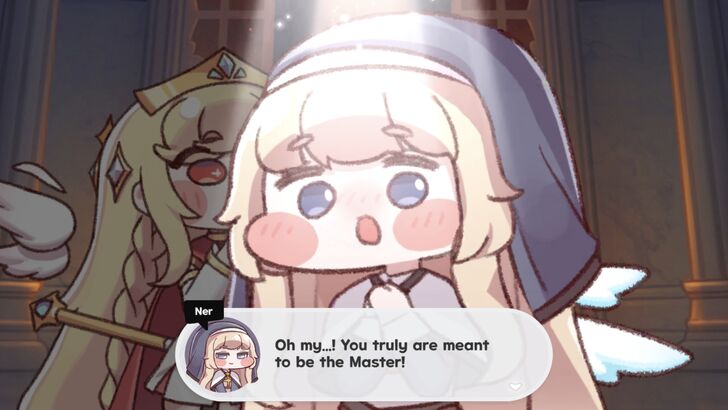
If there's one place where the story occasionally leaves something on the table, it's how quickly it returns to its trademark humor. Trickcal does give its emotional moments room to breathe, particularly during Erpin's quieter scenes in earlier chapters, but it rarely lets those moments become the lasting takeaway before shifting back into comedy. That keeps the pacing consistently light and entertaining, though it also means some of the narrative's strongest emotional beats don't linger quite as long as they could have.
Between the unrest across the different kingdoms and a cast that's far more layered than their adorable appearances initially suggest, Trickcal's story proved surprisingly easy to get invested in. It may never stop reminding players that it's a comedy first and foremost, but beneath all the jokes is a world that's interesting enough to keep coming back to.
Easy to Pick Up, Easy to Leave Running
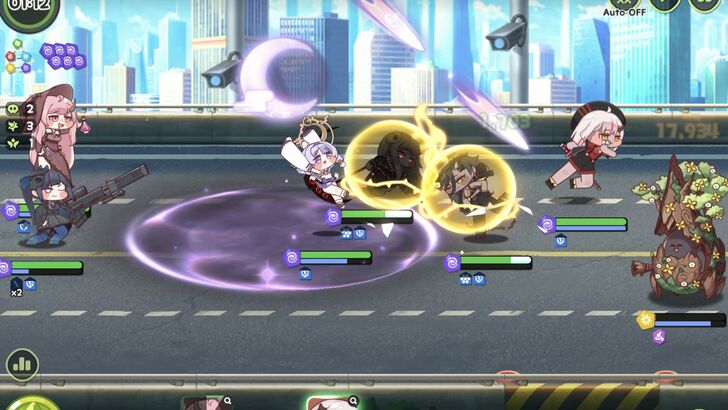
Most of Trickcal: Chibi Go's gameplay revolves around sending a team of up to six Apostles into battle, gradually strengthening them through an in-match shop while building around Personality and Race synergies. It's a side-scrolling auto-battler with a few auto-chess ideas sprinkled into the mix, though its gameplay remains straightforward. Rather than overwhelming players with layers upon layers of mechanics, Trickcal focuses on a gameplay loop that's easy to pick up and settle into.
Every wave rewards Coins that can be spent on recruiting Apostles, increasing their grade by purchasing duplicates to unlock stronger skills, buying Relics that benefit the entire team, or equipping new gear. Fortune events occasionally throw in random bonuses as well, giving players a few extra ways to salvage—or completely snowball—a run. The overall strategy isn't particularly complicated, and the shop's randomness means no two runs play out exactly the same. Sometimes you'll get exactly what you were hoping for. Other times, one poor Apostle stubbornly stays at Grade 1 while everyone else somehow ends up at three or four. At that point, there's little to do beyond finishing the run and hoping the next shop is a little more generous.
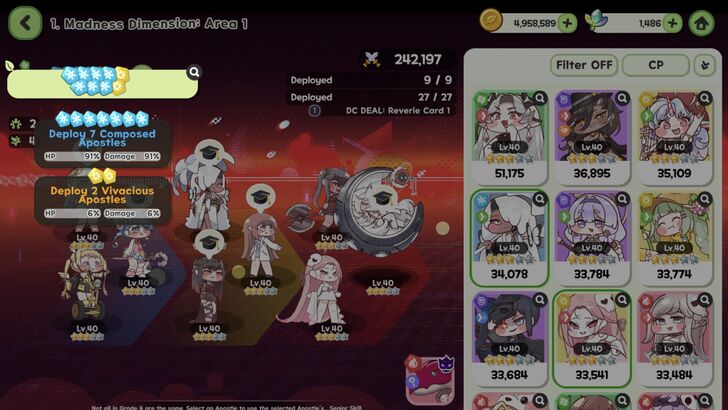
Building teams follows that same philosophy. Personalities function much like elemental affinities, encouraging players to group compatible Apostles together, while Races provide their own passive bonuses, such as Sprites boosting Skill Damage or Elves increasing Attack Speed.
Apostles are also assigned to the Front, Mid, or Back Row. Tanks always occupy the Front Row, while Damage Dealers and Supports can appear across all three depending on their individual kits, making team building easy to grasp without feeling restrictive.
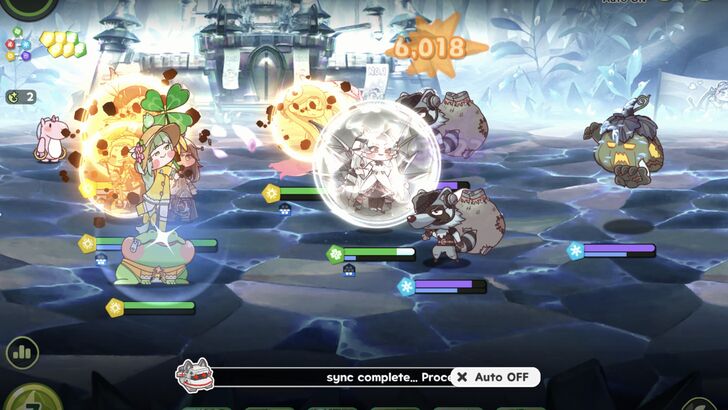
Combat itself is about as hands-off as the game suggests. Battles play automatically, with manual skill activations available for players who prefer a little extra involvement. Most of the time, though, I found myself letting the fights play out while occasionally stepping in to activate skills or make small adjustments when needed. It's the kind of game that doesn't mind if your attention drifts elsewhere for a few minutes.
That focus on convenience carries throughout the rest of the experience. Auto mode comfortably handles most routine content, while Sweep lets players instantly clear stages they've already completed. Together, they make short play sessions feel genuinely productive.
A Comfortable Daily Grind That Occasionally Slows Its Own Momentum
Building a stronger Apostle in Trickcal: Chibi Go is exactly what players would expect from a gacha. Between leveling, equipment, stars, skill upgrades, Character Boards, and eventually Yearnings, every upgrade contributes to an ever-increasing Combat Power. It may sound like a lot at first, but each system is introduced at a comfortable pace, making it easy to understand how an Apostle grows stronger without constantly throwing another menu or mechanic onto the pile.
Fortunately, farming is about as painless as it can be. Equipment, skill materials, Character Board resources, and other upgrade items all have their own dedicated stages, while the in-game material lookup points directly to where everything can be obtained. Once a stage has been cleared, Sweep takes over, turning routine farming into a matter of spending stamina rather than replaying content that has already been beaten.
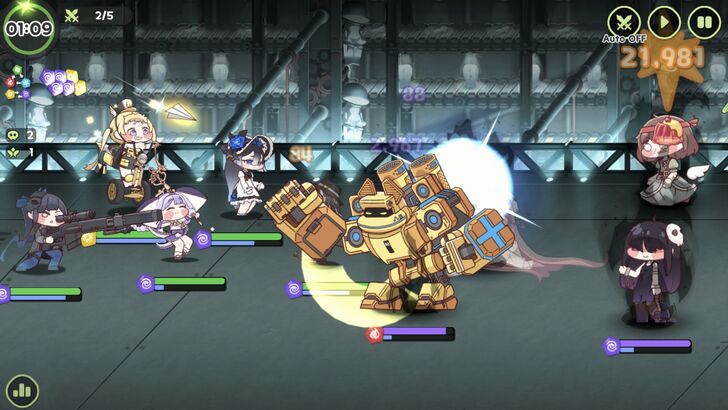
Nearly everything eventually circles back to Crusade. It's the mode responsible for unlocking new game systems, opening additional features, and pushing the main story forward, making it the backbone of Trickcal's overall progression. Early on, that structure works well. New mechanics arrive gradually, and watching more of the game open up world after world gives progression a satisfying sense of momentum.
That momentum eventually begins to slow. As Combat Power requirements climb, Crusade asks players to spend more time strengthening their teams before the next stretch of progression opens up. I eventually reached a point where I fully expected the next story chapter to unlock, only to realize I still had another Combat Power wall standing between me and the rest of Elias. That meant taking a detour to farm upgrades before I could continue, and I couldn't help but let out a quiet groan knowing the story would have to wait just a little longer.
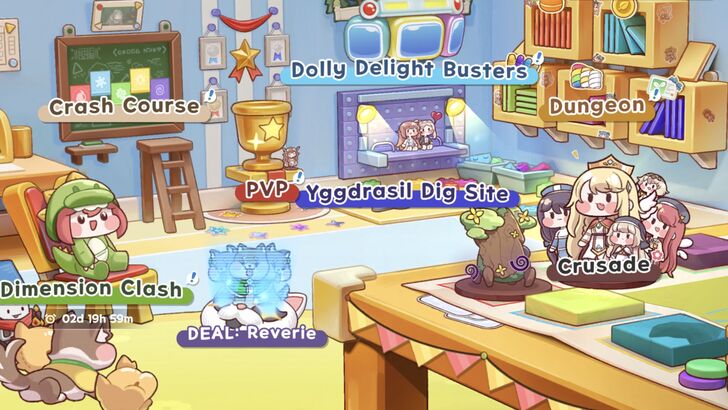
Stamina reinforces that same daily rhythm. Equipment farming and upgrade materials each use separate stamina currencies, allowing players to make progress across multiple systems instead of choosing one over the other. Both resources are still finite, however, and longer farming sessions eventually come to a halt unless players dip into stockpiled refills or premium currency.
That's where Trickcal's progression rhythm becomes most apparent. Short sessions feel consistently rewarding, making it easy to log in, strengthen an Apostle, and gradually work toward the next goal without feeling overwhelmed. Longer sessions, however, begin to expose its limits, as Combat Power requirements and finite stamina can slow progress to a crawl. It's a progression loop that works best in smaller bursts, even if it occasionally tests the patience of players looking to keep going.
A Presentation That Never Misses a Beat
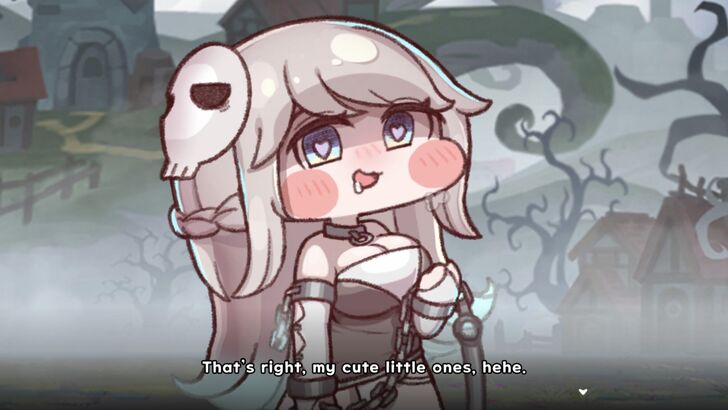
Nearly every part of the game feels packed with personality. Expressive animations, playful UI interactions, and a cast of Apostles that somehow manage to be equal parts adorable and chaotic all come together to create one of Trickcal's biggest strengths: its presentation.
The chibi art style does a lot of the heavy lifting here. Some Apostles are very clearly designed with plenty of sex appeal in mind, but shrinking everyone down into tiny, expressive gremlins completely changes the vibe. Instead of becoming the defining feature of their designs, the fanservice takes a back seat to exaggerated expressions, goofy animations, and an art style that's simply fun to look at.
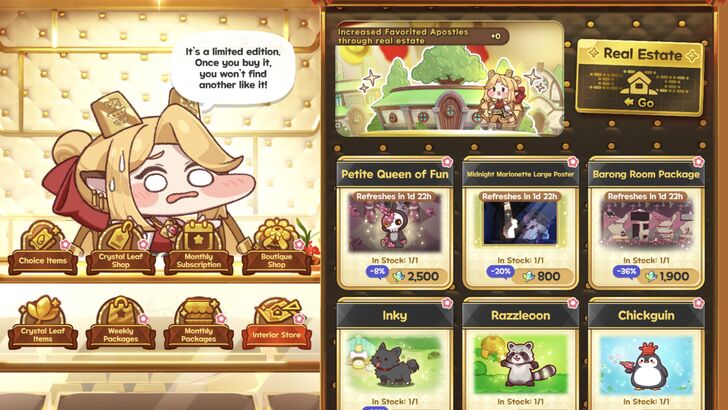
That personality doesn't stop once combat ends either. Pull on the visible cheek of almost any Apostle in the menus, victory screens, or even certain cutscenes, and they'll react with their own voice lines and little crying or annoyed animations. It serves absolutely no gameplay purpose whatsoever.
I love it.
It's such an unnecessary little detail, but also one I found myself repeatedly messing with whenever another Apostle showed up on screen. Trickcal is full of interactions like this that don't need to exist, yet give the game far more character than a menu screen has any right to.
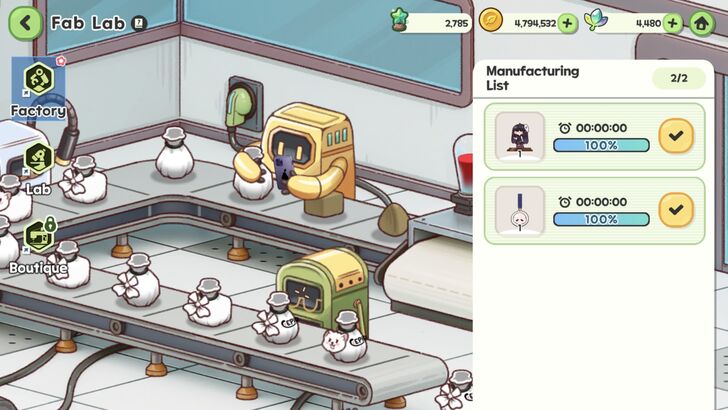
The interface carries that same energy. Bright colors, clean layouts, and soft, bubbly sound effects make simply navigating menus surprisingly satisfying, while little touches like miniature chibi Apostles scrambling onto the battlefield before each encounter keep the game's playful identity front and center. Even the sketch-like outlines around character artwork help give everything a distinct look without feeling overdesigned.
The audio presentation is just as charming. Major story scenes and character interactions are fully voiced, sound effects remain lively without becoming grating, and the soundtrack does a great job matching Trickcal's lighthearted atmosphere while occasionally surprising players with tracks carrying more emotional weight than expected. I only wish those moments came through a little more clearly. Voice lines and sound effects often overpower the background music, making it easy for some genuinely enjoyable tracks to fade into the background.
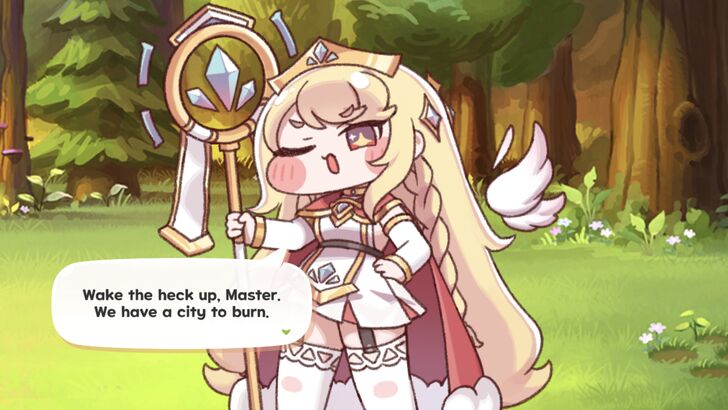
The localization deserves plenty of credit as well. Between the constant pop culture references, absurd one-liners, and a script that fully commits to the world's bizarre sense of humor, the jokes landed far more often than they missed. One moment you'll be laughing at an obvious reference, and the next you'll be watching tiny chibis argue over a kingdom-threatening crisis with complete sincerity. Somehow, it all works.
Plenty of games can be called cute. Trickcal stands out because it never settles for being just that. Every animation, UI flourish, and unnecessary little interaction adds another layer to a presentation that's consistently fun to watch, poke at, and spend time with long after the novelty should've worn off.
Familiar, With a Few Nice Touches
There's very little about Trickcal's monetization that'll surprise veteran gacha players. Character banners, skins, subscription packs, a Premium Shop, and a Battle Pass are all present, though a few thoughtful systems help make even unlucky pulls feel like they're still contributing toward a long-term goal.
One of the better ideas is how Trickcal handles its banner economy. Devotion Points, the pity currency earned from rate-up banners, carry over between future rate-up banners instead of disappearing once one ends, while most new Apostles eventually join the permanent pool after their debut banners. Limited banners also allow unused Devotion Points to be converted into Crystal Drops, a shop currency used to exchange for specific Apostles. Building toward an Eldyne, one of Trickcal's rarer Apostle types, still takes time, but every pull continues feeding into a longer-term goal instead of feeling like progress disappears alongside a rotating banner.
That same feeling carried over to the premium currency. Crystal Leaves, Trickcal's premium currency used for summons, stamina refills, and other purchases, never felt particularly scarce during my playthrough, with the daily board steadily chipping away toward the next ten-pull alongside whatever events or freebies happened to be running. Outside of occasionally stopping by to claim another batch of free Crystal Leaves, I rarely found myself opening the Premium Shop. It was always there whenever I wanted to browse bundles, subscriptions, or cosmetics, but I never felt particularly compelled to visit it just to keep up with progression. The Battle Pass landed in much the same spot, quietly rewarding regular play without demanding much attention.
Ultimately, Trickcal's monetization rarely felt like it was competing with the game itself. Spending certainly speeds up progression, as expected from a gacha, but throughout my time with Trickcal, I never felt pressured to open my wallet simply because I wanted to keep progressing. More often than not, I simply logged in, claimed another handful of Crystal Leaves, made a little more progress, and called it a day.
Is Trickcal: Chibi Go Worth It?
Keeping It Cute, Every Step of the Way
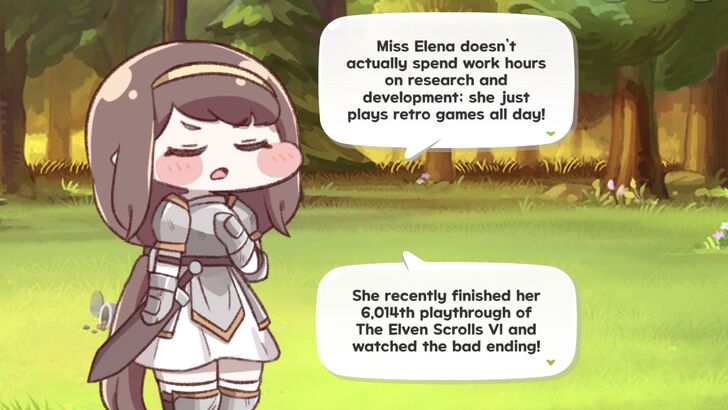
Trickcal: Chibi Go never tries to be the deepest strategy game, the most mechanically demanding auto-battler, or the flashiest gacha on the market. Instead, it commits wholeheartedly to being a charming, low-maintenance experience that's easy to pick up, difficult not to smile at, and surprisingly easy to keep coming back to.
Its story balances absurd comedy with a cast that's more layered than first impressions suggest, while its approachable gameplay and satisfying progression make steady daily progress feel rewarding. More than anything else, though, it's the presentation that leaves the strongest impression. From expressive chibis and playful menu interactions to a localization that fully embraces the game's bizarre sense of humor, Trickcal consistently finds small ways to give its world personality.
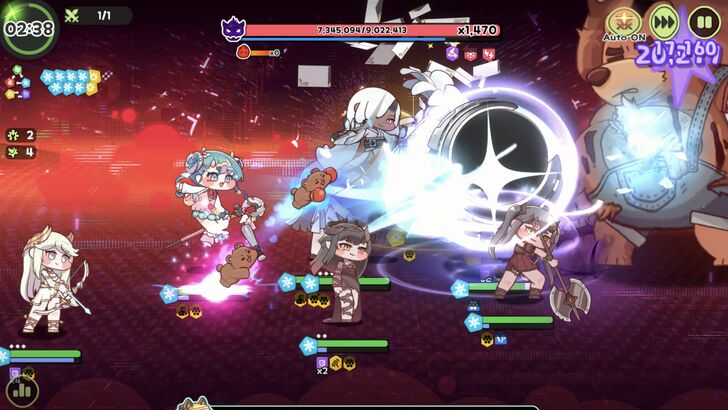
That doesn't mean it's without shortcomings. Crusade eventually becomes a noticeable gatekeeper for both progression and story, occasionally slowing the game's momentum more than I'd like, while players looking to settle in for lengthy farming sessions will eventually run into the limits of its stamina system. Neither issue stopped me from enjoying the game, but both became increasingly noticeable the longer I played.
By the time I reached that point, however, I had already settled into Trickcal's rhythm. Log in, strengthen a few Apostles, poke a couple of cheeks for no reason whatsoever, make a little progress, and log off. That's the routine Trickcal settles into, and it's one the game never tries to disguise. It wears its ten-minute daily structure on its sleeve, then spends those ten minutes making sure they're as enjoyable as they can be.
Trickcal: Chibi Go won't be the right fit for everyone. Players looking for mechanically demanding combat or hours of uninterrupted grinding will probably bounce off its relaxed pace sooner rather than later. Those willing to meet the game where it is, however, will find a charming little gacha that's remarkably easy to weave into a daily routine. It won't ask for much of your time, but it'll probably earn a few extra minutes anyway—if only because you can't resist stopping by to bother your favorite Apostle one more time.
Game8 Reviews