


Brigandine Abyss is the latest game in the cult classic Brigandine series. Read our review to see what it did well, what it didn't do well, and if it's worth buying.
Overview
What is Brigandine Abyss?
Brigandine Abyss is a turn-based tactical RPG, developed by Adglobe and published by NIS America, Inc. and Happinet for PC, PlayStation 5, Xbox Series X|S, and Nintendo Switch 2. Players will train troops, defend bases, and invade enemy territories as one of 6 nations in Story Mode or one of 24 nations in Mission Mode. Story Mode tells six unique tales of a nation going up against the Abyssloa Empire, while Mission Mode features specific win conditions for players to complete.
Brigandine Abyss features:
⚫︎ Six Different Story Campaigns
⚫︎ 24-Faction Mission Mode
⚫︎ Turn-Based Hexagonal Grid Battles
⚫︎ Over 100 Units to Command
⚫︎ Class Changes and Character Growth
⚫︎ Fight and Rally With Monsters
| Digital Storefronts | |||||||
|---|---|---|---|---|---|---|---|
 Steam Steam |
 PS PS |
 Xbox Xbox |
 Switch 2 Switch 2 |
||||
| $49.99 | |||||||
Brigandine Abyss Review: It’s a Good Strategy Game With a Few Too Many Problems
Abyss Is a Good Introduction to the Series, But…
Brigandine is a series I had unfortunately never heard of before Brigandine Abyss. There have only been a handful of games under its name since The Legend of Forsena was released for the PlayStation in ‘98, though that was apparently enough for it to become something of a cult favorite among strategy RPG fans. At first, I thought I had a pretty good idea of what I was getting into with Abyss. It looked like a medieval fantasy strategy RPG built around a continent-wide war, with kingdoms fighting over territory and armies meeting on a turn-based battlefield. Comparisons to Fire Emblem came to mind almost immediately.
That comparison only goes so far, though. Brigandine as a series puts you in charge of a nation. Your job is to manage its Leaders and Monsters fighting under them as you defend your territory and work toward taking over the continent. Really, it has more in common with 4X strategy games.
Brigandine Abyss is the newest game in the series and is my introduction to it. I have no point of reference for what the older games did better or worse, so I cannot tell you how Abyss stacks up against The Legend of Forsena or The Legend of Runersia. What I can say is that it worked well enough as an entry point for someone who had never touched Brigandine before. The game can feel a little awkward in places, and there are moments where you can see the edges of its budget, though none of that stopped me from having a good time with it from beginning to end.
Its Story Has Potential But Doesn’t Do Enough With It

There is war brewing in Meltitea, 200 years after the fall of the Abyssloa Empire. The empire was defeated by the Brigandine's power, and the continent has since entered a new era. The Kingdom of Solginat has grown into Meltitea’s strongest power, though its growing influence has made the other nations uneasy. This reaches a breaking point when Solginat’s chancellor, Chaossolus, stages a rebellion and establishes the New Abyssloa Empire.
Six factions, then, are left to deal with the return of a power that was supposed to be gone for good, with each one taking up the fight from its own corner of the continent. The game lets you choose between these six factions and follow their leaders through the same war, with each route giving you its own cast and circumstances.
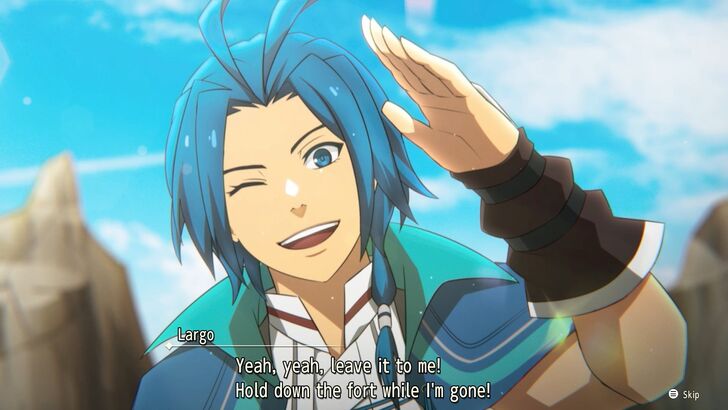
For instance, Gran Dragnica sends young dragon tamer Largo after dragons that were taken and brainwashed by the New Empire. Scarlet Will follows Garnet after her father’s death as she takes over his mercenary band and fights to protect her people. Mystiaine’s knight Zailzart fights to fulfill the kingdom’s duty of preserving peace, while Alicebell is drawn toward memories she has lost. The Samura Clan and Pandemonium have their own stories to tell as the war spreads across Meltitea.
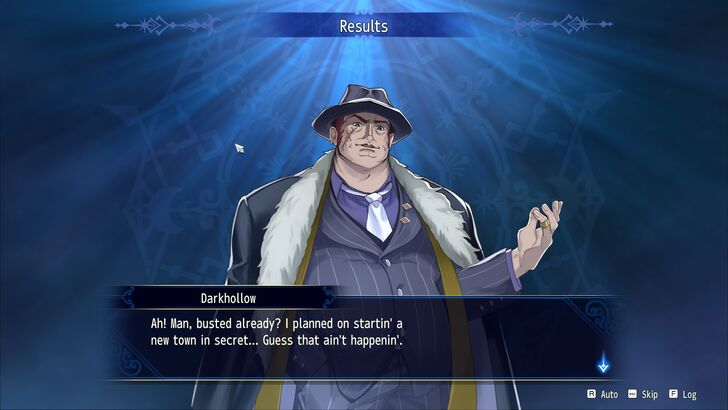
If I’m being truly honest, though, I didn’t care for Brigandine Abyss’ story. There are six factions involved, sure, and each one gives you a different perspective on how the war plays out. They have their own reasons for fighting and their own problems to deal with, yet the story itself is paper thin. Most of the characters are basic anime archetypes, and the game gives you very little to work with when it comes to the world they’re inhabiting.
This can become a problem for a medieval fantasy story built around a continent-wide war. I don’t need pages upon pages of lore explaining every kingdom, though I do want enough history to understand why these people care so much about the places they’re fighting for.
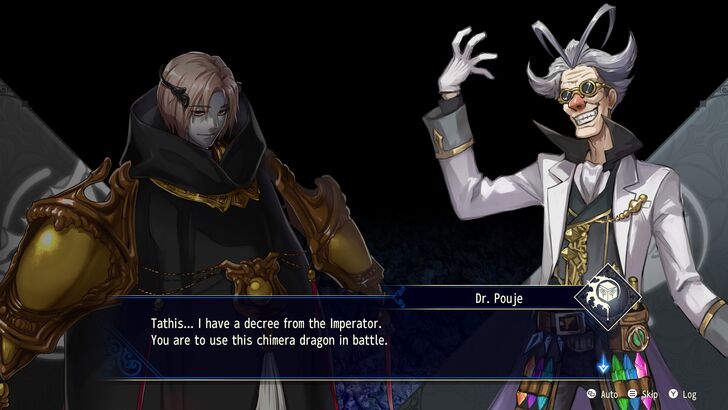
There are short dialogue exchanges throughout the campaign, and there are some nice-looking anime cutscenes sprinkled in between them. They rarely give me much more to work with. Characters can go through several Seasons without a proper story scene, then come back with a new revelation or some change in their temperament that I’m simply expected to accept.
These characters experience their arcs without showing you. The game tells you that they did. No matter which faction leader I picked, the macro-story kept falling into the same story beats. I get a brief introduction explaining why my side has a reason to oppose the New Empire, and then it becomes the age-old tale of "New Empire bad, so let’s go beat them."
There is some pretty funny ludonarrative dissonance in this setup. The New Empire is supposed to be a big threat, yet I have to invade and conquer the nations around me before I can properly deal with it. I can understand why the game works this way because conquering territory is the entire point of Brigandine’s campaign. It’s still strange, though, when the story tells me that the continent needs to stand against one empire while the gameplay has me spending Season after Season taking my neighbors’ strongholds.
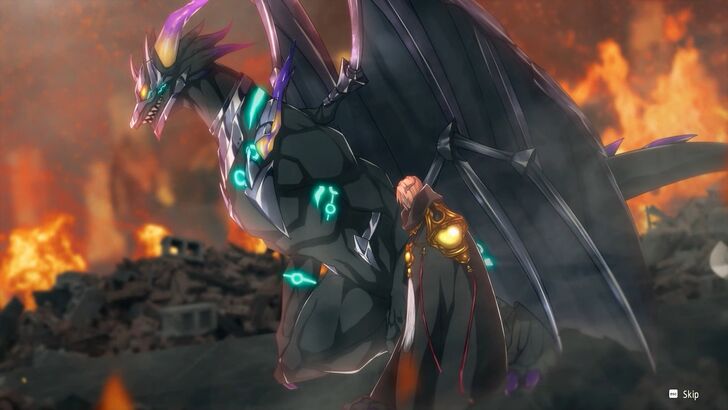
I can give Abyss some credit for keeping its story focused on what the game actually wants you to do. Each faction has a reason to enter the war, and their campaigns give you just enough context to understand why their armies are moving across Meltitea. I don't need every character to have a complicated backstory or every nation to come with a history textbook attached. I just wanted the writing to do more with the material it already had. Six factions looking at the same war from different sides is a good setup on its own, and it has a lot of potential to be a great war story.
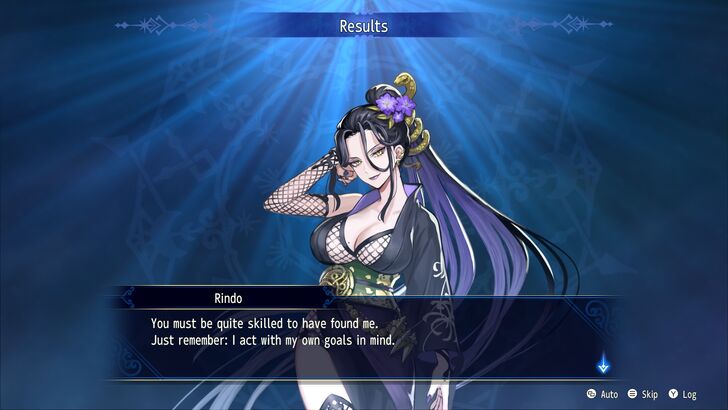
The presentation helps in this regard. There is enough detail in the 2D artwork to make the cast easily recognizable, and several character designs include subtle touches that reveal their personalities at a glance. The animated cutscenes are a bit rougher—resembling stills that were made to move late in production—though I still enjoyed having them for big story beats.
I just wish there were more behind these characters. The story is pretty bare-bones, but it at least gets the job done for its excellent gameplay.
Didn’t Know Navigating Through a Bunch of Menus Would be Fun
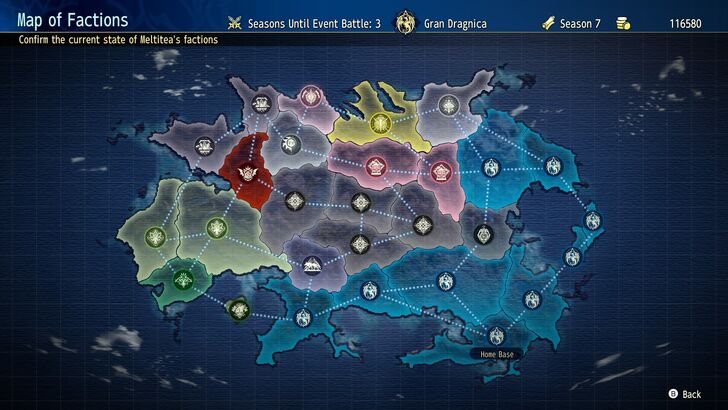
Brigandine Abyss operates fundamentally as a macro-level war simulator, with the bulk of its strategy taking place on the continental overworld map. Time moves forward in turns called Seasons, and each Season is split into three phases.
The first is the Organization Phase, where you decide what your forces will do before the fighting begins. This is where I likely spent most of my time in the game. There is quite a lot to manage here. You spend your income on recruiting Leaders and binding Monsters to your forces, then build squads around each Leader’s limited capacity. Every Monster takes up a certain amount of that capacity, so putting a powerful creature into a squad can leave less room for other units. This means that you can’t just go choose the biggest monster with the biggest numbers to add to your team. You have to consider what each one contributes to the squad and whether its cost is worth the space it occupies.
The same applies to the rest of the army. Leaders and Monsters can be equipped with weapons and accessories, and they can be moved between the game’s 28 bases to reinforce a border or prepare for an attack. Leaders who aren’t needed on the front lines can be sent on Quests to bring back useful items. There is a lot of decision-making packed into what could have been a simple preparation menu.
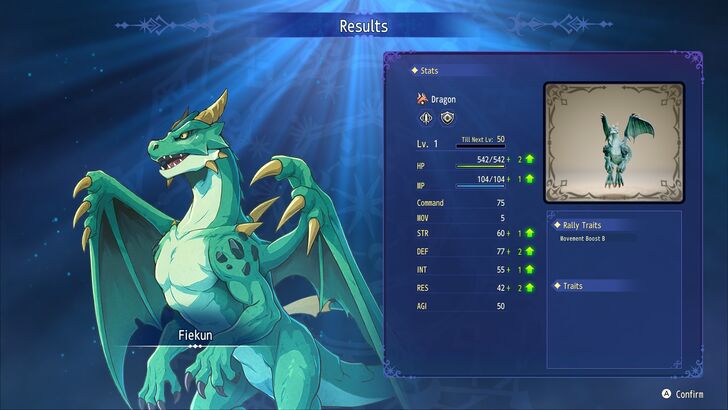
I spent plenty of time just moving things around and trying to make my armies work a little better. There were even times when I would spend hours organizing my forces, checking which Monsters belonged in which squad, and figuring out where each Leader was most useful. The game scratched an itch in me as an SRPG fan that I didn’t even realize I had. I could spend an hour staring at menus to move around units and equipment and somehow never feel as though I was wasting my time. I wanted to see how well I could put each squad together, how much I could get out of a particular Leader, and whether I could turn a group of units that seemed fine on their own into something that worked much better together.
Part of that comes from how different Monsters can fill different functions within an army. A Monster with higher stats isn't automatically the one I want when another creature might give the squad something it is missing.
Finding the right balance is key here, more so because certain Monsters can only be recruited at specific bases, which means I sometimes have to think ahead about where I want an army stationed if I want it to have access to a particular unit, especially since moving an army into position isn’t free. Relocating a force takes up its actions for that Season, meaning I have to give up the chance to use those Leaders for an attack or send them out on a Quest.
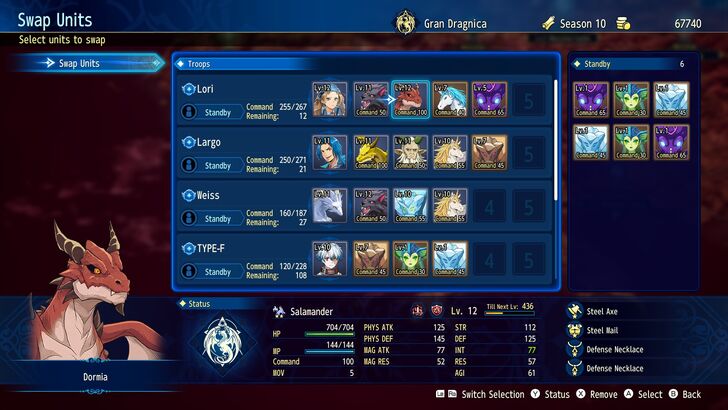
This creates a tug-of-war between preparing for the next attack and keeping the rest of your bases secure. I might have an army that is ready to invade an enemy base, but moving it into position could leave another border with fewer defenders. Sending a Leader on a Quest can bring back something useful, but that Leader isn't protecting a base during that time. Once multiple fronts open up, these small decisions start feeding into each other, and I have to think about where my strength is needed several turns ahead.
There is a lot of control in deciding where every Leader and Monster should go, what equipment they should bring, and which units should be sent out on Quests. This isn’t much of a problem when you’re playing on Easy or Normal, but harder difficulties can have you scrambling for whatever resources you can get.
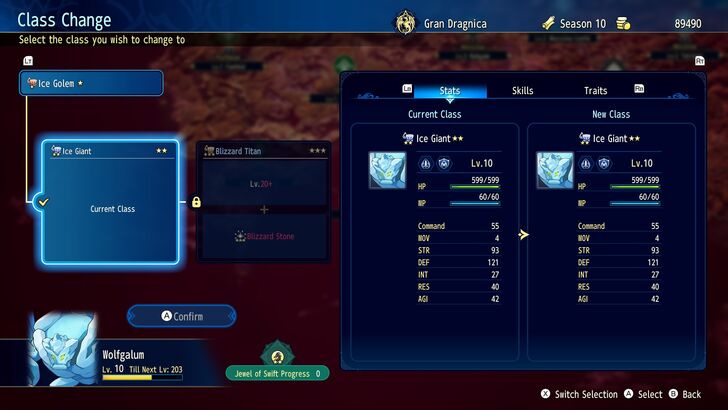
I do, however, wish there were more classes to tinker around with. Most Leaders only have one class change available, so there isn’t much room to experiment with how I want them to develop. There are some exceptions, with certain units such as Knights and Elemental Dragons having two or three class options, respectively, but the differences between the choices aren’t always enough to make me agonize over which one to pick. For the most part, they all increase the units' overall stats.
It’s a shame because class changes feel like they should be another part of the Organization Phase that I can really sink my teeth into, to find various ways to potentially break the game. I already spend so much time moving Monsters around, changing equipment, and figuring out where each Leader belongs. Having a few more class paths would have given me another reason to spend even more time messing around with my squads.
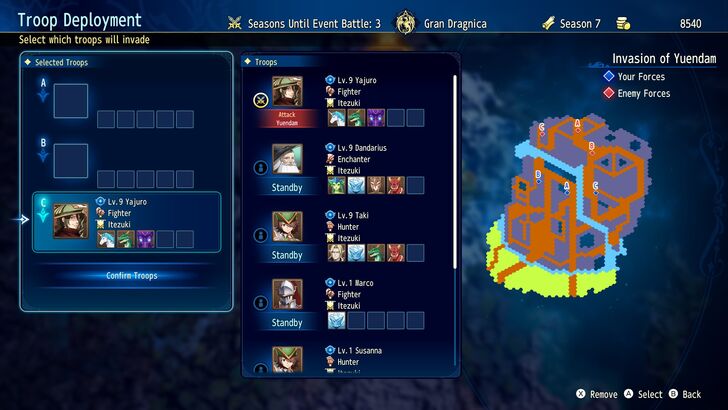
The Attack Phase, meanwhile, lets you choose whether to attack or just wait the Season out. You can select up to three Leaders and their squads of Monsters from a border base, then send them toward an adjacent enemy territory. Because the enemy can launch attacks of its own, the borders are constantly changing as both sides look for opportunities to expand.
More often than not, I have to look at the forces stationed there, decide which Leaders I can bring from the surrounding borders, and consider what happens once they leave. Since I can only send up to three Leaders into an invasion, the armies I commit are limited by the choices I made during the Organization Phase. A base I spent the last Season building up might suddenly be left with fewer defenders, while a Leader I need for an attack could still be halfway across the map. By this point, the planning is done. Now I get to see whether any of it actually works.
Battles Have Plenty of Strategy
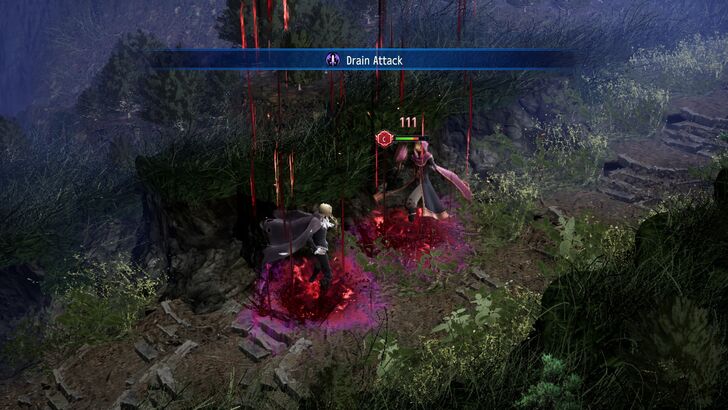
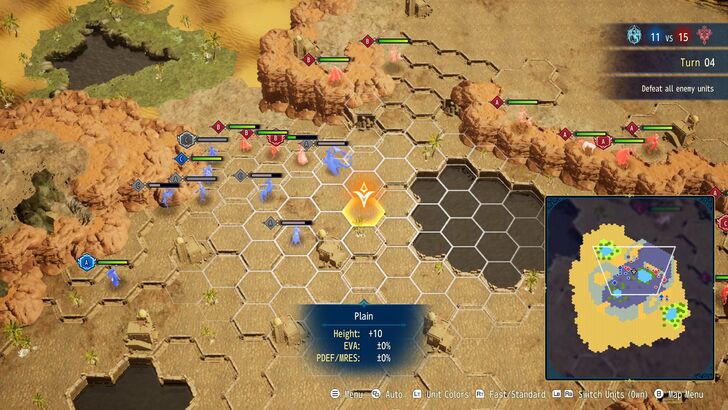
The third and final phase is Invasion, where you carry out any attacks issued during the previous phase and fight to occupy the targeted territory. Battles take place on a hexagonal grid, with the Leaders and Monsters you committed to the march facing off against whatever garrison force is waiting for them. You can move your units around the map, attack, use skills and spells, and work around the terrain to get your army where it needs to be. Winning takes the territory for you, while losing sends whatever survived back to its base.
At a glance, it sounds like any other traditional strategy RPG. You have your units on a grid, you take turns moving them around, and you spend each turn figuring out who should attack whom. The big difference is that, unlike many SRPGs, you don’t need to defeat every single enemy on the map. The enemy Leaders are what you really want to get to because taking one down removes their entire squad from the battlefield. That can save you a lot of time if you can find an opening, although the same thing can happen to your own Leaders. Lose one and their entire squad disappears with them, which makes throwing a Leader into the middle of a fight a pretty bad idea.
Which is why it’s so important to make use of your Monsters to the fullest of their abilities. You can either have them charge at the enemy or perform a wall to protect allies, or you can Rally one of them with your Leader. It’s a command that lets the Leader take that Monster off the battlefield in exchange for a passive effect based on its Rally trait. Some can protect you from elemental effects, while others give you defensive bonuses or extra movement.
You are giving up an active unit for the rest of the battle, so it isn’t something you can just throw out whenever you feel like it. You do it when you most need it or can spare an ally for it. There were times when I would look at Monsters that weren’t doing much on the battlefield and wonder whether their Rally effect would be more useful than keeping them around to attack. It gives you another thing to consider when a squad starts getting crowded or a particular Monster has already done what you needed it to do.
The AI Is Easy to Read Once You Realize How Predictable It Is
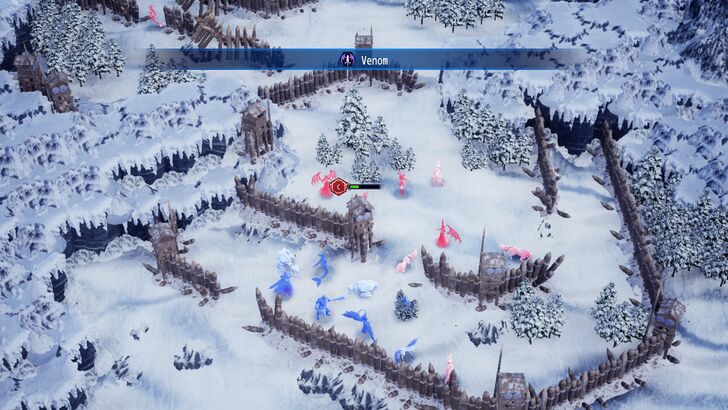
Despite all of this, the battles can be pretty easy once you figure out how the enemy AI tends to behave. They are pretty predictable. The AI sticks its units fairly close together, so getting straight to the backline usually isn’t an option. You can still bait enemies out, though. I could send a scout forward, take a shot at an enemy, pull it back, and watch the enemy army start marching toward me. Once they were close enough, I could have the rest of my squad ready to attack them.
It gets even sillier when an enemy Leader is a mage or an archer and decides to walk right up to my units. Those are supposed to be the units I should be trying to reach, yet there were plenty of times when they practically delivered themselves to me.
The allied AI isn’t much better either. There are moments when I would watch one of my units make a decision that I absolutely would not have made myself. It can be frustrating when a battle is going well and an ally suddenly puts itself somewhere it shouldn’t be. Thankfully, the game gives me enough control over my own army that I could usually work around it. The bigger problem is that the weak AI can take some of the tension out of battles that should feel more dangerous.
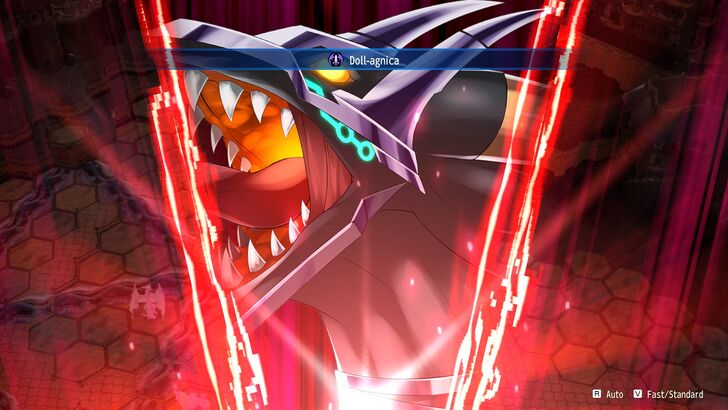
That, however, doesn’t mean I could just walk through every battle without thinking. If I went in without preparing properly, I could lose a lot of units very quickly. One of the final battles in particular humbled me. I had cleared out almost all the bases in the entire map save for those needed for the story to progress, so I went into it thinking my army was more than ready.
It wasn’t. I got absolutely wrecked because I had gotten too comfortable with how well my forces had been doing. I ended up loading an earlier save from several Seasons before the battle and spent that time fixing my army, managing my resources, and preparing for the fight again.
There is a moderate learning curve here, though it mostly comes from understanding how the different parts of the game work together. The basics of Invasion are easy enough to pick up within the first few hours, but the Organization Phase takes longer to fully understand because your decisions there have a direct effect on how well your squads perform in battle. It took me some time to figure out which Leaders and Monsters worked well together, where I should spend my resources, and how much I could afford to commit to an attack without leaving myself in a bad position elsewhere. You learn a lot of this through trial and error, especially after a battle goes badly because of something you overlooked before it even started.
Mission Mode Adds a Lot of Variety
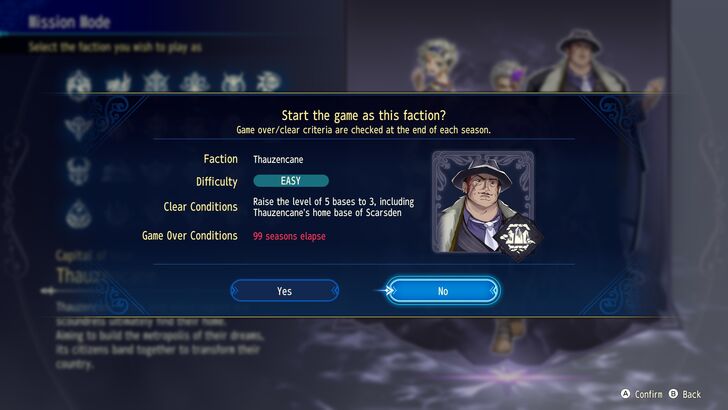
Mission Mode is a nice change of pace from the main campaigns. There are 24 factions to choose from, and each one comes with its own clear condition. Some ask you to bring all of the bases under your control, while others have you raise specific bases or even sell several items in the shop. You are given a set number of Seasons to accomplish the objective, so there is always a bit of pressure to figure out what you need to prioritize before the time runs out.
I really like the idea behind this mode because it gives me a reason to play around with the systems I already enjoy. I might spend one run trying to expand as quickly as possible, then have to rethink how I go about the next because of its clear condition. Some objectives are simple enough, though others ask you to make a particular restriction work. One that I quite liked is having to use only mages in your entire campaign.
The downside is that the missions can become repetitive after a while. The objectives change, but the actual process of completing them is still built around the same Seasons, Phases, battlefields, and so on. After playing several missions in a row, I started feeling as though I’m repeating the same cycle with a different checklist. don’t think that takes away from the mode itself, especially since I genuinely enjoy the systems underneath it, but it does make Mission Mode easier to enjoy in smaller doses. Don’t think that takes away from the mode itself, especially since I genuinely enjoy the systems underneath it, but it does make Mission Mode easier to enjoy in smaller doses.
Is Brigandine Abyss Worth It?
Its Gameplay is Good; Everything Else is Just... Fine
Brigandine Abyss costs $50. It’s not cheap. Even compared to many AAA games, that’s a lot to ask for a game with such a bare-bones story and dated presentation. As for whether it’s worth it, I’d say yes, but with a lot of asterisks. I had a good time with Brigandine Abyss from beginning to end, and its strategy systems are easy to get hooked on once you start min-maxing your units. That doesn’t mean I’d recommend it to everyone, though.
I’d only tell you to buy it if you already enjoy this kind of strategy game. Outside of that, there’s a lot to overlook. In the presentation alone, you have to excuse the game reusing the same character model for multiple units, along with battlefields that look like they could have come from the PlayStation 3 era.
If you can look past those issues, there’s plenty to do here. My first campaign took around 30 hours to complete, and there are six campaigns in total, which could easily take you well past 100 hours. Mission Mode, with its 24 factions, adds even more time on top of that. That’s a lot of content for anyone who enjoys this kind of gameplay, but it’s a shame that the gameplay is doing almost all of the work to justify the $50 price tag. I had plenty of fun with Brigandine Abyss, but most of that fun came from its battles. Once I stepped away from them, there wasn’t much left that made me want to stay.
Brigandine Abyss FAQ
How Long to Beat Brigandine Abyss?
A single playthrough of Brigandine: Abyss can take up to 30 hours. Factor in mission modes and alternative faction stories, and that number easily balloons past 100 hours.
Game8 Reviews